Atlanta Bagworm Damage Guide for Arborvitae and Junipers
Bagworms can strip an arborvitae hedge before many homeowners notice what's happening. In Atlanta, the early signs often blend right into the plant, so a small problem can turn into bare branches fast.
If your arborvitae or junipers look thin, bronzed, or dotted with tiny hanging cones, timing matters. Young larvae are much easier to stop than older ones, so early checks save plants and money.
Spotting Bagworm Damage on Arborvitae and Junipers
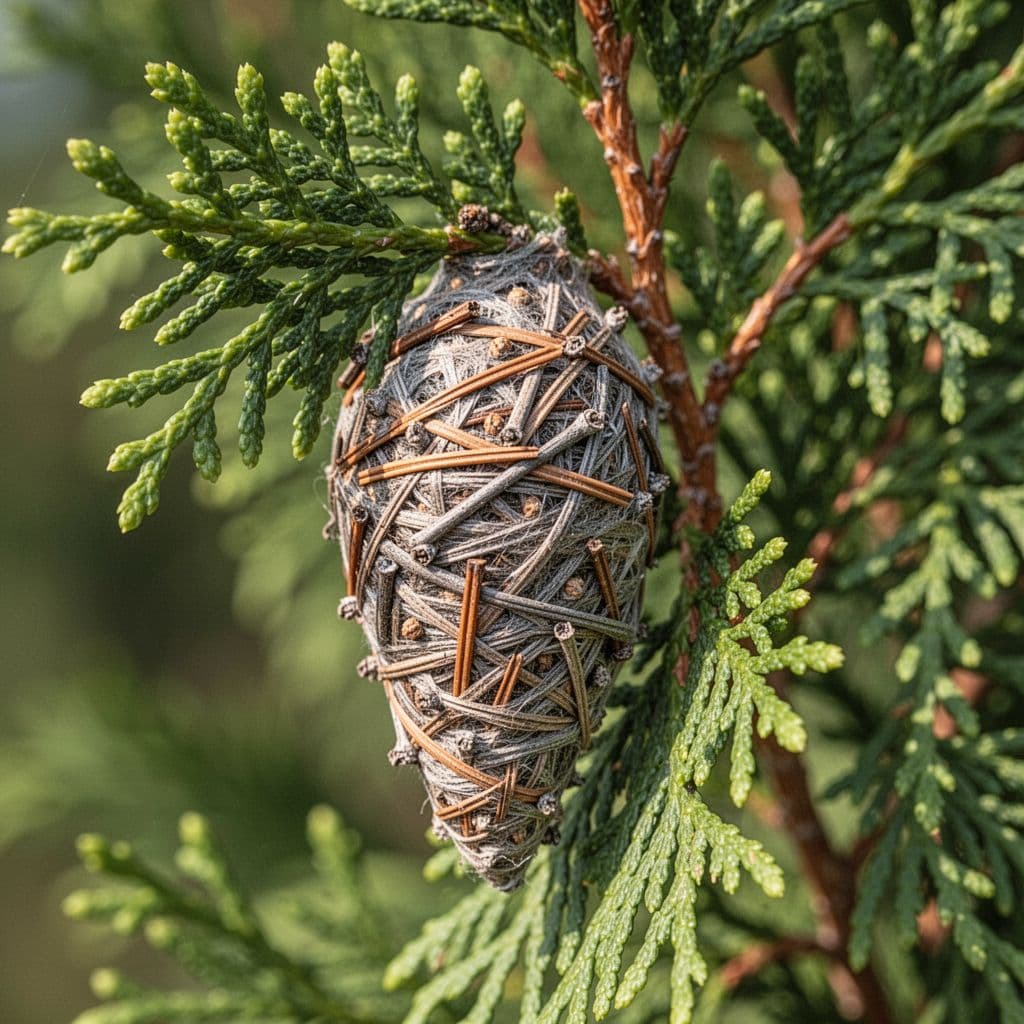
Arborvitae and junipers are easy targets because bagworms use bits of the host plant to build their cases. From a few feet away, the shrub may still look green. Up close, the damage tells a different story.
A quick comparison helps separate fresh feeding from older, lingering damage.
| What you see | What it often means | What to do next |
|---|---|---|
| Tiny cone-shaped cases on branches | Active bagworms are present | Check nearby branches right away |
| Brown or bronzed tips | Needles have been eaten | Inspect for more cases and feeding |
| Thin, patchy foliage inside the shrub | Larvae are moving deeper into the plant | Treat or remove infested growth soon |
| Large, dry bags still attached | Old cases or overwintering eggs may be present | Remove by hand and inspect carefully |
The strongest clue is uneven thinning. Bagworms usually start where you least expect it, then work inward. Arborvitae often show browning along the outer shell first. Junipers may look dusty, dull, and patchy before entire sections fade.
A healthy evergreen should hold its color fairly evenly. When one side looks weak or a top section is suddenly sparse, bagworm damage should be high on the list.
Why Atlanta Timing Changes the Outcome
In Metro Atlanta, spring warmth wakes up bagworms fast. Once the weather stays warm, tiny larvae begin feeding and building their cases. That is the window that matters most.
Control works best while the larvae are small and exposed. Once the bags grow larger, they protect the insect from sprays and make treatment harder. That is why waiting until the shrub looks badly burned is a bad trade.
Late spring through early summer is the time to pay close attention. By midsummer, you may already be dealing with more mature larvae and heavier needle loss. In fall and winter, the bags can still be visible, but that does not mean the problem is gone. Old cases can hold eggs that hatch the following season.
If you catch a few bags early, the fix is much simpler. If you miss that window, you may spend the rest of the year trying to slow a decline instead of stopping it.
The best time to stop bagworms is when the bags are tiny and the larvae are still feeding openly.
How to Inspect Shrubs Before the Bags Spread
A good inspection takes only a few minutes, but it needs to be deliberate. Start by standing back and looking for a hedge that seems uneven, faded, or thinner than the rest of the planting bed. Then move in closer.
- Look at the whole shrub first. Check for bronzed tips, weak sections, and branches that seem bare compared with the rest.
- Part the foliage by hand. Bagworms often hide inside the canopy, not just on the outside.
- Check branch undersides and lower limbs. Gravity and shade make these spots easy to miss.
- Look for tiny hanging cases that move with the branch. If you see several, assume the infestation is active.
If you find one infested shrub, inspect the others nearby. Bagworms often spread through a planting bed before anyone notices. That is why regular yard care helps, because residential lawn care and mowing services keep the area open and make evergreen beds easier to check.
A simple rule helps here. If the shrub looks dusty, patchy, or strangely thin, don't wait for the bags to get bigger. Early spotting is half the battle.
Home Treatment Options That Still Work
Homeowners can handle light infestations, but the method has to match the stage of the insect. If the bags are small and the larvae are active, treatment is still realistic. If the cases are large and tough, the job gets harder.
For a small outbreak, hand removal can help. Clip off heavily infested tips and bag them for disposal. You can also pick off visible cases by hand on smaller shrubs, especially in winter when the plant is dormant.
Sprays can work too, but timing matters. Products with Bacillus thuringiensis kurstaki, often called Btk, are most useful on young caterpillars. Spinosad can also be an option for homeowners if the label allows it. Use any product exactly as directed, and cover the foliage well.
A few limits matter here:
- Older larvae are much harder to kill.
- Dense hedges block spray coverage.
- Dead brown needles will not turn green again.
- Heavily defoliated shrubs may still look rough after treatment.
If you wait until the shrub is mostly brown, spray results can disappoint. The insect may be gone, but the damage is already done.
When a Damaged Hedge Needs Professional Help
Some bagworm problems stay small. Others hit a whole row of arborvitae or several junipers at once. That's when the job starts to move beyond a simple homeowner fix.
Professional help makes sense when the infestation is widespread, the shrubs are tall, or the center of the hedge is too dense to inspect well. It also helps when repeated damage has left the plants thin for more than one season. Arborvitae in particular can struggle after severe defoliation, and junipers may keep patchy, uneven growth for a long time.
Watch for these warning signs:
- More brown than green foliage
- Bags throughout several shrubs
- Tall branches you can't reach safely
- Damage that keeps returning each year
At that point, the question is no longer just how to kill the bagworms. It's also whether the shrub still has enough healthy growth to recover. A pro can judge whether pruning, treatment, or replacement makes the most sense.
Conclusion
Bagworm damage on arborvitae and junipers is easy to miss at first, especially in a thick Atlanta hedge. By the time the branches look bare, the larvae may have already done most of their feeding.
The smartest move is simple, inspect early, especially in late spring and early summer, then act while the bags are still small. That one habit gives you the best chance to save the plant, instead of chasing damage after it spreads.
If your evergreens already look thin or patchy, don't wait for the next season to tell you what's happening.