Atlanta Winter Kill Guide for Bermuda and Zoysia Lawns
Atlanta winters don't always kill warm-season grass, but a few cold snaps can leave Bermuda and Zoysia looking rough by March.
Most of the time, the lawn is sleeping, not dead. The hard part is telling the difference before you start fertilizing, raking, or watering too much.
That choice matters, because the wrong move can slow green-up or add more stress. This guide shows what true winter kill looks like in North Georgia, how long recovery usually takes, and when to call for help.
How winter damage starts in Bermuda and Zoysia
Winter damage happens when cold, wind, and wet soil work together. Bermuda and Zoysia both go dormant after frost, but their crowns and roots can still suffer if temperatures drop hard or the turf sits in shade or standing water.
Atlanta yards with tree cover, compacted clay, poor drainage, or heavy winter traffic are the first to show trouble. Thin spots on edges, slopes, and areas near driveways often take the worst hit.
Late fall fertilizer and very short mowing can also leave grass exposed. A lawn that entered winter thin usually wakes up thin.
Bermuda often shows stress first in open, sunny spots. Zoysia can hold color a little longer, but it can also get large patch disease in cool, wet weather. That disease can look a lot like winter kill, especially when it leaves round tan rings.
You can think of winter kill as patch failure, not whole-lawn fade. Dormancy usually makes the entire lawn tan. Winter kill usually leaves scattered dead zones, soft spots, or areas that never respond in spring.
Dormant grass or dead turf? What to check in March and April
In March, a brown lawn in Atlanta is often normal. By late April, you need a better test.
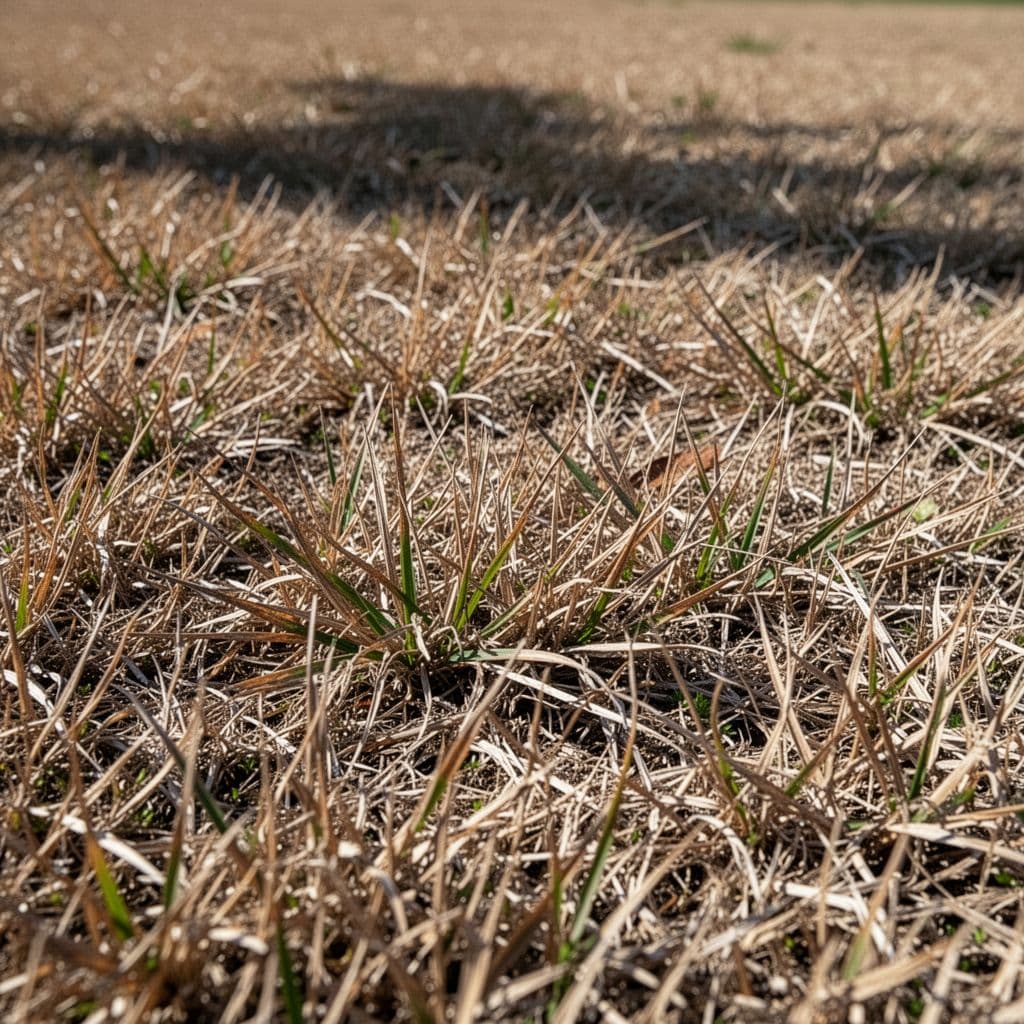
The easiest way is to check the crown near the soil line. If the base feels firm and you can find a little green near the crown, the grass may still be alive. If the patch pulls up easily, crumbles at the base, or stays tan while nearby turf starts growing, winter kill is more likely.
| Test | Dormant Bermuda or Zoysia | Winter-killed turf |
|---|---|---|
| Color | Tan or straw-colored blades, with possible green at the base | Dull tan, gray, or bleached patches that do not improve |
| Crown test | Base feels firm and roots hold | Crown feels soft, dry, or brittle |
| Tug test | Blades resist when pulled gently | Whole section lifts or tears out easily |
| Pattern | Most of the lawn looks uniformly brown | Patchy spots, edges, rings, or low areas |
| Timing | Still brown in late winter or very early spring | Still brown after nearby turf starts greening |
If you see circular rings or expanding arcs in Zoysia, don't assume cold is the only problem. Large patch can leave the same tired look.
Brown in March is often dormancy. Brown in late May is a problem.
What to do before spring green-up
Spring care should protect the turf, not rush it. In North Georgia, that usually means patience first, then light maintenance.
- Wait for real warmth. In Atlanta, that means several mild days in a row, not one sunny afternoon. Bermuda wakes sooner than Zoysia, so give each lawn type time.
- Rake only what you need. Lightly clear leaves, twigs, and mats that block air. Stop if the rake starts pulling live stolons or crowns.
- Check water movement. If rain sits in one spot, mark it for drainage work later. Winter kill often starts where soil stays wet.
- Water only when the soil dries. A dormant lawn does not need a heavy schedule in early spring, and extra water can keep cold, weak turf soggy.
- Hold fertilizer until you see active growth. Feeding too early can push top growth before roots are ready, which leaves the lawn soft and patchy.
Once green blades show across most of the yard, mow at the right height and take off only a small amount at a time. If you want help keeping the cut even, residential lawn care and mowing services can make that part easier.
Common mistakes to avoid
- Fertilizing too early can make weak grass chase growth before it has strength.
- Heavy watering can keep cool soil wet and invite more stress.
- Aggressive raking can pull up crowns that are still alive.
- Scalp mowing before green-up can strip away what little protection remains.
Recovery timelines for Bermuda and Zoysia in Atlanta
Spring timing is not the same for both grasses. Bermuda usually wakes first, while Zoysia waits for warmer soil.
| Grass type | First green-up in North Georgia | Normal recovery pace | When to worry |
|---|---|---|---|
| Bermuda | Often late March through mid-April | Stays patchy at first, then fills in fast once nights warm up; thin areas may improve through May and June | Bare spots stay unchanged after the rest of the lawn is actively growing |
| Zoysia | Usually mid-April through early May | Greens more slowly, then thickens through late spring and early summer | Circular dead spots, or areas that stay tan after steady warmth |
Bermuda can cover small gaps faster because it spreads aggressively. Zoysia is slower, so damaged areas may need plugs or sod instead of waiting forever.
If a patch is still bare by early summer, it is probably time to repair it. At that point, patience won't fix dead roots.
When a lawn needs professional eyes
Some lawns need more than patience. If dead spots keep growing, if the same areas fail every winter, or if the yard has shade, drainage, or compaction issues, a pro should take a look.
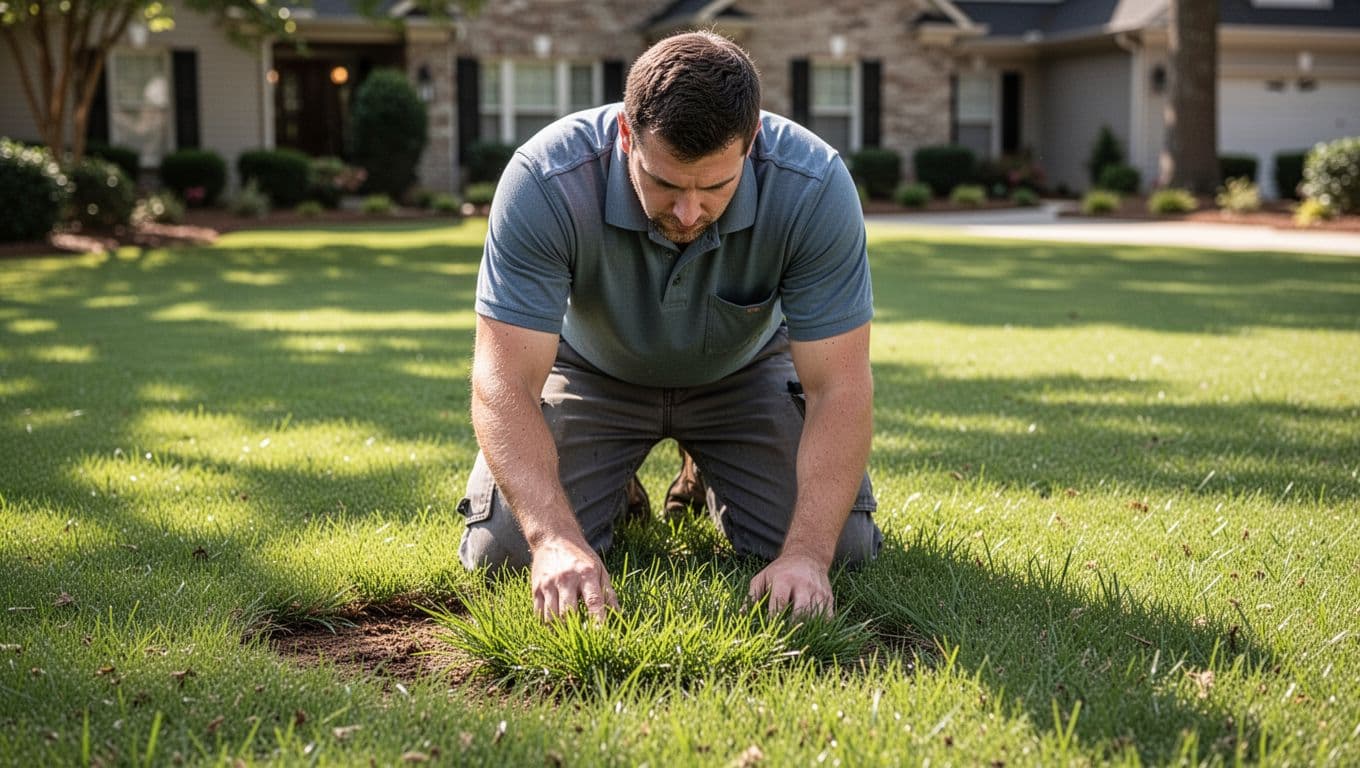
A good spring inspection can sort out winter kill, large patch, poor grading, irrigation gaps, and mower damage. It can also tell you whether the lawn needs patching, plugs, or a bigger fix.
Call for help if you see these signs:
- More than a few isolated patches stay brown after warm weather arrives.
- The same spots fail every year, even with normal care.
- The soil feels soft, soggy, or sunken in one part of the yard.
- Zoysia shows rings, arcs, or expanding circles that point to large patch.
- Bare areas are too large for simple touch-up repair.
The sooner you know what you're dealing with, the sooner you can choose the right fix. Guessing usually costs more than a careful look.
Conclusion
Atlanta lawns can look rough in late winter, but brown color alone does not tell the full story. Bermuda and Zoysia need warmth before they reveal whether they are dormant or truly damaged.
Watch the crown, use the tug test, and pay attention to timing. If the rest of the lawn is green and one area stays flat and tan, treat it as winter kill instead of waiting for a miracle.
That simple habit saves time, money, and a lot of guesswork.