Atlanta Camellia Tea Scale: How to Spot It and Treat Home Shrubs
Camellias can look healthy from a distance and still be under stress. Camellia tea scale often hides on the undersides of leaves, so the first clues are easy to miss.
In Metro Atlanta, warm spells, thick shrub growth, and crowded plantings give this pest plenty of cover. If your camellia has pale speckling, weak growth, or a dull look that won't go away, a closer look may explain why.
The good news is that you don't need a harsh approach to get started. A careful inspection, the right timing, and steady follow-up usually work better than panic spraying.
What camellia tea scale looks like on real shrubs
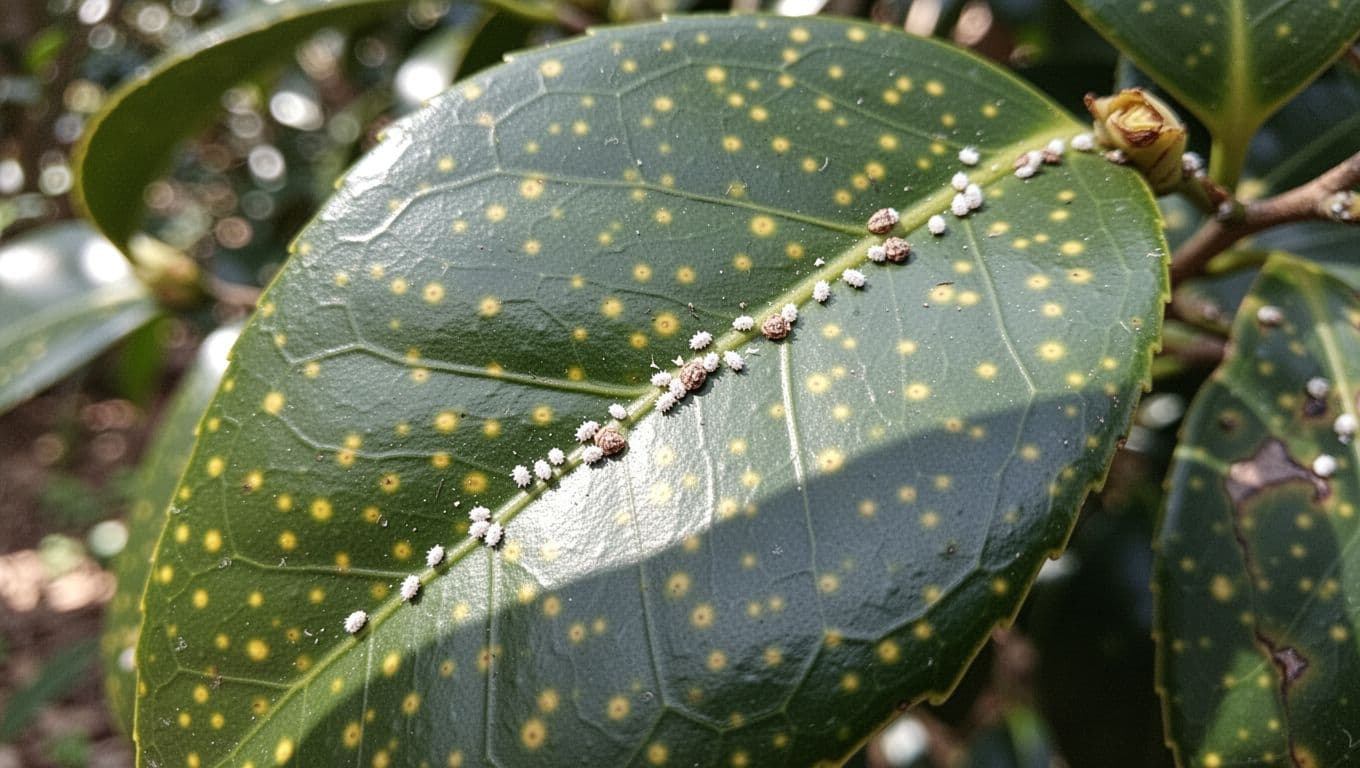
The fastest way to spot a problem is to look for yellow stippling on the upper leaf surface. Those tiny yellow dots often show up before the shrub looks tired from a distance.
Then turn the leaf over. Tea scale lives on the underside, where you may see small white waxy patches, brown shell-like covers, or a cottony look on heavily infested leaves. The shrub may also lose its rich, glossy color.
Here's a quick field check you can use on a Saturday morning.
| What you see | What it may mean | What to do next |
|---|---|---|
| Tiny yellow dots on top of leaves | Feeding damage from tea scale | Check the leaf undersides right away |
| White waxy patches under leaves | Active scale insects, often males | Look at several leaves on the same branch |
| Brown, oyster-like bumps | Mature female scales | Confirm the infestation before treating |
| Dull leaves, weak growth, or leaf drop | A larger or older infestation | Plan a treatment and follow up |
| Sooty buildup on leaves or nearby stems | Honeydew from another pest, or mixed pest pressure | Inspect the whole shrub, not just one branch |
If you only check the top of the leaf, you'll miss most of the problem.
For a closer look at the pest biology and why it hangs on so long, the University of Georgia's tea scale guide is a useful reference.
Why camellias and hollies get hit so often in Atlanta yards
Tea scale likes evergreen shrubs that keep dense foliage through the year. Camellias are a common target, and hollies can be hit too. Those shrubs hold their leaves for a long time, which gives the pest a steady place to feed.
Metro Atlanta weather can make things worse. Mild winters, warm springs, and long humid stretches help the pest keep cycling through generations. In shady beds, leaves dry slowly, and crowded branches make inspection harder.
That's why one plant can look fine while the next one nearby is already stressed. Plants that are crowded, drought-stressed, or overfertilized often show damage faster. New growth may also draw more attention because it is softer and easier to feed on.
If you manage several shrubs in the yard, the same scouting habit helps across the landscape. The close inspection you use on camellias also comes in handy when checking controlling scale pests on crape myrtles, since scale insects hide in plain sight on many ornamentals.
For home gardeners, the lesson is simple. Don't wait for the whole shrub to look bad. Check a few leaves on several branches, then work from the actual symptoms you find.
The NC State camellia tea scale article has a good photo-based description of the yellow spotting and white waxy material that often show up first.
A safe DIY treatment plan that fits most home shrubs
Start with the least disruptive step that fits the problem. If the infestation is light, a strong stream of water can knock some pests off the leaves. After that, prune out the worst twiggy growth if it's badly packed, then bag the clippings.
When you need a spray, horticultural oil is often a solid first choice for home use. Insecticidal soap can help too, but both products work best when you spray thoroughly and reach the leaf undersides. Missed spots become tomorrow's problem.
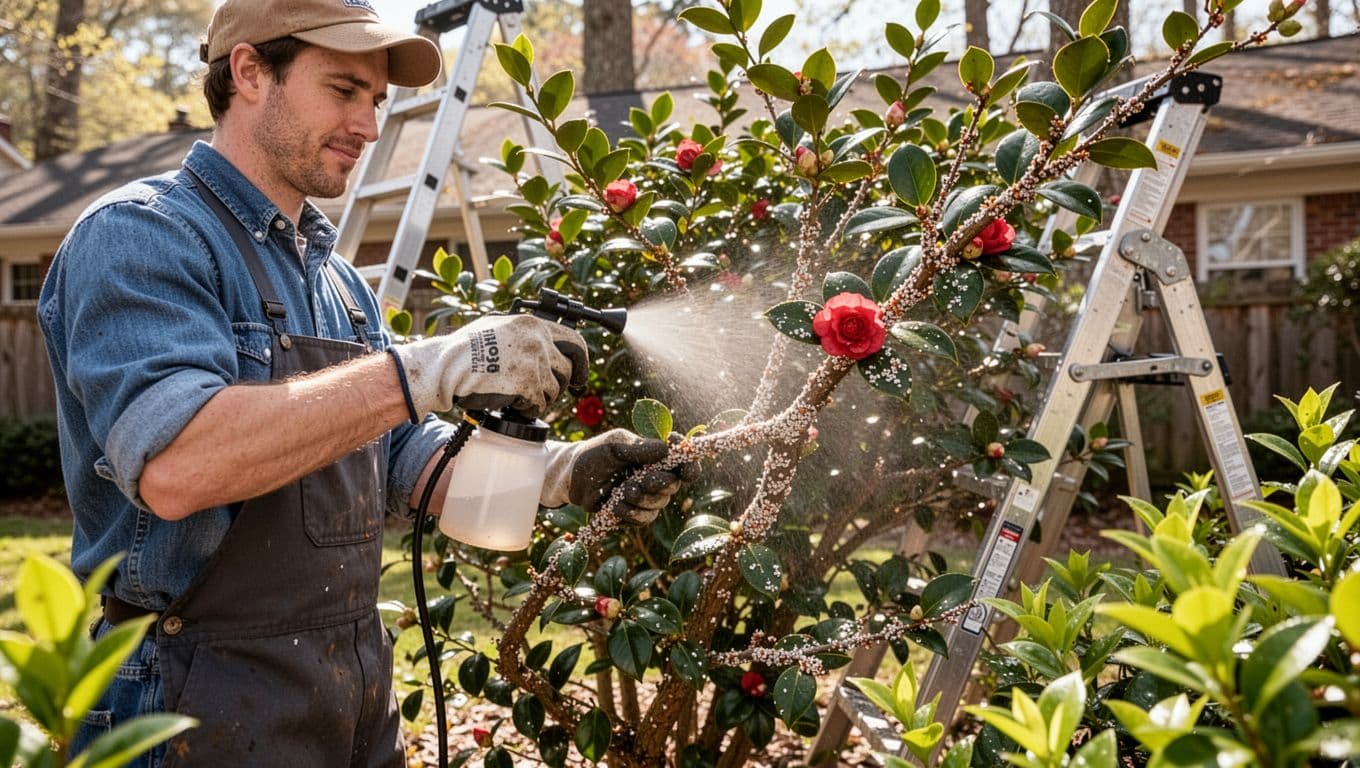
Use oils on mild days, not during a hot spell or on a thirsty shrub. In Metro Atlanta, that usually means watching the weather closely in spring and again during cooler stretches in late summer or early fall. Weather shifts fast here, so the label matters more than the calendar.
For heavier infestations, repeated treatment is normal. One spray rarely fixes an older problem. The damaged leaves may stay spotted for months, and the shrub can take time to recover.
The UGA field report on tea scale biology and management explains why follow-up matters so much. The pest can have overlapping generations, which means new crawlers may appear after you think the job is done.
Keep these basics in mind:
- Spray only plants listed on the product label.
- Cover the leaf undersides, not just the top.
- Repeat treatments only at the interval the label gives.
- Treat mild infestations early, before the shrub weakens.
- Give the plant time, because recovery is often slow.
If you use a stronger product, read the label all the way through first. That includes where it can be used, how often to reapply, and what temperatures are safe.
How to keep tea scale from coming back
Prevention starts with better air flow. Camellias that are packed against fences, other shrubs, or walls stay damp longer. Light pruning helps air move through the plant and makes future inspections easier.
Water the root zone, not the leaves. Deep, even watering helps the shrub handle stress better than frequent shallow watering. Mulch also helps, as long as it stays a few inches away from the trunk or main stems.
Avoid pushing the shrub with heavy nitrogen. Too much fertilizer can drive soft growth that attracts pests and creates more cleanup later. A steady, balanced care plan is safer for long-term shrub health.
Timing matters too. In Metro Atlanta, inspect camellias several times a year, especially during warmer stretches when crawlers are more active. A quick look every few weeks in spring, then again after summer heat eases, can catch a new outbreak early.
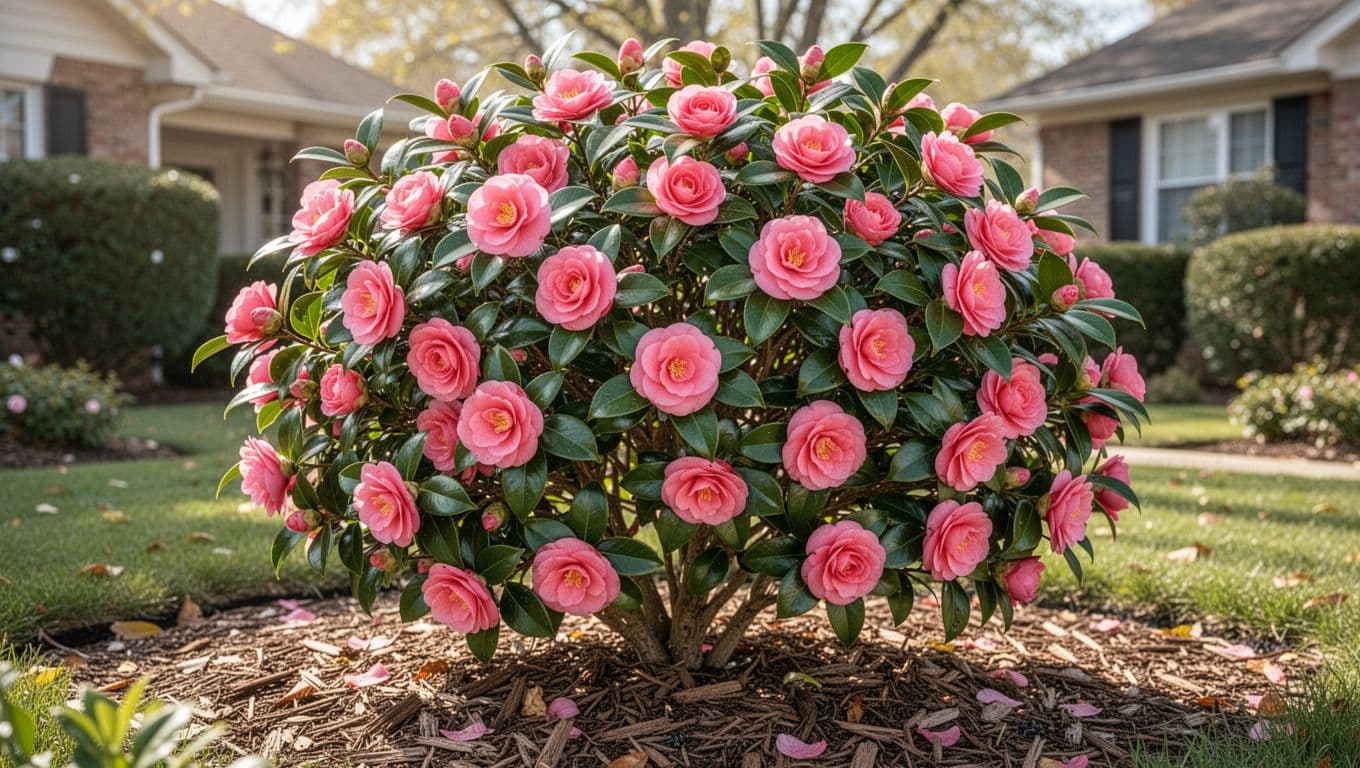
A healthy shrub still needs regular checks. Tea scale can return if you stop looking, especially on older camellias and hollies that hold dense interior foliage. The underside of the leaf remains the best place to start.
Conclusion
Tea scale on camellias is frustrating because it hides early and lingers after treatment. That's why the best approach is simple, careful scouting, not guesswork.
Look for yellow stippling , white waxy patches, and any sooty buildup that tells you the shrub is under pest pressure. Then flip the leaves, confirm the underside, and treat with patience if the infestation is real.
In Atlanta yards, the shrubs that get checked often are the ones that recover fastest. A few minutes with a close look can save a camellia from months of decline.