
Atlanta Crape Myrtle Bark Scale Guide for Home Landscapes

RW Lawn Co • May 2, 2026

Share this article

Crape myrtles can look fine one week, then show white bumps and black streaks the next. In Atlanta, crape myrtle bark scale often hides on the trunk long before most people notice a problem.

The best fix is usually simple. Start with a close inspection, then choose low-impact treatments that fit the season and the level of infestation.

If you catch it early, you can often keep the tree looking good without harsh spraying. That matters in Metro Atlanta, where heat, shade, and tight planting spots can make trees more stressed.

Signs Atlanta homeowners can spot early

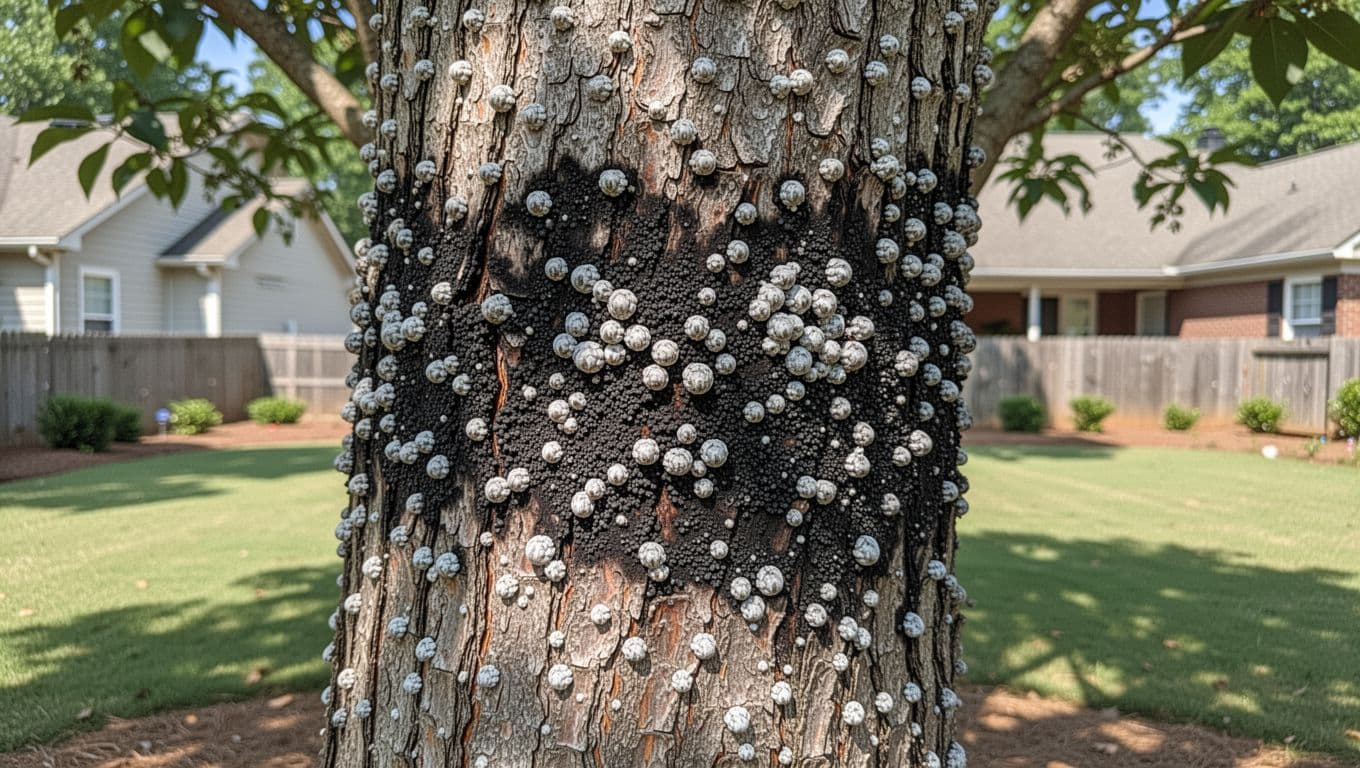
The first clue is usually the bark itself. Look for white or gray waxy bumps on the trunk, lower branches, and crotches. You may also see a sticky film on the bark or nearby leaves. That sticky residue turns into black sooty mold.

A dusty trunk that feels sticky is worth a closer look.

If you scratch one of the bumps with your fingernail and see pink underneath, that is a strong sign of crape myrtle bark scale. Tiny crawlers, which are the young stage, are even easier to miss. They are small, pink, and mobile.

Growth changes matter too. Heavy infestations can lead to thin blooms, delayed leafing, and a tired look overall. Trees in shade often show more damage than trees in full sun. That is one reason a crape myrtle that used to look clean can slowly decline over time.

How to inspect a crape myrtle step by step

A quick inspection only takes a few minutes, and it works best when you do it often. In Atlanta, check now in early May, then again after leaf drop in fall. Crawlers are easier to catch than the waxy adults.

  1. Start at the trunk and lower limbs. Look at branch crotches, pruning cuts, and loose bark.
  2. Search for white or gray bumps, sticky residue, and black sooty mold.
  3. Scratch a few bumps with your fingernail. Pink tissue under the cover points to scale.
  4. Wrap a short piece of double-sided tape around a twig or branch. Check it with a hand lens a few days later.
  5. Repeat the check every couple of weeks during spring and early summer.

This is the right time to watch for crawlers, because treatment works best before the pest builds its waxy shell. If you only see old, crusty covers, you may already be late for the easiest window.

A tidy yard helps here too. Routine residential lawn care and mowing in Atlanta keeps trunks more visible, so bark changes are easier to spot during normal maintenance.

Treatment that fits the problem

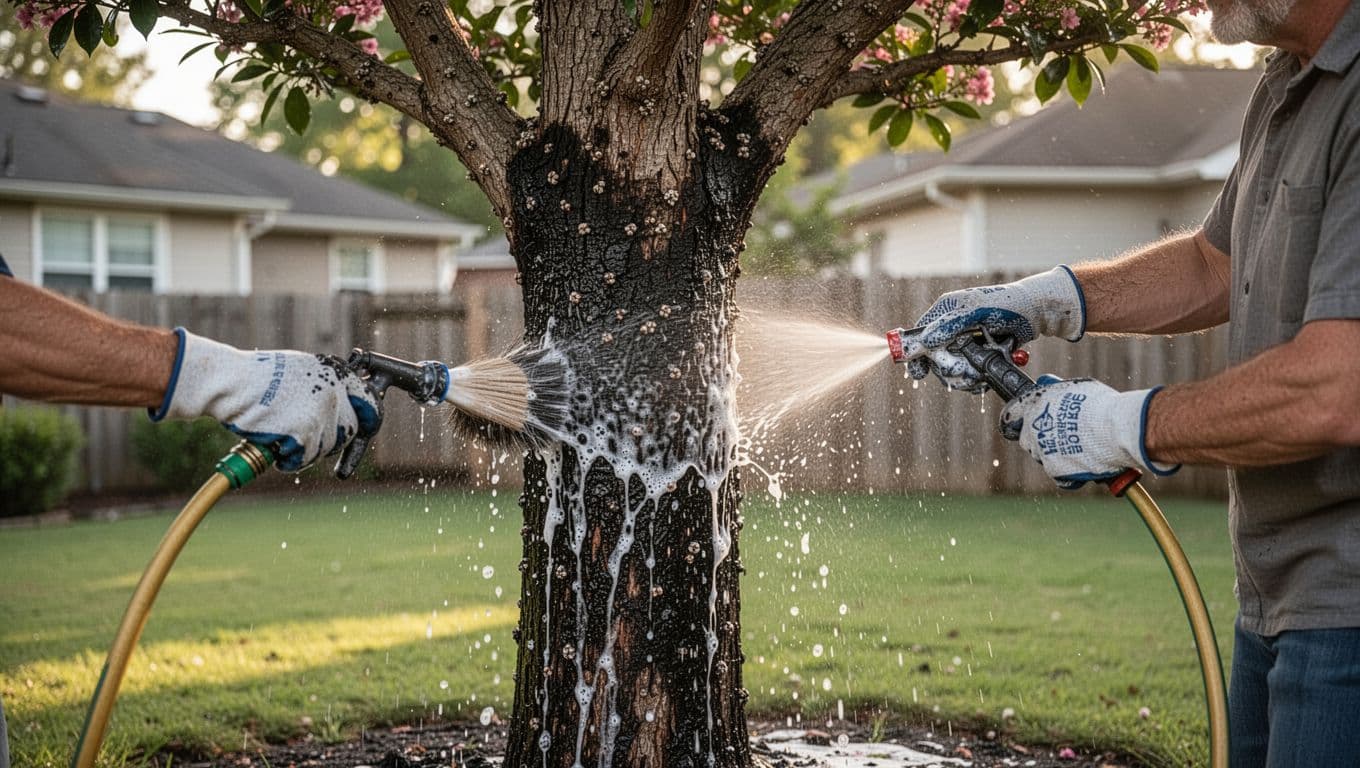
For light infestations, start with water. A strong stream from a hose can knock off some crawlers and loosen sooty mold. After that, warm soapy water and a soft brush can clean the trunk. That will not remove every insect, but it improves the tree's appearance fast.

Pruning takes some judgment. Remove dead or crowded wood, but do not heavily cut the tree back just to chase scale. Hard pruning can create more tender growth and make the tree look worse. Clean pruning also helps air move through the canopy.

For crawlers, horticultural oil or insecticidal soap can be useful when the label allows it. These work best when the young stage is active and exposed. Spray thoroughly, follow the label exactly, and avoid hot afternoons or trees that are already stressed.

Systemic insecticides can help with severe cases, but they should follow current Georgia Extension guidance and the product label. The usual timing is late March through early May, while the tree is actively growing. That is also why a quick decision in spring matters. If the infestation is heavy, ask a local Extension office or a certified arborist before you treat.

Keeping it from coming back

Good prevention is mostly about tree health and regular scouting. Crape myrtles in full sun usually handle pressure better than trees packed into shade. They also do better with proper watering, mulch that stays off the trunk, and sensible fertilizing.

Healthy trees are easier to read. A strong crape myrtle shows normal bloom size, solid leafing, and clean bark. A stressed one often gets scale first, then sooty mold follows the honeydew.

Here's a simple homeowner action checklist:

  • Inspect trunks and lower branches in spring and again after leaf drop.
  • Look for white bumps, sticky bark, and black sooty mold.
  • Use water first for light buildup.
  • Use oil or soap on crawlers when the label supports it.
  • Call a local Extension office or certified arborist if the problem keeps spreading.

If you are managing a whole yard, consistent landscape care makes the difference. It keeps trees visible, keeps stress down, and helps you catch pests before they spread to other plantings.

Conclusion

Atlanta crape myrtle bark scale is easier to handle when you spot it early. The key is to watch the bark, confirm the pest, and match the treatment to the right stage.

For most home landscapes, that means washing off buildup, using oils or soaps at crawler time, and saving stronger products for cases that truly need them. A five-minute bark check in early May can prevent a lot of frustration later.

By RW Lawn Co May 1, 2026
Boxwood blight can turn a tidy foundation bed into a patchy mess fast. In Atlanta, warm rain, thick shade, and long humid stretches give the disease a real advantage, especially where shrubs sit close to walls or crowd each other. The good news is that you can catch it early,...
By RW Lawn Co April 30, 2026
A spotted azalea can look like a watering problem, a nutrient issue, or plain old summer stress. In Atlanta, though, the classic culprit is often azalea lace bug damage , especially on shrubs planted in hot, open beds. The tricky part is that the leaves do not all look damaged...
SHOW MORE