Atlanta Azalea Lace Bug Damage: How to Spot It and Stop It
A spotted azalea can look like a watering problem, a nutrient issue, or plain old summer stress. In Atlanta, though, the classic culprit is often azalea lace bug damage , especially on shrubs planted in hot, open beds.
The tricky part is that the leaves do not all look damaged the same way. If you can spot the pattern early, you can choose a simple fix instead of guessing and spraying the wrong product.
Spotting the classic symptoms on azalea leaves
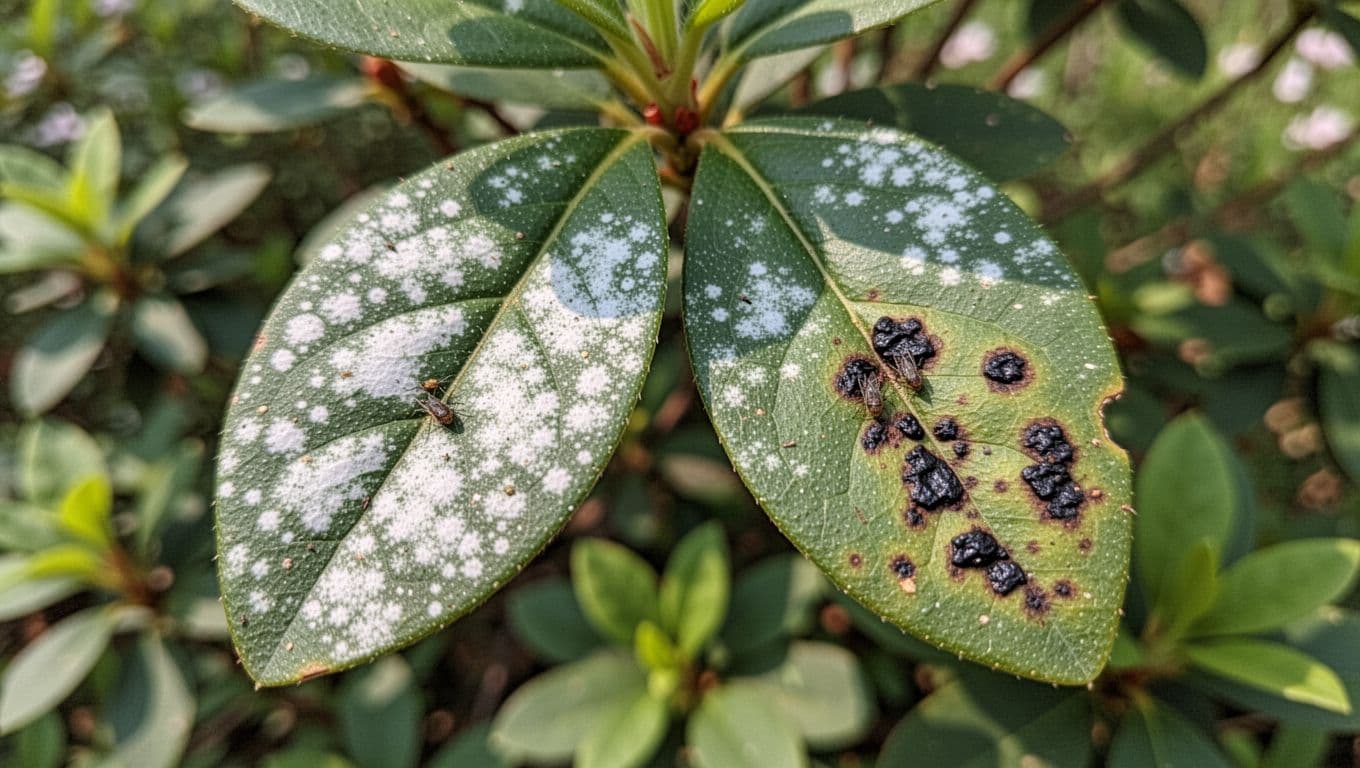
The easiest clue is on the top of the leaf. Look for fine white stippling, then a bleached or dusty look as feeding continues. Turn the leaf over, and you'll often see dark, tar-like spots, along with tiny bugs or shed skins.
White speckling on top and dark spots underneath is the classic lace bug pattern.
Under a hand lens, you may also see eggs tucked into the leaf tissue. The underside can look dirty even when the top surface only seems faded. That gap between top and bottom is why a quick glance misses the problem.
That pattern matters because other problems look different. Iron deficiency usually turns leaves a more even yellow, not a speckled white. Spider mites can also cause stippling, but they do not leave the same black residue.
Check older leaves first, since lace bugs often feed there before moving around the plant. If only a few leaves are marked, keep watching. If whole branches start looking washed out, the infestation is building. On evergreen azaleas, those leaves will stay marked for a long time, so a small problem can linger well past the season.
Why Atlanta azaleas get hit harder
Atlanta weather puts azaleas under more pressure than many homeowners expect. Lace bugs hatch in late March and early April in Georgia, so late April is still prime time to scout for the first generation.
Damage is often worse on azaleas in full sun. Those shrubs heat up fast, dry out faster, and lose the cushion of shade that helps them recover. Pavement, walls, and reflected heat add more stress, so even a light infestation can look rough fast.
If your beds dry out quickly, the Atlanta lawn watering schedule by season offers a useful local reference for deep, less frequent watering during hot stretches. Azaleas need that same kind of steady moisture, not constant soggy soil.
Partial shade usually gives the shrub a better chance. Morning sun with afternoon shade works well in many Atlanta yards. A plant in the wrong spot may need more than treatment, because the site itself is part of the stress.
When damage is cosmetic, and when to act
A little spotting does not always mean you need a spray. This quick check helps you decide whether to watch, adjust care, or step in.
| Situation | What you see | Best next step |
|---|---|---|
| Light damage | A few older leaves show speckling, but new growth looks normal | Monitor and check leaf undersides every 1 to 2 weeks |
| Site stress | The shrub sits in full sun and looks pale after hot weather | Improve shade, watering, and mulch before treating |
| Clear infestation | White stippling plus black spots are spreading across the plant | Use a low-impact treatment or a labeled product |
| Severe repeat damage | Evergreen leaves stay marked and the shrub keeps thinning | Act early and ask for local product guidance |
The key point is simple. Cosmetic damage is often just a surface problem, but heavy feeding weakens the shrub and leaves ugly marks that stay for a long time. A few spotted leaves are a watch item. A canopy that turns pale across several branches needs action.
A homeowner action plan that starts small
Start with a close look at the undersides of several leaves. Do this every two weeks in spring and keep going through summer. If you catch tiny nymphs early, control is much easier.
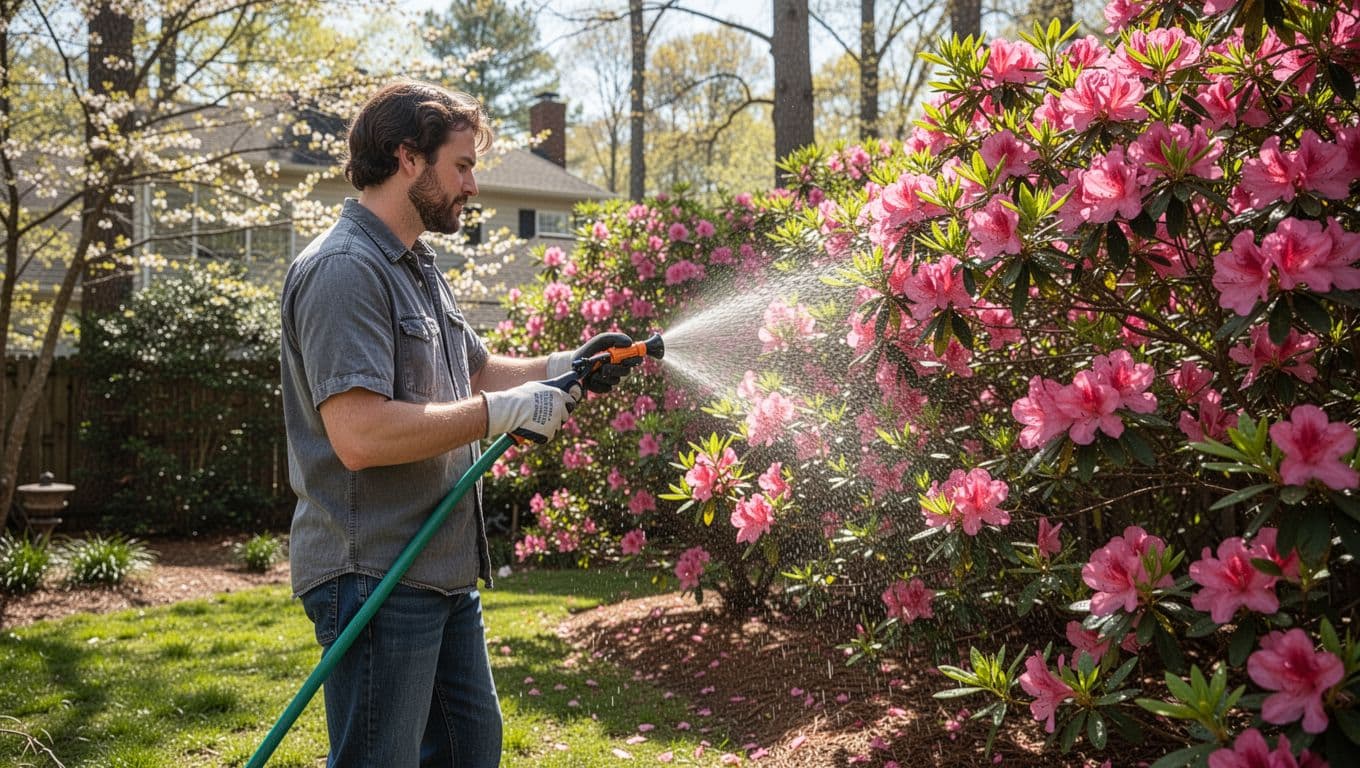
Next, use a strong stream of water to knock insects off light infestations. Spray from below so you hit the leaf undersides, where the bugs live. A morning rinse works better than a hot afternoon spray, because the plant dries faster and takes less stress.
Then clean up the basics. Water deeply during dry spells, renew mulch, and prune only when it helps airflow or removes dead wood. Heavy pruning is not a fix for lace bugs, and shearing a stressed azalea can make it look worse. Pruning is best after bloom, and only when the shrub truly needs shaping.
Encourage beneficial insects by avoiding broad, blanket sprays. Lace bugs have natural enemies, and healthy shrubs recover better when you leave room for those helpers. Lady beetles, lacewings, and tiny parasitic wasps all help more than a rushed spray ever will.
If you need a treatment, choose the least disruptive option that fits the label, such as horticultural oil or insecticidal soap when appropriate. For tougher cases, use a product labeled for azaleas and lace bugs, follow the label exactly, and avoid spraying heat-stressed plants. Temperature, coverage, and timing all matter more than guesswork.
If you are unsure about timing or product choice, Georgia Extension or your county Extension office can help narrow it down.
Conclusion
Atlanta azalea problems often start with a small patch of white speckles, then move into fuller bleaching and black residue underneath the leaf. Once you know that pattern, you can separate lace bugs from nutrient trouble and heat stress.
The fastest wins come from early scouting , better plant placement, and careful, low-impact treatment only when it makes sense. That approach protects the shrub, saves time, and keeps you from spraying just to guess. When azaleas sit in full sun, the site often tells the real story.