Atlanta Brush Clearing Cost Guide for 2026
A brushy lot can look simple from the street and turn expensive once work starts. In Atlanta, the brush clearing cost in 2026 depends on far more than square footage, and a small change in terrain can move a quote by a lot.
If you're comparing estimates, the goal is to spot what each contractor included, not just the bottom line. A fair price should match the site, the debris, and the amount of machine work needed.
What Atlanta brush clearing costs in 2026
For many Atlanta-area jobs, brush clearing starts in the low hundreds for small, light sites and reaches several thousand dollars for dense, hard-to-reach property. A moderate acre on flatter ground often lands around $1,100 to $2,300 per acre in 2026, while thick or steep properties can cost much more.
Here's a quick planning range for typical residential jobs:
| Scenario | Typical Atlanta property | Likely 2026 price |
|---|---|---|
| Low-end clearing | Quarter-acre lot, light brush, easy access, no stump work | $300 to $900 |
| Mid-range clearing | Half-acre lot, mixed shrubs and saplings, some debris, mild slope | $1,000 to $2,500 |
| Higher-complexity clearing | One-acre lot, dense growth, hauling, steep or tight access | $4,000 to $8,000+ |
A lot size alone does not tell the full story. Two half-acre yards can have very different quotes if one is mostly weeds and the other has thick privet, saplings, and a narrow access gate.
For per-acre comparisons, light brush often falls around $600 to $1,500 , moderate brush around $1,100 to $2,300 , thick undergrowth around $3,600 to $6,100 , and heavy wooded clearing can reach $5,100 to $8,100+ . Small jobs may also have a minimum service charge, which is why a quarter-acre cleanup can cost more per foot than a larger open lot.
The cheapest quote on paper can leave out hauling, stump work, or extra labor for tight access.
The biggest factors that move the price
Brush clearing prices rise or fall for a few clear reasons. If you understand them, the quotes make more sense.
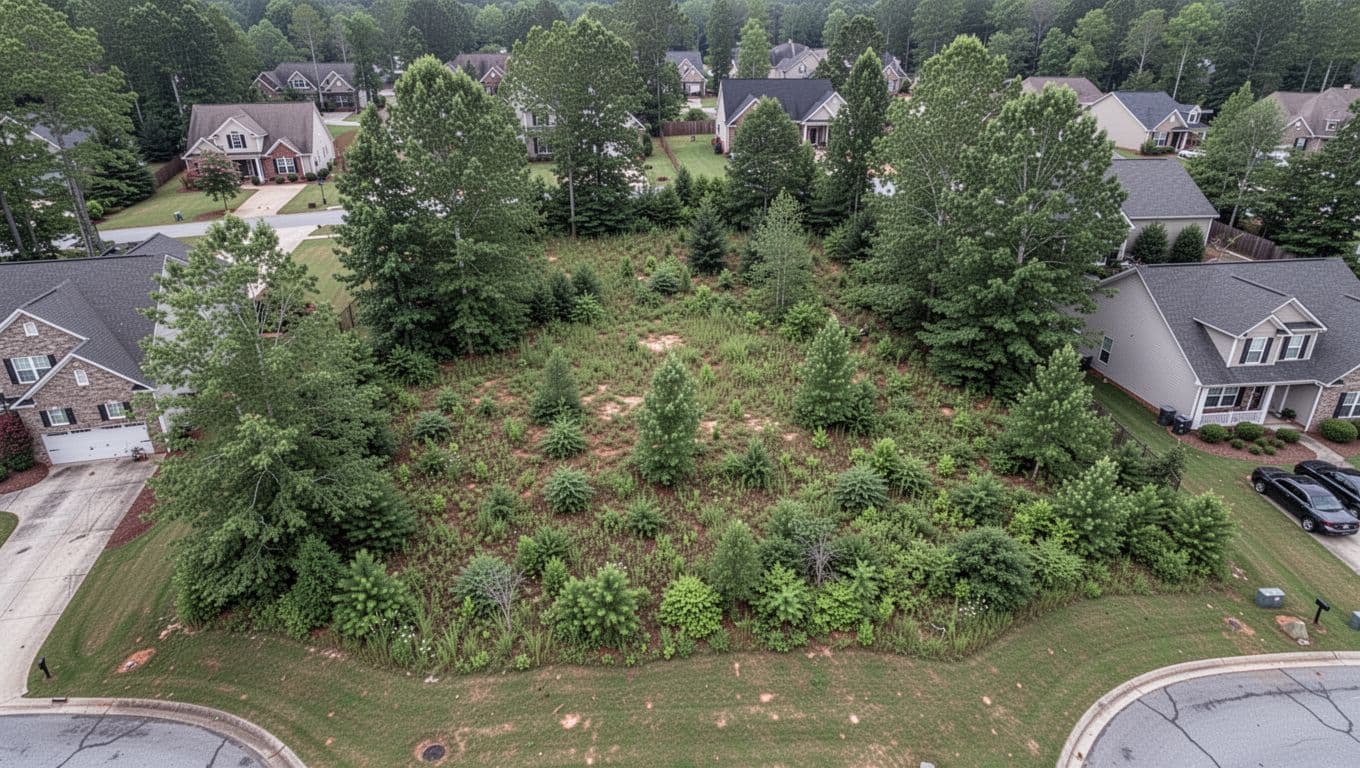
- Vegetation density : Thin weeds take less time than tangled shrubs and saplings. Dense privet, briars, and small trees slow everything down.
- Slope and drainage : Steep ground often means slower work and smaller equipment. If runoff or standing water is part of the issue, yard drainage grading may need to be included in the plan.
- Access : Wide open access lets crews move faster. Narrow gates, fences, and backyard-only entry points add labor.
- Disposal : Hauling brush off-site costs money. Piles that need loading, dumping, or staging will raise the bill.
- Selective clearing vs full clearing : Clearing fence lines or trails costs less than opening an entire lot.
- Stumps and roots : If the job needs stump grinding or root removal, expect a jump in price.
For a home owner, this is where quote differences usually start. One contractor may price only the cut. Another may include load-out, dump fees, and a cleaner finish. That gap can look small at first, then grow fast once the work begins.
Equipment, hauling, and cleanup can change the bill
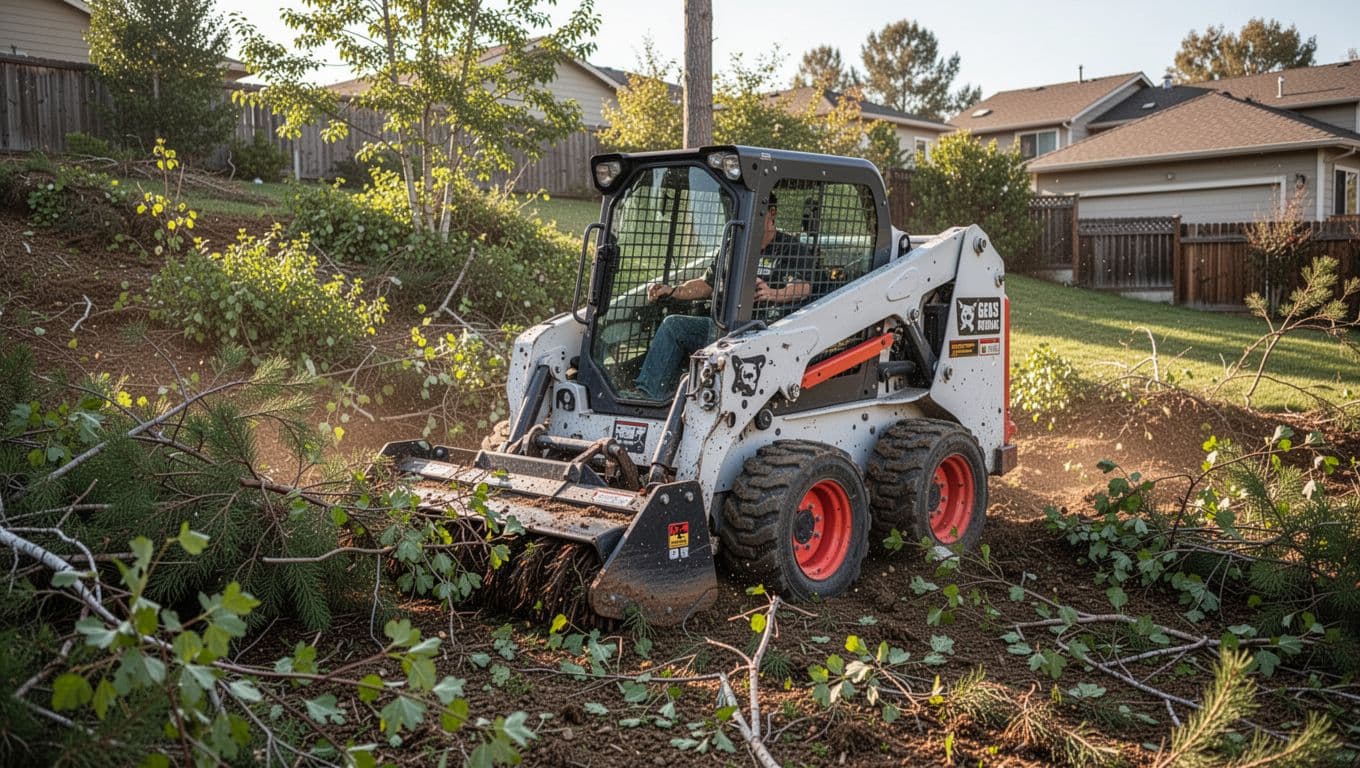
The right machine saves time, but it also changes the cost structure. Light growth may only need hand tools and a brush cutter. Moderate lots may need a mower head or skid steer. Heavier sites often call for a forestry mulcher or full clearing equipment.
A few common methods show up in Atlanta quotes:
| Method | Best for | Cost impact |
|---|---|---|
| Hand cutting and brush saws | Light overgrowth, small access areas | Lowest labor cost |
| Brush mower or cutter | Thin to moderate brush | Mid-range cost |
| Skid steer with mulcher | Dense brush, small trees, open lots | Higher equipment cost, faster on open ground |
| Full clearing with hauling | Thick brush, debris, stump work | Highest total cost |
When a site has old lumber, fencing, or junk mixed into the brush, cleanup gets more expensive. Property debris removal is often billed as a separate line item, and that can be the part of the estimate that surprises people.
If the lot needs selective clearing only, that can save money. If you want a complete reset before landscaping, the price should reflect the larger scope. For some homes, a seasonal cleanup is the better fit, especially when the issue is overgrowth rather than a full lot takeover. Seasonal yard cleanup can be a smarter option in those cases.
How to compare Atlanta quotes without guessing
A good quote should make the scope obvious. If it doesn't, ask for more detail before you agree to anything.
- Ask what the price includes. Cut only, haul away, dump fees, and stump work should be listed clearly.
- Share photos and measurements. Wide shots help, but close photos of the thickest sections matter too.
- Point out slope, wet spots, and access limits. These are common reasons a crew needs more time.
- Confirm whether the job is selective clearing or full clearing. The difference changes labor and cleanup.
- Ask about grading if the job affects drainage or erosion. A brush cut can uncover a problem that needs more than mowing.
- Compare the finish, not just the price. Two crews may quote the same lot and leave very different results.
When a project is part of a bigger property plan, a broader service page can help you frame the work. Residential property services gives a clearer picture of how clearing, cleanup, and other yard work can fit together.
Conclusion
Atlanta brush clearing costs in 2026 depend on the site, not a fixed rate card. The biggest price drivers are lot size, vegetation density, access, slope, and disposal .
If you want a cleaner comparison, look past the headline number and ask what each quote covers. That is the fastest way to avoid surprises and choose the right scope for your property.