
Atlanta Mole Cricket Damage In Bermuda Lawns Identification And Control
Your Bermuda lawn can look fine one week, then turn into a patchy mess the next. If the turf feels spongy, peels back like a loose rug, or shows thin spots that won't fill in, mole crickets may be the reason.
In Metro Atlanta, mole cricket damage often ramps up as the weather warms and soil stays moist. The tricky part is that the injury can mimic drought stress or compaction. That's why the best plan is simple: confirm the pest first, then time treatments for when they're easiest to control.
This guide walks through identification, a reliable soap-flush test, hotspot mapping, and a practical mole cricket control timeline for Atlanta-area bermudagrass.
What mole crickets look like (and what their damage looks like)
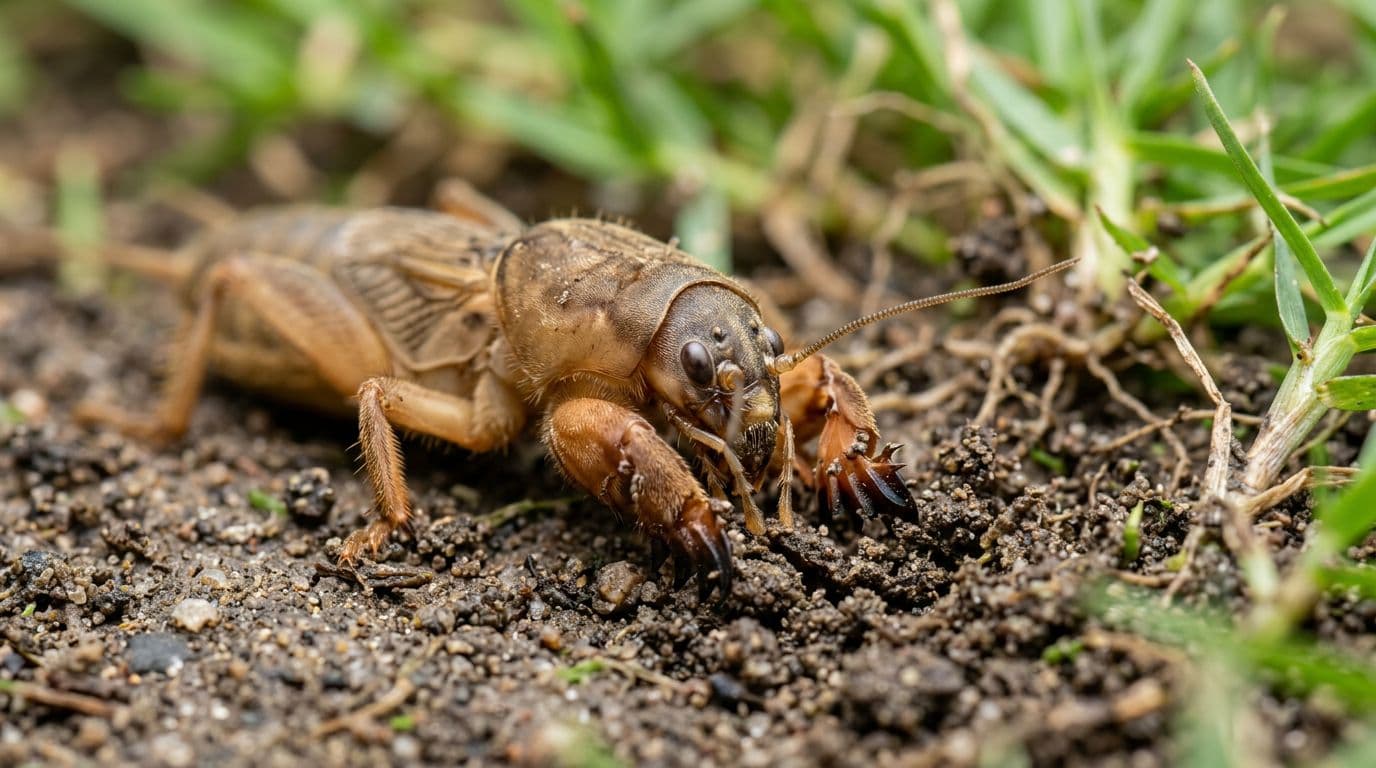
Close-up view of a mole cricket's spade-like front legs used for tunneling, created with AI.
Mole crickets aren't like the crickets you hear at night. They're built like tiny moles, with wide, shovel-like front legs for digging. In Atlanta lawns, the most damaging types are usually tawny or southern mole crickets. You don't have to identify the exact species to act, but you do need to confirm they're present.
Damage shows up two main ways:
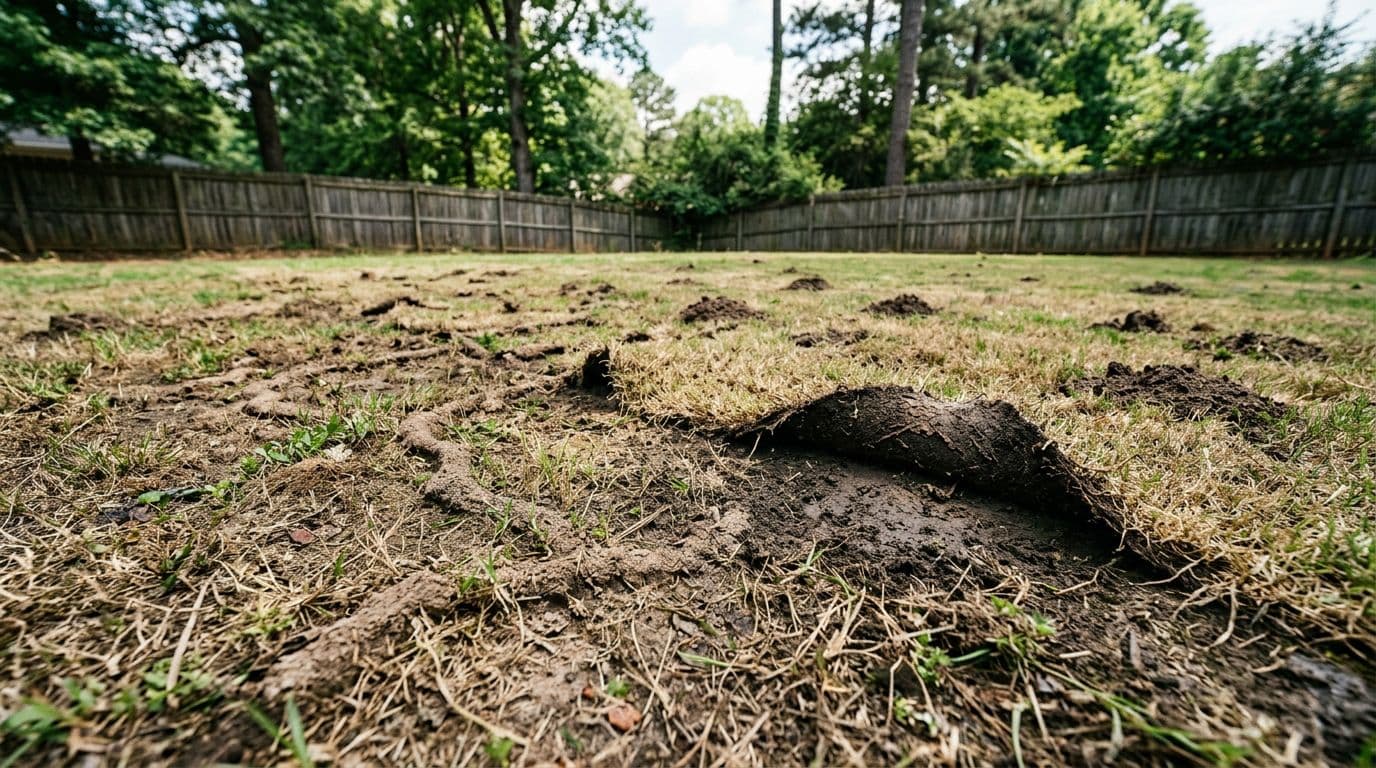
- Tunneling and soil lifting : They push soil up as they move, leaving small ridges or raised runs.
- Root feeding : Grass loses contact with soil, so it dries out fast and pulls up easily.
Typical bermudagrass thinning and tunneling patterns linked to mole cricket activity, created with AI.
A quick "feel test" helps. Grab a thin patch and tug. If it lifts like a carpet with little resistance, suspect root injury. Then look for fresh loose soil and ridges nearby, especially in lower, irrigated areas.
A common Atlanta clue: the lawn looks drought-stressed even when you've watered, because the roots aren't anchored anymore.
Confirming mole crickets with a soap-flush test (plus how to mark hotspots)
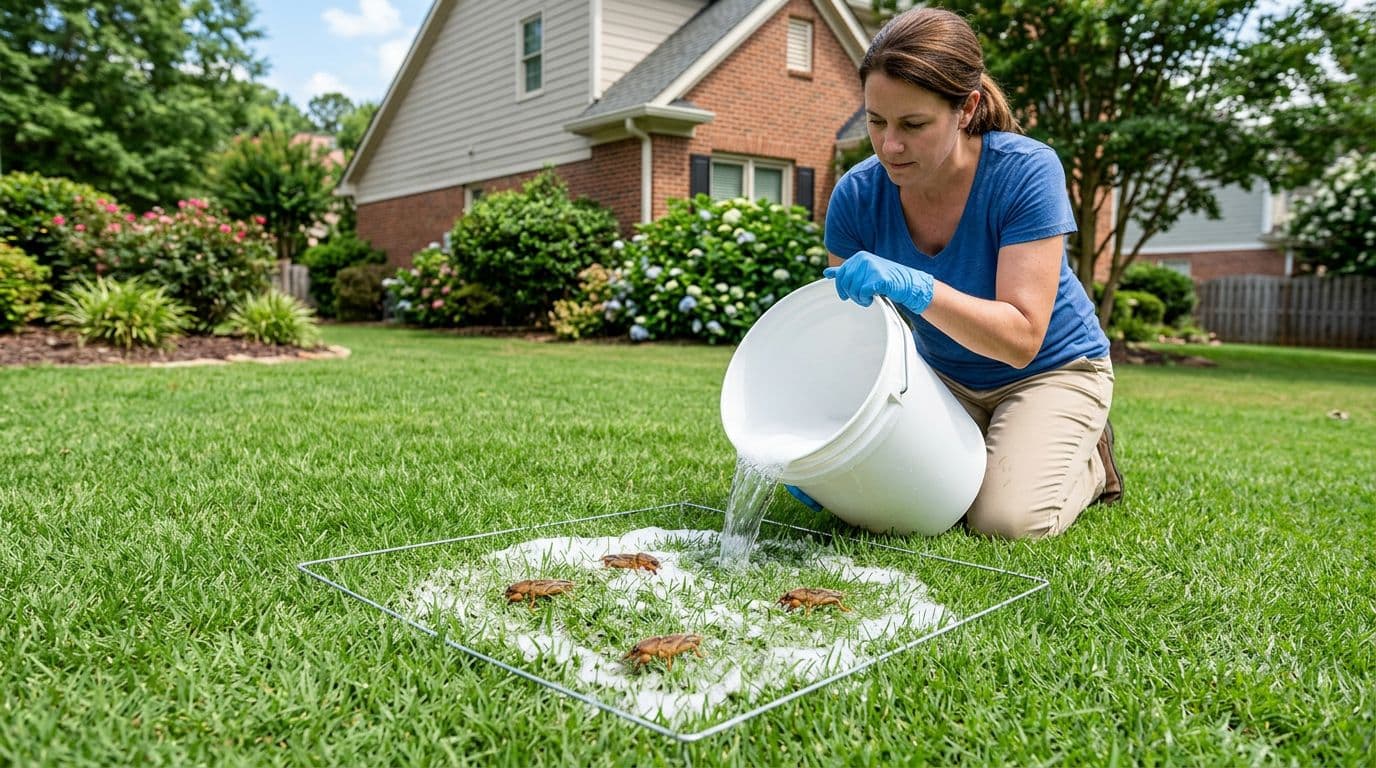
Soap-flush testing is an easy way to confirm active mole crickets in bermudagrass, created with AI.
Before you treat, prove the pest is active. The soap-flush test is fast, cheap, and surprisingly accurate when you do it right.
Soap-flush test (Atlanta homeowner version)
- Pick the right spot. Choose the edge of a thinning area where you see ridges or loose soil.
- Mark a 1-square-foot test box. Use two sticks, a small square of string, or even spray chalk.
- Mix the solution. Add 1 to 2 tablespoons of liquid dish soap (non-bleach, non-antibacterial is fine) into 1 gallon of water .
- Pour evenly over the square. Apply the full gallon slowly, so it soaks in instead of running off.
- Watch for 5 to 10 minutes. Mole crickets should surface and move around.
What you're looking for: brown insects about 1 to 1.5 inches long, often coated with soil, with obvious "digging hands" up front. You may also see earthworms or other insects, so focus on that shovel-leg shape.
As a practical rule, two or more mole crickets surfacing in one 1-square-foot test is a strong sign you should treat, especially if you also have fresh tunneling.
Map and mark your hotspots before you spray
Mole crickets rarely spread evenly. Treating the whole yard "just in case" wastes product and can stress the lawn.
Instead, take 10 minutes to map activity:
- Flag each positive test area (small utility flags work well).
- Draw a simple yard sketch on your phone or a scrap of paper.
- Note patterns like near irrigation heads, low spots, sunny slopes, or along driveways.
- Retest 7 to 10 days later if you're unsure, since activity can shift with moisture.
Once you see the clusters, you can focus applications where they'll matter most.
Mole cricket control in Metro Atlanta: when to treat and how products differ
Timing does most of the heavy lifting. Small nymphs (young mole crickets) are easier to kill than large adults, and they cause less damage if you stop them early.
Here's a simple Atlanta-area timeline to keep you on track:
| Time in Metro Atlanta | What's happening | What to do |
|---|---|---|
| Feb to March | Turf is still mostly dormant | Plan, check records, line up products or service |
| April to May | Adults become active, flights can start | Watch for tunneling, run soap-flush tests after rains |
| June to July | Eggs hatch, nymphs are small | Best window for most treatments, target hotspots |
| August to September | Nymphs get larger, damage often peaks | Treat if needed, expect slower results, repair turf |
| October to winter | Activity fades | Focus on recovery and reducing stress |
Common active ingredients you'll see (and how to use them)
For homeowner and professional applications, labels often include these actives for mole crickets:
- Fipronil : Long residual control in soil. Many products require watering-in soon after application so it moves into the root zone.
- Pyrethroids (often bifenthrin, lambda-cyhalothrin, cyfluthrin, permethrin): Good knockdown when timed to small nymphs. Coverage matters, and light irrigation can help move product into the thatch and upper soil where they tunnel.
- Carbaryl (often in baits): Can work when mole crickets are actively feeding at the surface.
Product type changes the "how":
- Granules : Spread evenly, then water in if the label calls for it. Granules often work best when the lawn is already moist.
- Liquids : Spray for uniform coverage, then follow label directions on irrigation timing. Many treatments perform better with 0.1 to 0.25 inch of irrigation after application, but only if the label says so.
- Baits : Apply to a dry lawn in late afternoon or evening when activity is higher. In many cases, you avoid immediate irrigation so the bait stays attractive (always follow the bait label).
Because rules and labels change, stick to the label on rate, re-entry time, watering guidance, and whether the product is allowed on residential turf in Georgia. Also avoid applications before heavy rain, and keep product out of storm drains.
The best mole cricket control usually comes from treating early summer nymphs, then fixing the turf after the pest pressure drops.
Look-alike problems in Bermuda (and a simple prevention checklist)
Mole cricket injury has "tunnels and loose turf" written all over it, but other issues can fool you.
Quick troubleshooting before you treat
- Drought stress : Grass turns bluish-gray and footprints linger. The soil is dry several inches down. Tunneling ridges are usually absent.
- Compaction : Hard ground, thin turf near paths or play areas, and poor rooting. A screwdriver is tough to push into dry spots, even after irrigation.
- Grubs : Turf peels back easily too, but you'll often find C-shaped grubs in the top few inches of soil. Skunks or birds tearing turf can be a clue.
- Chinch bugs : More common in St. Augustine, but they can show up in warm, sunny areas. Damage often starts as small yellow spots that expand, without raised soil ridges.
Ongoing monitoring and prevention (simple, not fussy)
Keep this short checklist in mind during the growing season:
- Mow Bermuda at a consistent height, and avoid scalping stressed areas.
- Water deeply and less often, but don't keep soil constantly wet.
- Reduce heavy thatch, since it can shelter insects and block treatments.
- Aerate compacted zones so roots recover faster after damage.
- Run a soap-flush test after big rains if you've had mole cricket history.
Bottom line: When you confirm activity and time treatments to early summer nymphs, you'll get better results with less product. If your lawn has widespread thinning or you're seeing new tunnels every morning, professional help can save weeks of frustration and a lot of Bermuda recovery time.