Atlanta Tree Root Damage: Lawn and Bed Repair Guide
A mature shade tree can improve an Atlanta yard, but its roots can also lift turf, expose bare soil, and crowd plants. Red clay, hot summers, heavy rain, and compacted ground make these problems more common around older trees.
The safest repair keeps the tree in place and changes the area around it. Tree root damage in Atlanta often needs better grading, mulch, plant selection, and watering rather than root removal. Start by identifying the cause before bringing in soil, edging, or new plants.
Key Takeaways
- Surface roots are often normal, but cutting or burying them can harm a mature tree.
- Atlanta's clay soil needs careful drainage and moisture management around established roots.
- Mulch, ground covers, and larger planting beds often work better than forcing grass under dense shade.
- Use shallow, careful planting methods and call an arborist before removing large roots.
- Keep mowers, trenches, irrigation leaks, and construction away from major roots.
Why Atlanta Tree Roots Damage Lawns
Atlanta sits in the Piedmont region, where many properties have dense red clay. This soil becomes sticky and compacted when wet, then hard and cracked during dry weather. Frequent summer storms can also wash soil away from the upper roots of mature oaks, maples, sweetgums, and other shade trees.
Most fine feeder roots grow close to the soil surface, where oxygen, moisture, and organic material are available. As the trunk and roots expand, they may push up thin areas of turf or create raised ridges across the lawn. The tree isn't necessarily unhealthy. In many cases, the exposed roots show that the surrounding soil has eroded or compacted.
Dense shade adds another problem. Grass receives less sunlight beneath a mature canopy, while the tree competes with turf for water and nutrients. Hot weather can leave shallow-rooted grass brown even when the rest of the yard looks healthy.
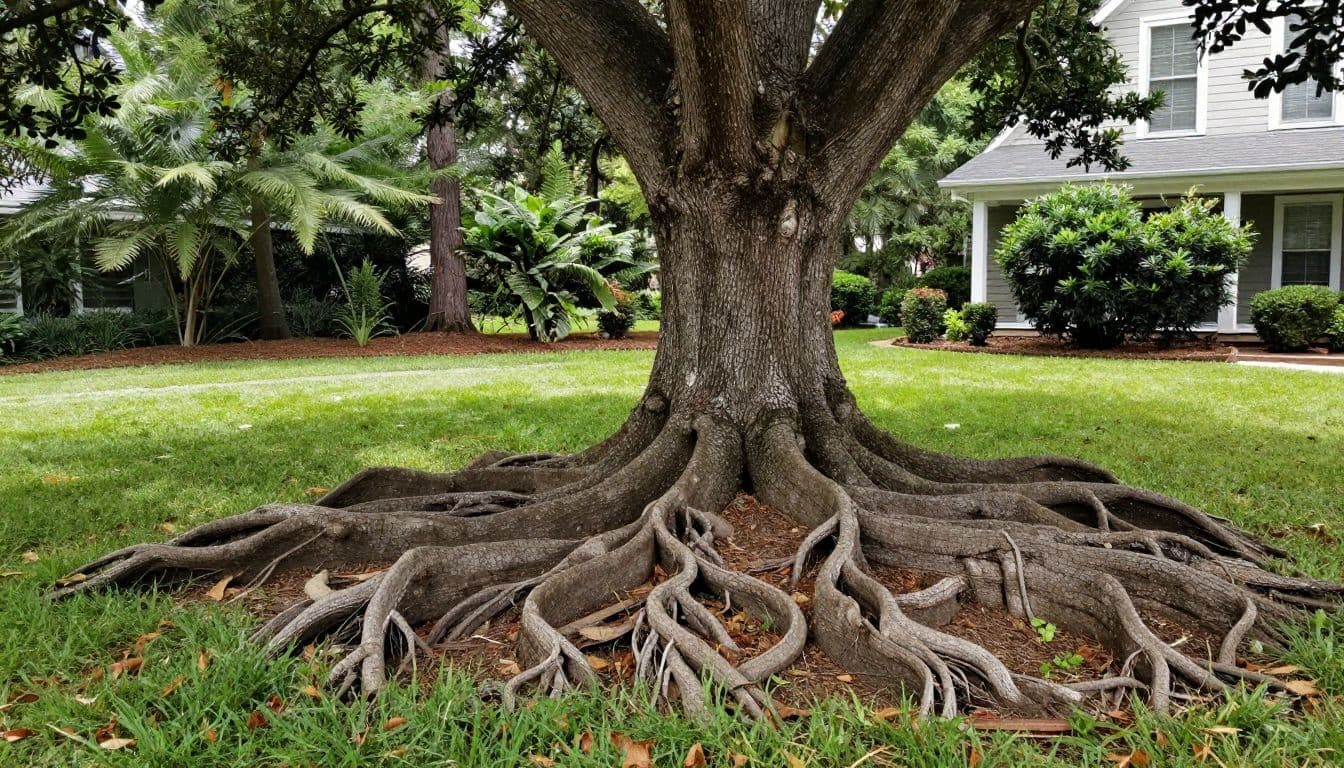
Tree roots can also affect hard surfaces. Roots may lift pavers, sidewalks, or edging. They can enter existing cracks or leaking joints in irrigation and drainage lines while seeking moisture. Cutting the root may solve a short-term obstruction but create decay, instability, or stress in the tree.
A tree with a visible root flare, the widened area where the trunk meets the roots, needs special care. Covering that flare with soil or mulch can hold moisture against the trunk and restrict airflow. Keep the trunk base visible.
How to Diagnose Root Problems Safely
First, walk the area after mowing and after heavy rain. Look for raised soil, exposed roots, thin grass, standing water, erosion channels, and recurring dry spots. A pattern that follows one large root usually points to root-related disturbance. A broad patch of dying grass may also involve shade, poor drainage, insects, disease, or irrigation problems.
Check whether the tree has warning signs above ground. Leaning, cracked limbs, large dead branches, trunk cavities, mushrooms growing from the base, or sudden canopy dieback deserve an arborist's assessment. A healthy-looking canopy doesn't make aggressive root cutting safe.
Before digging for edging, drainage, irrigation, or a new planting bed, contact 811 for utility locating in Georgia. Then probe the soil by hand with a narrow trowel in a few small spots. If a planting hole fills with woody roots, move the plant rather than chopping through them.
Avoid these common responses:
- Don't grind, chop, or cut a large root with a saw unless a qualified arborist directs the work.
- Don't add several inches of topsoil over exposed roots to create a smooth lawn surface.
- Don't trench close to the trunk for plastic edging, drainage, or irrigation.
- Don't park equipment or pile mulch, soil, pavers, or building materials beneath the canopy.
- Don't assume a leaking pipe is caused by roots before checking the pipe and its joints.
A raised root is easier to manage than a damaged tree. Treat the root zone as a protected area before planning repairs.
If a sidewalk or driveway is lifting, measure the height change and inspect the tree's condition first. A landscape contractor can adjust the surrounding area, but an arborist should guide decisions that may affect structural roots.
Repairing a Lawn Around Surface Roots
The first decision is whether grass belongs in the damaged area. Turf needs enough light, soil access, and moisture to compete with a mature tree. Bermuda grass requires strong sun. Zoysia tolerates some shade, but dense canopy and dry root competition can still thin it. Tall fescue may perform in selected Atlanta shade, although it also struggles under heavy tree cover and often needs supplemental summer water.
Where light is limited, expand the mulched area instead of reseeding every season. A clean, gently curved bed around the tree reduces mowing damage and gives exposed roots room to remain at the surface. Keep the bed wide enough to avoid tight turns around roots.
For areas that can support turf, repair the soil lightly. Remove only loose debris and dead grass by hand. Do not scrape roots or bury them. Seed or install sod during the correct growing period for the grass type, then water the new turf according to its needs. Keep foot traffic and mower wheels off the repair until the grass establishes.
Raise the mower deck slightly and use sharp blades. Mowing too low scalps turf over roots and leaves the soil exposed to heat and erosion. If the mower bumps, skips, or scalps a raised root, route the mowing line around that area instead of forcing the machine across it. Homeowners who want consistent care can review professional lawn mowing in Atlanta for routine cutting and edging support.
Mulch is often the most practical lawn alternative. Apply about 2 to 3 inches of organic mulch, such as shredded hardwood, across the root zone. Keep mulch several inches away from the trunk and root flare. Rake it gently into place, and refresh thin areas rather than building a tall mound each year.
Designing Landscape Beds That Protect Tree Roots
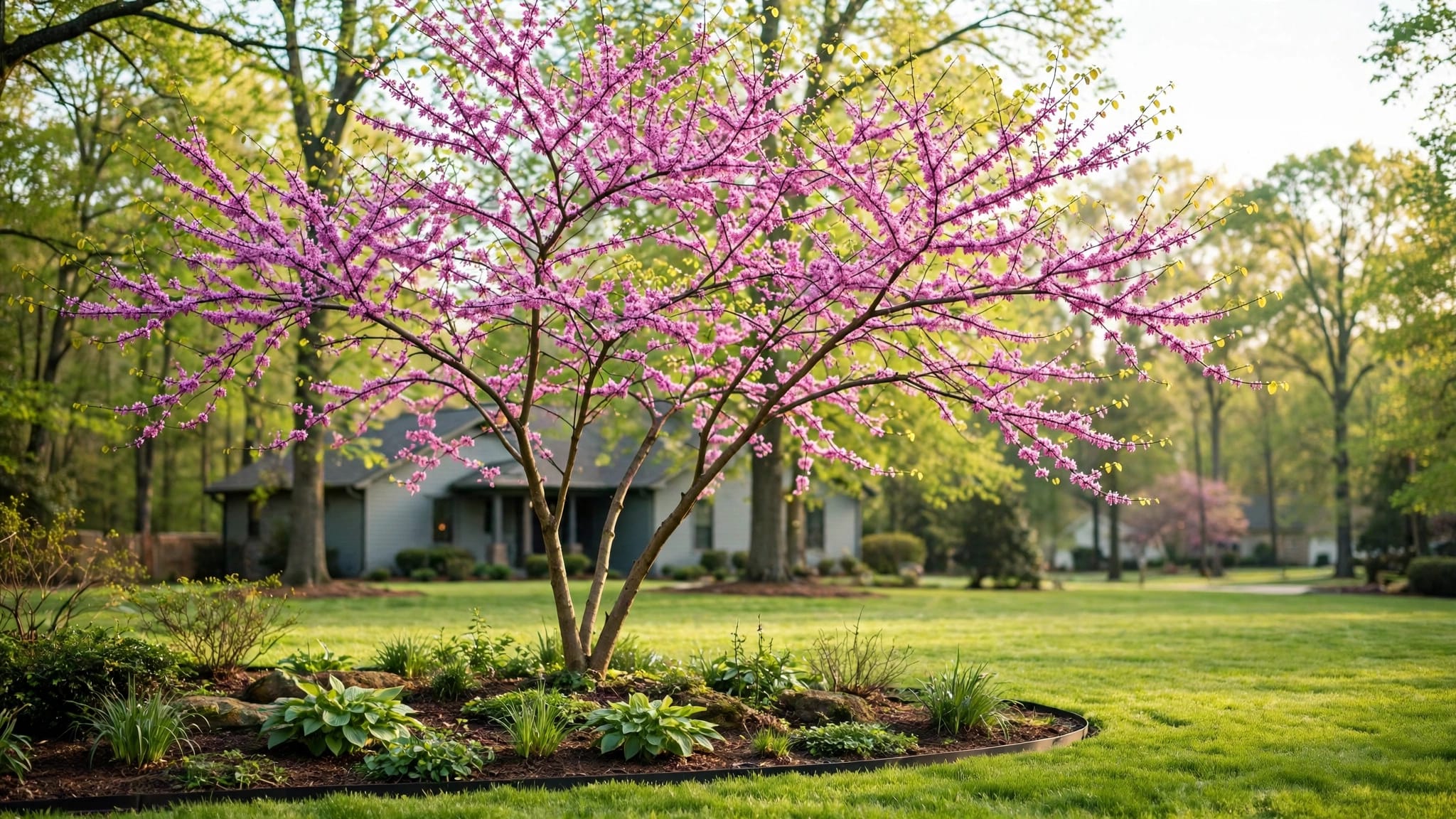
A landscape bed can make a root-heavy area easier to maintain, but its design matters. Shape the bed around existing roots instead of leveling the ground with fill. A wider, natural bed usually looks better than a narrow ring that forces plants into crowded pockets.
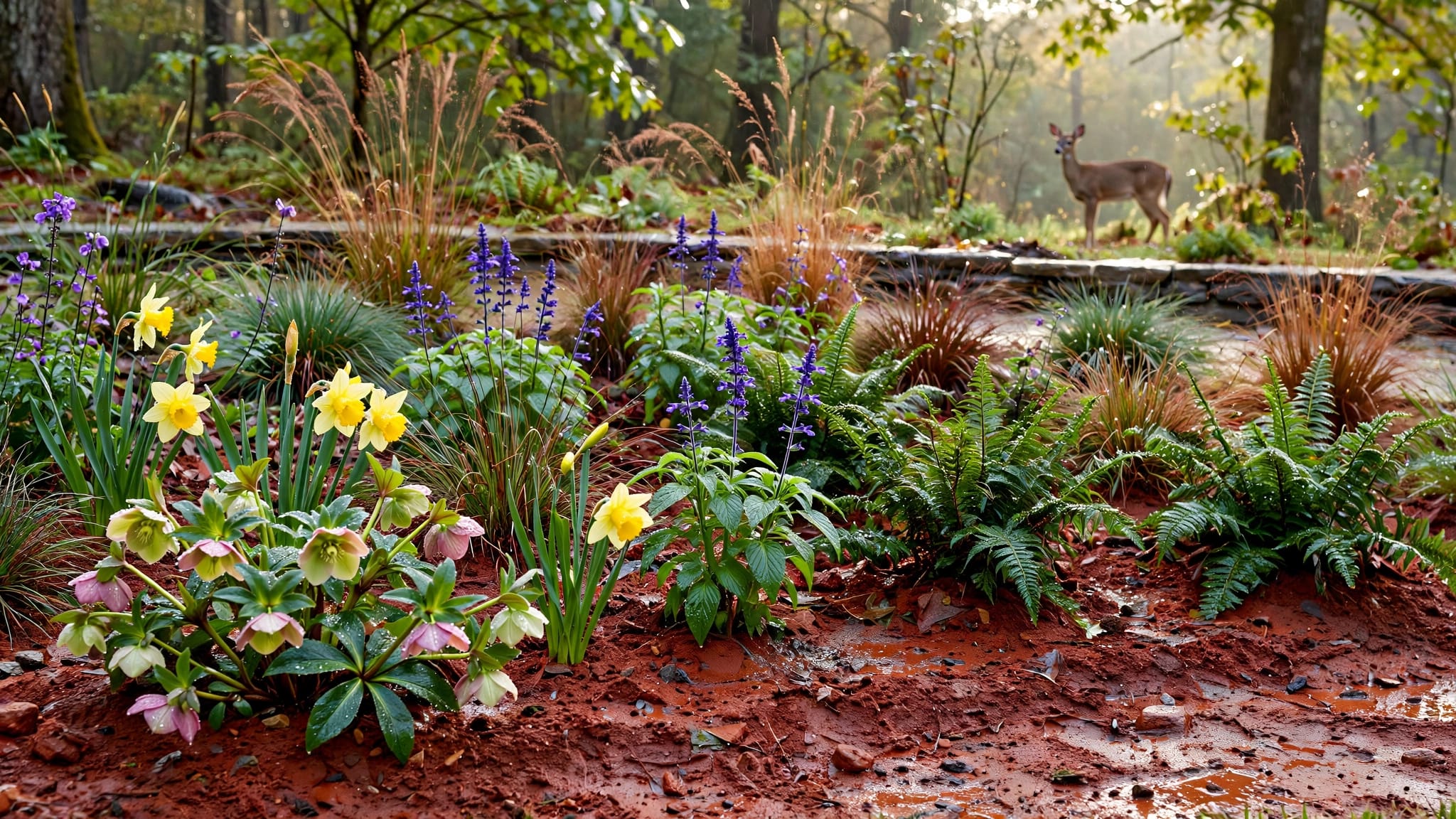
Choose plants that tolerate the actual conditions. Under dense shade, liriope, mondo grass, cast iron plant, autumn fern, and suitable sedges can provide coverage where turf fails. Plant labels still matter because shade levels, drainage, and mature size vary across Atlanta properties. A bed beneath a pine may be drier and more acidic than one beneath a deciduous tree.
Install small plants with hand tools. Dig only as deep and wide as the root ball requires. If you meet a large root, shift the plant a few inches or choose a smaller container size. Several small plants spaced properly are safer than a few oversized shrubs that require large holes.
Water new plants until their roots establish, but don't keep the entire bed saturated. Clay soil drains slowly after storms, so inspect the soil before watering again. Organic mulch helps reduce evaporation and moderates soil temperature, but it can't correct poor drainage or compacted soil by itself.
Traditional edging can create problems when it requires a continuous trench. Better choices include a natural mulch transition, a mowable strip placed beyond the main roots, or low ground cover that defines the bed without excavation. Flush stone or metal edging may work farther from the trunk, but install it only after locating major roots and checking the required trench depth.
Avoid piling a raised bed around the trunk. Added soil can cover the root flare and reduce oxygen in the root zone. Also skip aggressive vines such as English ivy near mature trees because they can climb trunks and add maintenance concerns.
Watering, Drainage, and Ongoing Maintenance
Atlanta yards often swing between saturated soil after thunderstorms and dry, hard clay during summer heat. Irrigation should respond to those changes rather than run on a fixed schedule every day.
Inspect sprinkler heads for broken parts, overspray, and water pooling near the trunk. Use drip emitters or low-flow watering in planting beds when practical, placing them over the root area without fastening anything to the tree. Water slowly so clay can absorb it, and pause after rain. Frequent shallow watering encourages weak surface growth and may leave deeper soil dry.
New turf and plants need more frequent attention during establishment. Mature trees usually benefit from deep moisture during extended dry spells, especially when nearby lawn irrigation doesn't reach beneath the canopy. Water the soil, not the trunk, and check moisture several inches below the surface before adding more.
Heavy rain can expose roots by washing mulch and soil downhill. Repair the drainage source, redirect concentrated runoff, or add a shallow swale where appropriate. Never bury the problem with fill. A grading or drainage change near a mature tree should account for root locations and natural water flow.
Keep seasonal cleanup crews from piling leaves, brush, or equipment against the trunk. Refresh mulch evenly, remove dead branches through proper pruning, and monitor changes in the canopy. If roots are lifting a structure, the tree is leaning, or a project requires root cutting, contact a certified arborist before work begins.
Conclusion
Surface roots don't automatically mean a mature Atlanta tree is failing. They often show how shade, clay soil, erosion, and years of growth have changed the area around it.
The safest repair usually replaces struggling turf with an appropriate mix of mulch, ground cover, or a larger bed. Careful watering, shallow planting, and root-friendly edging protect both the yard and the tree. When large roots affect sidewalks, drainage, or tree stability, get professional guidance before cutting anything.