Pruning Hydrangeas in Atlanta: Bigleaf, Panicle, and Oakleaf
One bad pruning day can wipe out a full summer of hydrangea blooms. Around Atlanta, that usually happens when every hydrangea gets cut the same way.
For hydrangea pruning in Atlanta , the first job is simple: know whether your plant blooms on old wood or new wood. Once you know that, the timing gets much easier, even with late frosts, hot summers, and our red-clay soil.
Start with the hydrangea type, not the calendar
Most Atlanta yards grow one of three hydrangea types. Bigleaf hydrangeas have mophead or lacecap flowers, with common picks like Nikko Blue and Endless Summer. Panicle hydrangeas make cone-shaped blooms, such as Limelight, Little Lime, Bobo, and older Pee Gee forms. Oakleaf hydrangeas have oak-shaped leaves, white blooms, peeling bark, and strong fall color. Alice, Snow Queen, and Ruby Slippers are all popular in North Georgia.
This quick chart keeps the timing straight:
| Type | Common look | Blooms on | Best pruning window |
|---|---|---|---|
| Bigleaf | Round or lacecap flowers | Old wood | Right after bloom |
| Panicle | Cone-shaped flowers | New wood | Late February to early March |
| Oakleaf | Oak-like leaves, white blooms | Old wood | Right after bloom |
The main takeaway is simple. Bigleaf and oakleaf hydrangeas bloom on old wood , so spring shaping can remove next year's buds. Panicle hydrangeas bloom on new wood , so they handle pruning much better.
Atlanta's climate adds one more wrinkle. Warm spells in late winter can push early growth, then a March cold snap can burn tender tips. Because of that, use clean, sharp pruners and don't rush. If you aren't sure what you have, wait until the plant flowers before making major cuts. If you're caring for shrubs in shared entrances or neighborhood beds, this Atlanta HOA landscape maintenance checklist can help line up pruning with mulch, cleanup, and irrigation timing.
Bigleaf hydrangeas need light pruning after bloom
Bigleaf hydrangeas are where most pruning mistakes happen. These shrubs set flower buds on old stems in late summer and fall, so cutting in fall, winter, or early spring often means no flowers next season. That rule applies to most mophead and lacecap types. Reblooming varieties, like Endless Summer, are more forgiving, but they still do best with careful timing.
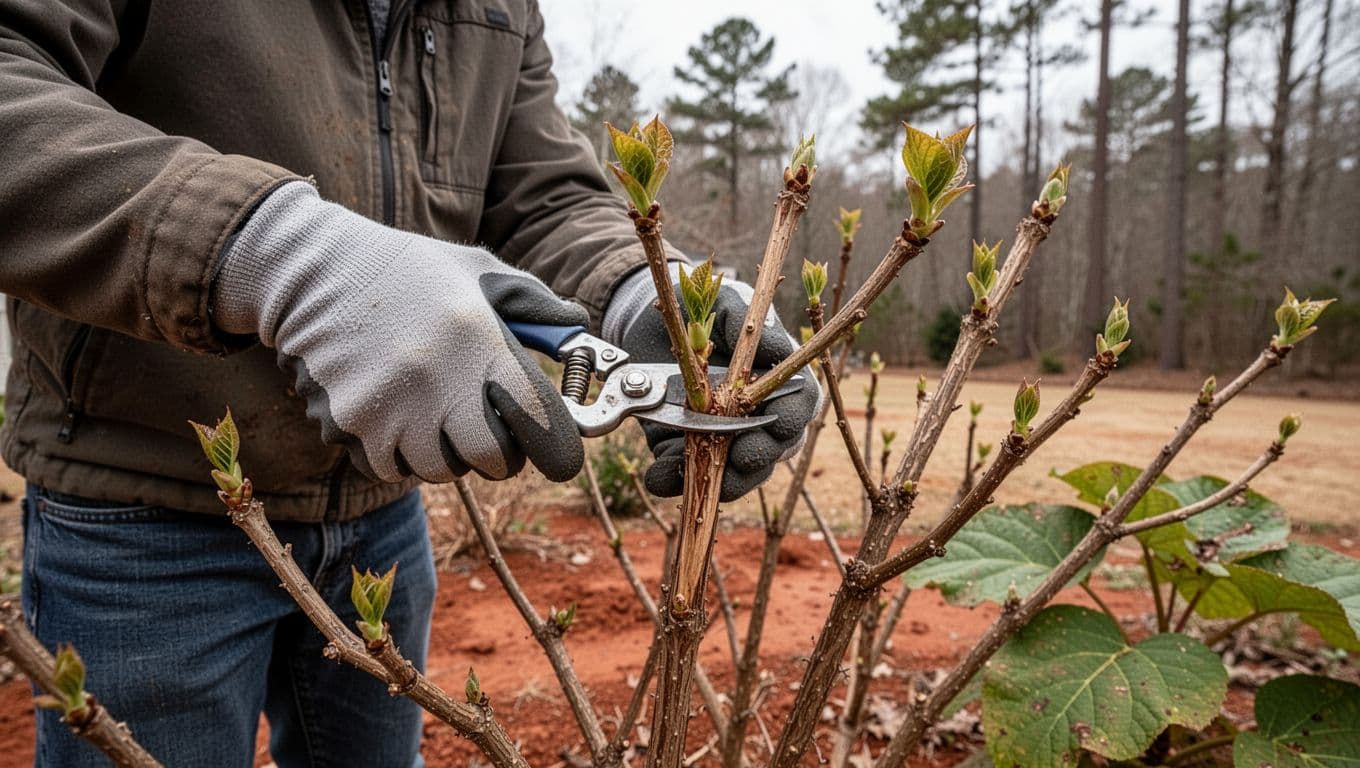
Prune bigleaf hydrangeas right after the flowers fade, usually in early summer, and finish by mid-August. First, remove spent blooms by cutting just above a strong pair of leaves. Next, trace any dead, brittle stems to the base and remove them fully. After that, thin a few of the oldest canes at ground level if the shrub is crowded. Keep the total removal light, and stay under about one-third of the plant.
If you see plump green buds on old stems in late winter, put the shears away.
There are clear signs you should wait. Don't prune if the plant still has healthy buds, if frost damage is only on the tips, or if stems look bare but still feel flexible. Bigleaf hydrangeas often leaf out late after a cold spring. Give them time before you decide a branch is dead.
After pruning, water during dry spells and keep 2 to 3 inches of mulch over the root zone, not against the stems. In Atlanta heat, bigleaf hydrangeas usually flower best with morning sun and afternoon shade. Go easy on fertilizer, too. Too much nitrogen pushes leaves, not blooms.
Panicle hydrangeas can be cut back in late winter
Panicle hydrangeas are the easiest type to prune in Atlanta. Since they bloom on new wood, you can prune in late February or early March before strong spring growth starts. That's one reason they work so well in local landscapes, especially in sunnier spots where bigleaf hydrangeas struggle.
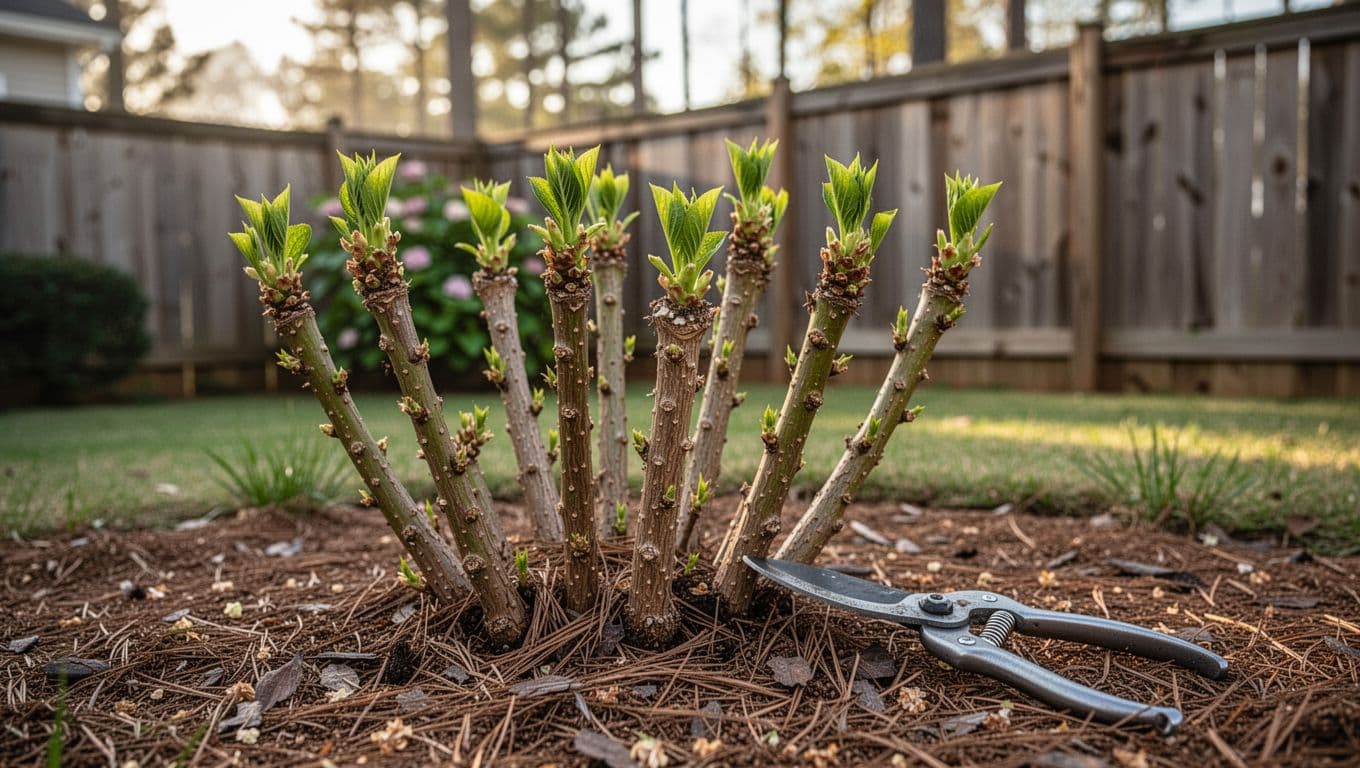
Start by removing dead, weak, and crossing stems. Next, shorten the remaining branches to shape the shrub and keep a strong framework. Many homeowners cut panicles back by about one-third. On larger Limelight or Pee Gee plants, you can cut harder, often to 12 to 24 inches, if you want fewer but larger blooms. If you want more flowers on a taller plant, prune more lightly.
Hold off on hard pruning once leaves are pushing and stems are stretching fast. At that point, stick to cleanup cuts and broken wood. A late frost usually won't ruin the plant, but fresh new growth can still get burned back.
Aftercare is simple. Refresh mulch, water if spring turns dry, and skip heavy feeding. If flower heads flop in summer, your last pruning may have been too light, or the plant may need a sturdier framework.
Oakleaf hydrangeas need the lightest touch
Oakleaf hydrangeas already have a strong natural shape, so they rarely need much pruning. Like bigleaf hydrangeas, they bloom on old wood. The safe time to prune is right after flowering, not in fall and not in spring.
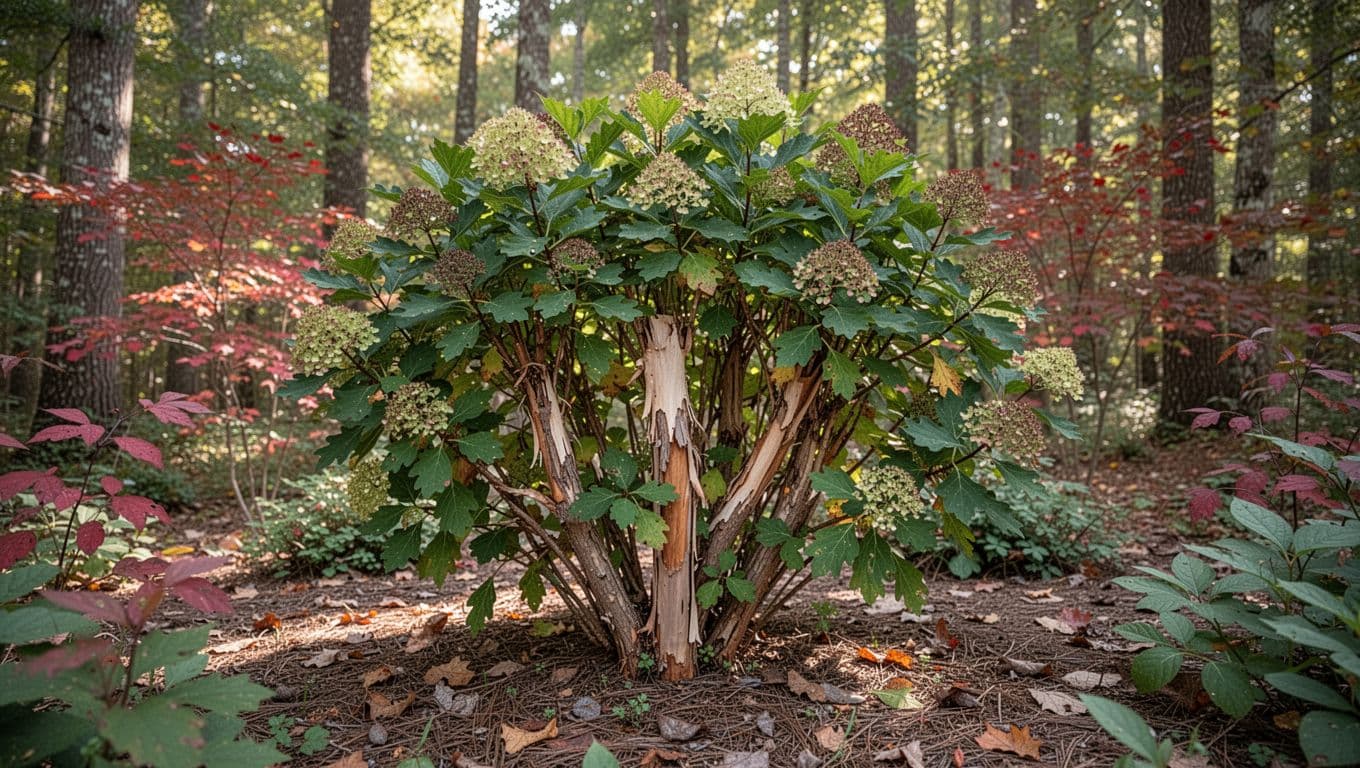
Start with the smallest cut that solves the problem. Remove spent flowers if you want a cleaner look. Then take out dead wood and any branch that rubs through the center. If the plant is too dense, remove a few of the oldest stems at the base. Keep its arching form. Don't shear it into a ball.
Oakleaf hydrangeas usually need cleanup, not reshaping.
Wait if the plant is still blooming, if buds are forming near the tips, or if summer heat is severe. In many Atlanta yards, an oakleaf needs shade, water, and mulch more than a haircut. Deadwood can come out any time.
What to remember in Atlanta yards
The biggest mistake is treating all hydrangeas alike. Bigleaf and oakleaf types need light pruning after bloom , while panicle hydrangeas can be cut back in late winter.
If you match the cut to the bloom habit, you'll keep more flowers and a better-shaped shrub. In Atlanta, good timing matters as much as good technique.