Annual Bluegrass Control for Atlanta Fescue Lawns
Annual bluegrass can turn a thick Atlanta tall fescue lawn into a patchwork of pale green clumps by late winter. The weed often appears after fall rains, survives through cool weather, and produces seed before summer heat arrives.
A reliable control plan depends on timing, accurate identification, and healthy turf. Herbicides can help, but the right product must match the grass, growth stage, and label directions. Start by understanding why annual bluegrass appears so easily in Metro Atlanta lawns.
Key Takeaways
- Annual bluegrass, also called Poa annua , usually germinates in late summer or fall and produces seed in spring.
- Wet soil, compaction, thin turf, and frequent shallow watering create favorable conditions.
- Preemergence control works before seedlings emerge, while postemergence options require careful label review.
- Fall fescue care, proper mowing, deep watering, and soil improvement reduce future infestations.
- Exact treatment timing depends on weather, soil conditions, and the product label.
Why Annual Bluegrass Appears in Atlanta Fescue
Annual bluegrass is a cool-season annual weed. It germinates when soil temperatures drop after Atlanta's hot summer, often following rain in late August, September, or October. The plant stays green through winter, then flowers and produces seed during spring.
Tall fescue also grows best during Atlanta's cooler months. That overlap gives annual bluegrass an opening, especially where the lawn has weak or missing turf. A dense stand of fescue can crowd out many seedlings, but thin areas leave bare soil where weed seeds can take root.
Poor drainage is another common factor. Annual bluegrass tolerates wet conditions better than tall fescue, so low spots and compacted areas often develop heavier infestations. Soil that stays damp near downspouts, sidewalks, or shaded foundations deserves close attention.
Frequent light irrigation can add to the problem. Small amounts of water keep the surface damp without encouraging deep fescue roots. Over time, the lawn becomes less able to compete, while annual bluegrass continues filling open spaces.
Mowing too short can also increase pressure. Short fescue loses moisture faster and receives more heat at the soil surface. Follow a consistent mowing routine and avoid removing more than one-third of the blade height at a time. These proper mowing practices for Atlanta fescue lawns help protect turf density during stressful weather.
How to Identify Annual Bluegrass Before Treating
Correct identification matters because annual bluegrass is a grass weed, not a broadleaf weed. A typical broadleaf herbicide containing ingredients such as 2,4-D won't control it and may add unnecessary stress to the lawn.
Look for these features:
- Light green color compared with the darker blades of tall fescue
- Low, bunching growth that stands out in small clumps
- Soft leaves with a noticeable crease or folded appearance
- Small white or pale seedheads, often visible in late winter or spring
- Growth concentrated in wet, compacted, shaded, or thin areas
Annual bluegrass may appear scattered across the lawn or form dense patches near drainage problems. Its seedheads can show up even when the plants are cut short, which makes the turf look fuzzy after mowing.
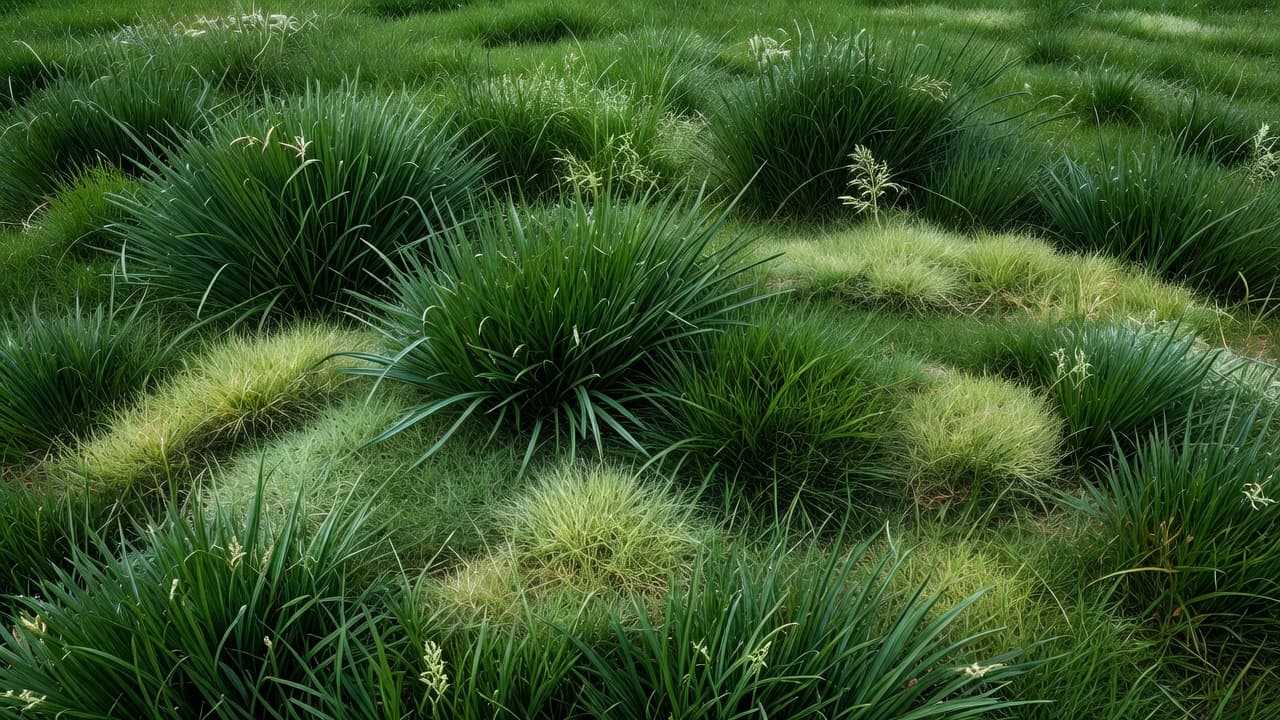
Annual bluegrass has a lighter color and finer texture than established tall fescue.
Other cool-season grasses and weeds can look similar. Poa trivialis, for example, is a perennial bluegrass that prefers cool, wet locations and may survive longer than annual bluegrass. A local lawn care professional can help identify the plant before you choose a treatment.
The Best Control Timing for Atlanta Lawns
Annual bluegrass control works best when it follows the weed's life cycle. Once mature plants produce seedheads, removing the visible growth won't prevent new plants from appearing next season.
| Atlanta season | Annual bluegrass activity | Main lawn-care focus |
|---|---|---|
| Late summer | Seeds begin germinating as soil cools | Plan preemergence timing and inspect thin areas |
| Fall | Young plants establish among fescue | Maintain dense turf and avoid interfering with fescue seeding |
| Winter | Plants remain green and grow slowly | Mow correctly and monitor wet or compacted spots |
| Late winter and spring | Seedheads develop and seed matures | Limit seed spread and evaluate control results |
| Summer | Many plants decline in heat | Repair soil and prepare for the next fall cycle |
Preemergence herbicides must go down before annual bluegrass seedlings emerge. In Atlanta, that window often falls near the end of summer or the beginning of fall, but the calendar alone isn't reliable. Rain, soil temperature, irrigation, and seasonal weather can shift germination.
Product labels may provide application timing based on expected germination or local conditions. Follow those directions instead of applying on a fixed date every year.
Fall overseeding creates an important scheduling conflict. Preemergence products can prevent desirable fescue seed from establishing, too. If your lawn needs overseeding, select a treatment plan that accounts for both goals. Some products and application schedules may not fit newly seeded turf.
Use an Integrated Plan for Established Fescue
Herbicide is only one part of annual bluegrass control in Atlanta. The strongest results come from reducing the conditions that help the weed compete.
Start with mowing. Keep tall fescue tall enough to shade the soil, usually around 3 to 4 inches depending on the season and lawn condition. The exact height should match the mower setting and turf response. Sharp blades create cleaner cuts and reduce the ragged appearance that follows mowing with a dull blade.
Water deeply when the lawn needs it instead of sprinkling a little every day. Check the soil several inches below the surface, especially during dry periods. Tall fescue may need more careful monitoring during summer heat, so these deep watering tips for tall fescue roots can help you adjust irrigation by season.
Next, address compaction. Heavy foot traffic, construction activity, and clay soil can restrict air and water movement. Core aeration can improve root-zone conditions when the lawn is actively growing and the soil has enough moisture for the equipment to work properly.
Drainage problems need a separate solution. Adjusting a downspout, correcting a low spot, or improving a poorly draining bed may reduce annual bluegrass pressure more than repeated spraying.
During spring seedhead production, mow on schedule and clean equipment after working in heavily infested areas. Mowing won't eliminate the weed, but it can reduce mature seedheads and help limit movement into clean sections.
Herbicide Use Requires Careful Label Review
Preemergence products containing active ingredients such as prodiamine, dithiopyr, or pendimethalin may fit some annual bluegrass control programs. They don't work the same way in every situation, and application rates differ by product. They also may interfere with tall fescue seed germination.
Postemergence options can be more complicated. Some products containing mesotrione carry directions for use on certain cool-season turf types, including tall fescue. However, the label controls the permitted turf species, rate, timing, temperature limits, reapplication interval, and other restrictions.
Tall fescue can suffer injury when conditions are hot, dry, or otherwise stressful. Avoid treating drought-stressed grass, newly seeded areas, or turf that already shows heat damage unless the label clearly allows it. Never mix products or increase the rate because the weed looks stubborn.
Read the entire label before applying any herbicide. Wear the required protective equipment, keep people and pets away during the restricted period, and prevent spray drift onto ornamental plants or water features. Store leftover products in their original containers.
A professional treatment may make sense when annual bluegrass covers large areas, the lawn contains multiple grass types, or you plan to overseed soon. A qualified technician can identify the weed, inspect the turf, and choose a schedule that doesn't conflict with fescue establishment.
A product that controls annual bluegrass in one turf setting may injure another. The grass species and label directions must match.
Repair Thin Areas Before Next Fall
Annual bluegrass often returns because the original cause remains. Treating the visible weeds without improving the soil leaves the same open door for new seedlings.
After spring growth declines, inspect the lawn for recurring problem areas. Mark places that stay wet, receive little sunlight, or show heavy traffic. Correct drainage where possible and reduce compaction before the next fescue growing season.
Tall fescue renovation usually works best in early fall, when soil temperatures begin to fall and rainfall becomes more reliable. Remove excess thatch, improve seed-to-soil contact, and keep new seed consistently moist during germination. Avoid applying a preemergence product that blocks the seed you want to grow.
Use quality seed suited to the site, especially in areas with shade or heavy use. A thicker stand of fescue won't prevent every annual bluegrass seed from germinating, but it reduces the bare soil and weak competition that make infestations expand.
Keep leaves from smothering the lawn during autumn. Leaf buildup blocks light and holds moisture against the turf, especially in shaded sections. Regular cleanup supports fescue growth and makes new annual bluegrass patches easier to spot.
Conclusion
Annual bluegrass control in Atlanta starts before the weed becomes obvious. Watch for late-summer germination, manage wet and compacted soil, and plan herbicide use around fescue seeding and product labels.
A dense, well-maintained tall fescue lawn gives annual bluegrass fewer places to establish. When the first pale clumps appear in winter, early identification and a season-specific plan can prevent a small problem from becoming next year's larger infestation.