
Atlanta 811 Utility Locates Before Yard Excavation
That narrow trench for a backyard drain can cross a gas line you never knew was there. Atlanta 811 utility locates are an early step in safer excavation, but you still need completed responses and a plan for private lines.
Whether you're planting a tree or hiring a grading crew, build utility checks into the schedule before digging. Start by identifying the full work area, then follow Georgia's notification and safe-excavation requirements.
Which Yard Projects Need a Utility Check?
Georgia law requires the person planning mechanized excavation to notify Georgia 811 before work. That includes landscaping projects involving powered equipment, even when the finished improvement looks small.
Fence-post augers, trenchers, stump-removal equipment, and mini excavators can all reach buried infrastructure. Drainage trenches, retaining-wall foundations, tree holes, and yard regrading also deserve advance planning.
Don't assume shallow digging is safe. Previous grading, erosion, or landscaping can change how much soil covers a line. Utility routes also aren't reliably predictable from the location of a meter or street.
Ordinary mowing doesn't involve excavation. However, converting a maintenance visit into root removal or drainage installation changes the work.
For larger projects, discuss the excavation footprint during the estimate for Atlanta land clearing and site preparation. Include stump and root removal, trenches, and areas where soil will be cut. Otherwise, a ticket describing only one planting bed may leave other excavation outside the requested area.
How to Request Atlanta 811 Utility Locates
Call With a Clear Work Description
Call 811 or 1-800-282-7411 to reach Georgia 811. Homeowners can also use its online eRequest option for work involving one address and one building.
Have the property address, contact information, planned start date, and excavation description ready. Explain where work will occur using clear boundaries, such as the rear yard between the patio and fence. Mention locked gates, pets, or other access restrictions.
White paint or flags can identify proposed excavation where practical. Keep that designation separate from existing utility markings.
Save the ticket number and details. If a contractor will dig, coordinate the request with that contractor rather than assuming a homeowner's earlier ticket covers the entire job.
Submit Early and Follow the Effective Date
Allow several business days before the planned excavation. Georgia 811's published timing guidance requires careful attention to business days and ticket processing.
Its law summary describes 48 hours, excluding the request day, weekends, and holidays. Its 2025 Excavator Guide instructs excavators to wait at least three business days. Online eRequest processing can take up to two business days, and after-hours requests count as received the next business day.
Because these instructions aren't interchangeable, use the ticket's effective date and confirm uncertainty with Georgia 811. Review Georgia 811's legal guidance before scheduling equipment.
Submitting a request doesn't authorize immediate digging. The required waiting period and utility responses both matter.
What the Paint and Flags Mean
Utility markings identify the approximate horizontal location of buried facilities. They don't establish depth or guarantee that every line on the property has been found.
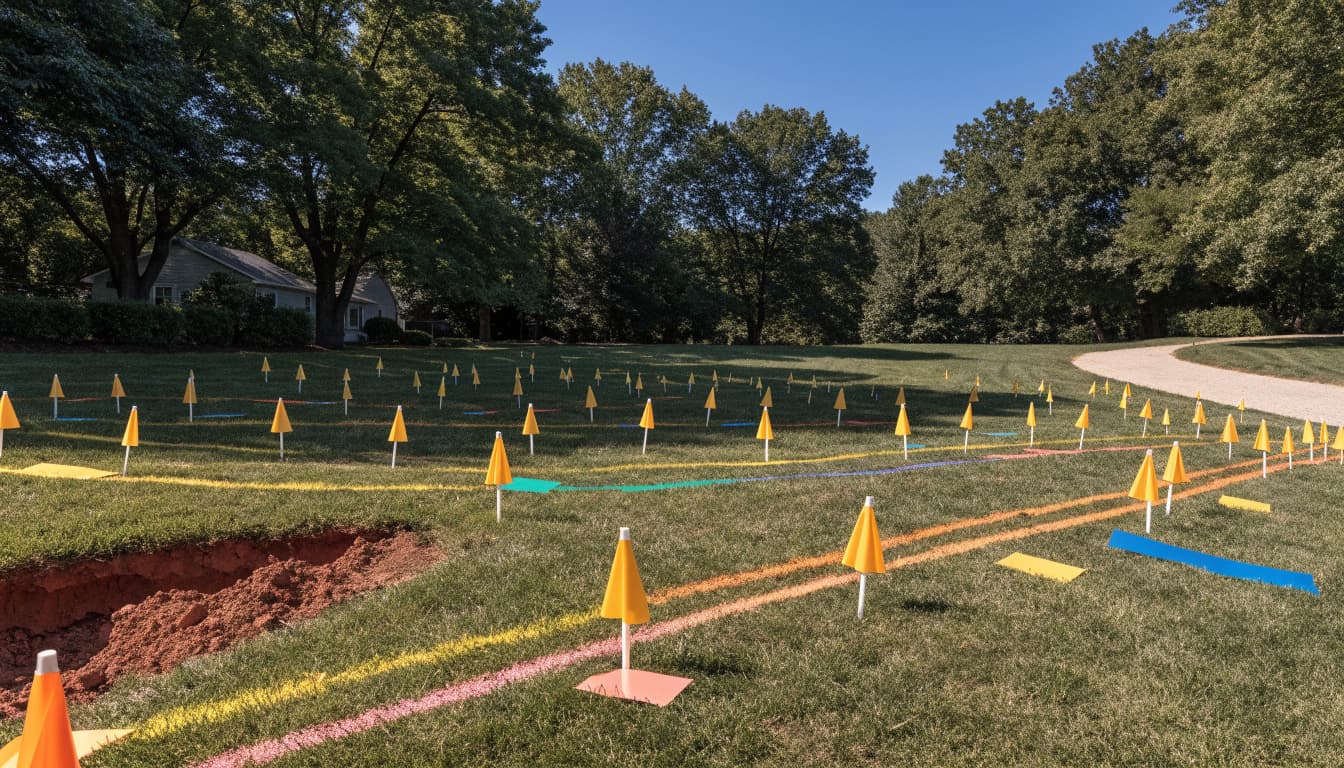
The standard marking colors help you recognize the type of facility.
| Color | Meaning |
|---|---|
| White | Proposed excavation |
| Pink | Temporary survey markings |
| Red | Electric power |
| Yellow | Gas, oil, steam, petroleum, or gaseous materials |
| Orange | Communications, alarm, or signal lines |
| Blue | Potable water |
| Purple | Reclaimed water, irrigation, or slurry |
| Green | Sewers and drains |
Use the colors to guide precautions, then review the ticket responses for details. A purple marking doesn't mean every homeowner-installed sprinkler pipe has been located.
Preserve flags and paint throughout the work. Also, tell anyone mowing or cleaning the yard to leave them undisturbed. Photographs help document conditions, but they don't replace readable markings on the ground.
Wait for Responses, Then Keep the Ticket Current
Check Each Utility's Status
Georgia 811 sends the request to participating facility owners. Those owners or their locating contractors provide markings and responses.
Check the ticket through Georgia 811's Positive Response Information System (PRIS) , website, or app. Responses such as "marked," "clear," or "no conflict" indicate the utility's reported status for the described work area.
Review every listed facility owner's response after the required waiting period. A marked gas line doesn't confirm that electric, water, or communications facilities have also been addressed.
If a response is missing, unclear, or inconsistent with visible conditions, contact Georgia 811 before digging. The utility response guidance explains how to check status.
Confirm Expiration and Changed Scope
Keep the ticket accessible while work continues. Request assistance if markings disappear, become unreadable, or no longer cover the planned excavation.
Published Georgia documents list different duration rules. The ordinary-notice statute states 21 calendar days after notice, while Georgia 811's online ticketing agreement lists 30 calendar days.
Don't assume a universal 30-day window. Follow the ticket's effective and update dates, and ask Georgia 811 to resolve any discrepancy before continuing.
If you move a trench, expand a grading area, or add another excavation location, arrange the appropriate new or updated request. Yesterday's marked footprint doesn't automatically cover today's revised plan.
Public Utility Locating Has Limits
Identify Customer-Owned Lines
Georgia 811 coordinates locating for participating utilities' facilities. Property owners remain responsible for identifying privately owned underground lines.
These can include irrigation piping, landscape-lighting cables, electric service to a detached shed, pool equipment lines, and customer-owned gas piping. Septic components and private drainage systems also need separate attention.
Ownership boundaries vary, so ask the utility what its locate covers. Don't assume every service line beyond a meter is included or excluded without checking.
Review installation records and walk the property before excavation. Sprinkler valves, outbuildings, pool equipment, and outdoor lighting are clues that additional buried systems may exist. Records help, but they don't prove a line's current position.
Arrange Private Locating Before Digging
Georgia 811 advises homeowners to hire a private locator for private facilities. Tell the locator which systems exist and exactly where excavation is planned.
Some materials, including certain plastic pipes, require different detection methods or additional investigation. Ask what the locator can identify and what remains unresolved.
A utility's "no conflict" response applies to that utility's facilities within the ticketed area. It doesn't certify that the yard contains no privately owned lines.
Schedule private locating before the crew arrives. Any unresolved line near the excavation should change the work plan until its location is established.
Safe Digging Still Matters After Marking
Respect Georgia's Tolerance Zone
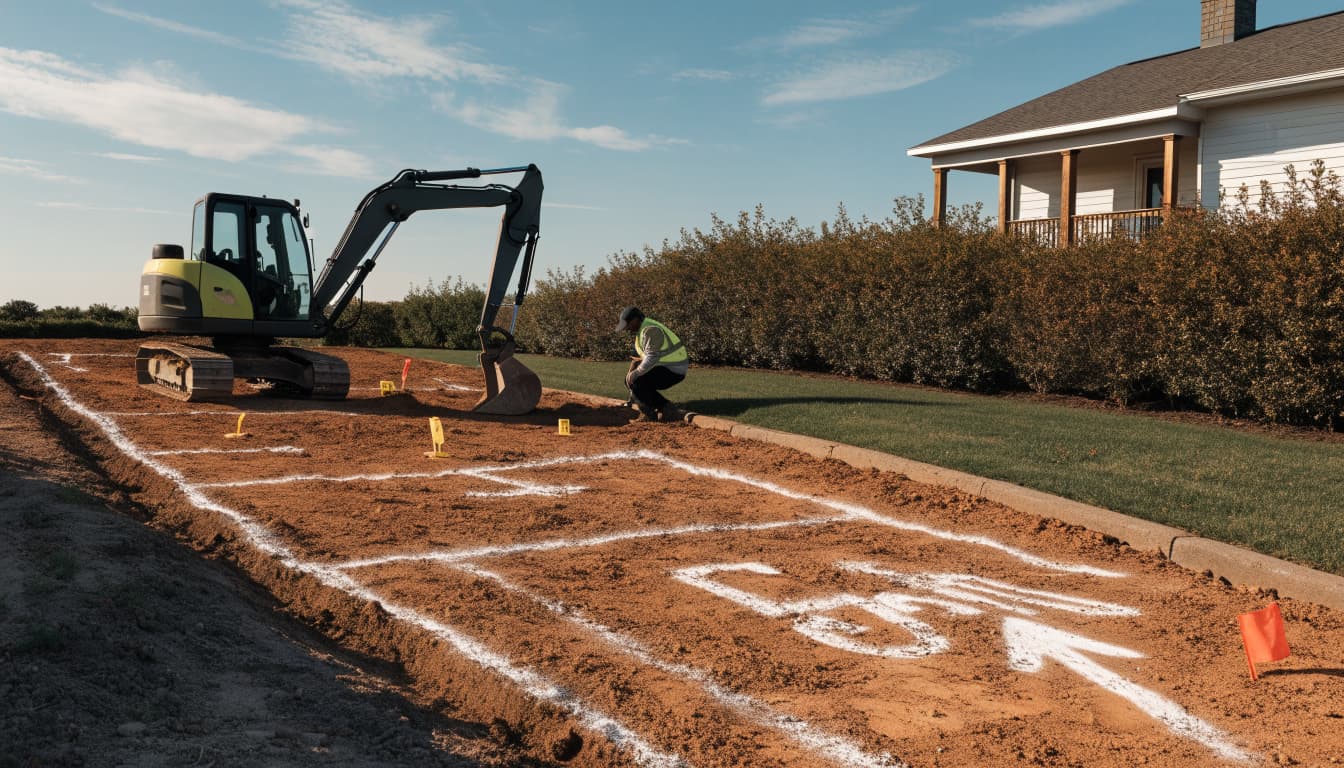
Georgia defines the tolerance zone as the facility's width plus 18 inches on each side , measured horizontally from its outside edges. Don't measure only from a flag and assume the facility has no width.
Markings indicate an approximate route. They don't provide a safe digging depth, and the tolerance zone isn't an automatic permission line for a machine bucket.
Use careful hand excavation or qualified vacuum excavation to establish a facility's position before mechanized work approaches it. Choose the method with the utility or qualified contractor when conditions are uncertain.
Hand tools can also damage lines. Avoid forceful stabbing, prying against a facility, or using a tool to test an unknown object.
Stop for Unexpected Lines or Damage
If you uncover an unmarked pipe, cable, or conduit, stop work nearby. Contact the appropriate utility and Georgia 811 rather than guessing whether the line is abandoned.
Report damage even when it appears minor. A scraped coating or nicked cable can create a problem without an immediate outage.
For a gas odor, hissing, or suspected leak, leave the area and keep others away. Don't operate equipment or create ignition sources nearby. Call 911 and the gas utility from a safe location.
Never attempt a utility repair yourself. Resume excavation only after the responsible parties address the hazard and provide appropriate direction.
Plan Around Atlanta Soil, Access, and Drainage
Utility precautions belong in the excavation estimate. Hand excavation, private locating, or a revised trench route can change labor and scheduling.
Metro Atlanta's red clay adds another constraint. Wet soil can rut under equipment, stick to buckets, and destabilize trench walls. Therefore, a completed locate doesn't mean the ground is ready for excavation after heavy rain.
Narrow gates, fences, mature trees, and steep slopes can also limit machine access. Ask the contractor how those conditions affect safe positioning and soil removal.
For drainage projects, combine the excavation plan with the finished grade. A trench alone may leave runoff moving toward the house or an unsuitable outlet. Discuss grading for better drainage before settling on the digging route.
Also confirm who handles ticket updates, private-line checks, spoil removal, and lawn restoration. Clear responsibilities reduce last-minute changes once equipment arrives.
Key Takeaways Before Excavation
- Submit the Georgia 811 request early, then follow the confirmed effective date and review every utility response.
- Arrange separate investigation of privately owned lines because public utility locating doesn't cover every buried system.
- Preserve markings, respect the tolerance zone, and stop when conditions or underground facilities differ from the plan.
Atlanta 811 utility locates support a safer project when they remain part of the work plan throughout excavation.
Frequently Asked Questions
Should I Request a Locate for Hand Digging?
Yes, request a utility check before digging tree holes, fence holes, or drainage trenches by hand. Georgia's mechanized-excavation notice requirement doesn't make hand digging harmless. A shovel or post-hole digger can damage a shallow facility, and private lines still require attention.
Can My Landscaping Contractor Handle the Request?
Discuss that responsibility before scheduling. The person planning mechanized excavation must provide the required notice, so the contractor should confirm the appropriate ticket for its work. Ask for the ticket number and verify that the described area covers the full excavation footprint. Don't rely on an unrelated previous locate.
Start the Yard Project With a Confirmed Digging Plan
A small landscaping job can encounter the same buried utilities as a larger excavation. Completed utility checks belong ahead of the first shovel or machine pass.
Request the locate early, confirm responses and dates, and investigate private lines before work begins. Then keep the markings visible and adjust the plan whenever site conditions change.