Best Native Pollinator Plants for Sunny Atlanta Gardens
A sunny strip beside your lawn can feed bees and butterflies without becoming an untidy patch. The best native pollinator plants for Atlanta gardens match your yard's drainage , available space, and maintenance routine.
Georgia's native flowers offer plenty of choices, but a dry slope and a damp low spot need different plants. Start with the site, then combine species that keep flowers available throughout the growing season.
Match Native Pollinator Plants to Your Atlanta Yard
Watch the proposed bed during sunny weather and after a substantial rain. Full-sun flowers need an open location, but sunlight alone won't make a planting successful.
Atlanta's clay can hold moisture below a surface that looks dry. Construction traffic, foot traffic, and repeated mower passes can also compact soil, leaving roots short of air.
Separate well-drained beds from areas that stay damp. Butterfly weed belongs in the first group; swamp milkweed fits the second. Neither plant benefits from a location chosen only because its flowers look appealing.
Also consider mature height and spread. Tall plants near a driveway can block sightlines, while sprawling stems beside a narrow walk create extra trimming work.
On sloping properties, check erosion before adding flowers. RW Lawn Co's guide to native plants for erosion control distinguishes drier sunny slopes from moist banks.
Native status doesn't make every species suitable for every Georgia yard. These selections are native to Georgia, but each still needs the right soil conditions.
Compact Choices for Drier Sunny Beds
These flowers suit open beds where water drains away rather than lingering around roots. Their smaller size also works near lawn edges.
Lanceleaf Coreopsis
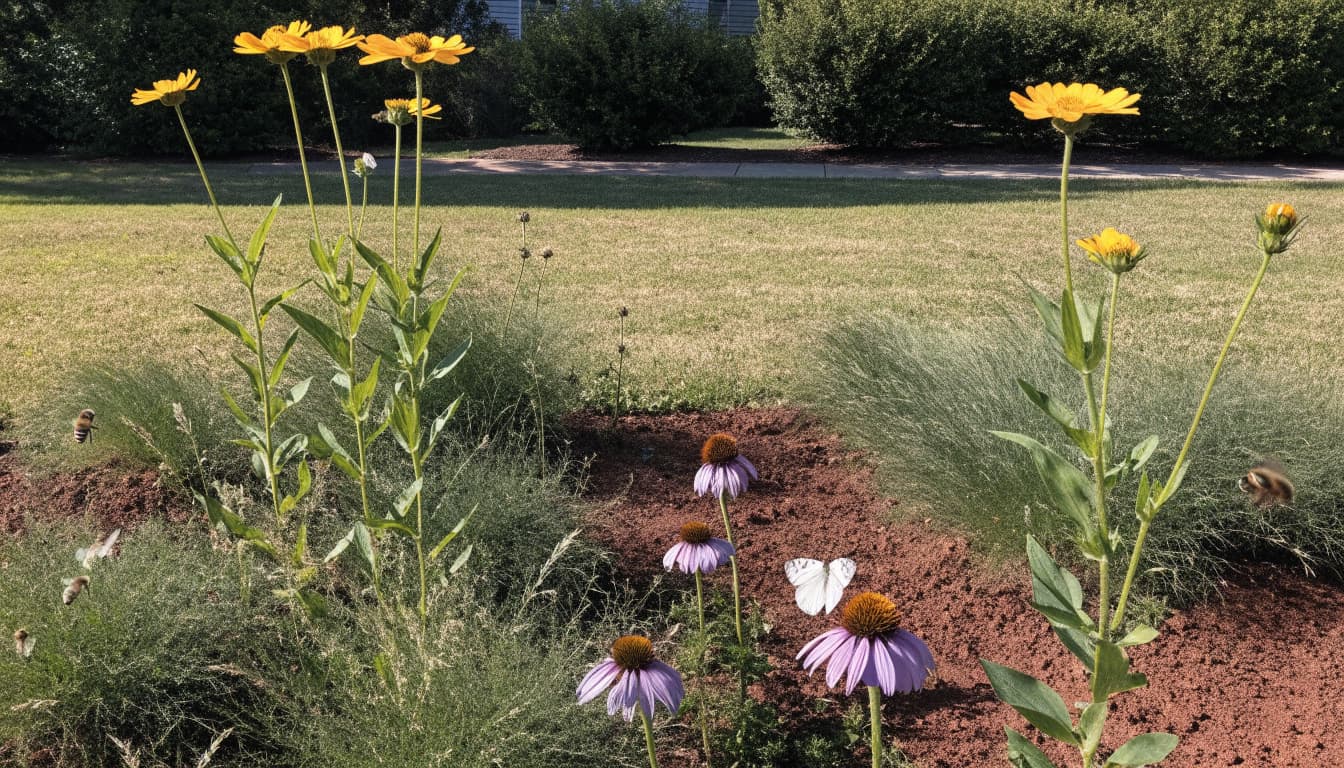
Lanceleaf coreopsis ( Coreopsis lanceolata ) produces yellow, daisy-shaped flowers above narrow leaves. It usually reaches about 1 to 2 feet tall , making it useful near the front of a planting.
Choose full sun and well-drained soil, including lean ground that doesn't need rich feeding. Bees visit the flowers for pollen and nectar; butterflies also use them.
Its loose, informal shape works best in repeated groups. However, allow for seedlings if you leave seed heads standing. Remove unwanted seedlings while they're small instead of letting them spread into adjoining turf.
Butterfly Weed
Butterfly weed ( Asclepias tuberosa ) has orange flower clusters and generally grows about 1 to 3 feet tall . It needs full sun and well-drained soil, with good tolerance for dry conditions after establishment.
Bees and butterflies visit its flowers. Its leaves also feed monarch caterpillars, so some chewing is part of its purpose in the garden.
Avoid persistently wet clay or heavily irrigated lawn edges. Because butterfly weed develops a substantial root system, choose its permanent location carefully. Mark the spot so routine weeding doesn't disturb new growth.
Gray Goldenrod
Gray goldenrod ( Solidago nemoralis ) is a smaller goldenrod, usually about 1 to 3 feet tall . It fits sunny, well-drained sites and tolerates relatively dry, lean soil.
Its yellow flower clusters support native bees, butterflies, and other flower-visiting insects. This species is useful where taller goldenrods would overwhelm a compact bed.
Ask for the scientific name when buying, because goldenrods differ in size and spreading behavior. Also, goldenrod isn't the usual cause of seasonal airborne pollen allergies. Wind-pollinated ragweed commonly blooms alongside it.
Native Flowers for Well-Drained Mixed Borders
These plants add height and flower variety behind lower-growing selections. Keep their mature growth inside the bed rather than against mowing routes.
Black-Eyed Susan
Black-eyed Susan ( Rudbeckia hirta ) usually reaches about 1 to 3 feet tall . Its yellow petals and dark centers give a native planting a familiar, tidy appearance.
Plant it in full sun with well-drained soil. It tolerates a range of soil textures, but prolonged saturation causes trouble. Native bees and butterflies visit its flowers.
This species can behave as an annual, biennial, or short-lived perennial. Therefore, a planting may depend partly on reseeding rather than permanent individual plants. Leave some seed heads, then thin seedlings where they crowd neighboring flowers.
Wild Bergamot
Wild bergamot ( Monarda fistulosa ) produces lavender flower clusters and usually grows about 2 to 4 feet tall . Choose full sun and well-drained soil with dry to moderate moisture.
Bumblebees and other bees use its tubular flowers, while butterflies also visit. Its aromatic foliage adds another point of interest when the plant isn't flowering.
Give mature clumps enough room for air movement. Atlanta's humidity can encourage powdery mildew, particularly in crowded beds. Water the root zone instead of wetting the leaves, and avoid excessive fertilizer that encourages soft, crowded growth.
Purple Coneflower
Purple coneflower ( Echinacea purpurea ) generally reaches about 2 to 4 feet tall . Its pink-purple petals and raised central cones work well in mixed native borders.
Full sun produces sturdy growth and good flowering. Choose well-drained soil with moderate moisture, especially while plants establish. Bees and butterflies visit the flowers, and birds can feed on mature seeds.
Although established plants tolerate dry spells, newly planted coneflowers still need moisture checks. Leave some seed heads for wildlife, but remove diseased material. Avoid placing the crowns in a low pocket that collects runoff.
Moist-Site Natives for Sunny Low Areas
A damp planting area needs moisture-tolerant species, not extra mulch around plants that prefer dry roots. These options fit sunny sites with reliable moisture.
Swamp Milkweed
Swamp milkweed ( Asclepias incarnata ) generally grows about 3 to 5 feet tall . Its pink flower clusters attract bees and butterflies, while its leaves support monarch caterpillars.
Choose full sun and moist soil. Unlike butterfly weed, this milkweed suits areas that retain moisture, including appropriate rain-garden locations.
However, a wet-site plant doesn't repair drainage problems near a foundation. Evaluate runoff and the bed's position first. RW Lawn Co's guidance on native plants for rain gardens explains why moisture conditions should guide placement within the planting.
New England Aster
New England aster ( Symphyotrichum novae-angliae ) typically reaches about 3 to 6 feet tall . Its purple to pink flowers provide nectar and pollen for bees and attract butterflies.
Use full sun and moist soil that still allows roots to breathe. It belongs toward the back of a bed, away from paths and driveway sightlines.
This is a substantial perennial, so allow for its mature clump rather than its nursery-container size. In exposed locations, neighboring plants can help support taller stems. Avoid squeezing it between low-growing flowers that need open sunlight.
Keep Flowers Available Across the Growing Season
A pollinator garden needs continuity. A bed full of plants with the same flowering period can leave insects without much forage once that display finishes.
When shopping, ask the nursery for the local flowering period of each species. Record that information alongside mature size and moisture needs before choosing your final combination.
Bloom periods vary with weather and site conditions. Warm spells, drought, rainfall, and exposure can shift flowering, so treat nursery calendars as planning guides rather than guarantees.
Build the planting around these priorities:
- Include flowers for spring, summer, and fall rather than buying only what's blooming during one nursery visit.
- Choose overlapping flowering periods so another species opens as an earlier display fades.
- Keep milkweed foliage available for caterpillars, even when the plants aren't flowering.
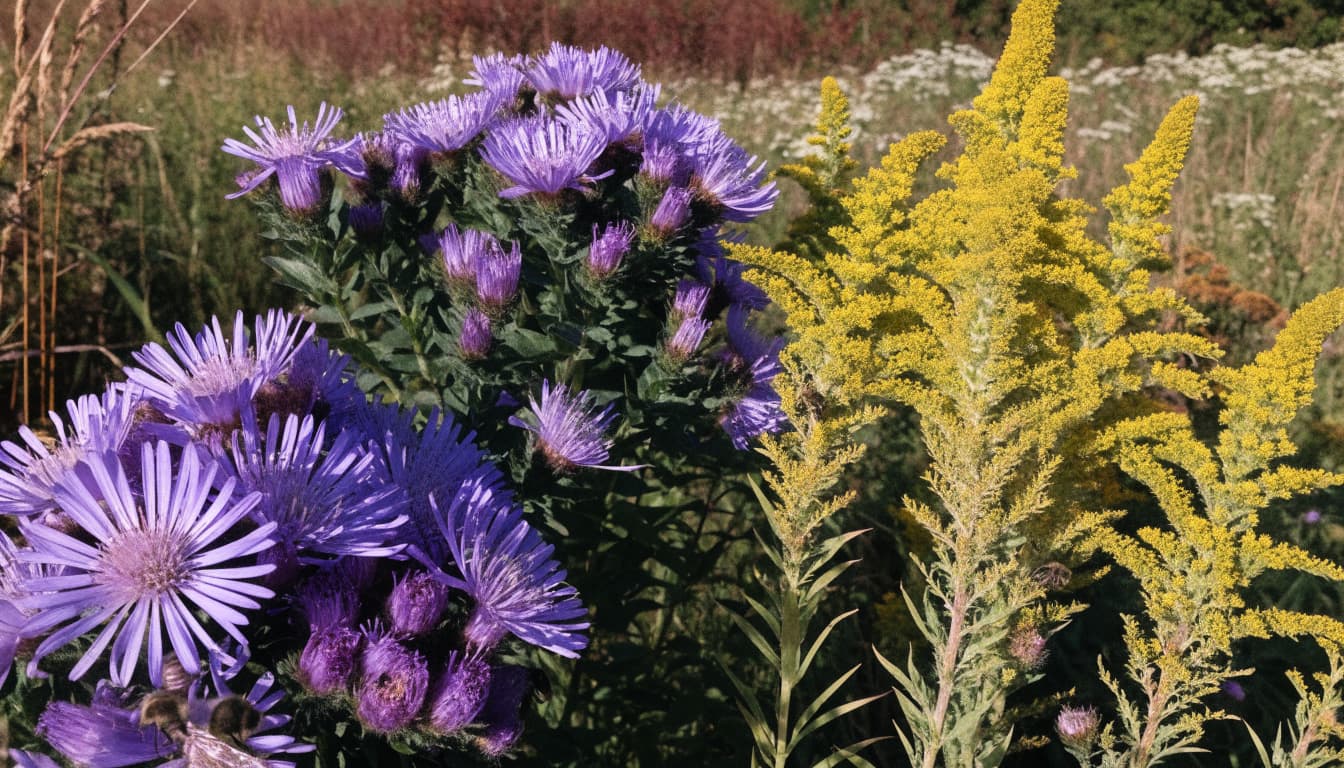
Plant repeated groups instead of scattering isolated specimens throughout the lawn. Grouping makes flowers easier for insects to find and simplifies weeding.
Also, separate plants by moisture needs. A dry-bed goldenrod and a moisture-loving aster shouldn't share an irrigation routine simply because their colors look good together.
Prepare Atlanta Clay Before Planting
Remove competing turf and persistent weeds before installing native flowers. Bermuda grass can spread into a new bed through runners, so a clean boundary needs ongoing attention.
Avoid digging or operating equipment when clay is saturated. Working wet soil can worsen compaction and leave a planting bed with poor structure.
Check where water enters and leaves the area. A deeper planting hole won't correct a drainage problem affecting the whole bed. Likewise, flowers won't stabilize active soil movement on a steep bank without suitable preparation.
Protect existing tree roots during bed construction. Don't cut major roots or pile soil against trunks to create a sunny flower garden.
Set each plant at its appropriate nursery growing depth, then water the root ball and surrounding soil thoroughly. Keep mulch away from crowns rather than burying emerging stems.
A new plant's root ball can dry out while the surrounding clay remains wet. Check both before deciding whether to water.
Cooler weather can reduce planting stress, but soil condition matters more than a calendar date. Avoid frozen, waterlogged, or extremely dry ground.
For a professional installation, request a scope that includes turf removal, plant material, bed preparation, watering arrangements, and cleanup. Access, slope, and drainage work can affect the job as much as plant selection.
Maintain the Garden Without Losing Its Wildlife Value
Native plants still need care, especially during establishment. Check moisture regularly, remove competing weeds, and watch for plants leaning into sidewalks or turf.
Water at the root zone and adjust after rainfall. Don't copy the lawn's sprinkler schedule automatically, because a flower bed may have different moisture needs.
Use fertilizer only when a soil test and plant requirements support it. Heavy feeding can produce tall, weak growth in species adapted to leaner conditions.
Avoid routine insecticide applications in pollinator beds. If a pest causes serious damage, identify it first and follow any treatment label carefully. Keep applications away from open flowers and visiting insects.
During seasonal cleanup, retain healthy seed heads and some standing stems where practical. However, remove diseased material and keep sidewalks, drains, and mowing edges clear.
Coordinate the bed with your lawn crew. Mark the boundary, identify plants that should remain standing, and prevent mower discharge or lawn-treatment drift from entering the flowers.
Professional landscape bed care in Atlanta can help maintain defined edges, control weeds, and manage mulch. Explain that the bed supports pollinators so cleanup doesn't remove every useful stem or seed head.
Key Takeaways for Your Atlanta Pollinator Garden
The strongest native pollinator planting starts with site fit : dry-bed flowers in well-drained ground and moisture-loving plants where water remains available.
Combine flowering periods, protect caterpillar host plants, and keep the garden clearly separated from routine lawn work. A defined bed with thoughtful maintenance can look cared for while giving bees and butterflies useful habitat.
Start with a manageable area, then expand as you learn how the plants perform in your yard.