Atlanta Tree Transplanting Costs in 2026: Moving vs. Planting
Moving a tree already growing in your yard differs from installing one delivered by a nursery; tree planting and transplanting involve different work in Atlanta, Georgia. The cost of transplanting a tree in Atlanta depends on the root ball, equipment access, travel distance, and whether the tree can tolerate the move.
Published planting prices won't tell you what a mature-tree relocation will cost. They can, however, give you a useful comparison before you pay for an on-site transplant assessment. Start by separating those two kinds of work.
Key takeaways
- Professional planting commonly costs $300 to $800 for a typical Atlanta residential tree; larger nursery trees cost more.
- There is no dependable Atlanta-wide price range for relocating an established tree. A contractor needs to inspect the tree and both sites.
- Check City of Atlanta tree rules before disturbing a protected tree, and budget for watering and site repair after the move.
Tree transplanting cost Atlanta homeowners can plan around
What published planting prices cover
RW Lawn's 2026 Atlanta, Georgia, planting guide estimates a typical professional installation at $300 to $800 . These are estimates, not exact quotes, and cover new-tree planting rather than established-tree relocation. For tree planting and transplanting, the price basis differs, especially when a tree has a larger root ball.
| Nursery tree size | Estimated installed cost | Typical scope |
|---|---|---|
| Small, 3 to 6 feet | $300 to $500 | Tree, delivery, basic planting, and mulch |
| Medium, 6 to 12 feet | $500 to $1,200 | More handling and a larger planting hole |
| Large, 12 to 15 feet or taller | $1,200 to $2,500+ | Heavy delivery and equipment coordination |
These figures estimate new-tree planting, not digging up and moving a tree from your property. Another Atlanta-area provider, Heflin Tree, lists $350 to $1,200 per installed tree. Labor rates and the scope of arboricultural services help explain differences; nursery availability for native trees can also affect which sizes are offered. The written scope matters more than a single advertised average.
Why an established-tree move needs a site quote
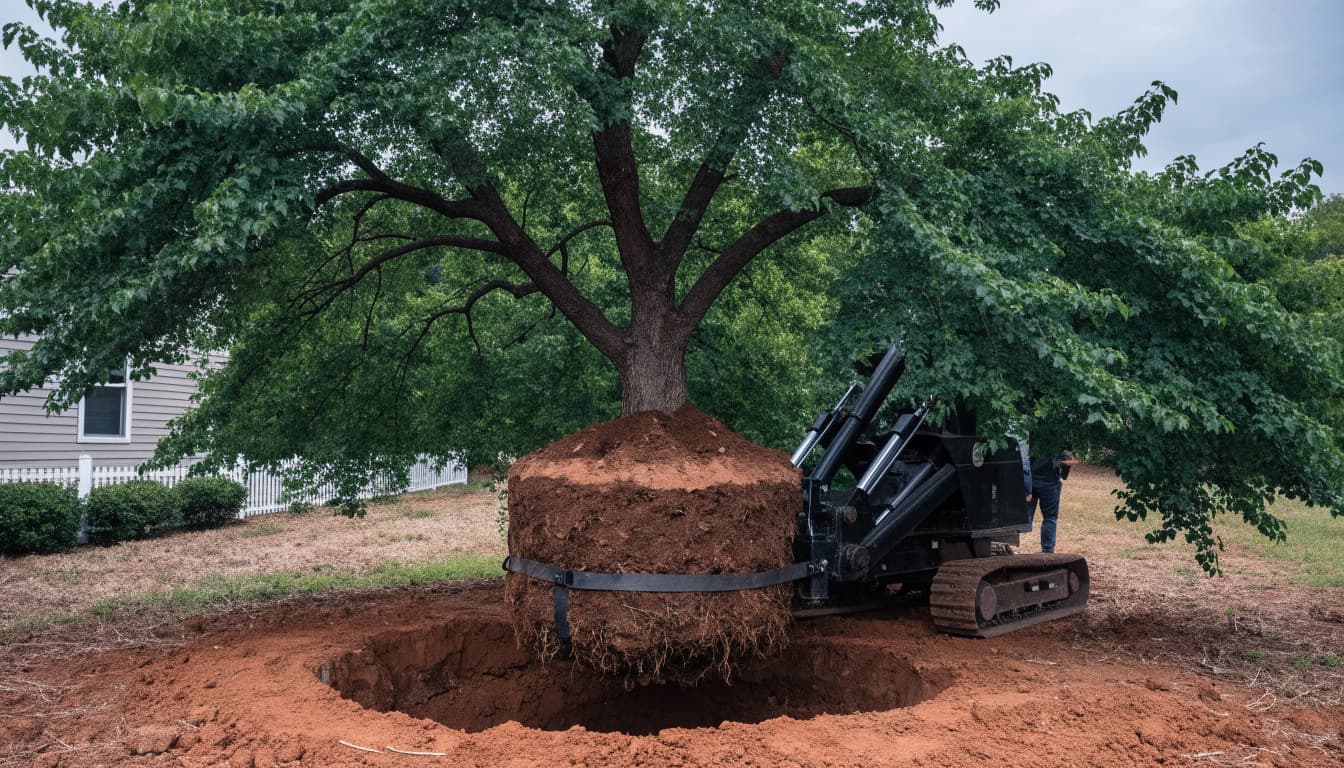
A relocation crew must keep enough roots and soil intact to support the existing canopy. It also needs a safe route out of the old location and into the new one. A machine may handle a suitable tree in an open yard, while walls, slopes, or a narrow gate can rule out that approach.
No reliable published Atlanta-wide price range covers those different relocation jobs. For an established tree, ask for an on-site assessment rather than treating a nursery planting price as a transplant estimate.
What makes one relocation quote higher than another?
Trunk diameter matters more than height alone. A thicker trunk generally requires a larger, heavier root mass. Certified arborists assess tree species, age, root condition, canopy size, and construction damage. Transplant suitability varies among species, including native trees, so similar-height trees may need different equipment.
Access can determine whether a move is practical at all. Crews need room for a tree spade, skid steer, trailer, or other machinery at both locations. In Atlanta, Georgia, a tight side yard may require more hand work, while soft lawns, steep ground, retaining walls, and overhead wires can complicate the route.
Distance matters, too. Moving a tree across one open property differs from transporting it across Metro Atlanta. Ask whether the quote includes travel, traffic planning, labor rates, and protection for the root mass during transport.
Finally, the planting site may need grading, drainage work, or clearing before the tree arrives. If water collects where you plan to plant, address that problem first. Land clearing and site preparation in Atlanta may be included among the arboricultural services for a larger project, but it should appear as a distinct estimate item.
When moving a tree makes sense instead of buying a new one
Compare the tree's value with the full job
Relocation may be worth considering when a healthy mature tree has a clear place in the new landscape project and room for its full canopy. It can preserve shade that a small nursery tree would take years to provide.
When comparing tree planting and transplanting, weigh the complete transplant quote against the cost of a suitable replacement. Include soil preparation, transport, planting, lawn repair, and follow-up care. A less expensive replacement may be better when the existing tree has root damage or a poor planting site. Native trees can also be an option when suited to the property. A low planting quote isn't directly comparable if it leaves out delivery or site work.
Check whether the tree can survive the move
Certified arborists should assess tree health, crown condition, trunk defects, available root area, and the proposed route during an on-site visit. Roots beneath paving or near a foundation may limit how much of the root system crews can recover. The planting site must also be suitable for the tree.
Ask what root-ball size the contractor proposes and whether advance root preparation would help. A move can still fail despite careful work, especially when drought or poor drainage follows installation. Get the survival outlook and any warranty limits in writing before committing.
Atlanta tree permits: confirm the rules before work begins
Protected trees and street trees need extra attention
Within Atlanta, Georgia city limits, tree protections generally apply to private-property trees with a trunk diameter of 6 inches or larger , measured 4.5 feet above the ground. City guidance lists a 12-inch threshold for pines. Trees on public property or in the right-of-way require permission regardless of size.
A transplant isn't automatically treated as tree removal in every circumstance. However, digging around a protected tree can injure it, and Atlanta's rules address removal, destruction, and injury. Contact the City of Atlanta Arborist Division through ATL311 before work begins to determine whether your plan requires review or a permit.
Allow time for review and other approvals
ATL311 states that projects affecting trees require an arborist meeting before permit submission under a rule effective June 25, 2025. Don't schedule machinery before confirming how that requirement applies to your property. Requirements for permits and inspections, along with any City charges, depend on the work and its approval, so ask what applies rather than assuming a flat transplant fee.
Metro Atlanta addresses outside the city follow their own local rules. Confirm the jurisdiction, property lines, and ownership if the tree sits near a boundary. Also have underground utilities located before digging. Contact 811 and tell the contractor about private irrigation or lighting lines.
Choose the season and planting site together
Favor cool weather, but check the soil
UGA Extension favors fall after leaf drop and early spring before bud break for transplanting native trees in Atlanta, Georgia. Cooler weather reduces demand on a disturbed root system. The Georgia Forestry Commission identifies December through March 1 as its main seedling planting season, though that schedule isn't a guarantee for a mature transplant.
In Atlanta, workable soil and available water matter as much as the calendar. Saturated clay can make heavy equipment unsafe and leave the new root ball in poorly drained ground. Summer moves bring greater heat and watering demands. Ask the arborist for timing advice based on your tree, not a date chosen solely to fit a construction schedule.
Give the roots a workable destination
Check mature canopy spread, sunlight, overhead wires, pavement, and distance from structures at the planting site. Walk the area after heavy rain. If water remains pooled there, address drainage through soil preparation before moving the tree.
The crew should plan a broad planting hole without burying the root flare, where the trunk widens into the roots. General planting guidance often recommends a hole two to three times the root-ball width, no deeper than the root collar. An established tree's root-ball shape and site conditions may call for a tailored plan.
Backfill and water as the arborist directs. Avoid piling rich soil in a small pocket or raising the finished grade against the root flare. If the move is part of a yard redesign, coordinate residential landscaping and mulch services with the planting plan rather than placing beds over the root flare.
Budget for the first year after the move
Water the root ball, not just the lawn
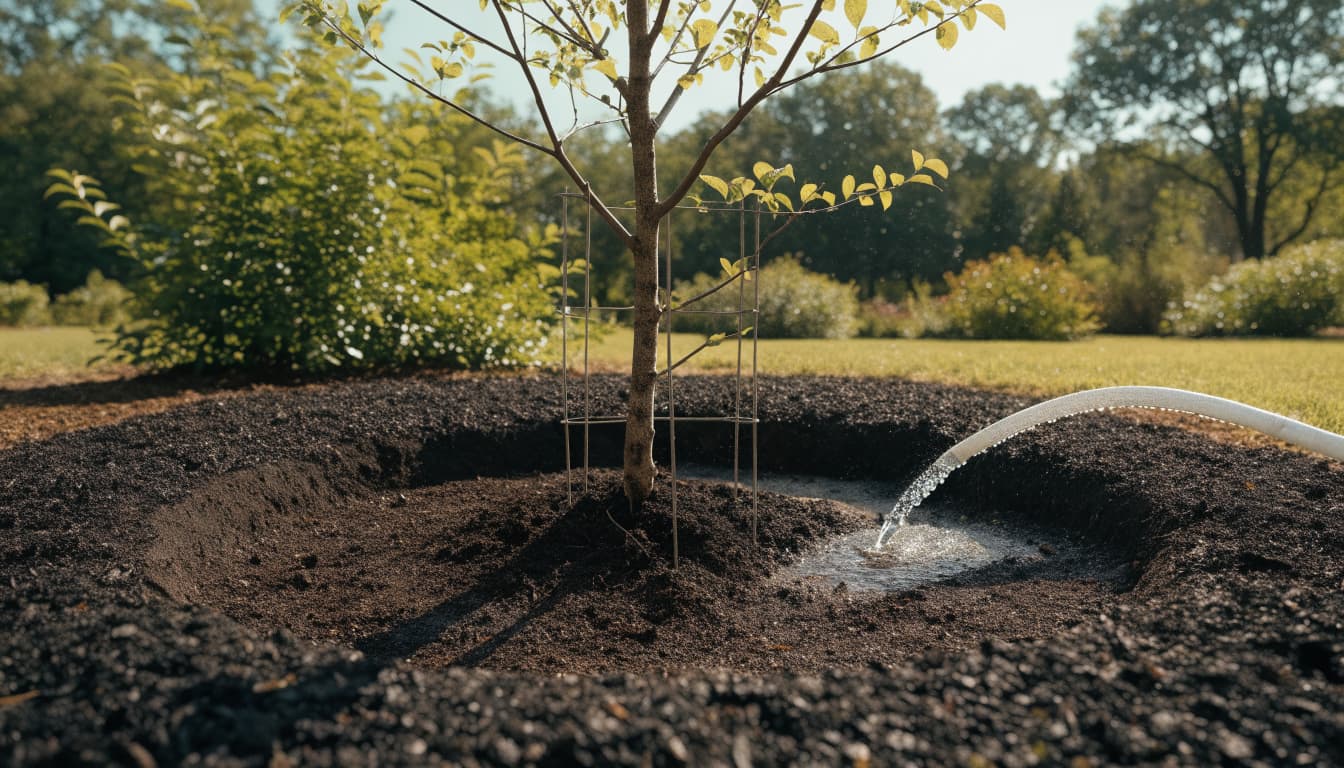
A transplanted tree has fewer working roots than it had before excavation. At installation, the crew should thoroughly wet the root ball and surrounding backfill. Set an initial watering schedule, then check soil moisture just below the surface near the root zone. Dry soil needs slow watering; soggy soil needs time to drain.
UGA Extension advises roughly 1 inch of water per week when rain is absent for newly planted trees, with more frequent attention during hot weather. A large relocated tree needs a watering schedule tailored to its size and site conditions. Sprinklers that keep grass green might not reach the tree’s roots, while automatic irrigation can leave heavy clay waterlogged.
Protect the planting area
Mulching helps protect the root zone, but leave a clear gap around the trunk. Keep mowers and string trimmers away from the bark. If the contractor uses stakes, ask when to remove them rather than leaving them in place indefinitely.
Watch for wilting, early leaf drop, or persistent wetness, especially during the first Atlanta summer. These signs warrant a moisture check and, if they persist, a follow-up inspection to assess tree health. Ask whether aftercare services are included in the original price, and confirm what ongoing tree care covers.
Get transplant estimates you can compare
A tree transplanting quote in Atlanta, Georgia should cover the whole move, not just equipment and crew time. Ask whether each provider offers free estimates, then invite contractors to assess the tree, access route, and planting site. Photos can start the conversation, but they won't reveal every root or drainage problem.
Ask each company to put these details in writing:
- Identify who assessed the tree, whether certified arborists will oversee the plan, and which arboricultural services are included.
- State the proposed root-ball preparation, equipment, transport method, and planting work.
- Show who handles permits, utility locating, lawn protection, and site restoration.
- List optional grading, mulch, staking, watering visits, aftercare services, and any replacement warranty. Ask about separate charges for travel, permits, utility locating, grading, lawn repair, and follow-up care.
Also request proof of current insurance and ask what happens if the crew finds buried debris or inadequate access. Compare proposals for tree planting and transplanting against the same scope. A lower price that excludes lawn repair or follow-up care may cost more after the equipment leaves.
Frequently asked questions
How much does it typically cost to transplant a tree in Atlanta?
For new nursery trees , typical professional planting runs about $300 to $800, with large specimens reaching $1,200 to $2,500 or more. Those figures don't price the relocation of an established tree. Its cost requires an on-site quote based on root size, access, equipment, distance, and planting conditions.
Can I move a tree to another spot in the same yard?
Yes, if the tree is a suitable candidate and the crew can reach both locations safely. A short move can reduce transport needs, but excavation, root protection, planting, and aftercare still require a plan.
Do I need a permit to transplant a tree on my property?
That depends on your municipality, the tree, and the work involved. Within Atlanta city limits, contact the Arborist Division before disturbing a protected tree. Street trees and right-of-way trees need permission regardless of size.
When should I arrange a transplant assessment?
Arrange it before construction or grading changes access to the tree. That gives the arborist time to assess roots, check the proposed planting site, and recommend a cool-season moving window.
The right price starts with the right assessment
A nursery planting price is useful for comparison, but it can't predict the cost or survival prospects of moving an established tree. The decision rests on the tree's condition, a workable route, a suitable new site, and a clear aftercare plan.
Get an on-site assessment and a written scope before choosing between relocation and replacement. The cheapest move isn't a bargain if the tree can't establish in its new location.