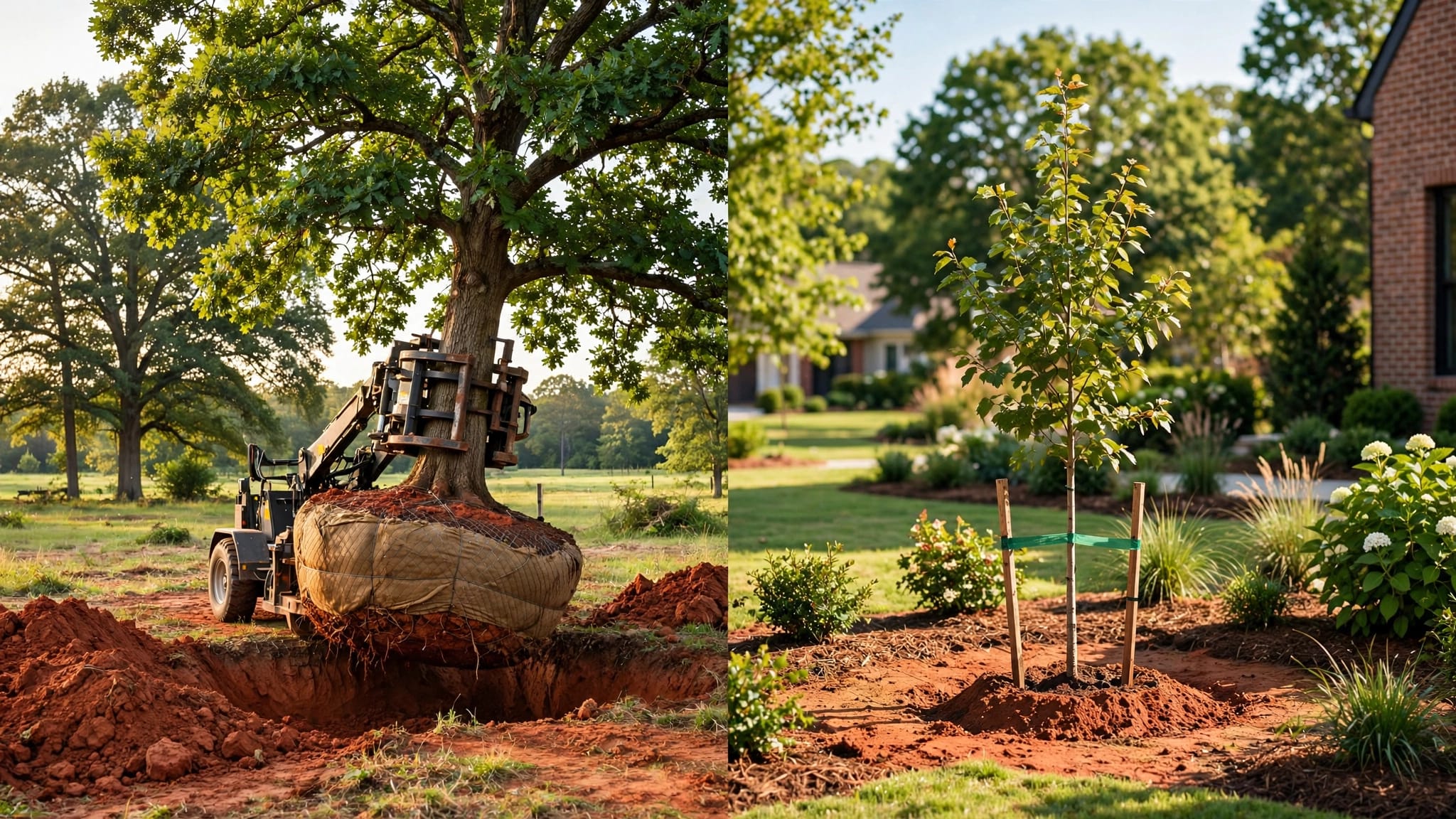
Best Shade Groundcovers for Deep Shade in Metro Atlanta
That bare patch beneath your trees may need a planting bed instead of another round of grass seed. The right shade groundcovers can make it look intentional, but soil moisture matters as much as low light.
Metro Atlanta's humid summers don't prevent dry soil beneath mature trees, where roots compete for water. Meanwhile, compacted clay can stay wet after storms. Start by separating those conditions, then choose plants that fit the shade you have.
Match shade groundcovers to light and moisture
Deep shade differs from partial shade
For landscape planning, less than three hours of direct sunlight is a useful deep-shade warning sign. Partial shade generally receives more direct sun or brighter filtered light.
However, hours alone don't describe every site. Open shade beside a house can be brighter than ground beneath dense evergreen branches. Check the area with the trees fully leafed out, rather than judging it during winter.
Most turf struggles in the darkest areas. RW Lawn Co's guidance on St. Augustine in shady yards explains why brighter shade and deep shade need different plans.
Check drainage and tree-root competition
After rain, inspect the bed for standing water, runoff channels, and exposed roots. Then check it again during a dry stretch.
A pine-covered bed may be dry and acidic, while a nearby clay depression stays damp. Those areas need different plants and watering schedules.
Get a soil test before adding lime or fertilizer. Shade doesn't explain every problem, and acidic soil doesn't automatically need correction. Also, leave room for a path wherever people regularly walk. Ornamental groundcovers won't replace a traffic-tolerant lawn.
Native-focused candidates for a woodland bed
Allegheny spurge and wild ginger are worth discussing with a native-plant nursery. Confirm the species, regional native range, and suitability for your particular site before buying.
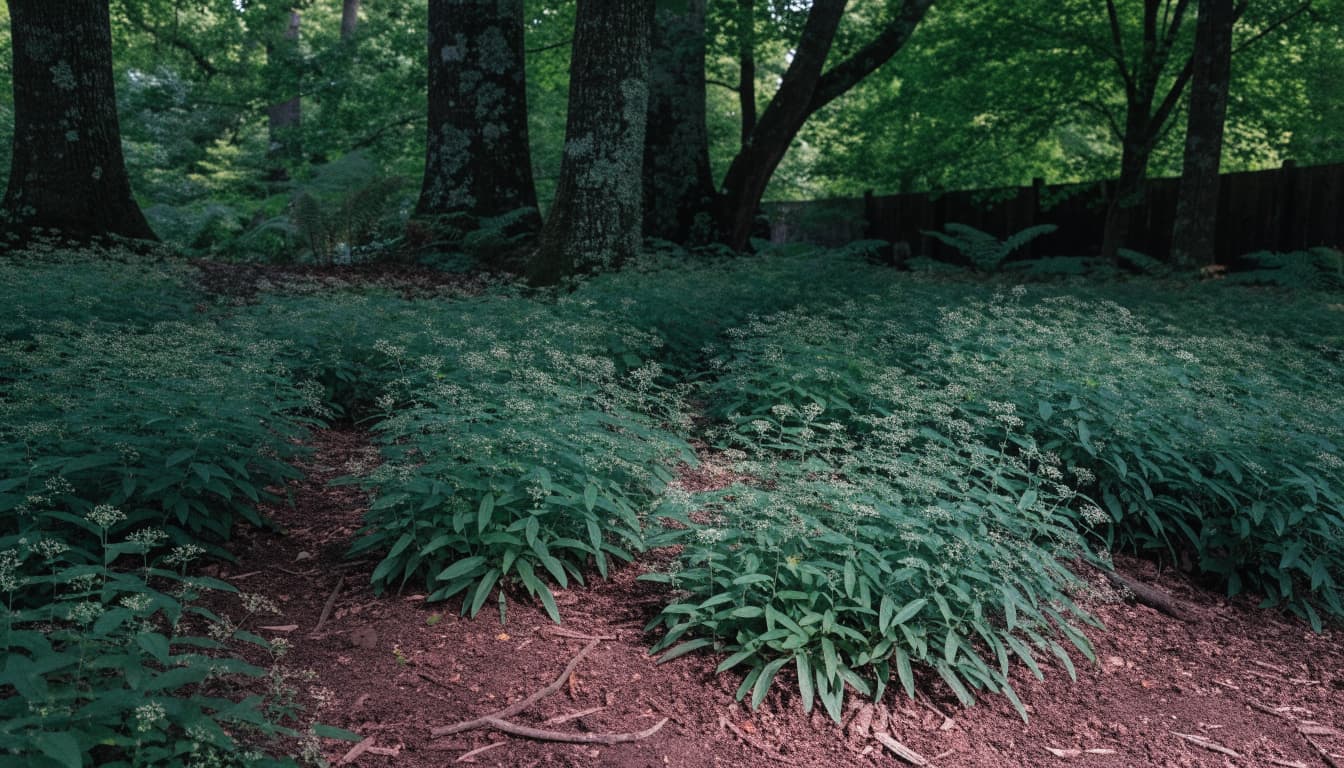
Allegheny spurge for textured foliage
Allegheny spurge ( Pachysandra procumbens ) has broad leaves with attractive mottling and small spring flowers. Its woodland appearance suits informal beds beneath trees.
Consider it for shaded, humus-rich soil with drainage. Start with small plants, preserve surrounding tree roots, and water the root balls while they establish. A light covering of leaf mulch helps protect open soil.
Its spreading habit can connect separate plants over time, but don't expect immediate coverage. Winter foliage can look weathered, and leaf retention varies with conditions. Confirm its performance locally rather than treating it as interchangeable with Japanese pachysandra.
Wild ginger for a low leafy layer
Wild ginger offers rounded or heart-shaped foliage that softens a woodland floor. However, the common name covers several plants with different habits.
Ask which Asarum or Hexastylis species you're purchasing. Canadian wild ginger ( Asarum canadense ) is deciduous, so it won't provide the same winter appearance as evergreen relatives.
These plants generally suit shaded, organic soil that retains moisture without staying saturated. Keep new plants watered and avoid burying their crowns under mulch. The main limitations are species-specific moisture needs, seasonal leaf loss, and slow coverage. Check the botanical name before choosing it for a dry Atlanta tree bed.
Options for dry shade beneath established trees
Dry shade is often the hardest planting condition in an Atlanta yard. Even plants that tolerate it need establishment watering, because tree roots already occupy much of the available soil.
Suitable sedges for a softer, grasslike look
Sedges provide narrow foliage without demanding a conventional lawn treatment. Some form distinct clumps, while others spread into a looser carpet.
Choose by species rather than buying anything labeled "shade sedge." Pennsylvania sedge ( Carex pensylvanica ) is a candidate to discuss with a knowledgeable nursery for woodland conditions. Confirm regional suitability and available growing space.
Plant small plugs or containers between roots and monitor moisture until they establish. Sedges aren't interchangeable: a wet-site species can struggle beneath thirsty trees. Also, their coverage usually looks more natural and less uniform than turf. Use a separate walkway where regular foot traffic would wear them down.
Cast iron plant for bold evergreen foliage
Cast iron plant ( Aspidistra elatior ) has upright, strap-shaped leaves and a substantial evergreen presence. It's useful where you want a leafy mass rather than a short carpet.
The supplied landscape guidance identifies it as an option beneath dense shade. Give it well-drained soil and water new plants until rooted, then adjust watering to actual soil moisture.
Its clumping growth makes it manageable, although it needs room beside walkways. Cold weather can damage leaves, and exposed afternoon sun can spoil their appearance. Cast iron plant is a nonnative ornamental, so choose another option when regional native planting is the priority.
Choices for moist shade and brighter bed edges
A shaded site that holds moisture offers different possibilities. Still, moisture retention and standing water aren't the same thing, especially in Atlanta's clay soils.
Ferns for leafy coverage
Ferns create overlapping foliage that can cover ground without forming a tightly knit mat. Christmas fern ( Polystichum acrostichoides ) is worth asking about for a native-focused woodland planting.
Autumn fern ( Dryopteris erythrosora ) is a nonnative alternative with copper-colored young fronds. Landscape guidance also identifies it as a dense-shade option.
Confirm the species' moisture needs before planting. Water during establishment, keep mulch away from crowns, and leave space for mature fronds. Don't assume every fern wants saturated soil. Ferns also aren't walkable groundcovers, and winter appearance varies by species. Their upright texture works well alongside lower-growing plants.
Green-and-gold for brighter shade
Green-and-gold ( Chrysogonum virginianum ) has low green foliage and yellow flowers. It's a candidate for a native-focused bed, with regional suitability worth confirming at purchase.
Consider it first for brighter filtered shade or a bed edge rather than the darkest pocket beneath a dense canopy. Reduced light can mean fewer flowers and less vigorous coverage.
Provide well-drained soil with organic matter, and keep new plants from drying out. Its spreading growth can fill gaps, but growth habit varies among selections. Ask how the particular plant spreads and how much room it needs. Avoid placing it where runoff repeatedly buries the foliage or leaves the roots waterlogged.
Evergreen choices for a more formal planting
Mondo grass and liriope are common nonnative options for structured beds. Both appear in the supplied guidance for dense shade, but species identification makes a major difference in maintenance.
Mondo grass for fine-textured foliage
Mondo grass ( Ophiopogon japonicus ) produces narrow, arching leaves that create a tidy appearance beside paths and foundations. Dwarf selections offer a shorter look, although they may take longer to close gaps.
Use it in shaded, well-drained soil, and water through establishment. Check beneath the foliage before watering again, because humid air doesn't reveal whether the roots are wet.
Its main limitation is slow coverage, especially when small plants sit far apart. Weeds can occupy those gaps before the planting fills in. Mondo also spreads over time, so inspect bed edges. It shouldn't be treated as a surface for regular walking.
Clumping liriope for defined borders
Clumping liriope ( Liriope muscari ) has arching green foliage, with variegated forms also available. Flower spikes add seasonal interest, although flowering can decline in heavy shade.
Plant it in well-drained soil and water new clumps until rooted. Allow enough space for their mature width rather than squeezing them tightly against pavement.
The important distinction is between clumping liriope and creeping liriope ( Liriope spicata ). Creeping liriope spreads aggressively and can move beyond the intended bed. Clumping types are easier to manage, but seedlings or expanding clumps may still need attention. For a controlled planting, check the botanical name instead of relying on "monkey grass."
Establish the bed without damaging your trees
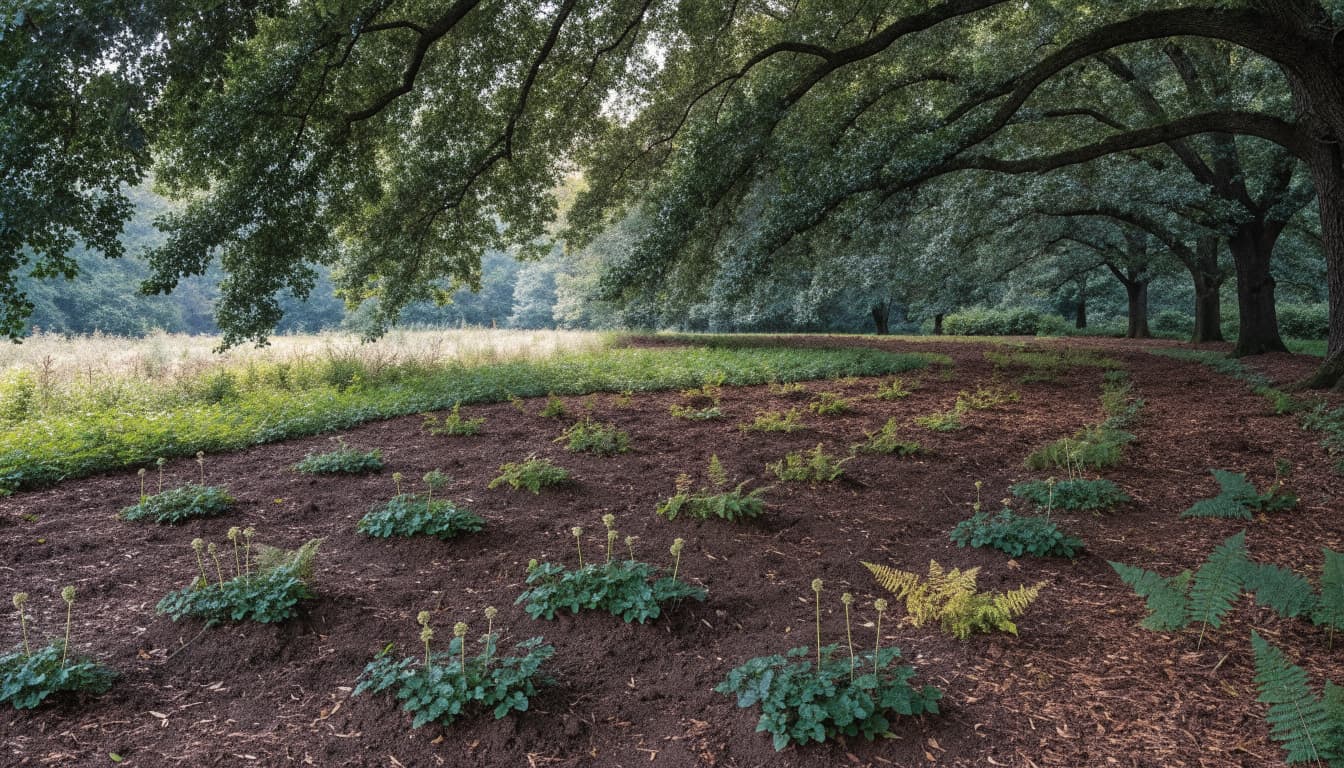
Small plants usually fit between established roots better than large containers. Use hand tools, and dig only the space each root ball needs.
If you encounter a substantial root, move the planting hole. Avoid tilling beneath mature trees or piling new soil over their roots. Call 811 before digging where underground utilities may be present.
Remove weeds before planting, then follow species-specific spacing recommendations. Wider spacing reduces the initial plant purchase but leaves more soil exposed to weeds.
A rainstorm can wet the leaves while leaving a sheltered root ball dry. Check the soil beside new plants before deciding whether they need water.
Organic mulch reduces evaporation and moderates soil temperature. However, it doesn't repair poor drainage or compacted soil. Keep it away from plant crowns and tree trunks.
Inspect clay soil before watering again. Aim for moist root balls during establishment without keeping the whole bed saturated. Morning watering also gives wet foliage time to dry.
For larger conversions, RW Lawn Co's landscaping and mulch services can help with bed preparation and ongoing upkeep. On slopes, groundcover alone may be insufficient; assess runoff before assuming plants will stop erosion.
Plan for maintenance, spread, and project costs
Reliable shade groundcovers still need weeding while gaps remain. Later, inspect edges, remove damaged foliage, and adjust irrigation when rainfall changes.
Avoid English ivy, periwinkle, and creeping liriope when your priority is a contained, noninvasive planting. Their spreading habits can create more work around neighboring beds and wooded areas. Ask about the exact species before accepting a fast-covering substitute.
Price the whole project rather than comparing plant pots alone. Weed removal, plant quantity, root-safe installation, mulch, access, and drainage work affect the total.
RW Lawn Co's landscape bed renovation cost guide outlines the broader work involved. Request an itemized estimate with botanical names and an establishment-watering plan. If the darkest area cannot support a satisfactory planting, a mulched bed with stepping stones may be the better investment.
Key Takeaways
- Match plants to both light and moisture, because dry tree shade differs from damp clay.
- Confirm species and regional suitability when buying native-focused plants, sedges, or anything labeled "wild ginger."
- Choose manageable growth habits, protect tree roots during installation, and provide water while new plants establish.
- Use paths for regular traffic and mulch where living coverage isn't practical.
Give Deep Shade a Purpose Beyond Turf
A bare patch beneath mature trees doesn't have to become another failed lawn repair. Match the planting to moisture, available light, and the appearance you want throughout the year.
The strongest plan combines site-matched plants with careful installation and realistic coverage expectations. Where shade, roots, or traffic make planting impractical, a defined mulch bed or path can make the space look finished without fighting the trees.