Atlanta Rain Garden Design for Clay Soil and Roof Runoff
A well-designed Atlanta rain garden can turn roof runoff into a controlled landscape feature instead of a muddy foundation problem. The challenge is making it work with Piedmont red clay, steep or uneven yards, and intense storms that deliver more water than the soil can absorb quickly.
Homeowners need more than a shallow planted hole. The garden needs the right location, soil depth, overflow route, and plants for Atlanta's wet winters and hot, dry summers. Start with the water path, then build the planting plan around it.
Why Atlanta Clay Needs a Rain Garden Plan
Metro Atlanta's red clay can hold water after a storm, then harden during dry weather. Compacted clay often sheds water across the surface instead of accepting it evenly. A roof downspout can worsen the problem by concentrating hundreds of gallons in one small area.
Test the soil before digging
Choose a possible location away from the foundation and dig a test hole about 6 to 8 inches deep. Fill it with water and watch how quickly the level drops.
If water remains after 12 hours, the native soil may drain too slowly for a simple rain garden. You may need deeper excavation, amended soil, a controlled underdrain, or a different drainage solution.
A rain garden should manage water, not create a permanent wet spot. Georgia Green Landscapes guidance says the native soil should infiltrate faster than 0.5 inches per hour. Test more than one area if the yard contains fill, construction debris, or different soil layers.
Watch the yard during a storm
Inspect the property after a heavy rain before choosing the basin location. Look for downspout discharge, settling near the house, washed-out mulch, standing water, and the natural direction of surface flow.
A lawn that stays soggy may need grading or drainage work before planting. Review these Atlanta downspout drainage solutions before directing roof water into a new landscape bed.
How to Size an Atlanta Rain Garden
The roof area, downspout connections, soil infiltration, and planned ponding depth all affect the garden's size. A small basin may work for one section of roof, while a larger home may need multiple gardens or a separate drainage system.
Use roof area and clay factors
University of Georgia Extension provides clay-soil sizing factors based on ponding depth. For a 1,000-square-foot roof area, its example produces a garden of about 190 square feet when the basin holds 4 inches of water.
| Planned ponding depth | Clay-soil sizing factor | Example for 1,000 sq. ft. roof |
|---|---|---|
| 4 to 5 inches | 0.19 | About 190 sq. ft. |
| 6 to 7 inches | 0.15 | About 150 sq. ft. |
| 8 to 9 inches | 0.08 | About 80 sq. ft. |
These figures are planning guidance, not a substitute for checking the actual soil and runoff route. Georgia Green Landscapes also gives a broad rule that a 100-square-foot rain garden may receive runoff from an area five to ten times larger, depending on site conditions.
Keep ponding shallow and temporary
A residential basin usually works best at about 6 to 8 inches deep. Sandy Springs guidance limits maximum ponding depth to 6 inches in its green-infrastructure manual, so local requirements may affect the design.
Water should drain within a reasonable period after rain. Georgia guidance commonly uses 24 to 48 hours, depending on the source and setting. If water remains longer, mosquitoes, plant loss, erosion, or soil failure may follow.
Provide a defined overflow notch or shallow swale. During an intense storm, excess water must move toward a safe lower area rather than back toward the house.
Where to Place the Garden Safely
A rain garden should never be placed in the wettest spot simply because that area already collects water. It needs separation from structures and a reliable discharge path.
Protect foundations, septic systems, and neighbors
University of Georgia Extension recommends at least 10 feet from building foundations and 25 feet from septic tanks, drain fields, and well heads. Georgia DOT guidance also recommends 10 feet from property lines and foundations, while noting that local rules should be confirmed.
These distances can vary with slope, bed width, soil, and local regulations. Sandy Springs guidance also restricts rain gardens in public rights-of-way, above septic fields, over utility lines, and near steep slopes.
Keep overflow away from:
- Basement walls, crawlspaces, and slab foundations
- Septic tanks and drain fields
- Private wells
- Neighboring lots and shared driveways
- Retaining walls and unstable slopes
- Underground utility lines
Call 811 before digging, even for a small residential basin. Mark the downspout route, utility locations, foundation, septic components, and property lines before excavation.
Plan for slope and overflow
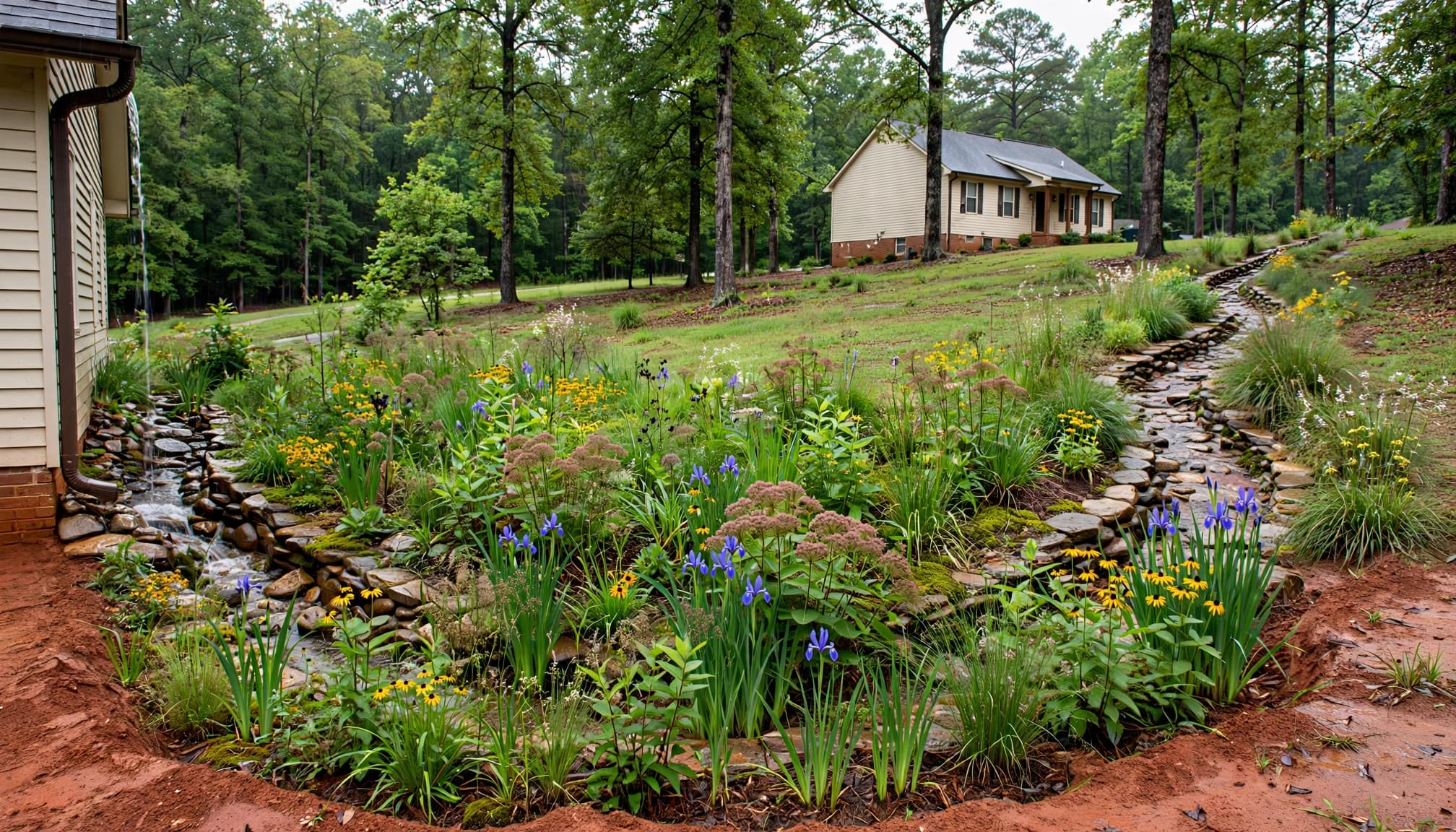
A slope greater than 10 to 12 percent may require terracing, a level spreader, or another design instead of one open basin. Water should enter slowly through a stone-lined channel or splash pad, not scour the soil at the end of a downspout.
The overflow route should be visible on the plan. If the only outlet leads toward the foundation or a neighboring property, the site is not ready for a rain garden. Correcting the grade may be safer than forcing the basin into a poor location. RW Lawn Co's Atlanta grading and paving services include slope correction and drainage-focused site preparation.
How to Build the Basin in Red Clay
Construction quality matters as much as plant selection. Digging into wet clay can smear the sides of the basin and create a sealed surface. Work when the soil is workable, not saturated.
Remove compacted soil and add a suitable mix
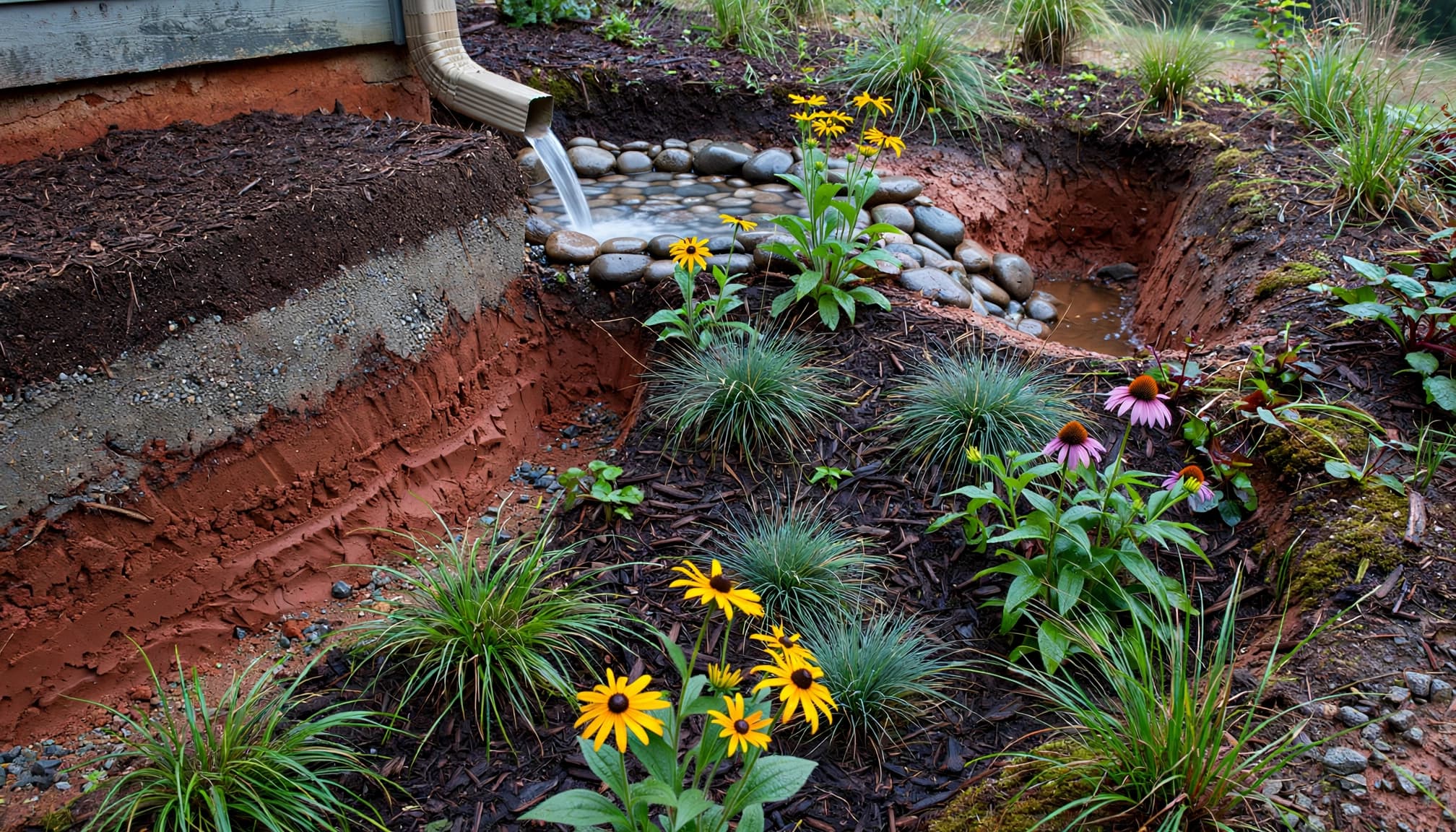
On high-clay sites, University of Georgia Extension recommends removing roughly 1 to 2 feet of soil and replacing it with a more porous rain-garden mix. A common blend contains approximately:
- 50 percent sand
- 25 percent topsoil
- 25 percent compost
The finished amended soil layer is often 12 to 24 inches deep. Avoid using a mix that contains excessive clay, because it can recreate the same drainage problem below the plants.
Shape the basin with a flat or gently rounded bottom and stable sides. Do not leave sharp edges that will erode when water enters. Keep the final grade low enough to prevent mulch and soil from spilling into the lawn.
Protect the inlet and outlet
Use rounded stone at the downspout outlet to spread the incoming flow. A short swale, rigid extension, or buried solid pipe can carry water from the downspout to the basin without washing out the yard.
Mulch helps protect the surface, but it should not block the inlet or overflow. Inspect the area after major storms for displaced stone, sediment, exposed roots, and erosion. Keep gutters clean so leaves and roof debris do not fill the basin.
Atlanta-Area Plants for Wet and Dry Conditions
Rain gardens alternate between saturated soil after storms and dry conditions during Atlanta's summer. Choose plants by position in the basin, not only by appearance.
Use moisture-tolerant plants in the basin
The lowest area needs plants that can handle short periods of standing water. Atlanta-area plant lists include sedges, river oats, black gum, sweetbay magnolia, and inkberry for suitable wet-to-moist locations.
Trees and shrubs need room to mature, so avoid placing large species beneath roof edges, near utility lines, or beside narrow walkways. River oats and sedges can provide ground-level structure without turning the entire garden into a shrub bed.
Confirm the mature size, sun exposure, and local availability before planting. Avoid invasive plants and species that spread beyond the bed into nearby natural areas.
Plant the outer edge for seasonal dryness
The upper rim may drain quickly and become dry during summer. Goldenrod, black-eyed Susan, and orange coneflower can suit sunnier edges when the soil and moisture conditions match.
Group plants according to water needs. Avoid watering the entire yard to compensate for a poorly placed plant. Seasonal maintenance may include removing damaged stems, clearing sediment, refreshing mulch, and controlling weeds. Professional Atlanta landscaping and mulch services can help keep the bed defined and functional throughout the year.
When a Rain Garden Is Not the Right Fix
A rain garden may be unsuitable when the soil fails the infiltration test, the yard slopes sharply, or no safe overflow route exists. It is also a poor choice above a septic drain field or close to a foundation.
Regrading may solve a negative slope that sends water toward the house. A French drain may fit a persistent subsurface wet spot, while a dry creek bed may provide a controlled surface route for visible runoff. Compare these options in this guide to Atlanta drainage solutions for soggy lawns.
Steep yards may need terracing or a retaining wall, but walls require their own drainage and structural support. A planting bed should not replace a wall that is holding back unstable soil. Review Atlanta retaining wall installation when elevation changes or erosion make a simple basin unsafe.
Key Takeaways for Atlanta Homeowners
- Test the soil before sizing the basin.
- Keep the garden at least 10 feet from foundations unless local guidance requires more.
- Maintain a larger buffer around septic systems and well heads.
- Size the garden for roof area, clay, and ponding depth.
- Use amended soil deep enough to support infiltration.
- Give every basin a safe overflow route.
- Protect downspout inlets with stone or a stable channel.
- Choose plants for both wet storms and dry summer conditions.
- Call 811 before excavation.
- Use grading or drainage work when a rain garden cannot safely receive the water.
Atlanta Rain Garden FAQ
How far should a rain garden be from my house?
University of Georgia Extension recommends at least 10 feet from building foundations. More separation may be needed when the ground slopes toward the home, the soil drains slowly, or the basin is large. Keep overflow moving away from the foundation rather than relying only on the initial setback.
Can I connect a roof downspout directly to the basin?
You can route a downspout toward a rain garden through a stone-lined inlet, extension, swale, or properly installed solid pipe. The connection must spread water without eroding the basin. Check whether the garden can handle the entire roof area before adding another downspout.
What if my clay soil holds water all day?
A 12-hour infiltration test can show whether the site needs correction. High-clay areas may require excavation and replacement with a porous mix, along with a redesigned outlet. If the soil remains saturated or the garden has no safe overflow path, choose another drainage approach.
How much maintenance does a rain garden need?
Inspect it after major storms and remove leaves, sediment, and weeds before they block the inlet or overflow. Check for erosion, settled soil, exposed roots, and water that remains too long. Seasonal trimming and mulch maintenance also help keep the garden attractive and functional.
Conclusion
An Atlanta rain garden works best when it is designed around the property's actual water movement. Test the Piedmont clay, size the basin for the roof, protect the foundation and septic system, and plan overflow before planting.
The strongest design uses native or well-adapted plants, stable inlets, amended soil, and regular inspection. When the site cannot drain safely, grading, a dry creek bed, or another drainage solution is often the better long-term choice.