Atlanta Hydrangeas Not Blooming: What to Do Next
If you're dealing with hydrangeas not blooming in Atlanta, identify the type before making another cut. One poorly timed trimming can cost a summer of flowers, even when the shrub still looks leafy.
Bigleaf, panicle, and oakleaf hydrangeas need separate maintenance decisions. The safest immediate step is to pause routine shaping while you review the plant's identity and recent care.
Start by separating a missing flower display from problems that only affect the shrub's appearance.
Key Takeaways
- Identify bigleaf, panicle, or oakleaf hydrangeas before approving pruning. Similar-looking shrubs can require different treatment.
- Review recent trimming before adding another corrective task. Cutting again won't replace flowers already lost through pruning.
- Treat spotted leaves, untidy beds, and missing flowers as separate observations. They don't automatically point to the same problem.
For a landscape crew, the instruction should be clear: leave unidentified hydrangeas out of general shrub shaping. That protects the plant while you decide what work is appropriate.
Identify Your Atlanta Hydrangea Before Troubleshooting
Flower shape helps, but leaves and the overall plant also matter. An old photograph showing the shrub in bloom can be useful when flowers are absent.
Bigleaf: Mopheads and Lacecaps
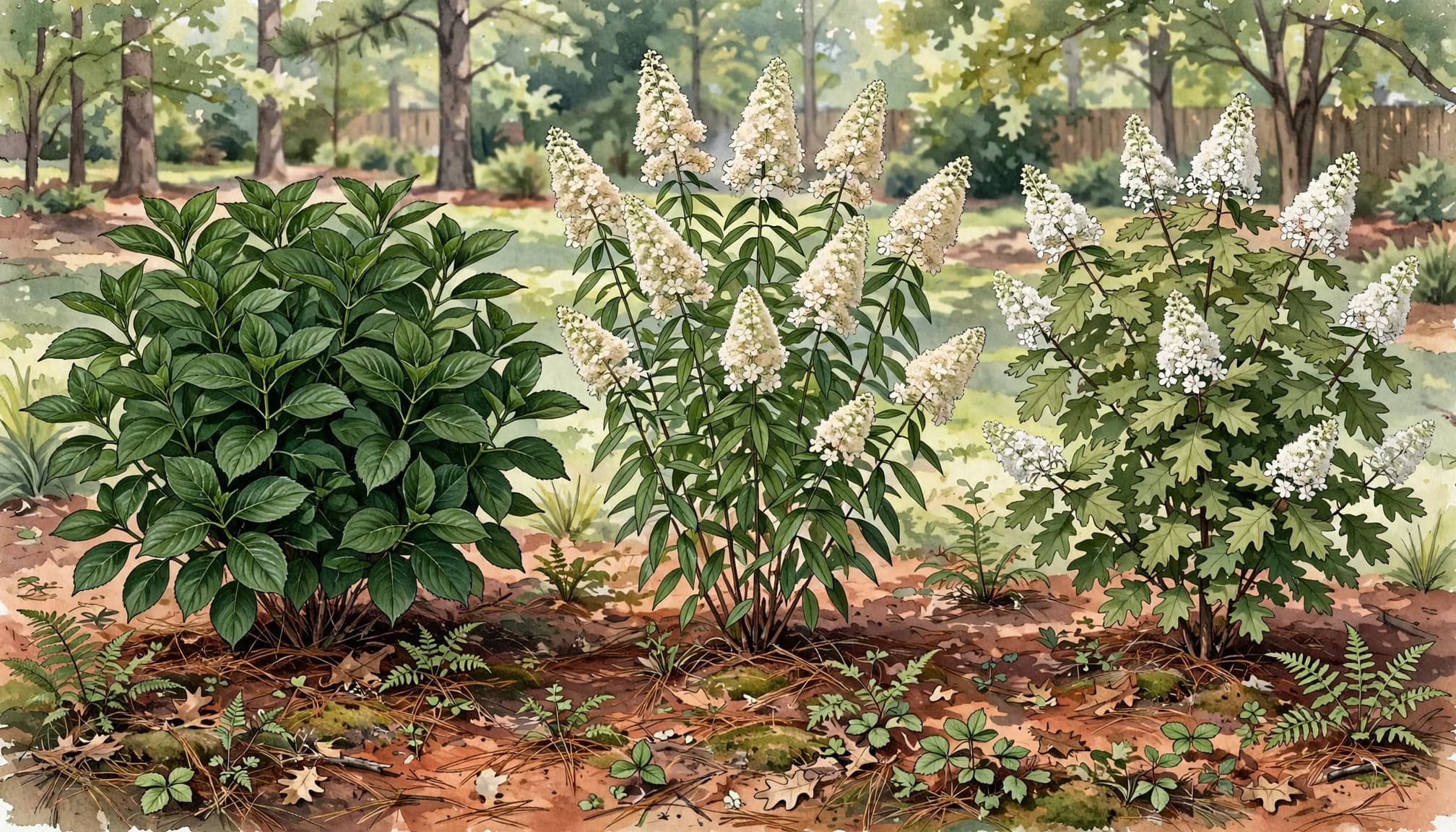
Bigleaf hydrangeas include familiar selections such as 'Nikko Blue' and Endless Summer. Their flowers may form rounded mopheads or flatter lacecaps.
When flowers are missing, record the cultivar name if you have it. Don't assume every broad-leaved hydrangea is the same variety. Likewise, a leafy shrub with no flowers doesn't provide enough information for a pruning decision. Keep the identification separate from the question of why flowering stopped.
Panicle: Cone-Shaped Flower Clusters
Panicle hydrangeas include 'Limelight', 'Little Lime', and 'Bobo'. Their tapered flower clusters distinguish them from rounded bigleaf mopheads.
However, cone-shaped flowers alone don't distinguish panicles from oakleaf hydrangeas. Look at the foliage as well. If you have several hydrangeas along a driveway or foundation, identify each plant individually. A shared planting bed doesn't mean every shrub belongs to the same group or should receive identical maintenance.
Oakleaf: Lobed Leaves and Peeling Bark
Oakleaf hydrangeas have distinctive oak-shaped leaves, white flower clusters, and peeling bark. Named selections include 'Alice', 'Snow Queen', and 'Ruby Slippers'.
Those lobed leaves are helpful when the plant hasn't flowered. They also prevent confusion with panicle hydrangeas. Once you identify an oakleaf, record it separately on your landscape plan. Its natural outline shouldn't disappear into a general instruction to make every shrub in the border match.
Trace Bloom Loss Back to Recent Maintenance
Before changing the care routine, reconstruct what happened. Photos, calendar entries, and landscape work orders are more useful than a general impression that the shrub "used to bloom."
Record What Was Cut
Write down when the hydrangea was last trimmed and what the work involved. Distinguish trimming a few branches from shortening the entire shrub.
Also note whether the plant received the same treatment as nearby hedges. That detail matters because a broad instruction such as "trim all shrubs" can overlook flowering plants.
If several hydrangeas stopped flowering after one maintenance visit, record that pattern. It provides a useful starting point without proving that every plant has the same problem.
Compare Like With Like
Compare the affected shrub with its own earlier photographs whenever possible. A comparison with a different hydrangea type can distract from what changed.
Look for differences in the plant's outline, remaining branch length, and distribution of flowers. Record whether blooms disappeared throughout the shrub or only in certain areas.
Then keep the pruning decision specific to that plant. Our Atlanta hydrangea pruning guide separates the three types so they don't get treated as interchangeable shrubs.
Separate Missing Flowers From Leaf Problems
A hydrangea can have more than one issue at once. Still, a spotted leaf doesn't establish why flowers are absent, and a missed flower display doesn't automatically mean disease.
Describe the Flower Problem Precisely
Record whether the plant produced no flowers, fewer flowers, or flowers only on part of the shrub. Those are different observations.
If buds or flower heads appeared and then disappeared, include that detail too. A photograph taken before routine landscape work can be helpful.
Avoid describing every disappointing display as "not blooming." More precise notes make it easier to decide whether the next task concerns pruning, damaged growth, or appearance alone.
Keep Leaf Spot on a Separate Track
RW Lawn Co's hydrangea leaf-spot guidance addresses small brown spots commonly seen around Atlanta. That is a separate issue worth documenting when foliage looks damaged.
Photograph affected leaves and the whole shrub rather than treating one marked leaf as the explanation for everything.
Our guide to hydrangea leaf spot in Atlanta covers that foliage problem. Keep the bloom history alongside those observations so one symptom doesn't hide another.
Protect the Shrub Before Making Another Cut
When hydrangeas aren't blooming, another haircut can feel like a useful reset. Yet trimming without identifying the plant can repeat the original mistake.
Hold off on blanket shaping , especially when nobody has established which hydrangea is in the bed. Don't shorten every branch merely to create an even surface.
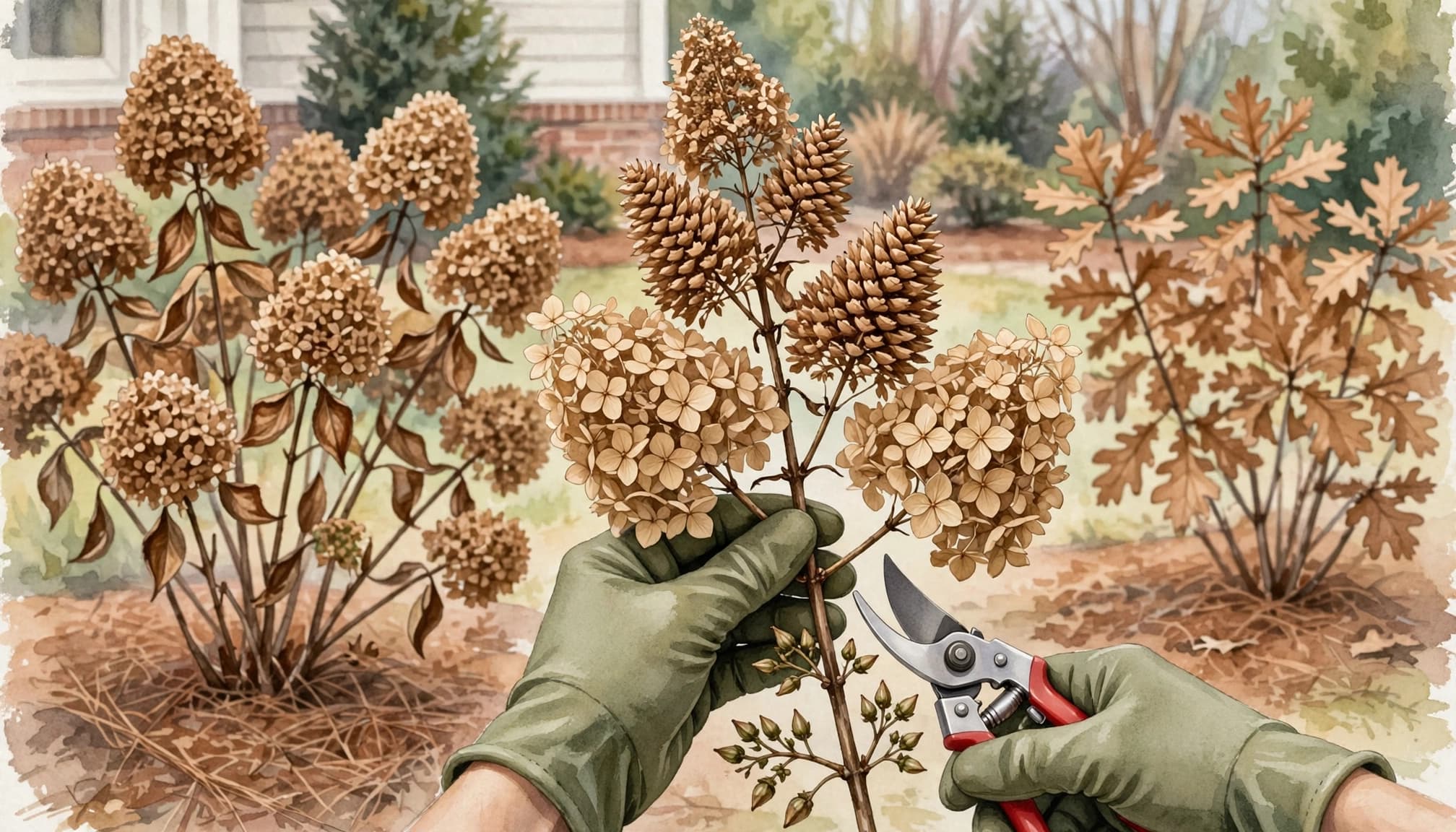
A tidy outline immediately after trimming doesn't tell you whether the work protected the hydrangea's flower display.
Keep faded flower heads and untidy growth separate from decisions about reducing the shrub. Appearance alone isn't enough reason to cut.
If a hydrangea has already received extensive trimming, document the work and stop additional cosmetic cuts. Another pass won't restore flowers removed during the first one.
Meanwhile, keep routine equipment and hauling routes clear of the branches. Protecting the remaining plant is a practical task that doesn't require guessing at a pruning treatment.
That distinction is helpful during property cleanup, when shrubs can otherwise become part of a general effort to make everything look uniform.
Review the Whole Bed Without Inventing a Cause
Atlanta landscape beds face summer heat that dries them out and sudden storms that shift material around. Those conditions deserve attention during property maintenance, but they don't establish why a particular hydrangea missed its flowers.
Walk the entire border. Note displaced bed covering, encroaching plants, accumulated debris, and branches extending into walkways.
Also record whether the hydrangea repeatedly gets trimmed because it obstructs access. That is a layout and maintenance question worth addressing separately from the missing display.
For broader bed planning, our comparison of pine straw and mulch explains the available covering options. Keep that project distinct from a promise to restore flowering.
A refreshed border can look much better while the bloom question remains unresolved. Likewise, removing debris doesn't justify reshaping the hydrangeas at the same visit.
Separate work orders help here. One can cover cleanup and bed appearance; another can address plant-specific maintenance. That prevents an ordinary cleanup appointment from becoming an unnecessary pruning job.
It also gives the crew a clear stopping point when the requested work is complete.
Give Your Landscape Crew a Plant-Specific Plan
Hydrangeas often share borders with plants maintained for a clipped outline. Unless the instructions name exceptions, a crew may receive an overly broad scope of work.
Use a short handoff before the next service visit:
- Identify each hydrangea by type and location, using photographs where helpful.
- State which shrubs must remain unshaped during routine maintenance.
- Separate cleanup, access work, and proposed pruning into distinct tasks.
- Record completed cuts so the next visit starts with an accurate history.
A location description should be concrete, such as "oakleaf beside the front steps," rather than "the flowering bush."
Also make the instruction visible to anyone handling the property. That includes whoever schedules work, performs cleanup, or maintains the adjacent lawn.
At RW Lawn Co, our residential landscaping and mulch services can fit into a broader property-maintenance plan. For hydrangeas, that plan should clearly distinguish general bed work from decisions about the shrub itself.
Keep the record concise enough to use. A labeled photograph and a few clear instructions are easier to follow than a long, ambiguous request.
Frequently Asked Questions About Hydrangeas Not Blooming
Should I Cut Back a Hydrangea That Didn't Flower?
A missed flower display alone isn't a reason to cut back the shrub. First identify whether it's bigleaf, panicle, or oakleaf, then review previous trimming.
If the plant has already been shaped, avoid adding another cosmetic cut while the maintenance history remains unclear. A second trim cannot put removed flowers back.
Keep the shrub out of blanket hedge work until there is a plant-specific decision. That instruction protects it without requiring an immediate diagnosis.
Can I Treat Every Hydrangea in One Bed the Same Way?
Each hydrangea needs identification, even when the plants share a border. Bigleaf, panicle, and oakleaf types shouldn't receive one undifferentiated pruning instruction.
A planting can also contain several named varieties, so retain labels or record cultivar names when available.
For routine service, mark the hydrangeas as individual plants rather than including them in a general hedge outline. This makes the work scope clearer and helps prevent accidental cuts.
Preserve the Plant Before Trying Another Fix
For Atlanta hydrangeas not blooming, the most useful first decision is often to stop unnecessary trimming. Identify the shrub and reconstruct its recent maintenance before approving more work.
Keep foliage problems and general bed cleanup separate from the flower question. That gives each task a clear purpose.
A plant-specific maintenance plan protects the remaining growth and reduces the chance of repeating a pruning mistake. Better instructions begin with knowing which hydrangea you're caring for.