Atlanta Hydrangea Leaf Spot: Cercospora Care for Hydrangeas
Small brown spots on hydrangea leaves are a common sight in Atlanta, especially after a stretch of warm rain. The mix of heat, humidity, and evening storms gives fungal diseases a long season to settle in.
If your hydrangea is losing lower leaves while the top still looks fair, hydrangea leaf spot may be the problem. The good news is that this disease often looks worse than it is, and steady care can keep the shrub growing well.
The key is to spot it early, then change the conditions around the plant. That starts with knowing what Cercospora leaf spot looks like and how it differs from other leaf problems.
How Cercospora Leaf Spot Shows Up on Hydrangeas
Cercospora leaf spot usually starts on the lower, older leaves. The first signs are tiny purple, brown, or reddish spots. As they grow, the spots often develop tan centers with darker edges.
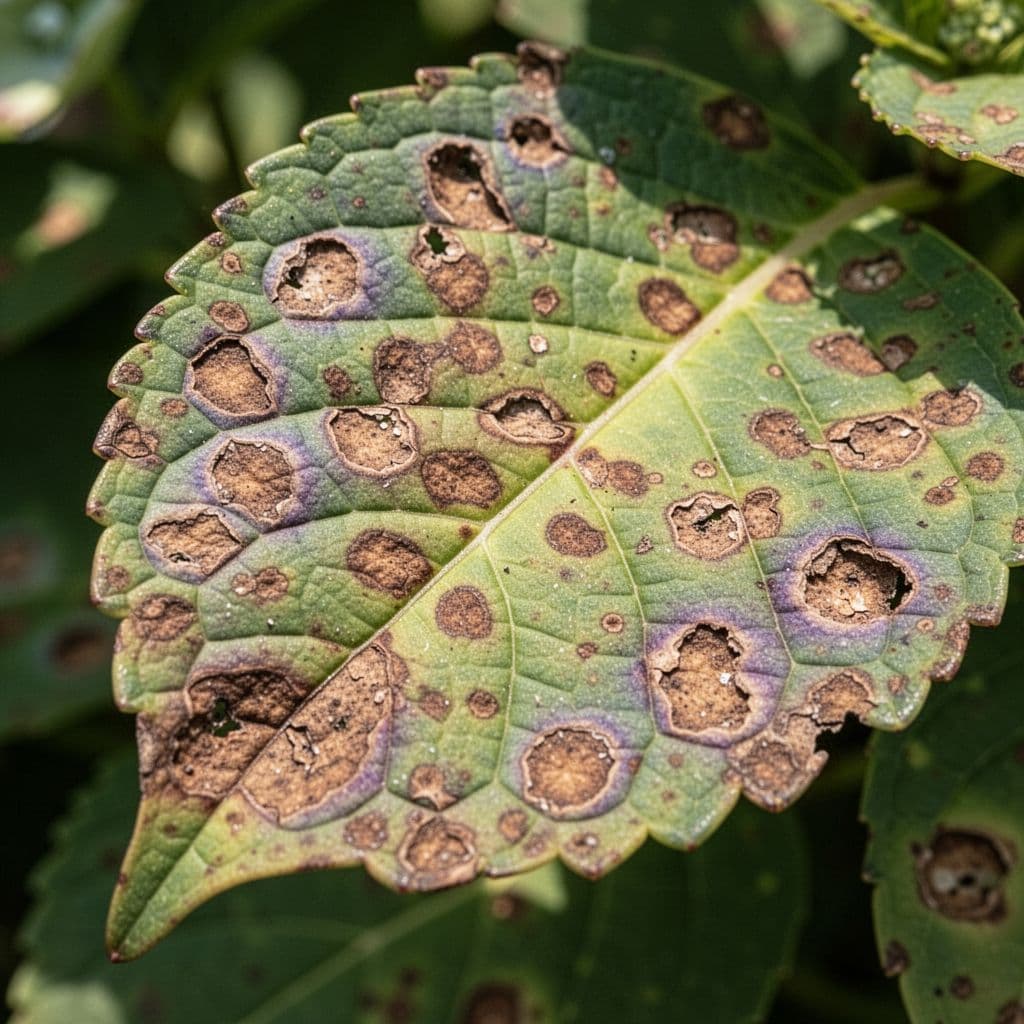
Those spots do not usually spread in a random blur. They stay fairly round, and they often keep a defined edge. As the disease builds, the tissue between the spots turns yellow, then the leaf drops.
In Atlanta yards, the pattern often begins in late spring and gets stronger through early fall. A shrub can still flower while the leaves look rough, which is why many homeowners miss the issue at first. By mid to late summer, the plant may look thin and tired.
The fungus does not need a dramatic storm to get started. It only needs a wet leaf surface, a bit of splash, and time.
New spots won't heal, but clean new growth can still look good once the weather turns drier.
Why Atlanta and North Georgia See More of It
Atlanta weather is friendly to fungal leaf spots. Warm days, humid nights, and repeated rain give spores plenty of chances to move.
Crowded planting beds make the problem worse. When leaves stay packed together, they dry slowly after rain or morning dew. That slow drying time is exactly what the fungus likes.
Overhead watering adds another boost. Water splashes spores from infected leaves and old debris onto healthy foliage. Beds under trees or along fences can also stay damp longer because air does not move through them well.
Mulch helps, but only when it is used the right way. A 2 to 3 inch layer of organic mulch reduces soil splash, yet it should stay pulled back from the stems. Piled mulch traps moisture at the base and can create new problems.
How to Tell It Apart From Anthracnose, Sun Scorch, and Water Stress
Hydrangea problems can look alike at first glance. The table below helps separate the common ones.
| Problem | What the leaves look like | Where it starts | Other clues |
|---|---|---|---|
| Cercospora leaf spot | Small round spots with purple or dark brown edges, tan centers, yellowing around the spots | Lower, older leaves first | Builds slowly in humid weather |
| Anthracnose | Larger brown blotches, irregular dead areas, sometimes stem or bloom damage | Leaves, stems, and flowers | Often follows long wet periods and can look more severe |
| Sun scorch | Bleached, crispy, or faded patches | Outer leaves in the hottest exposure | Shows up on the side getting strong afternoon sun |
| Water stress | Wilting, drooping, edge burn, or dull leaves | Whole plant or scattered leaves | Plant may perk up after watering |
Cercospora leaf spot stays small and round. Anthracnose usually looks rougher and can damage more than just the leaf surface. Sun scorch shows up where heat and direct sun hit hardest. Water stress affects the whole plant more evenly.
If the leaf spots are mostly on the lower canopy and keep a purple edge, Cercospora is a strong suspect. If the damage is blotchy, sunlit, or tied to wilting soil, look elsewhere first.
What to Do When You Spot It
The first step is simple cleanup. Remove the worst spotted leaves, especially those already yellowing or dropping. Pick up fallen leaves under the shrub too, because they can keep feeding the disease.
Then change how the plant gets water. Hydrangeas do best when water goes to the soil, not the leaves. Early morning is the best time, because leaves dry fast after the sun comes up.
A few steady habits help right away:
- Remove badly spotted leaves from the plant and the ground.
- Water at the base, not from overhead.
- Water in the morning so foliage dries fast.
- Keep mulch 2 to 3 inches deep, but off the stems.
- Avoid crowding the shrub with nearby plants.
If the shrub is dense, thin a few crossing stems so air can move through it. That small change can make a big difference in a wet Georgia summer.
For repeated, severe cases, a fungicide labeled for hydrangeas can help protect new leaves. It works best before the plant is heavily spotted, so timing matters. Old damage will still be visible, even if new leaves stay cleaner.
Keeping Hydrangeas Cleaner Next Season

A cleaner hydrangea season starts with the space around the plant. Good airflow helps leaves dry after rain, and that matters more in North Georgia than in many other places. If shrubs are packed too tightly, the leaves stay wet longer and the fungus gets another chance.
Mulch is useful when it is done well. It cuts down on soil splash and keeps roots cooler in summer. Keep it a few inches away from the main stems so the crown does not stay wet.
Fall cleanup matters too. Remove fallen leaves before they sit through winter, because infected debris can carry the problem into the next warm season. In spring, check the lower leaves first, since that is where Cercospora often begins.
A few long-term habits make the biggest difference:
- Give hydrangeas morning sun when possible.
- Avoid planting them in tight, still corners.
- Water early and at the soil line.
- Clean pruners between shrubs.
- Remove leaf litter before new growth starts.
Healthy plants still need care after a wet summer. Even so, a shrub with good airflow and clean mulch can handle Atlanta weather far better than one packed into a shady, damp corner.
When Recovery Is Realistic
Hydrangeas often recover well after a season of leaf spot. The damaged leaves won't turn green again, but the plant can push cleaner growth if weather and care improve.
That said, repeated defoliation weakens the shrub. If a hydrangea loses leaves every year, blooms may get smaller and the plant may look thin by late summer. In those yards, the fix is usually not more water. It is better air, better drainage, and better cleanup.
If the disease keeps returning despite those changes, the site may be part of the problem. Deep shade, crowded beds, and constant leaf wetness can keep the cycle going.
Conclusion
Atlanta hydrangea leaf spot is common, but it does not have to take over the plant. Cercospora leaf spot thrives in warm, humid weather, so the best response is to dry the foliage faster and reduce splash.
Look for small round spots with purple edges, then compare them with anthracnose, sun scorch, and watering stress. Once you know what you are seeing, the next steps are clear: clean up debris, water at the base, and keep the plant open to air.
A hydrangea with leaf spot can still bounce back. The leaves that are already marked are gone, but the next flush can be much cleaner when the growing conditions improve.