Atlanta Catch Basin Installation Cost Guide for 2026
A single catch basin can cost $800 to $2,000 in Metro Atlanta , but the final bill depends on pipe length, soil, access, and where the water will discharge. Homeowners comparing Atlanta catch basin installation cost should also separate the basin price from excavation, labor, permits, drainage pipe, and lawn repair.
A catch basin collects surface water at a low point and sends it through buried pipe to a suitable outlet. It can help with stormwater pooling, driveway runoff, and water flowing toward a foundation. However, the basin is only one part of the system. The drainage route determines much of the project price.
Key Takeaways
- A basic Atlanta catch basin installation often costs $800 to $2,000 per basin .
- A connected multi-basin drainage system commonly reaches $3,000 to $12,000 , while complex projects can exceed $20,000.
- Labor, excavation, pipe, the outlet, permits, and surface restoration should appear as separate estimate lines.
- Plastic basins cost less than concrete, but the right choice depends on traffic, soil, size, and expected water flow.
- Get a written drainage plan before accepting a low bid. A basin without a workable outlet won't solve recurring flooding.
What Is the Average Atlanta Catch Basin Installation Cost?
For 2026 budgeting, expect these broad Atlanta-area ranges:
| Project type | Typical installed cost |
|---|---|
| Small plastic basin with short pipe run | $800 to $1,500 |
| Larger basin or difficult excavation | $1,500 to $2,000 or more |
| Two or more basins with connected pipe | $3,000 to $8,000 |
| Full residential drainage system | $5,000 to $12,000 |
| Complex system with grading or major restoration | $12,000 to $25,000 or more |
These figures are planning ranges, not guaranteed prices. Local contractor estimates vary because Atlanta properties have different slopes, soil conditions, access problems, and drainage requirements.
A straightforward installation may include one plastic basin, a grate, 30 to 50 linear feet of solid pipe, bedding material, backfill, and a daylight outlet. That type of project often falls near $1,200 to $2,800 when excavation and restoration are included.
Some local pricing sources report $800 to $1,500 per basin when the basin, grate, and pipe connection are included. Larger concrete structures, longer pipe runs, deep trenches, or storm-sewer connections can push the price well above that range.
The biggest mistake is comparing a basin-only price with a complete drainage proposal. A $300 plastic box may be inexpensive to purchase, but excavation, pipe installation, outlet work, and turf repair can make the completed project several times higher.
What Drives Catch Basin Prices in Atlanta?
Basin size and material
Small plastic catch basins may cost roughly $35 to $120 for the unit, depending on dimensions and grate style. Common products from manufacturers such as NDS are available in several sizes, including compact basins for small lawn areas and larger boxes for heavier runoff.
Plastic works well for many residential lawns because it is light, easy to install, and resistant to rust. It may not be suitable where vehicles will drive over the grate unless the product has the required load rating and proper support.
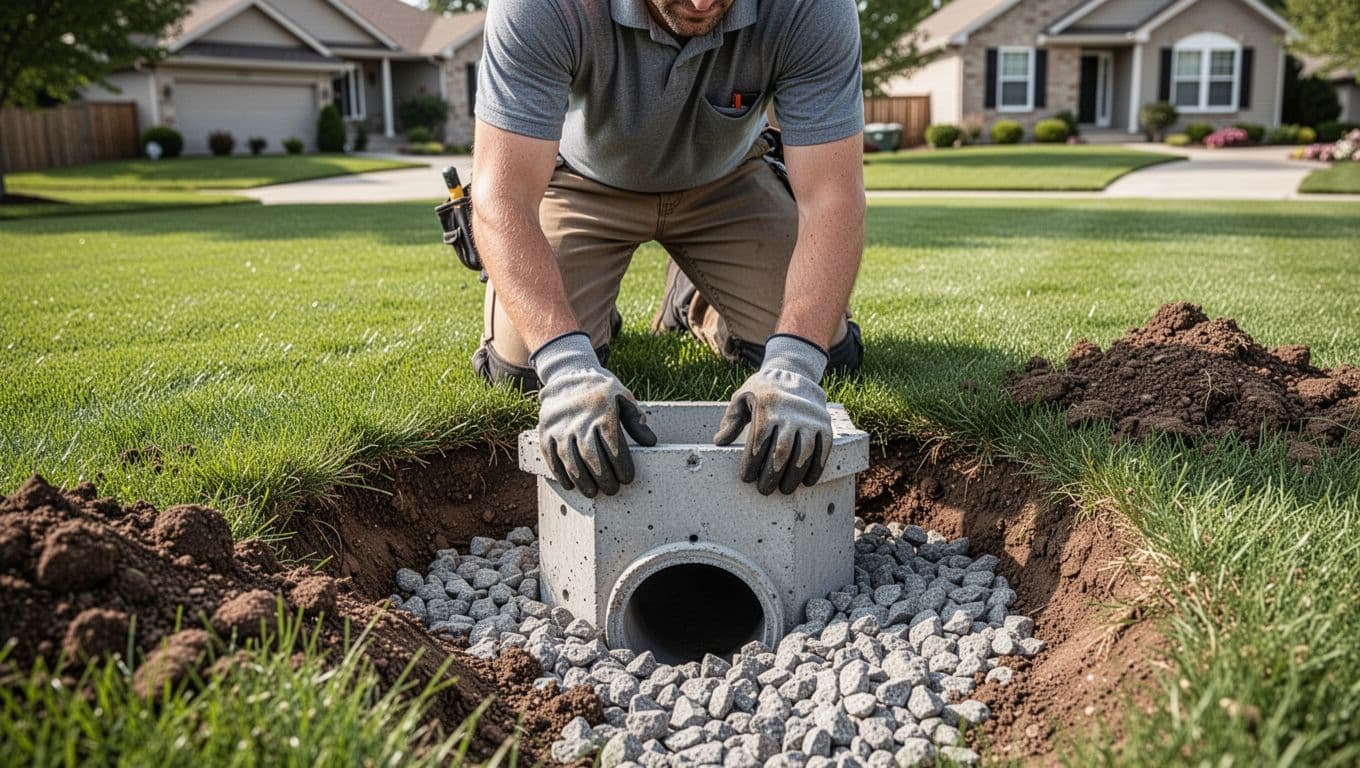
Concrete costs more to handle and install. A residential concrete basin can land near $600 to $2,100 , while large structures or deep installations may cost much more. Concrete may make sense in areas with heavy traffic or demanding structural requirements.
Excavation and soil
Excavation and basin setting often add $150 to $300 per basin before unusual site conditions. Atlanta's red clay can compact tightly and become difficult to dig after dry weather. Wet soil creates a different problem because trench walls can collapse and backfill may not compact correctly.
Rock, tree roots, narrow side yards, retaining walls, and limited equipment access can increase labor. Hand excavation takes longer than machine work, and carrying spoil through a gate adds time.
Pipe length and outlet design
Installed drainage pipe may cost around $3.50 to $6 per linear foot for common four-inch solid PVC or corrugated pipe, though larger pipe and difficult trenching cost more. A short run to a safe daylight outlet costs far less than a long route beneath a driveway or patio.
The outlet also matters. A basic daylight discharge may cost about $150 to $450 . A pop-up emitter, outlet protection, gravel apron, or connection to an approved drainage structure may increase the total.
A catch basin only works when the pipe has enough slope and the outlet can safely accept the water. The cheapest basin location is not always the cheapest complete solution.
Labor, Materials, Permits, and Lawn Restoration
A reliable estimate should show more than one combined total. Ask the contractor to separate the following items:
- Basin and grate: The size, material, brand, and load rating should be listed.
- Excavation and installation: This includes digging, bedding, setting the basin, and backfilling.
- Drainage pipe: Confirm the diameter, pipe type, and total linear feet.
- Outlet: Identify whether the system uses daylight discharge, a pop-up emitter, or another approved outlet.
- Permits and inspections: Requirements can vary by city, county, project size, and connection point.
- Restoration: Include topsoil, seed, sod, mulch, pavers, concrete, or asphalt repairs when applicable.
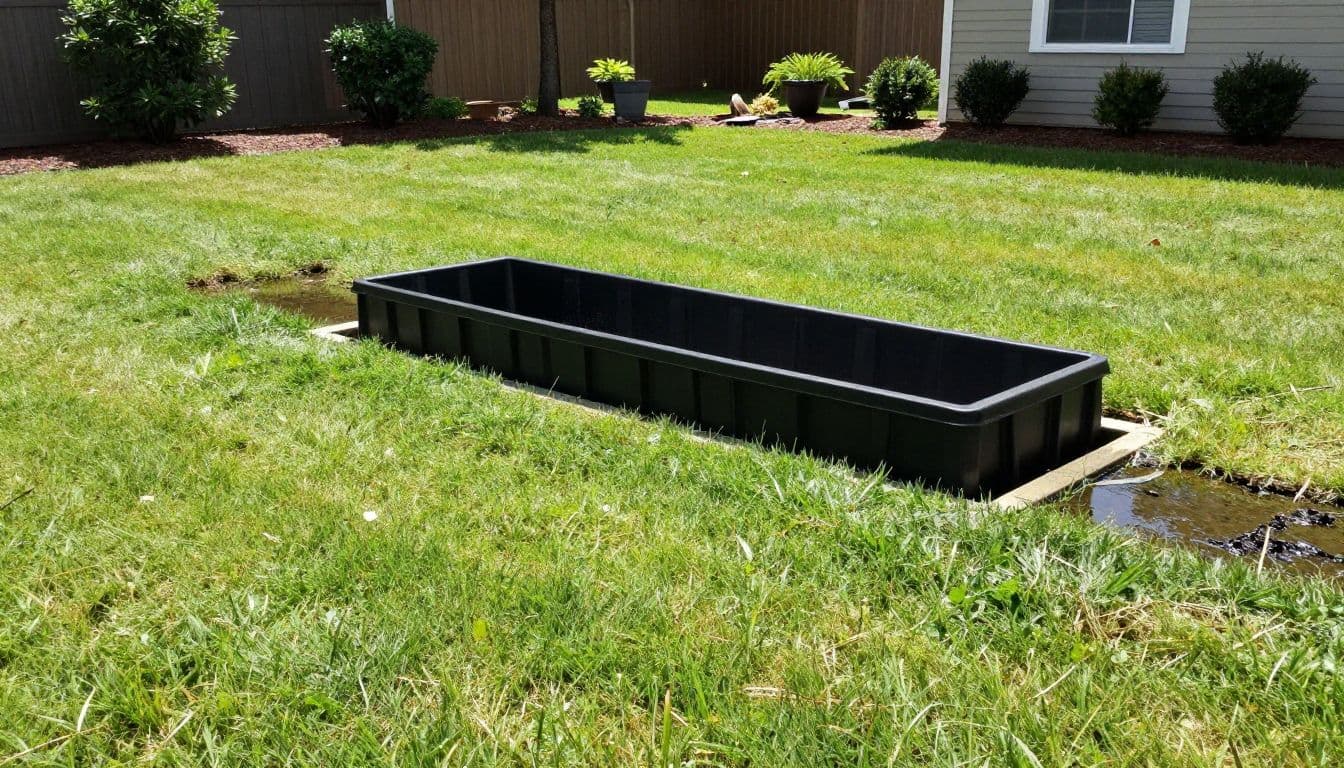
Lawn repair is easy to overlook. A trench across established turf may need topsoil and new seed, while a shaded or high-traffic area may need sod. Driveways, walkways, irrigation lines, landscape beds, and decorative edging can add restoration costs.
Before digging, the contractor should identify buried utilities. Georgia homeowners should also ask who handles utility locating and whether the work requires local approval. A pipe that crosses a property line, connects to a public drainage system, or changes runoff toward another property may require additional review.
No single permit price applies across Metro Atlanta. Confirm the requirement with the municipality or county where the property sits. A responsible estimate should state whether permit fees are included, excluded, or still pending.
When a Catch Basin Is the Right Drainage Fix
Catch basins work best where water travels across the surface and collects at a low point. Typical locations include the bottom of a driveway slope, a lawn depression, a patio edge, or an area receiving concentrated roof runoff.
They may not be the right answer for every wet lawn. If water sits across a broad area because the yard lacks slope, regrading may address the cause more effectively. If the soil remains saturated along a long strip, a French drain may fit better. A dry creek bed can help manage visible runoff when an open, decorative channel works with the property.
Review these soggy lawn fix options in Atlanta before choosing a basin based only on a puddle's location.
Roof runoff deserves separate attention. A downspout that releases water beside the foundation can overwhelm a nearby catch basin. In many cases, a buried solid pipe from the downspout provides a more direct fix. These Atlanta downspout drainage fixes cover options such as extensions and underground pipe systems.
The water source also affects sizing. A basin serving one small lawn area has different demands than one collecting runoff from a roof, driveway, and sloped backyard. The contractor should explain which surfaces drain toward the basin and whether the grate and pipe can handle peak flow.
How to Compare Atlanta Drainage Estimates
Start with a site visit, not a phone-only price. The contractor needs to inspect grades, downspouts, soil, access, existing drainage, and the proposed outlet. Photos can help, but they don't replace measurements.
Ask each company to quote the same scope. For example, compare one 12-inch plastic basin, 40 linear feet of four-inch solid pipe, one daylight outlet, normal soil excavation, and basic seed restoration. Without matching assumptions, the lowest number may simply leave out important work.
A good proposal should answer five practical questions:
- Where will the basin sit, and what area will drain into it?
- How many feet of pipe will the crew install?
- Where will the water discharge?
- What happens if the crew finds rock, roots, utilities, or unsuitable soil?
- Which repairs are included after the trench is closed?
Also confirm whether the price includes hauling excess soil. Some installations create more spoil than the property can absorb. Removing it may add a separate hauling or disposal charge.
Ask about maintenance, too. Leaves, mulch, sediment, and grass clippings can block the grate. The basin may need periodic cleaning, especially near deciduous trees or unpaved areas. A contractor should explain how to access the box and whether the pipe has cleanouts.
If the water problem includes broad slope corrections, review the Atlanta yard grading cost guide as well. Regrading may cost less than installing several basins and still leave the property with poor surface flow if the underlying slope remains unchanged.
Ways to Control the Project Budget
The best way to reduce cost is to fix the water source before adding drainage hardware. Extending a downspout, correcting a small low spot, or directing water into an existing swale may reduce the basin size or eliminate an unnecessary unit.
Keep pipe routes short, but don't sacrifice the outlet. A poor discharge point can send water back toward the foundation or a neighbor's property. Saving 20 feet of trench isn't worthwhile if the system cannot move water away safely.
Protect existing improvements during planning. Routing beneath a lawn usually costs less than cutting through concrete, pavers, mature planting beds, or an irrigation system. However, the shortest route isn't always best if it creates erosion at the outlet.
Finally, avoid choosing a contractor from a bare number. Compare drainage plans, materials, pipe lengths, restoration details, warranty terms, and change-order policies. A clear mid-range estimate often provides better value than a low bid that excludes disposal or repairs.
Conclusion
Most homeowners should budget $800 to $2,000 for one basic catch basin installation in Atlanta , with larger connected systems reaching several thousand dollars more. Pipe length, excavation, outlet design, access, permits, and surface restoration account for much of the difference.
The right Atlanta catch basin installation cost depends on the complete water route, not the price of the plastic or concrete box. Get a written scope that shows every major cost, confirms the discharge point, and explains how the lawn or hardscape will be restored. When the basin matches the runoff problem, it can solve pooling without turning a small drainage issue into an oversized project.