Atlanta Dry Well Installation Cost: 2026 Homeowner Guide
A dry well can solve standing water near a downspout, but the Atlanta dry well installation cost depends heavily on soil, access, drainage volume, and excavation depth. Most Atlanta homeowners should budget an estimated $1,200 to $4,500 for a residential dry well project in 2026.
Small systems may cost less, while larger tanks, difficult clay soil, long underground pipe runs, or added grading can raise the price quickly. Before choosing a dry well, confirm that the soil can absorb water and that the system won't send runoff toward your foundation or a neighboring property.
Key Takeaways
- A typical Atlanta dry well costs an estimated $1,200 to $4,500 in 2026.
- Small, single-downspout systems may fall near $1,200 to $1,800 , while larger systems can exceed $5,000 .
- Atlanta's clay soils, heavy rain, slope, and limited equipment access are major cost factors.
- A dry well works best when the soil drains reasonably well and the problem involves concentrated runoff.
- Get an itemized estimate covering the basin, excavation, pipe, gravel, labor, restoration, and any grading.
What a Dry Well Does in an Atlanta Yard
A dry well is an underground structure that collects stormwater and releases it into the surrounding soil. The system usually includes a buried plastic or concrete basin, drainage pipe, gravel, and a filter fabric or similar separation material.
A downspout may connect directly to the dry well. In other projects, a catch basin collects water from a low spot before underground pipe carries it to the well. Once the water reaches the basin, it slowly disperses through openings or surrounding stone.
The system can help when one part of the yard receives too much water during storms. Common examples include:
- A downspout discharges beside the foundation.
- Water collects below a sloped driveway.
- A low area stays muddy after rain.
- Roof runoff cuts a channel through turf.
- A patio or walkway sends water toward the lawn.
A dry well isn't a substitute for correcting a bad slope. If the yard sends water toward the house, regrading may be the first step. A basin can collect runoff, but it shouldn't become a hidden container for a problem that affects the entire property.
Atlanta's Piedmont soils also require careful evaluation. Many properties contain dense red clay that drains slowly. Some yards have a layer of looser topsoil above compacted subsoil, which can make the surface appear suitable while water remains trapped below.
A contractor should evaluate the soil, the amount of runoff, and the available discharge area before recommending a system. The goal is controlled infiltration, not simply burying a tank in the wettest part of the yard.
A dry well that works during light rain may overflow during an intense Atlanta storm if the basin and drainage pipe are too small.
Atlanta Dry Well Installation Cost Ranges for 2026
Current 2026 estimates place a standard residential dry well in Atlanta between $1,200 and $4,500 . The lower end usually covers a small system with short pipe runs and easy access. The higher end may include a larger basin, more excavation, added gravel, multiple downspouts, and difficult soil.
These are planning estimates, not guaranteed quotes. Actual pricing depends on the site inspection and the scope written into the proposal.
| Project type | Estimated 2026 Atlanta cost | Typical scope |
|---|---|---|
| Small dry well | $1,200 to $1,800 | One downspout, small basin, short pipe run |
| Standard residential system | $1,800 to $4,500 | One or two downspouts, excavation, pipe, gravel, restoration |
| Larger dry well system | $4,500 to $8,000+ | More roof runoff, larger basin, longer trench, added catch basin |
| Complex combined drainage project | $8,000 to $15,000+ | Multiple drainage features, difficult access, grading, concrete work, or major restoration |
An Atlanta regional planning estimate places small residential dry wells around $1,200 to $1,500 for construction and maintenance. Contractor pricing guides for the area commonly extend to about $4,500 , especially when the tank size and excavation requirements increase.
National 2026 cost data shows a wider range of about $1,200 to $5,200 for dry well installation. Other cost models reach $12,000 when the project includes substantial trenching, large structures, site work, and difficult conditions. Those higher figures usually describe more than a basic backyard dry well.
The most useful number for your budget is the middle range. If your project involves one downspout, a nearby lawn area, and machine access, plan around $2,000 to $4,000 as an initial estimate. A contractor may recommend a different solution after testing the soil.
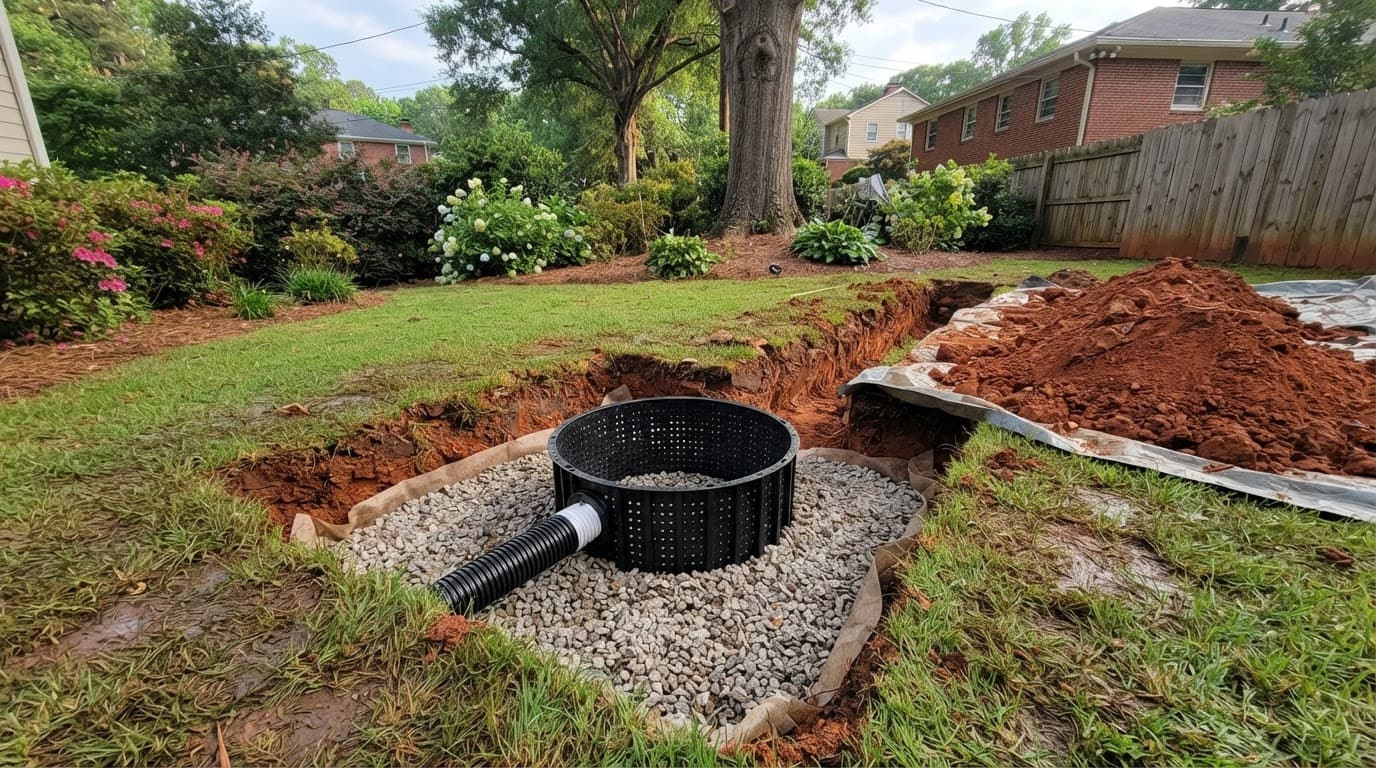
An underground basin needs enough gravel, space, and soil drainage to handle incoming stormwater.
What Raises the Atlanta Dry Well Installation Cost?
Two yards on the same street can receive very different estimates. The main price difference often comes from the work around the dry well, not the basin itself.
Soil and infiltration
Clay soil takes longer to excavate and may absorb water slowly. A contractor may need to dig deeper, replace unsuitable material, add more stone, or perform an infiltration test.
If the soil drains poorly, the dry well can fill faster than it empties. The result may be repeated overflow, soggy turf, or water backing up through the inlet pipe. In that situation, a French drain, daylighted outlet, swale, or regrading project may work better.
Dense clay can also make hand digging difficult. Mechanical excavation may reduce labor time, but equipment still needs a safe path into the yard.
Basin size
The holding capacity must match the amount of runoff entering the system. A small basin may handle one downspout, while several roof sections may require a larger chamber or multiple connected structures.
Larger basins cost more to purchase and require wider or deeper excavation. Concrete units also tend to cost more than lightweight plastic chambers, especially when delivery and equipment are included.
Pipe length and layout
Short pipe runs keep costs down. Longer runs require more trenching, fittings, bedding material, and turf repair.
A route that crosses a walkway, driveway, retaining wall, or established planting bed adds labor. The contractor may need to remove and replace concrete, work around tree roots, or restore several types of surfaces.
Site access
A backyard behind a narrow gate may require hand excavation or small equipment. That can add time compared with a property where a mini excavator can reach the work area directly.
Fences, steep slopes, utility lines, pools, decks, and outbuildings all affect access. Ask whether the estimate includes equipment transport, hand digging, and removal of excess soil.
Grading and surface drainage
A dry well may be only one part of the solution. If surface water travels across the yard, the project may need a shallow swale, berm, catch basin, or small grading adjustment.
For context, 2026 Atlanta estimates for drainage-driven yard regrading often fall around $3,500 to $10,000 for a yard-wide project. Smaller grading jobs may cost less, while extensive cut-and-fill work can exceed that range. You can compare those options in this Atlanta yard grading cost guide.
Lawn and hardscape restoration
The finished price should account for what happens after the pipe and basin are installed. Restoration may include:
- Replacing excavated soil
- Spreading topsoil
- Reseeding or installing sod
- Repairing mulch beds
- Resetting pavers
- Rebuilding a section of walkway
- Removing surplus dirt and debris
A low quote may exclude restoration. Ask before comparing bids.
Materials and Labor: Where the Money Goes
A clear proposal should separate major cost categories. That makes it easier to compare contractors and identify a low bid that leaves out necessary work.
| Cost item | Estimated 2026 range | What affects the price |
|---|---|---|
| Dry well basin or chamber | $750 to $2,000 | Material, size, capacity, delivery |
| Excavation and trenching | $1,000 to $4,000 | Depth, soil, access, trench length |
| Drainage pipe and fittings | $300 to $1,200 | Pipe length, diameter, number of connections |
| Gravel and bedding | $200 to $900 | Basin size, stone depth, local delivery |
| Surface restoration | $250 to $1,500+ | Turf, mulch, concrete, pavers, planting beds |
| Soil testing or added drainage work | Varies | Infiltration, grading, outlet, or permit needs |
The component ranges above can produce a basic installed total near $2,500 to $8,000 . Projects with major access problems, larger structures, extensive grading, or concrete restoration may reach $12,000 or more .
Labor includes more than digging. Workers must establish the layout, protect nearby surfaces, excavate safely, prepare the base, set the basin, connect the pipe, backfill, compact the soil, and restore the area.
Pipe quality also matters. Smooth-wall solid pipe can move water efficiently over a long run. Perforated pipe may be appropriate in a collection trench, but it isn't automatically the right choice for the line carrying water to a dry well. The system needs a design that matches the water source and the intended discharge method.
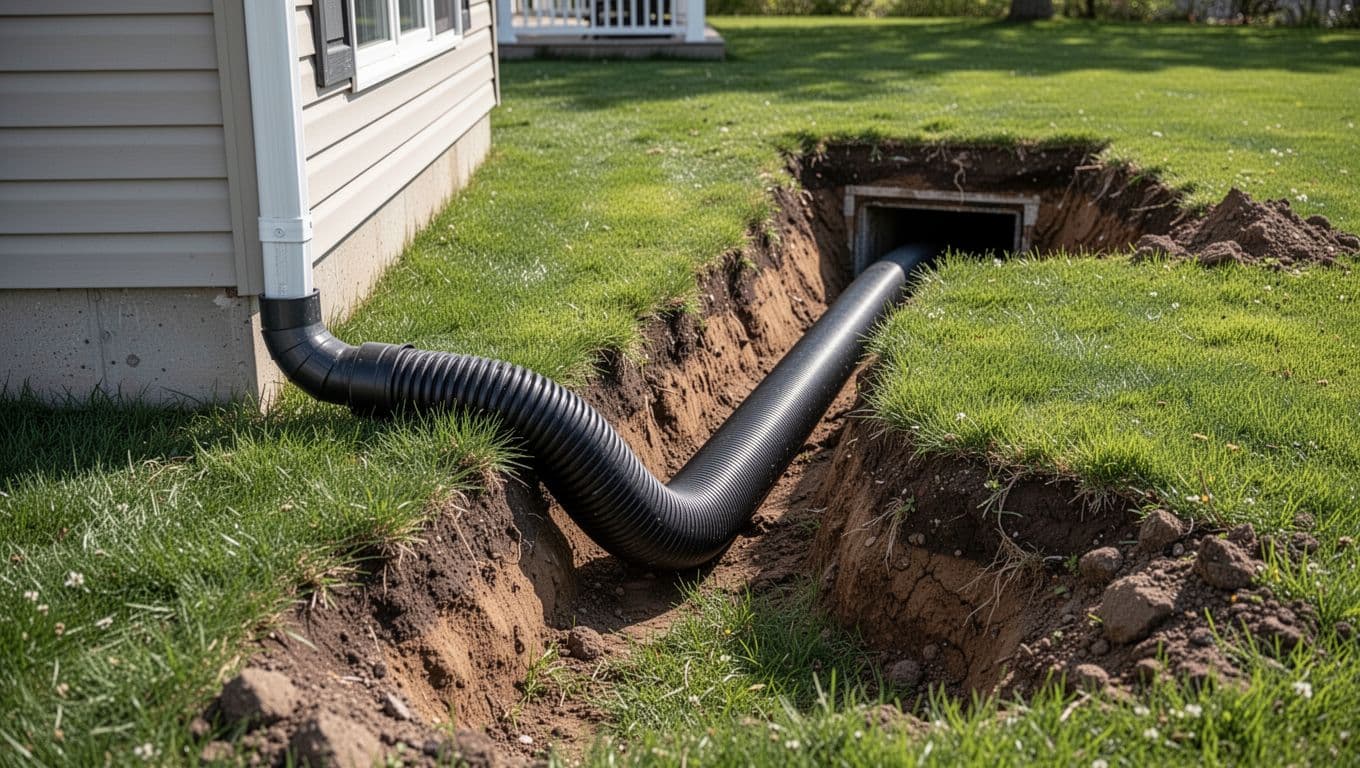
The pipe route, connection points, and distance to the basin can change the project total.
Dry Well Versus Other Atlanta Drainage Solutions
A dry well is one drainage option. It isn't automatically the least expensive or most effective choice.
A French drain collects water through a perforated pipe surrounded by gravel. It works well when the soil stays saturated along a trench or when water moves across a broad section of the yard.
A catch basin collects surface water at one or more low points. It can connect to solid underground pipe that sends water to a dry well or another approved outlet.
Regrading changes the slope of the soil. This often makes sense when water naturally runs toward the house or pools because of a low spot.
A dry creek bed carries visible surface runoff through a shaped, rock-lined channel. It can handle water that needs a clear route across the property. Review this Atlanta dry creek bed cost guide when comparing a visible drainage feature with an underground system.
| Drainage option | Estimated Atlanta cost | Best fit |
|---|---|---|
| Dry well | $1,200 to $4,500 typical | Concentrated runoff with suitable soil |
| Basic French drain | $1,500 to $5,000 | Saturated soil along a trench |
| French drain with catch basins | $5,000 to $12,000 | Several low spots or surface collection points |
| Yard regrading | $3,500 to $10,000 | Incorrect slope or broad pooling |
| Dry creek bed | $4,000 to $12,000+ | Visible runoff route and erosion control |
Metro Atlanta drainage estimates also place catch basin installation around $800 to $1,500 each . Channel drains often cost about $40 to $75 per linear foot , depending on the drain, surface, trenching, and outlet.
The right choice depends on where the water starts, how it moves, and how the soil handles it. This Atlanta drainage fix guide compares dry wells with French drains, regrading, and dry creek beds.
How Atlanta Soil, Rainfall, and Slope Affect the Design
Atlanta homeowners often deal with intense rain that sends a large volume of water through downspouts in a short period. A dry well must handle that flow without filling immediately.
Roof size matters. A large roof section can send more water to one downspout than a small dry well can absorb. The system may need a larger basin, a second basin, or a different discharge method.
Clay soil adds another concern. Water can move quickly through a loose upper layer, then stop at compacted clay below. A basic visual inspection won't always reveal that condition. A contractor may dig a test hole or recommend an infiltration test before finalizing the design.
Slope affects both construction and performance. A downhill property may allow gravity to move water toward a safe outlet. A flat yard may need a deeper trench or carefully set pipe elevations. If the pipe lacks enough slope, sediment can collect and reduce flow.
The dry well should also stay away from the home's foundation. Exact placement depends on the structure, soil, drainage design, and local requirements. Your contractor should identify a location that protects the foundation and avoids sending water toward neighboring lots.
Trees and roots deserve attention as well. Excavating near mature trees can damage roots and create future maintenance problems. A revised pipe route may cost more initially but prevent damage to valuable plantings.
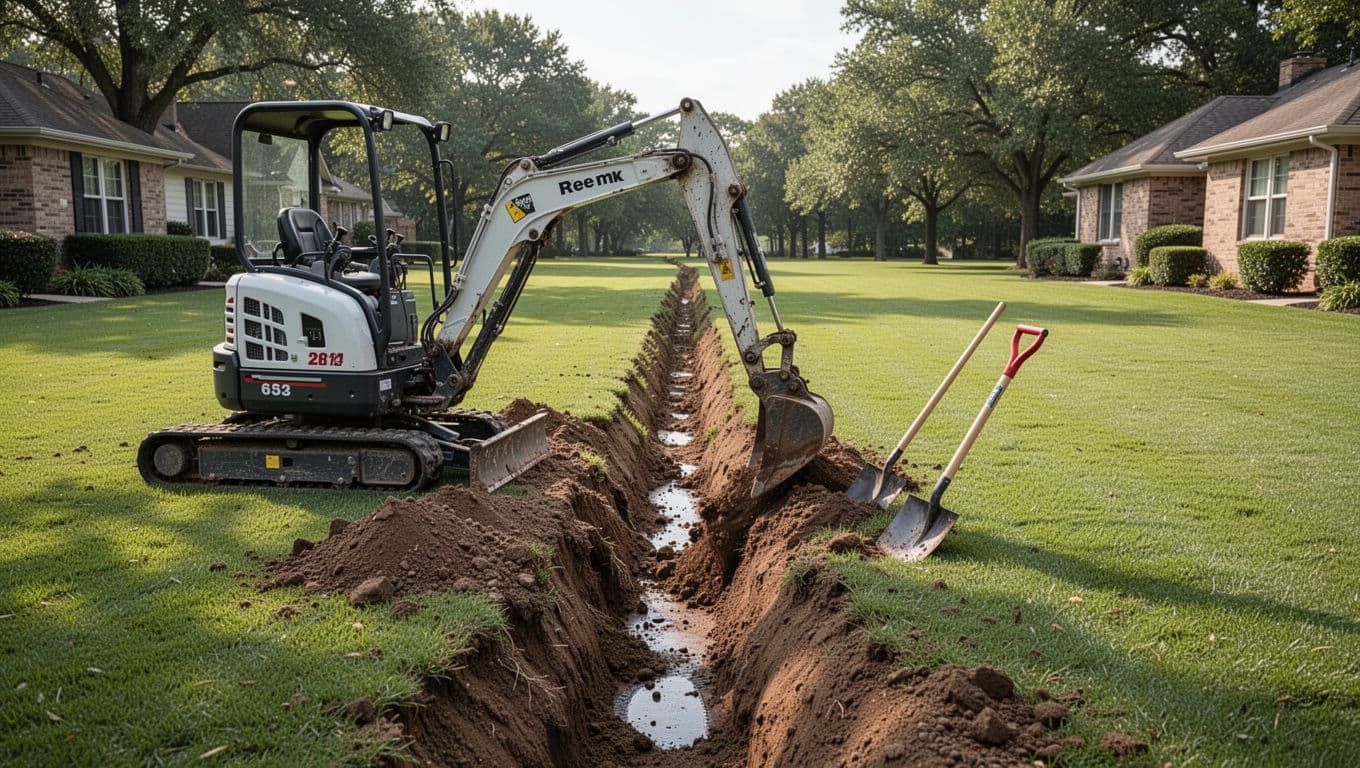
Limited backyard access can increase labor when crews must use compact equipment or dig by hand.
Questions to Ask Before Accepting a Quote
A professional estimate should describe the system in enough detail that you understand what you're buying. Ask the contractor to identify the water source, the basin location, the pipe route, and the expected discharge method.
Confirm whether the price includes these items:
- Site inspection and drainage layout
- Utility marking before excavation
- Basin or chamber size
- Pipe diameter, length, and fittings
- Gravel, bedding, and filter fabric
- Excavation, soil removal, and backfill
- Connection to the downspout or catch basin
- Lawn, mulch, paver, or concrete restoration
- Cleanup and removal of excess material
- Maintenance instructions and warranty terms
Ask whether the contractor expects to encounter rock, concrete, buried debris, roots, or unsuitable soil. Those conditions may appear only after digging, but the estimate should explain how change orders will work.
You should also ask where overflow goes during a major storm. A dry well needs a safe backup plan if the surrounding soil cannot absorb water fast enough. That might involve an overflow pipe, a swale, or another drainage feature.
Check local requirements before work begins. Rules can vary by city or county, especially when excavation, stormwater discharge, right-of-way areas, or connections near a structure are involved. The contractor should tell you which approvals or utility checks apply to the project.
Avoid choosing a bid based only on the lowest number. A quote that excludes restoration, gravel, or proper pipe connections may become more expensive after work starts.
Maintenance and Common Dry Well Problems
A dry well needs periodic attention even after a successful installation. Keep leaves, mulch, and sediment out of the downspout connection. Clean gutters so roof debris doesn't travel into the underground system.
Inspect catch basins before and after heavy storm periods. Remove sediment before it reaches the pipe. If the system includes an accessible inspection port, check whether water remains for long periods after rain.
Warning signs include:
- Water backing up at the downspout
- A soggy area above the basin
- Lawn settlement over the trench
- Slow drainage after ordinary rainfall
- Erosion around the inlet or overflow
- Sediment washing from the outlet area
Settlement often occurs when excavated soil wasn't compacted in layers. A contractor may need to add soil and regrade the surface. Persistent saturation can indicate that the soil isn't absorbing water as designed.
Don't connect additional downspouts without checking the system's capacity. Adding roof runoff later can overwhelm a basin that was sized for one connection.
The expected Atlanta dry well installation cost should include long-term care in your budget. A small amount of gutter and basin maintenance can prevent a larger repair, especially when heavy storms carry leaves and sediment into the drainage line.
Conclusion
For most Atlanta homeowners, a reasonable 2026 planning range is $1,200 to $4,500 for a standard dry well. Clay soil, long trenches, limited access, larger basins, grading, and surface restoration can push the total higher.
The best estimate connects the price to the actual water problem. Before work begins, confirm the soil, runoff volume, basin size, pipe route, overflow plan, and restoration details. A properly sized system can keep concentrated stormwater away from your foundation without turning one soggy area into another.