Atlanta Tree Removal Cost Guide for 2026
A tree can look manageable from the ground and still cost thousands to remove once height, access, and nearby hazards enter the picture. In 2026, the Atlanta tree removal cost for most standard residential jobs falls between $800 and $2,500 , although smaller trees may cost less and difficult removals can exceed $4,000.
The final price depends on more than the tree itself. Stump grinding, debris hauling, storm damage, utility lines, limited access, and emergency scheduling can all change your estimate. This guide explains what Atlanta homeowners should expect before hiring a tree removal company.
What Is the Typical Atlanta Tree Removal Cost in 2026?
For a normal residential removal, Atlanta homeowners should plan for approximately $800 to $2,500 . This range usually fits a medium-to-large tree with reasonable access and no major complications.
Some smaller removals begin around $200 to $500 . A tall tree near a house, fence, driveway, or power line can cost $2,000 to $4,000 or more. Very large trees, hazardous trees, and emergency storm work may reach $4,000 to $8,000+ .
Several Atlanta pricing models place the average single-tree job near $880 . Another 2026 estimate range places many typical jobs between $759 and $1,026 , depending on the tree and services included. These figures are useful for planning, but they shouldn't replace an on-site quote.
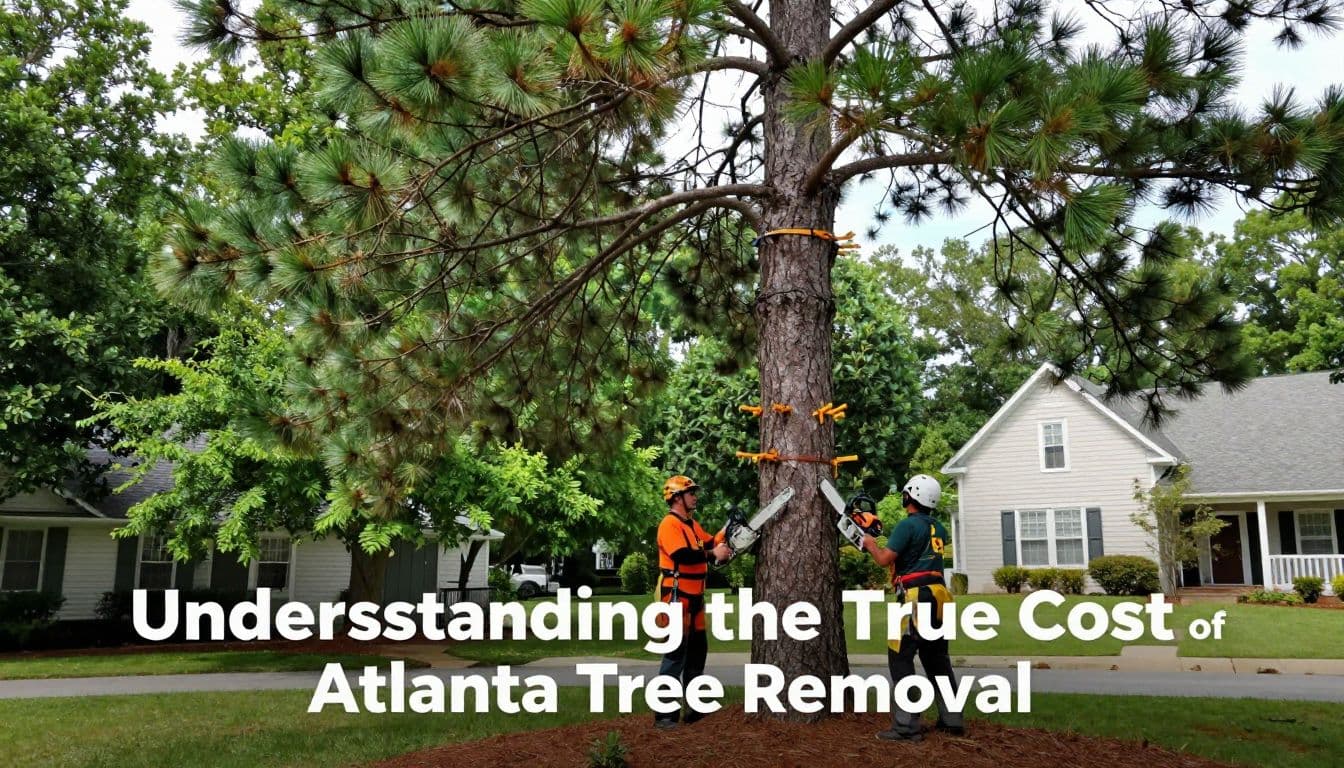
A company may price the work by tree size, labor time, equipment needs, or overall job risk. Therefore, two trees with similar heights can have very different removal prices.
A 40-foot pine in an open backyard is usually easier to handle than a 40-foot oak growing beside a roof. The second tree may require controlled section-by-section removal, additional workers, rigging equipment, and more cleanup.
A realistic Atlanta planning number is $800 to $2,500 for a standard medium-to-large tree removal, with small jobs near $200 and complex removals reaching $8,000 or more.
Atlanta Tree Removal Cost by Tree Size
Height is one of the first details a tree company considers. Diameter, trunk weight, branch spread, species, and condition also matter, but height often determines the equipment and labor required.
The following ranges provide a practical starting point for Atlanta homeowners.
| Tree size | Common estimate range | Typical job conditions |
|---|---|---|
| Small, under 30 feet | $200 to $800 | Open yard, limited branches, easy access |
| Medium, 30 to 60 feet | $500 to $2,000 | Moderate climbing, cutting, and cleanup |
| Large, over 60 feet | $1,500 to $4,000+ | Heavy limbs, rigging, larger equipment |
| Very large or hazardous | $4,000 to $8,000+ | Tight access, structural danger, emergency work |
These are estimate ranges , not fixed rates. A 25-foot tree with a thick trunk may cost more than a thin 35-foot ornamental tree. Likewise, a medium tree that leans over a garage requires more care than one standing alone in a field.
Tree species can affect the work as well. Mature oaks often have heavy wood and broad limbs. Pine trees may have tall, narrow trunks but can still create difficult jobs when they lean toward a structure. Dead trees are risky because branches and sections may break without warning.
Location also changes the price. A backyard with no gate access may require workers to carry equipment and debris farther. If a bucket truck can't reach the tree, climbers may need to work from the trunk. In other cases, a crane may be the safest option, and crane use can add several thousand dollars.
For a more useful estimate, measure the tree's approximate height and trunk diameter, then photograph the entire tree, its base, nearby structures, and access route. Those details help a company identify likely complications before visiting.
The Main Factors That Change Your Estimate
The tree's height is only the first part of the pricing equation. Companies also assess how safely they can bring each limb and trunk section to the ground.
Access and equipment
Easy access usually keeps labor and equipment costs lower. A truck that can park near the tree reduces carrying time and makes chip removal faster.
Backyard trees behind narrow gates, retaining walls, steep slopes, pools, or landscaping beds need more protection and hand work. If a company must use ropes, rigging, a bucket truck, or a crane, the estimate will rise.
Proximity to structures
Branches over a roof, shed, fence, driveway, sidewalk, or pool cannot fall freely. Workers must lower sections in a controlled way. That process protects property, but it takes more time than dropping wood into an open area.
Trees near foundations can also require careful planning. The removal itself may be straightforward, while moving logs through a tight space creates the added expense.
Tree condition
A healthy tree often behaves predictably during removal. Dead, hollow, split, insect-damaged, or storm-damaged trees are less predictable. Weak branches can break while workers climb or cut, so the crew may need extra safety measures.
A tree that is already leaning toward a home presents a higher risk than one with a stable trunk. The quote should reflect that risk rather than treat both trees as equal jobs.
Tree diameter and wood weight
A thick trunk produces more logs, chips, and disposal work. Heavy hardwood sections also require more time to cut, move, and load.
Two trees with the same height can have different prices because one has a much larger trunk. Ask whether the estimate accounts for trunk diameter, branch volume, and cleanup.
Location in Metro Atlanta
Travel distance may affect pricing, especially for properties outside a company's normal service area. Neighborhood access, parking restrictions, slopes, and local traffic can also influence how long a job takes.
Metro Atlanta properties vary widely. A flat suburban lot in Marietta may offer very different working conditions from a steep, crowded yard in central Atlanta. The address alone doesn't determine the price, but it helps the company plan equipment and crew needs.
Stump Grinding, Cleanup, and Other Add-On Costs
Many homeowners compare tree removal estimates without checking what happens after the trunk comes down. A low quote may cover only cutting and leaving the wood on-site.
Stump grinding commonly adds $100 to $400 per stump . Many Atlanta homeowners pay around $150 to $350 , while large stumps, exposed roots, or difficult access can push the price toward $600.
Grinding removes the visible stump and turns much of it into chips. It doesn't always remove every root, and the remaining area may settle as the wood decays. If you plan to install a patio, driveway, wall, or new planting bed, ask whether deeper stump excavation is needed.
Debris hauling may add $100 to $350 or more , depending on the amount of wood and the distance to disposal. Some companies include branches and chips but charge extra for large logs. Others leave firewood on the property unless you request removal.
Ask these questions before accepting an estimate:
- Does the price include stump grinding?
- Are branches chipped and hauled away?
- Will the crew remove large trunk sections?
- Is the final raking and blowing included?
- Are logs available for firewood?
- Will the company fill the stump hole with chips or soil?
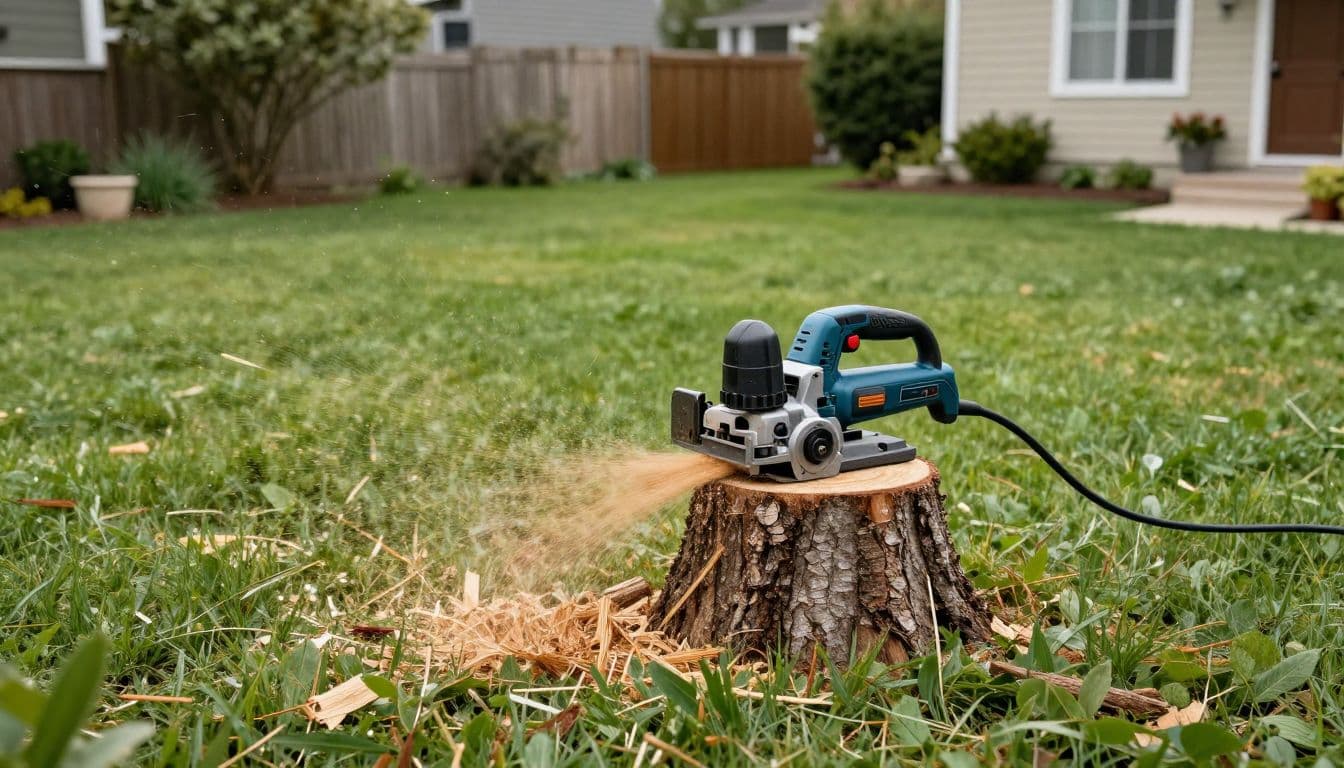
A complete removal can include cutting, lowering limbs, bucking the trunk, chipping branches, hauling debris, grinding the stump, and cleaning hard surfaces. Make sure every part you expect appears in writing.
Stump grinding can also affect the surrounding lawn. Heavy equipment may leave tire marks or compacted soil, especially after rain. If the area will become lawn again, ask whether basic soil leveling and seed preparation are included or priced separately.
Emergency and Storm-Damaged Tree Removal in Atlanta
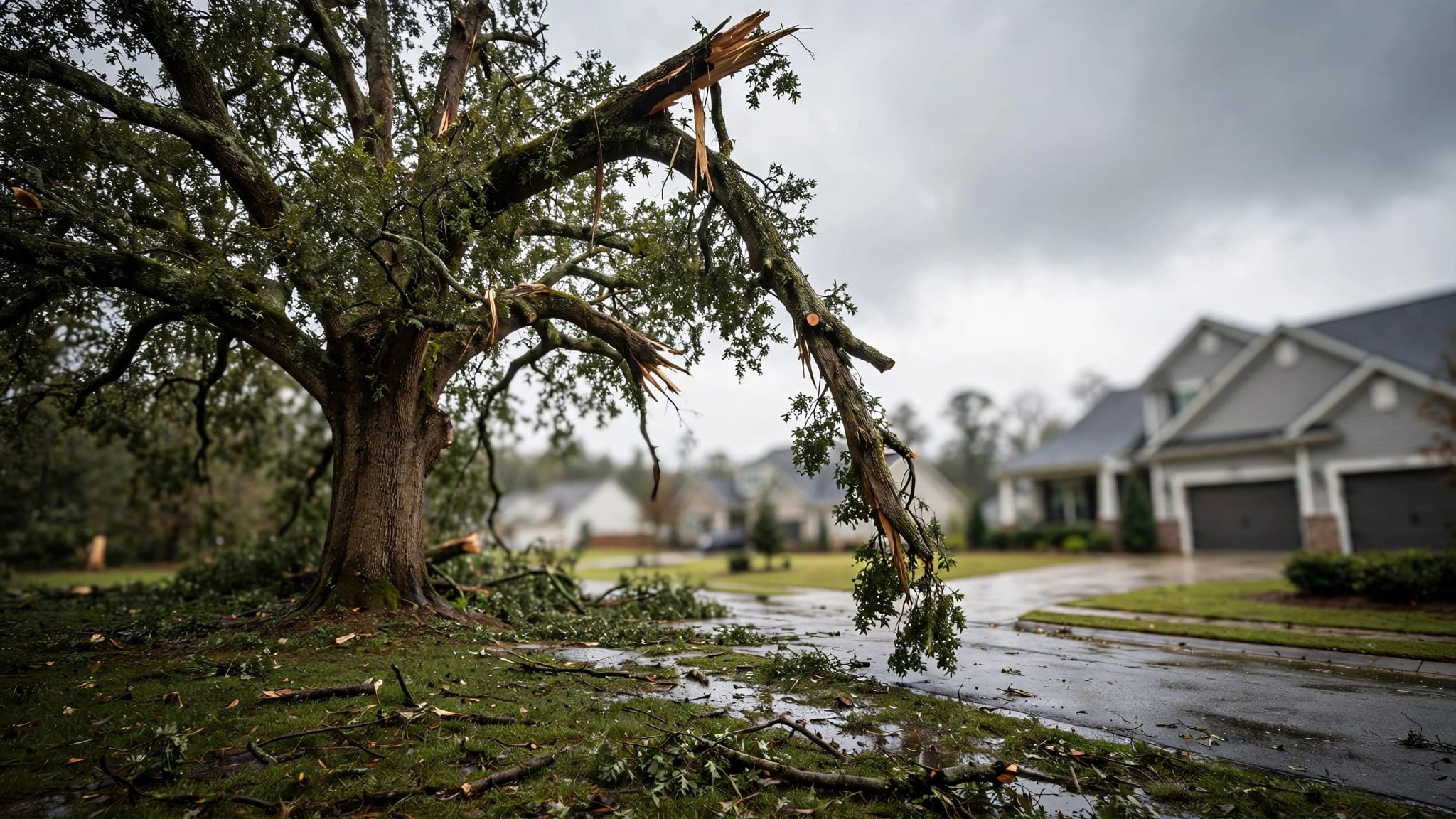
Atlanta storms can split trunks, tear large limbs from mature trees, and leave trees resting on roofs or fences. Emergency work usually costs more because the risk is higher and crews may need to respond outside normal scheduling.
A storm-damaged tree may cost $1,500 to $5,000 or more , depending on the damage and location. A large tree on a home, blocking a road, or tangled with utility lines can exceed that range.
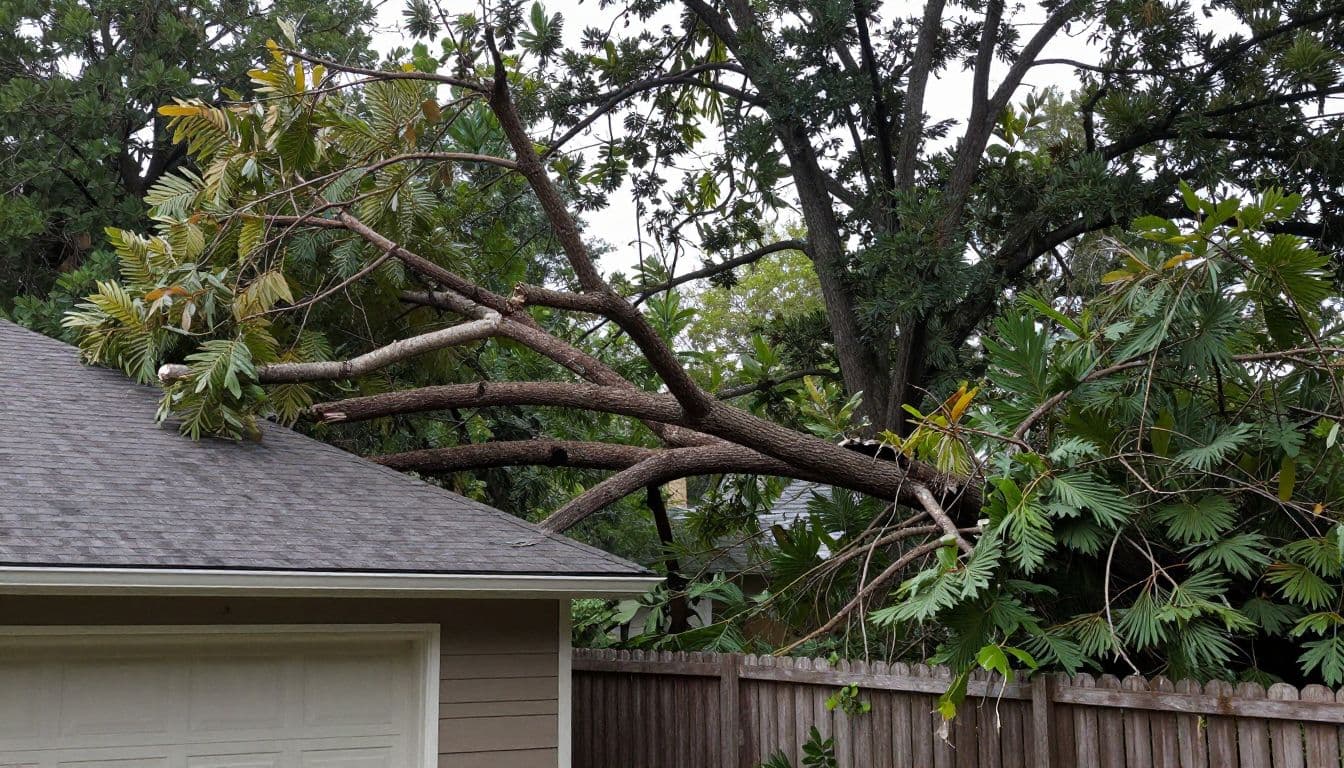
Safety comes first when a tree has fallen or shifted. Keep people and pets away from the area. Don't walk beneath hanging limbs, climb onto the tree, or use a chainsaw near a damaged trunk.
If power lines are involved, stay away and contact the utility company or emergency services as appropriate. Tree crews should not work on energized lines unless they have the proper qualifications and coordination. Homeowners should never assume a downed line is safe because it appears inactive.
After a storm, document the damage with photos from a safe distance. Contact your insurer before removing covered property damage when possible. However, an immediate hazard may require emergency stabilization before an adjuster arrives. Your insurance policy determines what costs qualify for coverage, so don't assume the full removal bill will be reimbursed.
Emergency pricing can include after-hours labor, traffic control, extra crew members, specialized equipment, and rapid debris hauling. Ask for the emergency rate and the expected scope before work begins, unless an immediate danger leaves no safe opportunity for a full estimate.
When Professional Tree Removal Is Essential
Tree removal is not a good do-it-yourself project when the tree is large, damaged, or close to anything valuable. A falling limb can crush a roof, damage a vehicle, break a fence, or injure someone several yards away.
Professional removal is essential when the tree:
- Stands near power lines, communication lines, or utility equipment.
- Leans toward a house, garage, driveway, road, or neighbor's property.
- Has a split trunk, hanging limbs, visible decay, or storm damage.
- Is taller than a typical one-story home.
- Requires climbing, rigging, a bucket truck, or a crane.
- Has a large trunk or heavy limbs that can't be controlled from the ground.
- Blocks access to a public path or creates an immediate safety hazard.
A homeowner may be able to remove a small, healthy ornamental tree in an open area with the right equipment and training. Even then, chainsaws can cause severe injuries, and falling wood can move in unexpected directions.
Roof and utility hazards make small mistakes expensive. A professional crew plans the fall zone, protects surfaces, controls limbs with rope systems, and removes sections in a set order. The work may look slow from the ground, but controlled cutting reduces the chance of damage.
Before hiring anyone, verify that the company carries liability insurance and workers' compensation coverage. Ask for proof rather than relying on a verbal assurance. You should also confirm who handles damage if a limb hits a structure or a worker gets hurt.
Avoid contractors who pressure you to approve work immediately, offer an unusually low price without seeing the tree, or request full payment before starting. A professional estimate should describe the tree, work area, cleanup, stump service, and payment terms.
How to Compare Tree Removal Quotes
The cheapest quote isn't always the least expensive choice. A contractor who leaves the stump, logs, or debris may appear cheaper until you pay another company to finish the property.
Request at least two or three written estimates for non-emergency work. Give each company the same information, including whether you want stump grinding, complete hauling, firewood, lawn repair, and final cleanup.
A useful quote should identify:
- The tree or trees included in the work.
- The removal method and equipment expected.
- Protection for roofs, fences, driveways, and planting beds.
- Whether branches, chips, and logs will be removed.
- The stump grinding or excavation price.
- Any expected access, permit, or disposal charges.
- The estimated schedule and payment terms.
- Proof of insurance and the company's contact information.
Ask whether the price is firm or subject to change. Some estimates include a range because the crew can't see the entire tree from the street. That's reasonable, but the contractor should explain what conditions could increase the final bill.
A detailed quote also helps you compare like with like. For example, a $1,000 estimate that includes stump grinding and hauling may be a better value than an $800 quote that leaves both behind.
Homeowners should also ask how the crew will protect the lawn. Plywood, temporary mats, careful equipment placement, and a planned debris route can reduce damage. These details matter when the tree stands beside a driveway or established garden.
Ways to Keep the Project Within Budget
You can't control the tree's height or location, but you can reduce avoidable costs. Scheduling non-emergency work during a company's regular operating hours is often less expensive than requesting immediate service after a storm.
If several trees need removal, ask whether combining the work lowers mobilization or cleanup costs. A crew already on-site may handle nearby trees more efficiently, although each tree still needs its own safety assessment.
Keep the access route clear before the crew arrives. Move vehicles, toys, patio furniture, planters, and loose decorations away from the work zone. Tell the company about irrigation lines, invisible fences, septic features, outdoor lighting, and underground utilities.
You may save money by keeping usable firewood or mulch on the property. However, only choose that option if you have a dry storage area and a plan for moving the material. A large log left beside a driveway can become another removal problem.
Don't cut corners on insurance or safety to lower the estimate. A damaged roof, broken window, or injured worker can cost far more than the original price difference.
After the tree is removed, the bare area may need grading, topsoil, grass seed, mulch, or a replacement planting. If the work affects your lawn, consider bundling the follow-up with other property maintenance. RW Lawn Co provides home landscaping and lawn services that can help restore the area after removal.
What to Do After the Tree Comes Down
Tree removal changes more than the view from your window. The open space may receive more sunlight, expose a damaged section of lawn, or reveal drainage and grading issues hidden by roots and shade.
Start by checking the work area after the crew leaves. Look for exposed roots, deep tire marks, leftover branches, nails, chips on walkways, or damage to irrigation components. Raise concerns promptly while the crew and company records are still available.
If you kept the wood, stack it away from the house and avoid placing it directly against siding or fences. Fresh logs hold moisture and can attract insects as they dry. Branch chips may work as temporary mulch, but don't spread a deep layer over turf or around tree trunks.
Stump grinding creates a shallow depression as the remaining wood breaks down. Fill and level the area before reseeding or installing new plants. For a lawn repair, regular grass cutting and upkeep can help keep the restored space neat while it recovers.
Replacement planting deserves some planning. Consider mature size, sunlight, root spread, drainage, and the distance from buildings and overhead lines. Planting another large tree in the same restricted spot can recreate the problem years later.
Questions to Ask Before You Approve the Work
A short conversation can prevent an expensive misunderstanding. Before signing, ask the contractor:
- What is the total price for removal, cleanup, and stump service?
- What happens if the crew finds decay or an unexpected hazard?
- Will workers use a bucket truck, crane, ropes, or specialized equipment?
- How will the crew protect my roof, driveway, fence, and lawn?
- Who removes the wood and branches?
- How deep will the stump be ground?
- Does the company carry current liability and workers' compensation insurance?
- When will the work begin, and how long should it take?
- What payment is due before and after completion?
- Can you provide a written description of all included services?
The answer should be clear enough for another homeowner to understand. If the contractor can't explain the scope, be careful about approving the job.
For trees near utilities, ask who will coordinate with the utility provider. For trees near property lines, confirm who owns the tree and whether the neighbor needs notice. Responsibility can become complicated when a tree's trunk, branches, or roots cross property boundaries.
Written details protect both sides. They also give you a fair basis for comparing Atlanta tree removal cost estimates without relying on a quick verbal number.
Conclusion
The Atlanta tree removal cost for 2026 is usually around $800 to $2,500 for a standard medium-to-large residential tree. Small, open-yard removals may start near $200, while large, storm-damaged, utility-adjacent, or difficult trees can reach $4,000 to $8,000 or more.
Get a written estimate that separates removal, stump grinding, debris hauling, and lawn repair. Most importantly, hire a qualified professional when the tree threatens a structure, utility line, vehicle, roadway, or person. A careful quote and a safety-first plan protect both your budget and your property.