Atlanta Storm-Damaged Tree Checklist for Homeowners
A storm can leave your yard looking messy while the biggest danger remains overhead. Before you pick up branches or restart your mower, check whether a storm-damaged tree threatens your home, driveway, or outdoor work area.
Your first priority is keeping people away from unstable wood , followed by documenting damage and arranging the right professional help. Start with a safe, ground-level check, then plan cleanup only after someone qualified addresses the tree hazards.
Key Takeaways
- Keep people, pets, and lawn equipment away from hanging branches, newly leaning trees, and damaged utility lines.
- Photograph damage from a safe location, and ask your insurer about documentation before arranging non-emergency removal.
- Separate structural tree work from debris hauling and lawn repair, with each service clearly included in a written estimate.
Make the Area Safe Before Inspecting
Wait until the storm has passed before checking your property. Strong wind, lightning, and falling branches can make even a short walk outside dangerous. Also, postpone mowing and scheduled landscaping work around damaged trees.
Treat utility contact as an emergency
If a branch or trunk touches a wire, stay away from the tree, wire, nearby fencing, and debris. A downed line can remain energized even when it looks inactive.
Call 911 for an immediate threat to life, fire, or another active emergency. Contact the utility provider to report damaged lines. Don't move wood to improve access or assume a tree crew can begin before the utility clears the electrical hazard.
Keep everyone outside the hazard area
Avoid walking beneath broken branches or entering the space around a shifted trunk. Move children and pets elsewhere, and tell household members, neighbors, and scheduled lawn crews about the hazard.
Only relocate vehicles or outdoor furniture if you can reach them without approaching the damaged tree. If wood rests on your home, don't climb onto the roof or try to pull it loose. Wait for qualified help and keep people out of affected areas.
Identify Storm-Damaged Tree Warning Signs
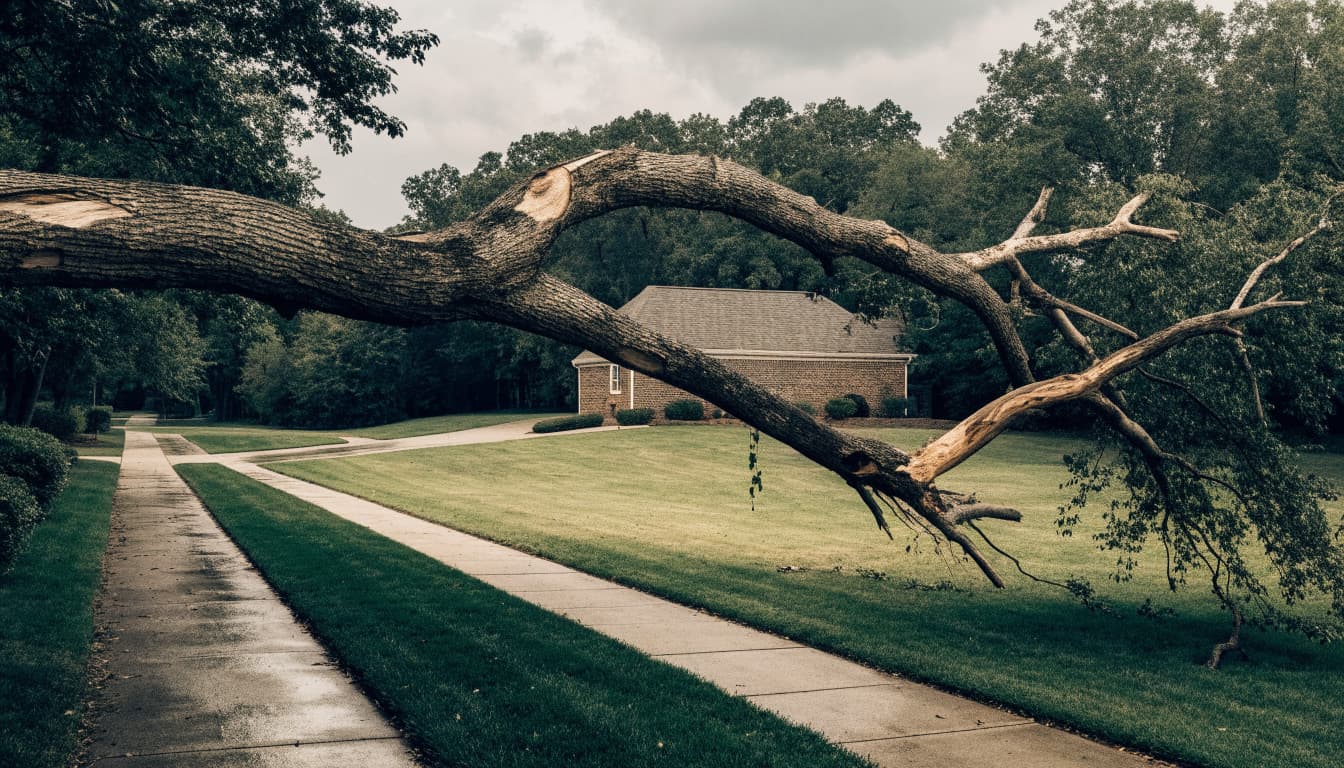
Look from an undamaged part of the property. Your goal is to record visible problems, not determine whether the tree can withstand another storm. Check nearby trees too, because one fallen limb doesn't explain every hazard.
Look for broken branches and trunk damage
Watch for branches hanging in the canopy, fresh splits where large limbs meet, and wood resting against another tree. Torn bark can also reveal damage that foliage partly hides.
A cracked trunk, large cavity, or extensive deadwood deserves professional attention. Atlanta thunderstorms can expose existing weaknesses as well as cause new damage. Don't shake branches, climb the tree, or make test cuts to see whether a damaged section feels secure.
Record what changed after the storm. Older photographs can help distinguish a longstanding feature from a fresh defect.
Check for changes around the roots
A new lean, lifted soil, fresh ground cracks, or a partially raised root plate can indicate movement. Saturated ground may complicate the assessment, especially when damage appears near a slope or drainage problem.
However, visible surface roots alone don't prove that a tree is unstable. Report new soil movement or a changed trunk position to the arborist.
Removing a broken branch doesn't resolve instability at the roots or a serious split in the trunk.
Photograph Damage Before Cleanup Begins
Take wide photographs showing the tree's position relative to your house, fence, driveway, and neighboring property. Then use your phone's zoom to capture visible defects without moving closer.
Record the date you noticed the damage and which areas you can no longer use safely. Include damaged roofing, gutters, vehicles, irrigation equipment, and outdoor structures where you can photograph them without entering the hazard area.
Contact your insurer before non-emergency work begins when you expect to file a claim. Ask what photographs, estimates, invoices, and other records the company needs.
However, don't delay necessary emergency stabilization while waiting for an adjuster. Document conditions safely and keep the contractor's explanation of the urgent work.
Your policy determines coverage. Don't assume that tree removal, stump grinding, debris disposal, and lawn repair receive the same treatment. Keep receipts for temporary protective work and separate invoices for each stage.
Arrange a Qualified Tree Assessment
A lawn cleanup crew and a tree-risk assessor handle different problems. Branch collection can restore access, but it doesn't establish whether a damaged tree is structurally sound.
Ask whether repair or removal is appropriate
An ISA Certified Arborist can evaluate the canopy, trunk, root area, and nearby targets. Request the person's name and credential number, then verify that the certification is current.
Describe what you observed rather than requesting removal automatically. Some trees need pruning; others have defects that pruning can't correct. Ask the assessor to explain the recommended work and any remaining concerns.
Avoid topping, which leaves major branches as stubs. Also, don't accept pruning as a complete solution when the main concern is severe decay or trunk failure.
Confirm ownership and local requirements
For a tree near a property line, confirm ownership before authorizing work. Discuss access and potential impacts with the neighbor, and put agreed arrangements in writing. Don't assume that overhanging branches settle ownership or liability.
If the property is inside Atlanta city limits, check removal requirements with the City of Atlanta's Arborist Division. Other Metro Atlanta municipalities and counties have their own rules.
Storm damage doesn't automatically answer every permit question. Ask the contractor who will confirm requirements, obtain any necessary approval, and coordinate utility involvement.
Compare Written Estimates, Not Verbal Totals
For non-emergency work, collect two or three written estimates from qualified, insured contractors. Compare the same scope rather than choosing whichever company gives the lowest number.
Emergency work needs a different conversation. Ask what must happen immediately, what can wait, and what equipment or additional labor the urgent work requires.
Make sure the estimate answers these questions:
- Which tree, branches, and damaged sections will the crew handle?
- Who will assess the tree and supervise the work?
- Does the company carry current general liability and workers' compensation insurance?
- Will the crew chip branches, remove logs, haul debris, and clean the work area?
- Are stump grinding, lawn repair, permits, and equipment charges included or separate?
Check payment terms and the proposed schedule before approving the job. A quote that covers cutting alone isn't equivalent to one that includes hauling and restoration.
Also, discuss access. Tell the contractor about narrow gates, steep ground, irrigation heads, septic components, and fragile planting beds. Move portable belongings only after the work area is safe.
Ask how the crew will protect your lawn when equipment crosses wet soil. Finally, get any changes to the approved scope in writing before extra work begins.
Separate Tree Work From Debris Cleanup
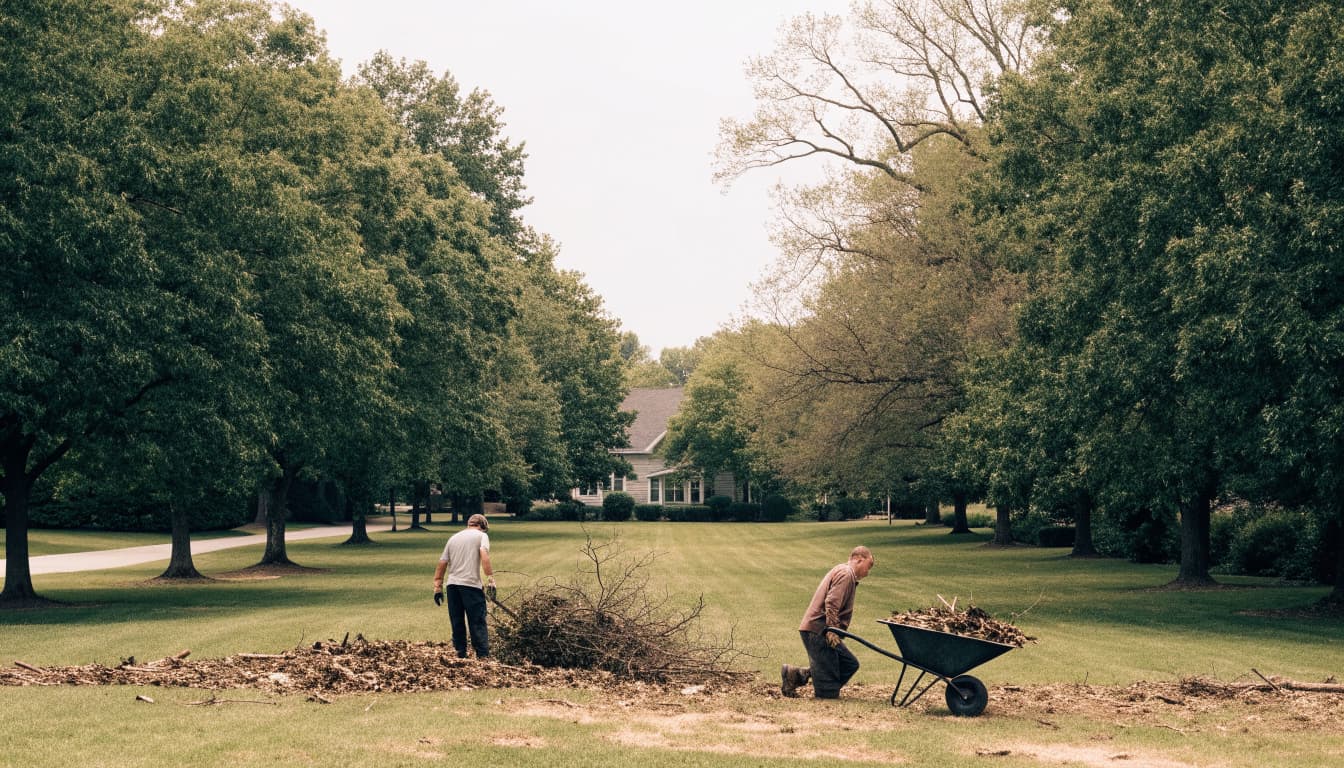
Once qualified professionals address hanging wood and unstable trees, organize the remaining cleanup. Small, loose sticks are different from heavy logs, pinned branches, or wood supporting another object.
Don't use a chainsaw on storm debris without the training to recognize tension and movement. Likewise, keep lawn mowers away from concealed branches and tangled debris.
RW Lawn Co's storm debris cleanup services include storm-debris cleanup and hauling within its land-clearing service listing. Confirm the scope for your property, and keep hazardous tree assessment separate from general clearing.
If the storm also damaged fencing, furniture, or an outbuilding, ask about yard debris and junk hauling. Mixed materials may need a different loading and disposal plan than branches alone.
Agree on where crews can temporarily stack material. Keep sidewalks, driveways, and drainage paths open, and confirm whether the final cleanup includes sawdust, small twigs, and wood chips.
Restore the Lawn Without Creating New Root Problems
After removal and hauling, inspect the yard for ruts, compacted soil, exposed irrigation components, and debris hidden in the grass. Don't resume mowing until the work area is clear.
Discuss stump grinding separately. Ask whether the contractor will remove grindings, address the remaining depression, and prepare the area for future lawn or planting work. Those tasks may fall outside the tree-removal scope.
Around surviving trees, avoid cutting exposed roots or covering them with added soil to make mowing easier. Have an arborist review repairs that could affect the root area.
If equipment damage or washed-out soil has changed drainage, RW Lawn Co's grading and drainage services cover slope correction, drainage improvement, and erosion-control work.
However, grading doesn't repair an unstable tree. Coordinate landscape repairs with the tree assessment so excavation doesn't introduce another problem.
Finally, choose replacement planting for the site's sunlight, drainage, soil, and available space. Restore the yard around the conditions that remain after cleanup.
Frequently Asked Questions
Can a tree with green leaves still be unsafe?
Yes. Green foliage doesn't establish that the trunk, major branch connections, or roots are sound. A tree can retain leaves after structural damage, so appearance alone shouldn't guide your decision. Fresh cracks, a changed lean, or lifted soil still need assessment, even when the canopy looks healthy.
Can I cut a fallen branch that's pinned beneath other wood?
Leave it for a qualified professional. Bent or trapped wood can release stored tension when cut, and nearby pieces may roll or shift. An uprooted tree's root plate can also move during removal. A branch being on the ground doesn't make it safe to handle.
Put Safety Before Yard Recovery
A clean-looking lawn doesn't confirm that a storm-damaged tree is safe. Address structural hazards first , document the damage, and get a written scope before scheduling removal or cleanup.
Then handle debris, drainage, and lawn repairs as separate parts of the recovery plan. That sequence helps you reopen the yard without overlooking the damage that matters most.