Native Evergreen Shrubs for Atlanta Foundation Beds
A shrub that looks tidy beside your front steps can eventually block the windows and crowd the walkway. Choosing native evergreen shrubs for Atlanta foundation beds starts with mature size , then the conditions around your house.
Dwarf yaupon holly and inkberry are candidates worth investigating, but neither name alone guarantees the right fit. A useful plant label identifies the exact selection, its eventual dimensions, and its growing requirements.
Start by separating locally native plants from familiar landscaping choices, then evaluate the bed before buying.
Separate Native Plants From Familiar Landscape Shrubs
"Common in Atlanta" and "native to Atlanta" describe different things. Nursery popularity doesn't establish a plant's natural range or make it suitable beside a foundation.
Check the species and its local range
Ask for the scientific name rather than relying on a common name such as "holly." Different species can have different origins and landscape uses.
Atlanta's planting guidance favors native Piedmont plants where practical. However, Georgia includes several ecological regions, so a plant native elsewhere in the state isn't automatically native to the Atlanta region.
For a locally focused planting, compare the species with reliable Georgia native-plant references. Also ask whether the nursery sells a named cultivar or a straight species. Cultivars can offer useful forms, but the selection name matters when judging eventual size.
Keep nonnative alternatives in a separate category
Common landscape abelias, garden camellias, and loropetalums shouldn't appear on a locally native shortlist. They may have landscaping uses, but they don't meet the same native-plant goal.
Likewise, a holly isn't automatically native because another holly species is. Nellie R. Stevens holly, for example, is a hybrid rather than a locally native species.
Evergreen status needs its own check. Oakleaf hydrangea is a native landscaping option, but it's deciduous and won't provide the same winter foliage as an evergreen.
Native Evergreen Candidates Worth Checking
Begin with candidates, then confirm each plant against a reliable species-specific reference. The exact nursery selection and the planting site determine whether it belongs in your foundation bed.
Investigate a named dwarf yaupon holly
Yaupon holly appears in Atlanta planting guidance and is identified as a native evergreen. For foundation planting, investigate a named dwarf selection instead of assuming ordinary yaupon will remain small.
The word "dwarf" describes a plant relative to other forms of that species. It doesn't guarantee that the plant will stay below your windows or inside a narrow bed.
Ask the nursery to document the selection's mature height and width. Then confirm its regional native status, growing requirements, and expected maintenance. A compact cultivar may suit a foundation layout better than the standard form, but that decision needs the cultivar's information.
Consider inkberry where moisture conditions fit
Inkberry also deserves investigation, particularly when the site has moisture conditions that require careful plant selection. RW Lawn Co's rain-garden guidance includes inkberry among plants for suitable wet-to-moist locations.
That recommendation doesn't make every damp foundation bed appropriate for inkberry. Water collecting against the house remains a drainage problem.
Confirm the scientific name, regional native range, evergreen habit, and the exact selection's dimensions before purchasing. Also check its light and soil requirements through a species-specific reference. Treat an inkberry recommendation for a rain garden as a starting point, not blanket approval for planting beside a wall.
Choose Compact Plants, Not Permanent Pruning Projects
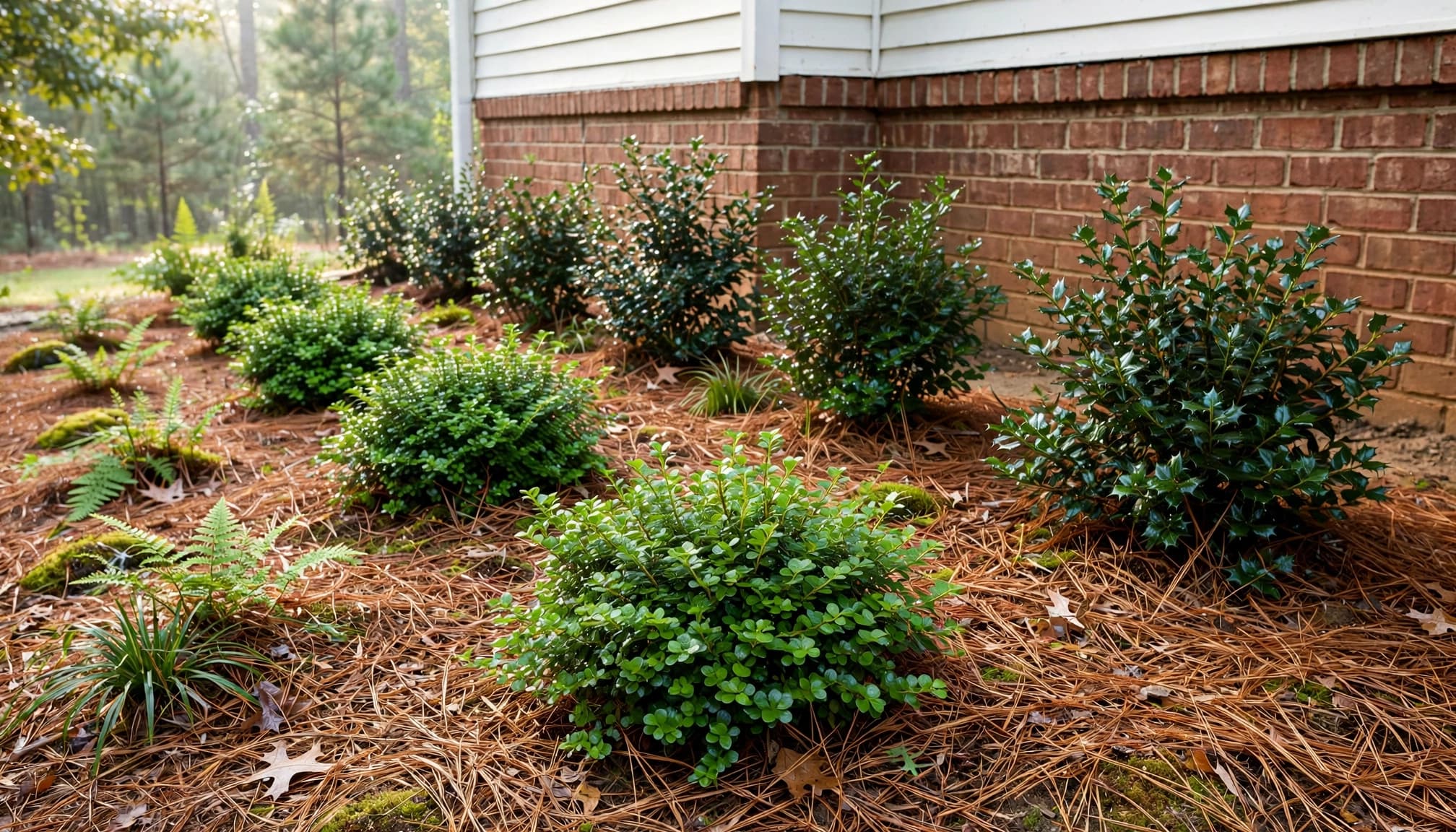
A small nursery container tells you little about the finished planting. Before shopping, measure the usable bed depth and note window sills, steps, meters, vents, and access panels.
Next, compare those constraints with the documented mature dimensions of each selection. A plant that fits naturally creates fewer maintenance problems than one that needs repeated cutting to remain usable.
Separate three categories: a naturally compact species, a compact cultivar of a larger species, and a large plant kept small through pruning. Those categories aren't interchangeable.
Ask what "compact" means on the nursery label. If the seller can't identify the cultivar or provide dependable dimensions, postpone the purchase.
A shrub can remain below a window yet still outgrow the bed sideways. Check mature width independently of height.
Your layout should preserve access for house maintenance and leave room to inspect the planting. Don't let foliage conceal vents or make utility equipment difficult to reach.
Also consider the view near driveways and steps. Replacing an oversized shrub is an opportunity to improve visibility rather than recreate the same obstruction.
Plan around the finished plant , not the empty spaces on installation day. Filling every gap immediately can produce a crowded bed later.
Check Atlanta Clay, Runoff, and Roofline Conditions
Plant selection can't repair a foundation bed that receives the wrong amount of water. Observe the area after rain and during dry weather before deciding what belongs there.
Address standing water before planting
Atlanta clay can remain wet beneath a surface that looks dry. Check where downspouts discharge and whether runoff collects along the house.
Don't assume that a deeper planting hole will improve drainage. A loose pocket surrounded by dense clay can hold water around the roots.
Where roof runoff needs a separate planting solution, rain gardens for roof runoff provide a different design framework. A rain garden and a foundation bed have different jobs.
Correct persistent water accumulation near the building before installing replacement shrubs. A moisture-tolerant plant doesn't remove the need to protect the foundation.
Evaluate shade and dry pockets separately
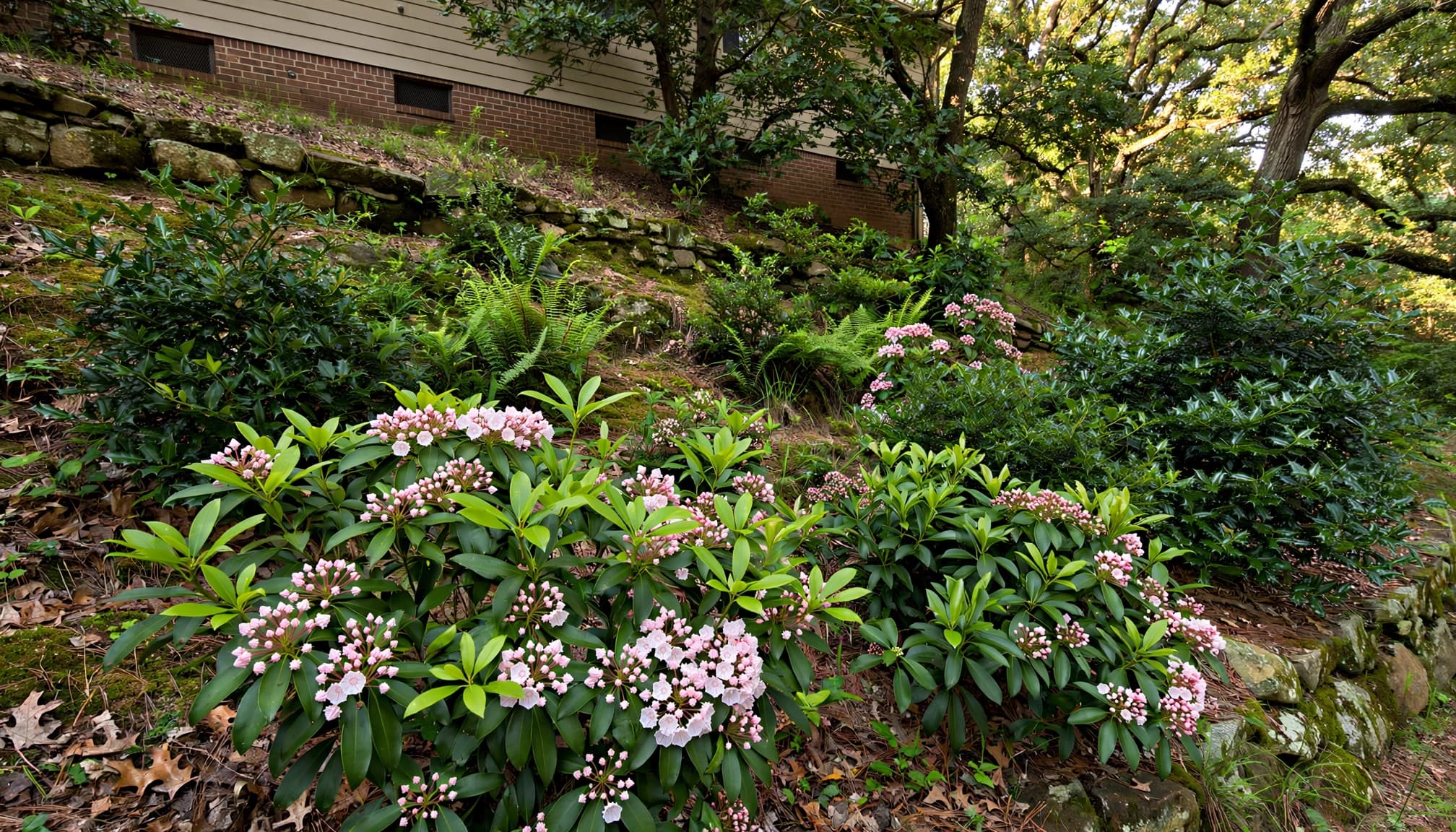
Beds beneath roof overhangs may receive less rainfall than nearby lawn areas. Meanwhile, established tree roots can compete for moisture.
Record the actual light across the bed rather than calling the whole front yard "sunny" or "shady." Buildings and trees can create different conditions within one planting area.
Compare those observations with verified requirements for the exact shrubs you're considering. Don't infer suitability from a photograph of a healthy planting.
Where tree roots occupy the bed, avoid cutting major roots to accommodate a larger nursery plant. Adjust the layout or container size instead.
Plant Without Creating a Loose Pocket in Clay
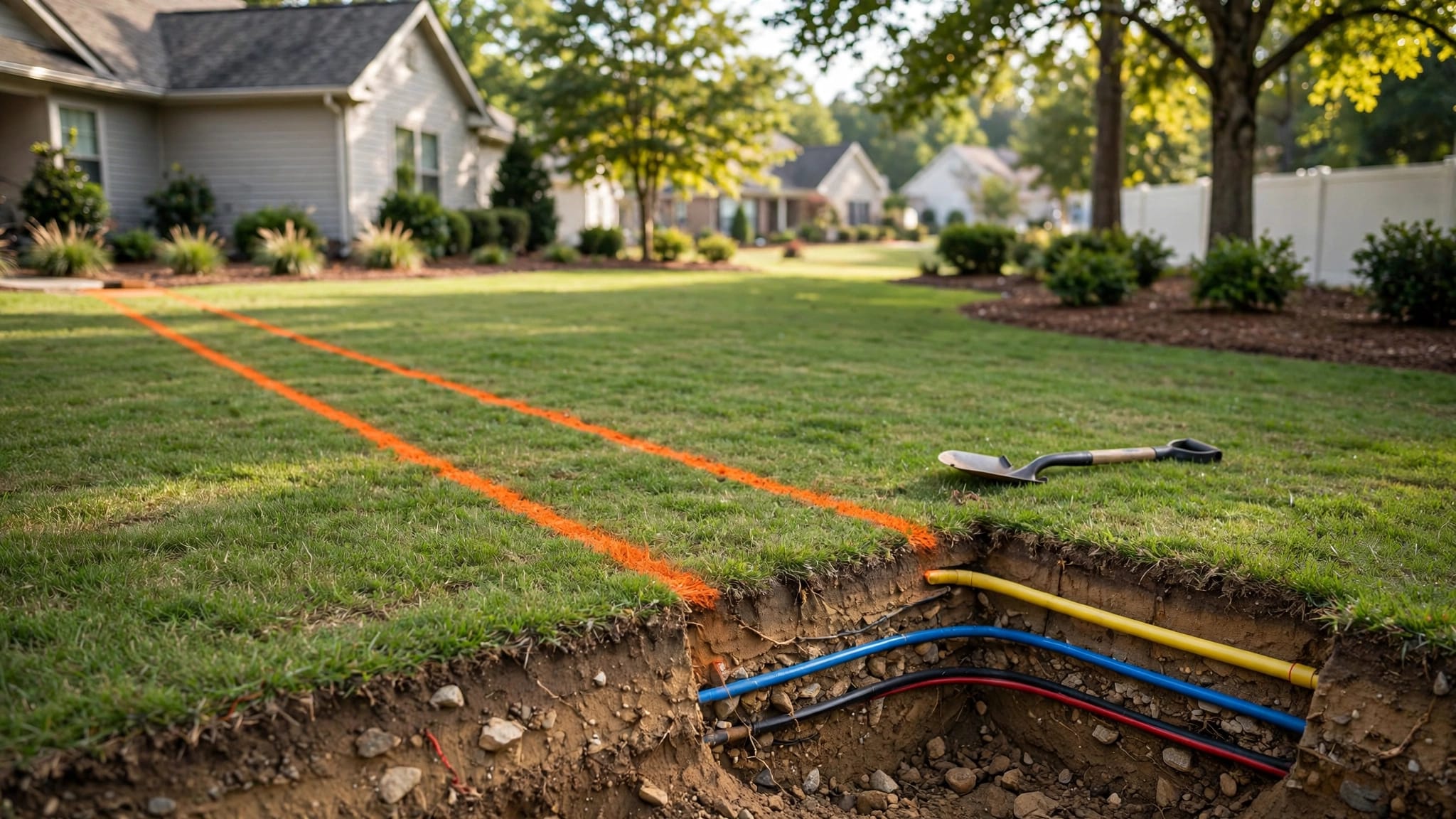
Call 811 before digging, even for a modest foundation-bed refresh. Then inspect the planting area for drainage problems, compaction, and existing roots.
Prepare a hole that's wide rather than unnecessarily deep. Keep the root flare visible, at or slightly above the surrounding grade, instead of burying the base of the shrub.
Backfill primarily with the soil removed from the hole. Heavy amendment inside one small pocket can create an abrupt difference between the planting hole and surrounding clay.
Where broader soil improvement is necessary, address the planting area rather than treating each hole as an isolated container. Major drainage or grading problems need their own solution.
After planting, water the root ball and surrounding soil thoroughly. Check moisture before watering again, because a timer can't account for every storm or dry spell.
A 2 to 3-inch mulch layer is the recommended range in RW Lawn Co's Atlanta mulch guidance. Keep it away from plant stems and pulled back from the foundation.
For material and budget decisions, review Atlanta mulch installation costs. Pine straw is a familiar Georgia option, but mulch choice doesn't replace drainage work.
Inspect existing mulch before adding more. Repeated top-ups can bury plant bases even when each individual application looks modest.
Use Replacement to Fix the Original Problem
If you're replacing diseased or declining shrubs, investigate why they failed before choosing replacements. Poor drainage, crowded foliage, and irrigation mistakes can affect the next planting too.
For confirmed boxwood blight, University of Georgia guidance recommends considering replacements outside the boxwood family. A different plant can reduce that disease-specific concern, but the bed still needs appropriate preparation.
Remove old plant material and follow sanitation guidance for the diagnosed disease. Clean pruning tools when working with diseased plants, and avoid moving contaminated debris through unaffected beds.
Replacement also provides a chance to reset the layout. Preserve inspection access and avoid rebuilding the same crowded planting against the wall.
A mixed planting can reduce dependence on one shrub type. However, each selection still needs to meet your native-plant goal and fit its location.
Don't substitute a familiar nonnative shrub without discussing that change with the installer. Put the agreed scientific names and cultivar names in the planting proposal so substitutions don't happen unnoticed.
That written plant list also makes future maintenance and replacement decisions easier.
Ask for a Planting Quote That Names the Details
A useful installation estimate should identify more than "six evergreen shrubs." Request the scientific names, cultivar names, container sizes, and the proposed locations.
The quote should also explain whether it includes old shrub removal, debris hauling, soil preparation, mulch, and watering setup. Drainage correction should appear as a separate scope when necessary.
RW Lawn Co's Atlanta plant installation cost guide explains why larger nursery stock, site conditions, and compact plant requirements can affect the bill.
Ask who handles establishment watering after installation. Also clarify whether follow-up visits, plant replacement terms, or ongoing bed maintenance are included.
Smaller plants may be easier to install around existing tree roots, while larger plants provide more immediate coverage. Compare the whole installation plan rather than choosing solely by container size or the lowest total.
Key Takeaways for Atlanta Foundation Beds
- Verify the species' regional native status and evergreen habit before treating it as a suitable candidate.
- Choose documented mature dimensions that fit the bed, rather than depending on repeated pruning.
- Investigate dwarf yaupon and inkberry selections, but confirm each one's requirements before buying.
- Correct drainage problems first, keep the root flare visible, and maintain mulch without burying stems.
Frequently Asked Questions
Does "dwarf" mean a shrub will fit beneath windows?
No. "Dwarf" is relative to the species or other selections. Check the exact cultivar's documented mature dimensions against your window height and available bed depth. Width matters just as much as height.
Is every shrub native to Georgia native to Atlanta?
No. Georgia includes multiple ecological regions. Confirm whether the species occurs naturally in the Atlanta region if local native status is your priority. A plant's availability at a nearby nursery doesn't establish its origin.
Can inkberry solve a soggy foundation bed?
Inkberry appears in guidance for suitable wet-to-moist planting locations, but it doesn't correct water accumulation near a building. Address runoff and drainage first. Then check whether the exact selection fits the corrected site's conditions and available space.
Build the Bed Around the Mature Plant
A tidy foundation planting begins with verified plant choices and a site that supports them. Native status, evergreen foliage, and compact size each need a separate check.
Before ordering shrubs, confirm the plant list and address drainage or access problems. RW Lawn Co's landscaping and mulch services can help prepare and maintain the bed.
The shrub beside your front steps should fit when it's established, not only when it's newly planted.