Atlanta Artificial Turf Cost Guide for 2026
A typical Atlanta artificial turf cost falls between $10 and $16 per square foot installed in 2026. Smaller or more complicated projects can reach $20 per square foot, while premium putting greens often cost much more.
That means a 500-square-foot backyard could cost about $5,000 to $8,000. A 1,000-square-foot lawn may run $10,000 to $16,000 before unusual drainage, grading, access, or demolition work.
The final price depends less on the grass alone than on what sits underneath it. Start with the local price range, then review the preparation and materials included in each quote.
Atlanta artificial turf cost per square foot in 2026
Atlanta homeowners should budget roughly $10 to $16 per square foot for a standard professional installation. Broader local estimates range from about $8 to $20 per square foot when turf grade, site conditions, and project complexity vary.
A typical quote near $12 per square foot is a reasonable planning figure for a straightforward residential lawn. However, a low quote may exclude old grass removal, base material, drainage improvements, or disposal fees.
| Project size | Typical installed range |
|---|---|
| 200 to 500 sq. ft. | $3,000 to $6,500 |
| 500 to 1,000 sq. ft. | $6,500 to $13,000 |
| 1,000 to 2,500 sq. ft. | $13,000 to $28,000 |
| 1,500 sq. ft. standard lawn | $15,000 to $24,000 |
These figures describe complete residential projects, not the price of turf rolls alone. Installation companies generally bundle materials and labor into the square-foot rate, but each contractor defines "installation" differently.
For example, one quote may include a compacted aggregate base and basic edging. Another may add drainage pipe, pet-friendly infill, concrete removal, and upgraded seams. Compare the scope before comparing the price.
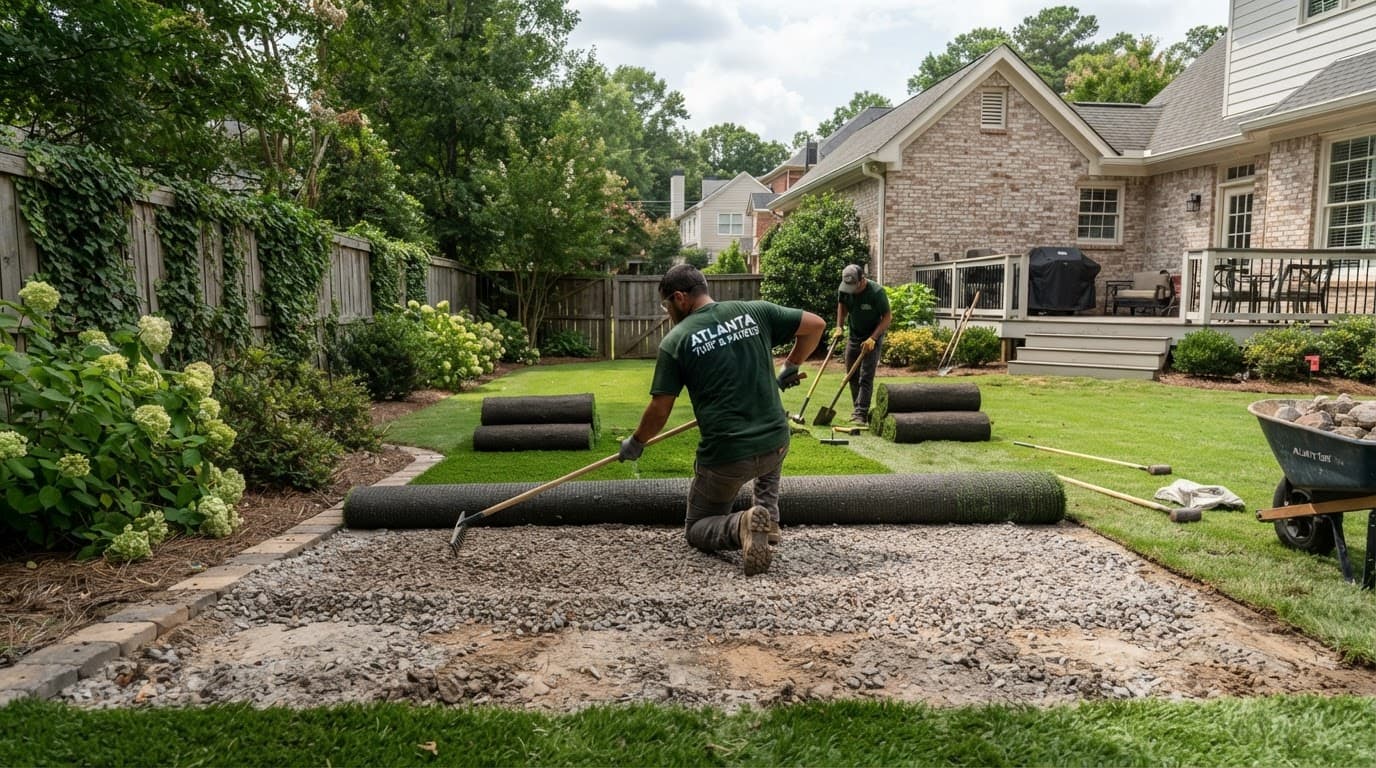
What an artificial turf installation quote should include
A professional turf project involves several layers. The visible synthetic grass is only the top part of the system.
Most complete residential quotes should address:
- Removal of existing grass, weeds, roots, and loose soil
- Hauling and disposal of removed material
- Excavation to the required depth
- A compacted stone or aggregate base
- Grading to direct water away from structures
- Weed barrier fabric where appropriate
- Turf cutting, seaming, and attachment
- Perimeter edging around beds, fences, concrete, or foundations
- Infill brushed into the turf fibers
- Final cleanup and site inspection
Atlanta's red clay soil can complicate preparation. Clay holds water and becomes difficult to compact when wet. A contractor may need to remove more soil, bring in additional aggregate, or correct low areas before installing the turf.
Drainage deserves special attention. Artificial grass has perforations, but water still needs a path through the base and soil below. If the yard already puddles after heavy rain, turf alone won't solve the problem.
Ask whether the proposal includes grading and drainage work or lists them as possible additional charges. A clear quote should state the excavation depth, base material, edging type, infill, warranty, and cleanup plan.
The main factors that change Atlanta turf pricing
Two lawns with the same square footage can have very different installation costs. These are the details that usually create the gap.
Turf quality and intended use
Basic landscape turf costs less than a dense, realistic product with multiple fiber tones and a tall pile height. Premium turf usually feels softer, holds its shape better, and can look more natural beside patios and outdoor living areas.
Pet turf may require specialized backing, odor-control infill, and a drainage plan that allows frequent rinsing. Those additions raise the project price, but they can make maintenance easier for households with dogs.
Putting greens are a separate category. Atlanta putting green installations often cost around $25 to $40 per square foot , depending on contouring, cups, fringe areas, and design. A 100 to 400-square-foot green may cost approximately $4,000 to $12,000.
Choose the product based on use rather than appearance alone. A decorative side yard doesn't need the same construction as a dog run or play area.
Site preparation and existing conditions
Preparation often controls the largest share of the labor. A flat, accessible area with thin grass is faster to prepare than a sloped yard filled with roots, rocks, irrigation lines, or construction debris.
Costs may increase when the crew must:
- Remove thick sod or established roots
- Break up concrete or old paving
- Regrade a slope
- Repair poor drainage
- Work around trees, steps, decks, or retaining walls
- Move materials through a narrow gate
- Install several small sections instead of one open area
Atlanta's summer storms make water management especially important. If water flows toward the house, pool, or basement, address that before the turf goes down. Correcting drainage after installation can require cutting and repairing the finished surface.
Lawn shape and access
A simple rectangle uses material efficiently and requires fewer seams. Curved borders, narrow strips, planting islands, and multiple elevations require more cutting and fitting.
Access also matters. When a truck can reach the work area, crews can move aggregate and turf more quickly. A backyard behind a small gate may require wheelbarrow transport, which adds labor.
Measure the actual turf area, not the entire property. Contractors typically calculate the square footage of the proposed surface, then add material for cuts and seams. Ask how much waste is included in the estimate.
Sample Atlanta artificial turf budgets
Square footage gives you a starting point, but the project type gives you a better budget.
A small side yard between 200 and 500 square feet often costs $3,000 to $6,500. The per-square-foot rate may be higher because fixed costs, delivery, mobilization, and cleanup are spread across less area.
A 600-square-foot backyard with moderate preparation may land near $6,000 to $9,600 using the common $10 to $16 range. A 1,200-square-foot lawn may cost about $12,000 to $19,200 before premium features or difficult site work.
Pet-focused projects can run higher than a basic lawn. Georgia examples for premium pet turf place a 1,200-square-foot backyard around $10,500 to $13,800, while a 300-square-foot pet run may cost $2,800 to $3,900. The difference usually reflects product selection, infill, drainage, and project scope.
| Project type | Planning range |
|---|---|
| Basic 500 sq. ft. lawn | $5,000 to $8,000 |
| 1,000 sq. ft. backyard | $10,000 to $16,000 |
| Premium 1,200 sq. ft. pet lawn | $10,500 to $13,800 |
| 300 sq. ft. pet run | $2,800 to $3,900 |
| 100 to 400 sq. ft. putting green | $4,000 to $12,000 |
These are planning ranges, not guaranteed bids. Request an on-site assessment before making a final budget.
How to compare artificial turf quotes
Collect at least two or three written estimates for the same area. Then compare the scope line by line.
A strong quote should answer these questions:
- How many square feet will the crew install?
- How deep will they excavate?
- What base material will they use, and how much will they compact?
- Does the price include sod removal and disposal?
- Which turf product, pile height, backing, and warranty are included?
- What type of infill will the crew apply?
- How will the contractor handle existing drainage problems?
- Is edging included around fences, beds, concrete, and foundations?
- Are permits, delivery, taxes, or disposal fees separate?
- What maintenance does the warranty require?
Be careful with estimates that use a low per-square-foot number without showing preparation details. The initial price may rise after the crew uncovers clay, roots, buried debris, or unstable soil.
Also check the warranty terms. Ask whether it covers fading, fiber breakdown, seam separation, and installation defects. A product warranty and a labor warranty may come from different parties.
The cheapest quote isn't always the lowest total cost. Poor drainage, visible seams, and weak edge restraint can lead to repairs that erase the original savings.
Is artificial turf worth the cost in Atlanta?
Artificial turf can make financial sense for homeowners who want a consistent lawn in areas that struggle with shade, foot traffic, pet use, or summer heat. It also reduces routine mowing and can lower irrigation needs after installation.
However, turf still needs care. Leaves should be removed, debris should be rinsed away, and pet areas need regular cleaning. Hot weather can also make synthetic grass feel warmer than natural grass, especially in full sun.
Natural grass remains a reasonable choice for larger properties and homeowners who prefer lower installation costs. Bermuda and Zoysia can handle Atlanta's growing season with the right care, while tall fescue performs differently in shade and cool weather. Use an Atlanta lawn watering schedule to compare the irrigation demands of living turf before choosing synthetic grass.
For a fair comparison, calculate both the installation price and the expected yearly mowing, watering, fertilizing, weed control, and repair costs. Turf usually requires more money upfront, while natural grass spreads its expenses across ongoing maintenance.
Conclusion
The average Atlanta artificial turf cost in 2026 is about $10 to $16 per square foot installed. Most homeowners should budget more when the project includes drainage repairs, difficult access, premium pet turf, complex borders, or a putting green.
Before signing, confirm the square footage, excavation, base, infill, edging, warranties, and disposal charges. A detailed quote gives you a much clearer picture than a low advertised rate. The right installation price is the one that includes the preparation your yard actually needs.