Atlanta Oak Tree Pruning Calendar for Homeowners
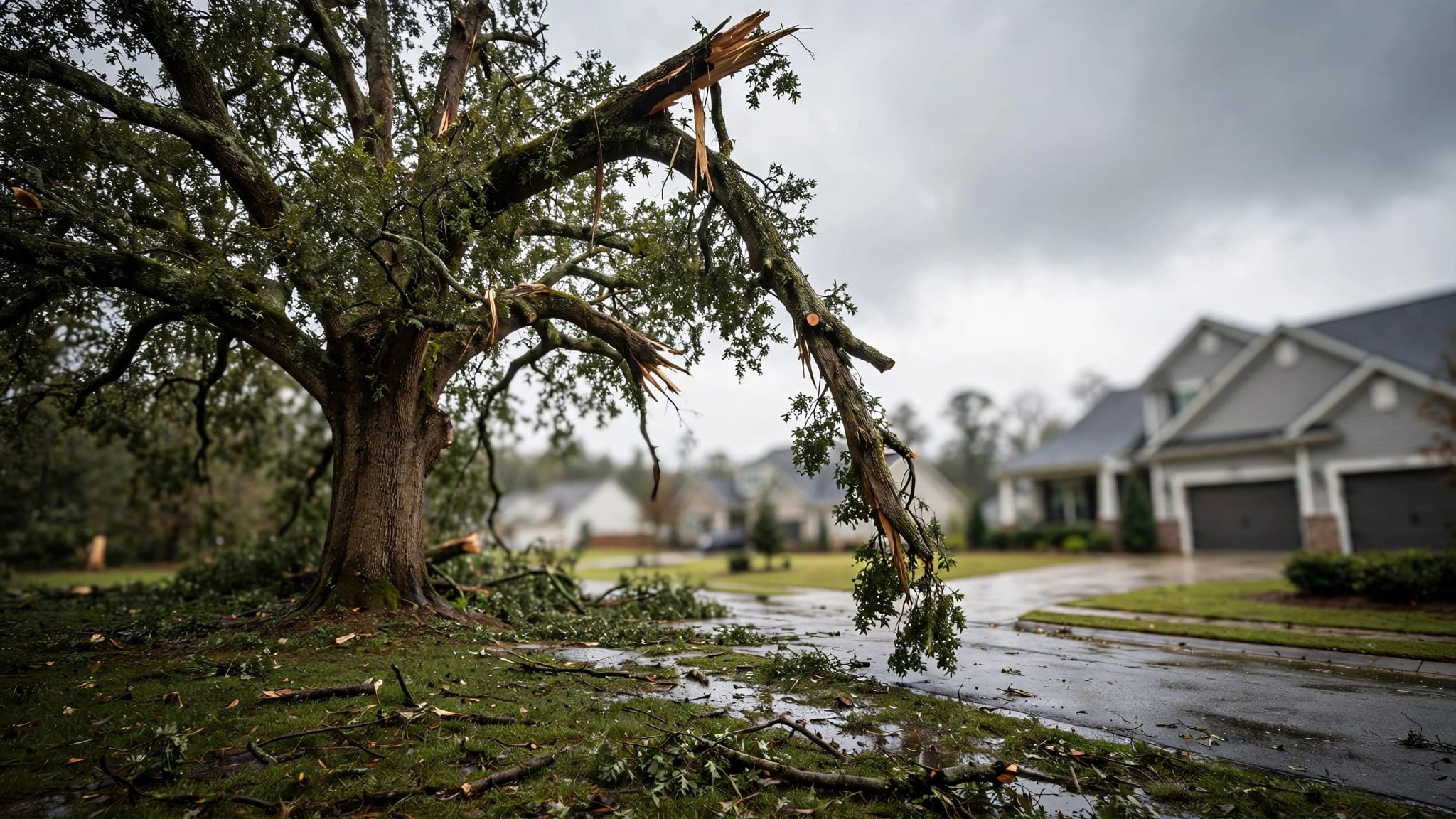
A cracked oak limb over your driveway can't wait for the ideal pruning month. For routine oak tree pruning in Atlanta, however, the cooler dormant season is usually the practical starting point.
Georgia's mild winters and long, humid summers make tree condition as important as timing. Your oak's species, branch structure, and recent storm damage should guide every decision.
Use the calendar below to plan inspections and routine work, then adjust it to the tree and the weather.
Key Takeaways for Atlanta Homeowners
- Plan routine oak pruning during the cooler dormant season. One Atlanta-area provider recommends November through January, but those dates aren't a statewide rule.
- Avoid unnecessary spring wounds, and postpone elective pruning when summer heat or drought has stressed the tree.
- Dead, damaged, or hazardous limbs may need prompt professional attention. Large branches, suspected disease, and structural defects deserve an arborist's assessment.
An Oak Tree Pruning Calendar for Atlanta Yards
For established Atlanta oaks, late fall through winter is a useful planning window. EastLake Tree recommends November through January for routine work. Treat that recommendation as a scheduling guide, not a deadline that overrides your tree's condition.
This seasonal calendar separates routine pruning from inspection and urgent work.
| Atlanta season | Routine pruning approach | Homeowner priority |
|---|---|---|
| November through January | Often a practical window for planned structural work | Have branch structure and clearance needs assessed |
| February | Confirm timing before buds begin opening | Adjust for warm spells and the individual oak |
| March through May | Avoid unnecessary spring wounds | Watch new foliage and inspect after storms |
| June through August | Defer elective work on heat-stressed or drought-stressed trees | Monitor moisture, canopy decline, and broken limbs |
| September through October | Inspect and arrange winter work | Identify concerns without automatically thinning the canopy |
| Any month | Address hazards according to urgency | Keep people away from hanging or unstable limbs |
The Georgia Forest Pest Management Manual cautions against spring wounds on susceptible oaks. However, it doesn't establish a specific statewide month-by-month pruning schedule.
A mature oak also doesn't need pruning simply because another winter has arrived. Each proposed cut should solve an identified problem.
Adjust Winter Timing to Your Oak and Your Yard
Identify the tree before choosing the date
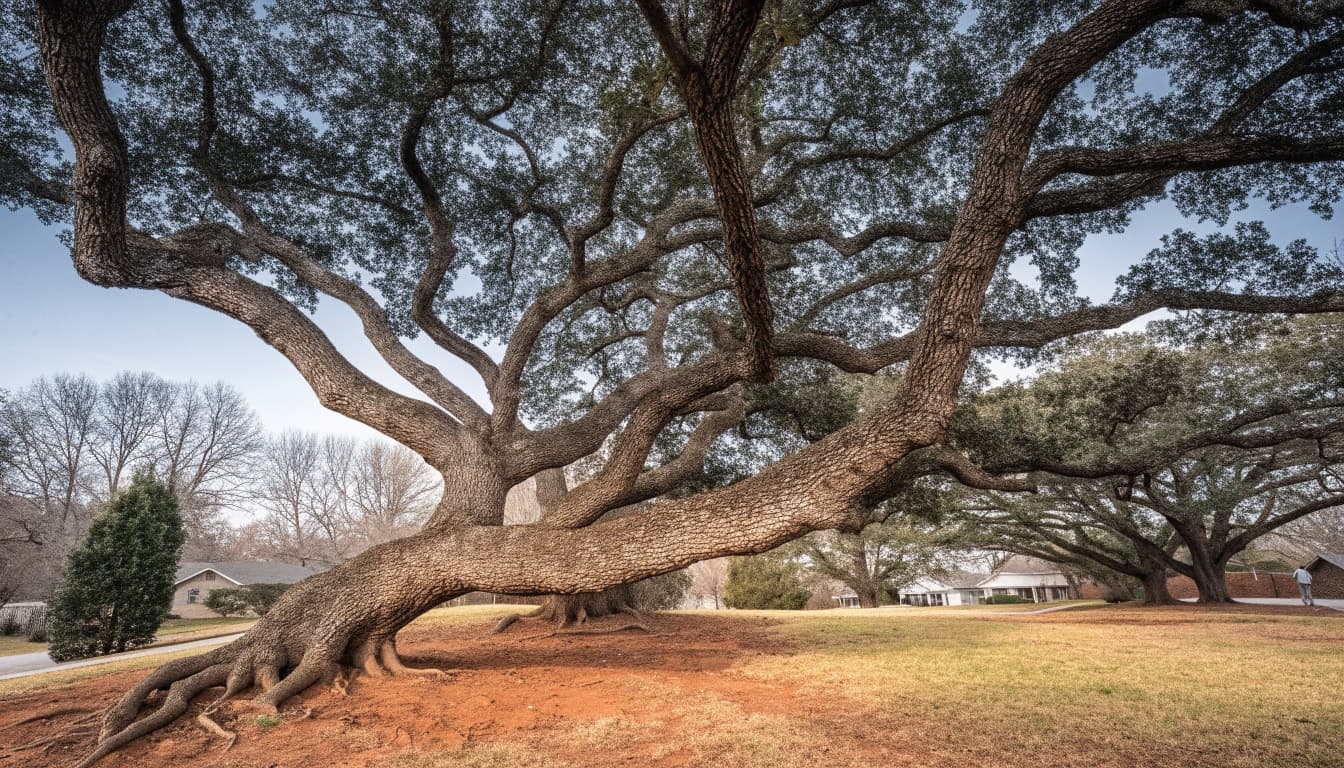
White oak, northern red oak, willow oak, and live oak don't have identical growth habits. Many deciduous oaks are easier to inspect after leaf drop, although some retain dead leaves into winter. Live oaks keep foliage through much of the year.
Therefore, a bare canopy isn't the only sign that pruning timing is appropriate. Ask the arborist to identify the species and assess growth activity. Young trees may need selective structural training, while mature specimens often need a much narrower scope.
Let Atlanta weather change the appointment
A warm February can advance bud development. Meanwhile, heavy rain can leave Georgia clay saturated even when the lawn's surface looks dry.
Crews may need to postpone work because of strong wind, rain, or unsafe access. Heavy equipment can also compact wet soil around roots. Before scheduling, discuss how the contractor will protect the root zone and reach the canopy.
Keep oak work separate from shrub shaping. A late-winter trimming appointment for hollies or ligustrum doesn't automatically establish the right timing or pruning method for an oak.
Spring and Summer: Inspect More, Cut Less
Atlanta's spring growth period calls for restraint with elective oak pruning. The Georgia Forest Pest Management Manual advises avoiding spring wounds because oak-wilt spore mats can develop during that season.
EastLake Tree identifies April through July as its highest-risk period for beetle-transmitted infection. That is the provider's precautionary window, not an official Georgia-wide restriction.
During summer, heat and drought add stress. Avoid removing healthy foliage simply to make the canopy look tidier. A tree showing sparse growth or widespread browning needs assessment before additional pruning.
After thunderstorms, inspect from a safe distance for hanging branches, fresh cracks, lifted soil near roots, or a new lean. Don't stand beneath a suspect limb to examine it.
If a branch threatens a roof, driveway, or occupied area, contact a qualified tree-care professional promptly. Necessary hazard work can proceed outside the preferred routine window when conditions allow safe access.
Oak Wilt and Other Disease Precautions in Georgia
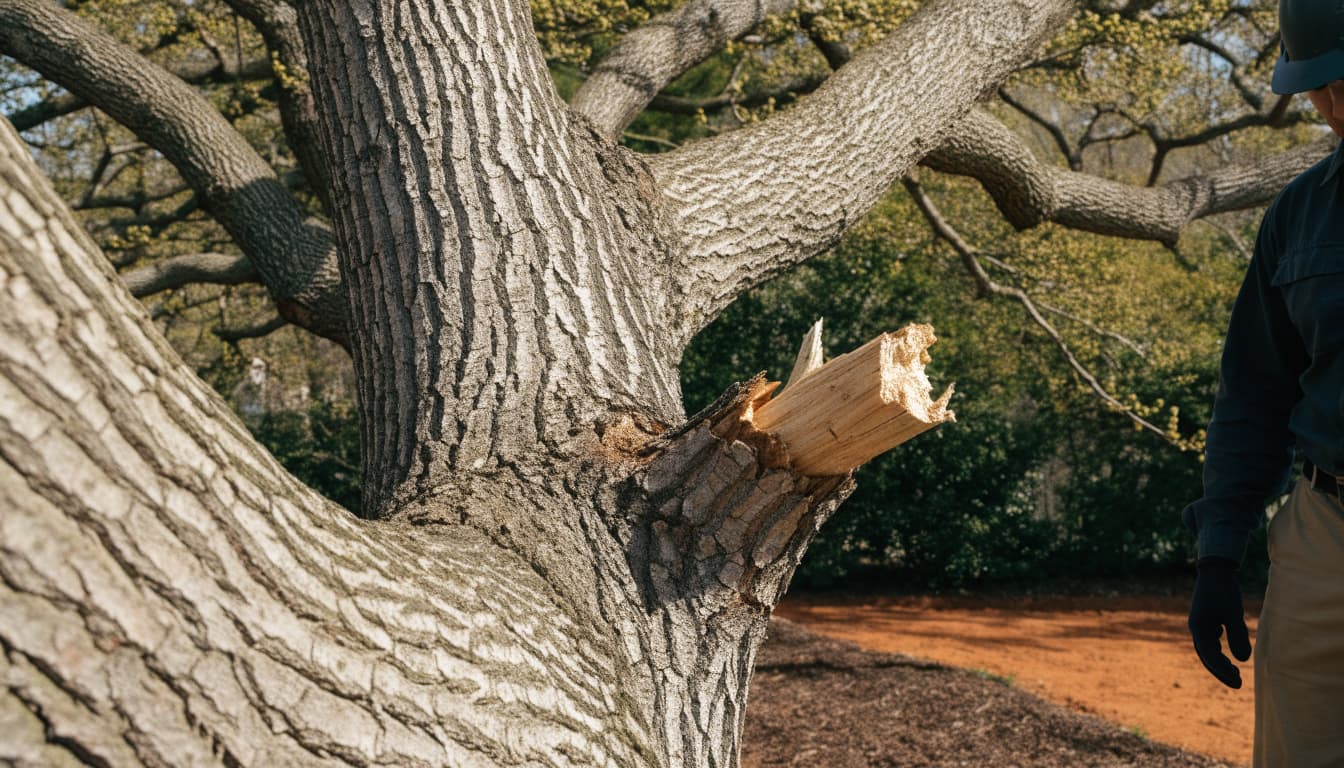
Oak wilt deserves careful discussion without exaggerating Atlanta's documented risk. UGA Extension's Key to Diseases of Oaks in the Landscape , updated March 20, 2025, reports no positive identification at the UGA Plant Disease Clinic. The Georgia Forest Pest Management Manual reports no confirmed Georgia cases.
Understand the reason for spring precautions
Oak wilt can spread through root grafts between trees. Sap-feeding beetles in the Nitidulidae family can also carry the fungus to wounds. The Georgia manual notes confirmations in nearby counties in Tennessee, North Carolina, and South Carolina.
Those facts support avoiding unnecessary wounds during spring, even though Georgia's documented situation differs from areas with established outbreaks. They don't justify treating every declining Atlanta oak as infected.
If disease is suspected, ask the arborist how the diagnosis will affect pruning, tool cleaning, and handling of removed wood.
Get symptoms assessed before choosing treatment
UGA describes possible oak-wilt symptoms as leaf browning or bronzing that advances inward from the margins, followed by early leaf drop. On live oak, yellowing veins that later become brown are a diagnostic clue.
However, symptoms alone aren't a diagnosis . Drought, root injury, and other oak diseases can also cause decline. Hypoxylon canker, for example, is associated with stressed oaks.
Contact your county UGA Extension office or an arborist when canopy changes appear sudden or extensive. Photographs and a history of construction, drainage changes, or drought can help guide the assessment.
Make Fewer Cuts and Protect Branch Structure
Good timing won't compensate for damaging cuts. The pruning method matters throughout the year, especially on an older shade tree.
Preserve the branch collar and natural canopy
For small branches, cuts should stay just outside the branch collar, the enlarged area where the branch joins its parent stem. Flush cuts remove protective tissue, while long stubs leave unnecessary dead material.
Avoid topping, which cuts major branches back indiscriminately. Also reject proposals to strip interior growth while leaving foliage concentrated at branch ends. An arborist should explain which branches need removal or reduction and why.
Pruning can remove a hazardous limb, but it can't restore the strength of a trunk weakened by extensive decay.
Keep homeowner work small and ground-based
Limit DIY work to small, accessible branches that you can handle safely while standing on the ground. Use sharp tools suited to the branch size. If a cut requires force, awkward positioning, or reaching overhead, stop.
Large limbs need controlled removal because their weight can tear bark or damage property. Ladder work and chainsaw work above ground belong with trained professionals.
Don't prune near power lines. Contact the utility about clearance concerns, and keep yourself, tools, and falling branches away from energized equipment.
When to Consult a Certified Arborist
Seek an ISA Certified Arborist for large oaks, substantial clearance work, suspected disease, or uncertain branch structure. Certification is a useful qualification, but it doesn't by itself establish expertise in oak-wilt diagnosis or every type of hazardous removal.
A split trunk, large cavity, fungal growth near the base, or new root movement deserves assessment before routine pruning begins. These defects may change the entire work plan. Removing a few branches can leave the underlying problem unresolved.
For non-emergency work, compare two or three written estimates with similar scopes. Ask who will assess and supervise the job. Confirm general liability and workers' compensation coverage, then clarify debris removal and equipment access.
RW Lawn Co's Atlanta tree pruning cost guide lists a typical residential range of $250 to $900 per tree. Tall oaks, restricted access, and hazardous limbs can cost more.
The estimate should identify the pruning objective and included trees. A vague promise to "trim everything" gives you little basis for comparing quality or protecting the canopy.
Coordinate Pruning With Lawn and Landscape Care
Tree work affects the yard below it. Before the crew arrives, identify irrigation components and agree on equipment routes. Keep trucks and repeated traffic away from roots where practical, especially when Atlanta's clay soil is wet.
Afterward, remove debris from turf and walkways without disturbing the root flare. Mulch can help protect the soil surface, but keep it away from the trunk. Don't mound soil or mulch over exposed structural roots to hide them.
During dry periods, check root-zone moisture rather than assuming a brief shower supplied enough water. Also avoid automatic heavy fertilization after pruning; fertilizer won't correct structural defects or an unidentified disease.
Coordinate Atlanta spring and fall yard cleanup with leaf and ground-debris removal. Seasonal cleanup complements tree care, but it doesn't replace overhead hazard assessment or professional limb removal.
Frequently Asked Questions
Can an Atlanta oak be pruned in February?
February can still be workable, depending on the species, weather, and intended cuts. However, Atlanta warm spells may start growth earlier than expected. The November-through-January recommendation is a local provider's planning window, not a statewide cutoff.
Have the arborist assess bud development and tree condition before extending routine work toward spring. Don't delay hazardous-limb assessment to preserve a preferred date.
Does every oak need annual pruning?
No. Healthy mature oaks may need inspection without needing cuts each year. Young trees can benefit from periodic structural pruning, but the interval depends on their development.
Annual landscape maintenance shouldn't automatically include canopy thinning. Ask what problem each proposed cut solves. If the tree has sound structure and adequate clearance, monitoring may be the appropriate next step instead of pruning.
Conclusion: Put Tree Condition Before the Calendar
Atlanta's cooler dormant season is a practical starting point for routine oak pruning. However, weather, species, and structural condition should determine the final plan.
Keep elective spring and summer cuts limited, and get unexplained decline assessed before treatment. Hazardous limbs need timely attention , regardless of the month.
A useful calendar helps you schedule care without allowing a date to outweigh the tree in front of you.