Atlanta Tree Pruning Cost in 2026: What Homeowners Should Budget
If you're researching Atlanta tree pruning cost , a typical residential job often falls between $250 and $900 per tree . Many straightforward Atlanta projects land closer to $379 to $565 , while tall trees, storm damage, power-line clearance, and difficult access can push the estimate much higher.
For many homeowners, the final price depends less on the number of cuts than on the tree's height, location, condition, and cleanup requirements. This guide explains current Atlanta pricing ranges, what professional pruning should include, and how to compare estimates without sacrificing safety.
Atlanta tree pruning cost: 2026 estimates by tree size
Published Atlanta pricing benchmarks vary because each company measures jobs differently. Some report the cost per tree, while others price the crew, equipment, disposal, and risk involved in the entire job.
For 2026 budgeting, these ranges provide a practical starting point:
| Tree or project type | Estimated Atlanta price |
|---|---|
| Very small tree under 30 feet | $75 to $450 |
| Small, simple tree pruning | $100 to $300 |
| Medium tree, 30 to 60 feet | $150 to $875 |
| Typical medium-tree service | $350 to $550 |
| Large or difficult tree | $800 to $2,500 or more |
| Emergency pruning or storm response | Up to about $250 per hour |
| Minimum service charge | $100 to $300 or more |
LawnStarter's Atlanta pricing data places many tree-trimming jobs between $379 and $565 per tree . Swivl Tech reports an Atlanta range of roughly $367 to $547 , with average estimates between $412 and $502 . Those figures fit many routine jobs involving one medium tree with reasonable access.
Other calculators show why you may see different numbers. Homeyou's Atlanta estimates place medium-tree pruning near $460 to $480 , while Atlanta Arbor gives a broader average of $250 to $500 . A simple young tree in an open yard may cost less than those averages. A mature oak beside a roof may cost much more.
The most useful figure is usually the written price for your specific trees. Online averages can help you spot an unusually low or high quote, but they can't account for your yard's slope, fence access, branch weight, or nearby structures.
Why tree size changes the quote
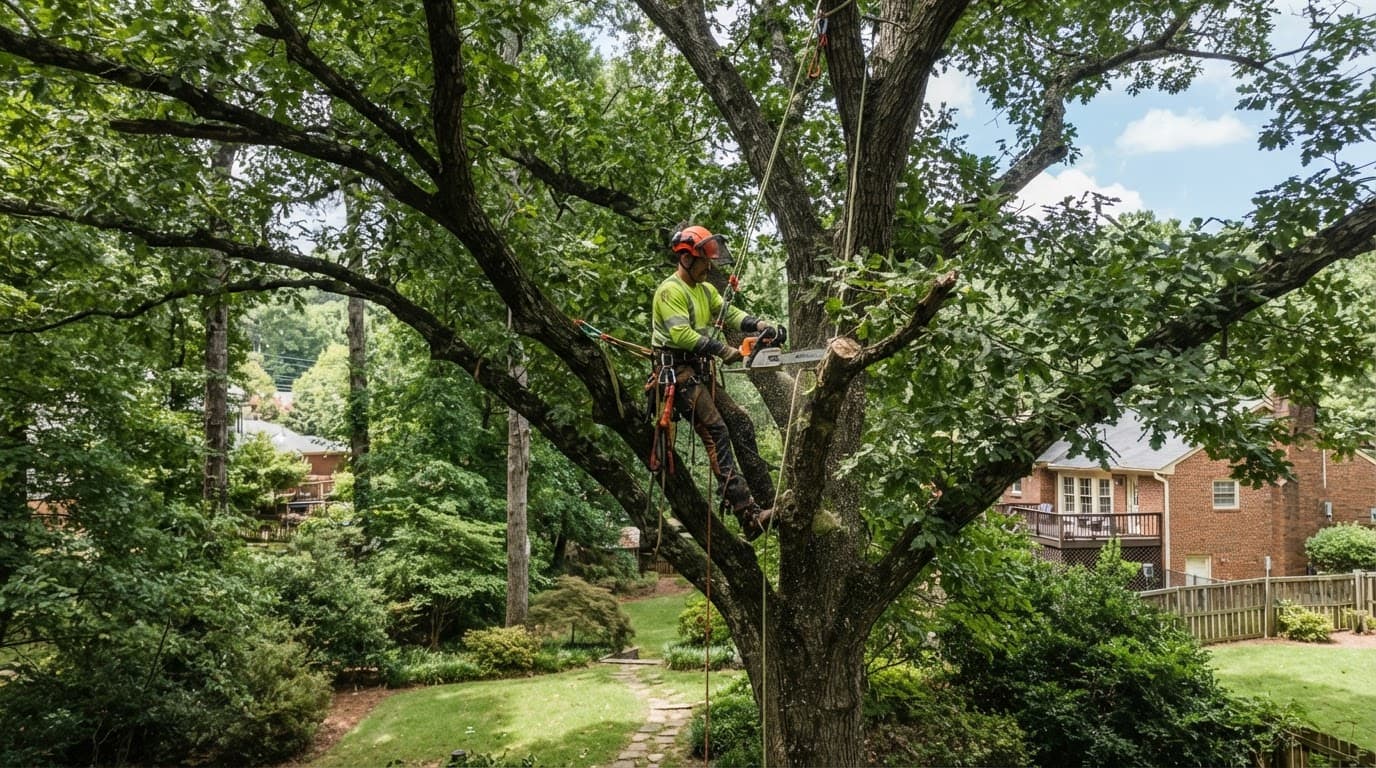
Tree height affects the amount of climbing, lowering, rigging, and equipment setup required. A crew can often prune a small ornamental tree from the ground or with a short ladder. A 60-foot oak may require climbing equipment, ropes, a bucket truck, or a crane.
Canopy density also matters. Removing a few dead limbs takes less time than reducing overextended branches throughout a broad crown. A tree with several trunks may require more careful cuts because poor pruning can leave weak attachment points.
A company may quote per tree for a small group of similar trees. For one difficult tree, the company may use a project price instead. That price covers labor, equipment, insurance, travel, and debris handling rather than counting individual branches.
What raises tree pruning prices in Metro Atlanta?
Two trees can stand 30 feet apart and still require very different work. The factors below usually have the greatest effect on an Atlanta pruning estimate.
Location and access
A tree in an open backyard is easier to service than one wedged between a house, garage, fence, and utility line. Narrow gates can prevent access for a chipper or lift. In that case, workers may need to carry branches by hand or lower them with ropes.
Sloped properties also add time. Atlanta-area yards often have grades, retaining walls, drainage areas, or exposed roots that limit where equipment can sit. Wet ground can make access worse and increase the risk of rutting the lawn.
The crew may need plywood or protective mats beneath equipment. Those materials protect turf and hardscapes, but they add setup time. If a driveway, patio, irrigation line, or garden bed sits below the canopy, the estimator should account for protection before work begins.
Nearby roofs, fences, and other structures
Branches over a roof need controlled removal. Workers can't allow heavy limbs to fall freely, even when the tree looks healthy. Ropes, lowering systems, and additional workers may be needed to guide each section safely.
The same concern applies to sheds, play equipment, pools, parked vehicles, and neighboring property. A branch that could fall into your yard may still need to cross a fence or pass over a structure before reaching the ground.
A quote that includes careful rigging may cost more than a quote based on dropping branches into an open lawn. The higher price may reflect a safer work plan rather than unnecessary labor.
Power lines
Trees near overhead utility lines require special care. Working around energized lines is dangerous and may require a qualified utility tree worker or coordination with the utility company.
Never choose a low bid that ignores the wires. Ask the company to explain who will handle the work and what clearances are needed. If branches are touching a line, keep people away from the area and contact the utility provider before arranging ordinary yard work.
Tree health and storm damage
Dead, cracked, hanging, or storm-damaged branches take more time to inspect and lower safely. A healthy limb may have predictable weight. A dead limb can break unexpectedly during removal.
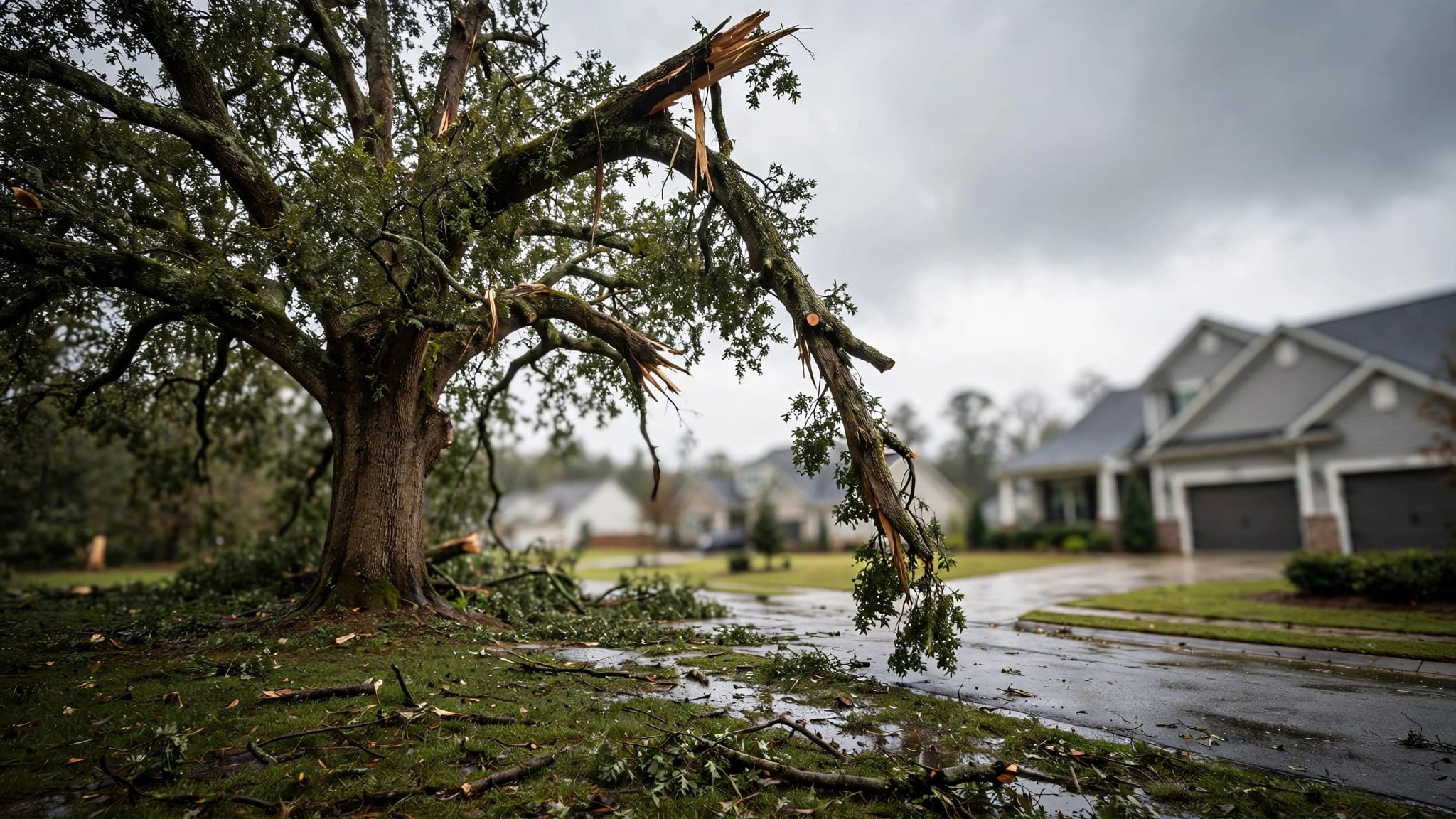
Atlanta's thunderstorms can split limbs and expose weaknesses that weren't visible during a routine inspection. Emergency service costs more because crews may respond outside normal scheduling, use additional equipment, or prioritize immediate hazards.
Homeyou and HomeGuide both place emergency tree-trimming labor near $250 per hour in some Atlanta estimates. That rate is an upper-end planning figure, not a standard price for scheduled pruning.
Debris and disposal
Some companies leave cut branches stacked at the edge of the property. Others chip branches, haul away logs, rake the work area, and remove all debris.
Ask whether the estimate includes:
- Chipping branches and removing chips.
- Cutting large logs into manageable sections.
- Hauling wood away from the property.
- Raking leaves, sawdust, and small debris.
- Protecting lawn areas during equipment use.
Disposal can be a meaningful part of the bill, especially when a mature tree produces a large volume of heavy wood. If you plan to keep firewood or mulch, tell the estimator before the work starts.
What should a professional pruning estimate include?
A reliable quote describes the work in plain language. "Trim tree" isn't enough detail to compare companies fairly.
The estimate should identify each tree by location or description. It should also state whether the crew will remove deadwood, raise branches over a driveway, reduce selected limbs, clear the roof, or perform structural pruning.
Professional pruning generally focuses on selected branches, not an even haircut across the canopy. The work may include:
- Removing dead, broken, diseased, or crossing branches.
- Improving clearance above roofs, driveways, sidewalks, and fences.
- Removing weak water sprouts or competing leaders when appropriate.
- Reducing selected limbs to manage weight or clearance.
- Improving branch structure without stripping the canopy.
- Removing branches that rub against one another.
A good pruning plan also explains what the crew will leave in place. Removing too much live growth can stress a tree and encourage weak regrowth. Topping, which cuts major limbs back to stubs, is not a sound substitute for proper crown reduction.
The estimate should include the total price, payment schedule, expected service date, and cleanup terms. It should also state whether the price covers travel, equipment, permits if needed, and sales tax.
If the company identifies a possible disease, decay, cavity, or major structural defect, ask whether the person inspecting the tree is an ISA Certified Arborist . Certification doesn't guarantee perfect work, but it gives you a credential to verify. Ask for the arborist's name and credential number, then confirm that the certification is current.
Insurance matters more than a low bid
Tree work involves falling wood, chainsaws, climbing, and expensive equipment. Before hiring a company, request proof of current general liability insurance and workers' compensation coverage.
General liability coverage helps address accidental damage to your home or property. Workers' compensation helps protect you if an employee gets injured while working on your property. Don't assume a company carries both types because it has a truck, website, or professional-looking uniform.
A certificate of insurance should come from the insurer or agent. Check that the business name on the certificate matches the company name on your estimate. If subcontractors will perform the work, ask whether their coverage is included.
A very low price may leave out rigging, cleanup, insurance, or proper equipment. Comparing the total scope matters more than comparing the largest number on the page.
Tree pruning versus trimming and removal
Homeowners often use "pruning" and "trimming" interchangeably. Companies may also use both terms in estimates. In general, pruning focuses on tree health, structure, and selective branch removal. Trimming often refers to clearance, shaping, or reducing overgrowth.
The distinction matters because a quote for light clearance may not include a full structural assessment. Ask what the crew plans to remove and why. If the work involves a mature tree, a qualified arborist should identify defects before workers start cutting.
Removal is a different service. It involves cutting down the entire tree, processing the trunk and branches, and often grinding or removing the stump. Pruning can postpone removal when the tree is structurally sound, but it can't repair a decayed trunk or restore a failed root system.
Routine pruning is usually less expensive than removal. Many Atlanta residential pruning jobs stay below $1,000 per tree, while removal often falls around $800 to $2,500 and can exceed $4,000 for difficult trees. The price rises when a tree is very large, damaged, near structures, or difficult to access.
For a broader comparison, review this Atlanta tree removal cost guide. It also covers related lawn repair, debris hauling, and stump-grinding costs after removal.
A tree may need an arborist's evaluation when it has a large cavity, a split trunk, extensive deadwood, exposed roots, fungal growth, or a noticeable lean. Pruning a hazardous tree without addressing its main defect can create a false sense of safety.
Pruning can remove hazardous branches, but it can't make a severely decayed tree structurally sound.
How to compare Atlanta tree service estimates
Collect at least two or three written estimates for non-emergency work. More quotes don't always improve the decision, especially when one company lacks the qualifications for the job. The goal is to compare similar scopes from insured professionals.
Ask each company to answer the same questions:
- Which trees and branches are included?
- Who will inspect and supervise the work?
- What qualifications does the person have?
- Does the company carry general liability and workers' compensation insurance?
- Will the crew use ropes, a lift, or other specialized equipment?
- Is cleanup and debris hauling included?
- Will the company protect the lawn, driveway, and nearby structures?
- Are there extra charges for travel, disposal, emergency work, or difficult access?
- What happens if weather delays the project?
- When is payment due?
The lowest quote deserves a careful review if it doesn't describe the same work. One contractor may plan to remove deadwood and haul everything away. Another may perform light shaping and leave the branches on site. Both may call the service "tree trimming," but they aren't offering the same job.
Watch for vague promises such as "make it safe" without a defined scope. Ask for a marked photo, tree number, or written description. You should know whether "clear the roof" means removing one branch or reducing several limbs to create a specific clearance.
A written estimate also protects both sides from confusion. If you approve additional work after the crew arrives, ask for the revised price before cutting begins.
Questions to ask before scheduling
A short phone call can reveal how carefully a company handles tree work. Ask whether the estimator will visit the property rather than quote a tall tree from a few photos.
Find out whether the crew will use climbing equipment and whether the company employs its own workers. Ask how the team handles branches over a house or near a power line. Clear answers indicate that the company has considered the job before discussing price.
You can also ask for recent local references, but don't rely on reviews alone. Look for a consistent record of communication, punctuality, property protection, and cleanup. Confirm the business name on the estimate, insurance certificate, and invoice.
Avoid paying the full amount before work starts. A reasonable deposit may be part of the agreement, but the contract should state when the remaining balance is due.

When should Atlanta homeowners schedule pruning?
The right timing depends on the tree, the reason for pruning, and the urgency of the work. Dead or hazardous branches should be addressed when you find them. Waiting for a preferred season doesn't make sense when a broken limb threatens a roof, driveway, or person.
For many deciduous trees, late winter is a practical time for structural pruning. Trees are often easier to inspect without full foliage, and the crew can see branch unions more clearly. However, Atlanta weather can shift quickly, so a contractor may postpone work during strong wind, heavy rain, or saturated soil.
Flowering trees need more careful timing. Pruning immediately before bloom can remove flower-producing branches. Ask the arborist when the tree forms its flower buds and whether the requested cuts are for health, clearance, or appearance.
Routine inspections after severe storms are useful, even when no branch has fallen. Look for hanging limbs, fresh cracks, lifted roots, bark separation, and new movement in the trunk. Stay away from damaged trees until a qualified professional assesses them.
Most properties don't need the same pruning schedule for every tree. Young trees may benefit from occasional structural correction. Mature trees often need inspection and selective work rather than annual heavy cutting. A recurring maintenance plan can help spread costs, but it should never pressure you into unnecessary pruning.
Ways to control pruning costs without cutting corners
You can reduce the bill through planning, not by asking a crew to skip safety steps.
Schedule routine pruning before a branch becomes an emergency. Storm-damaged work often costs more than planned service, and delays can expose roofs, vehicles, and walkways to additional damage.
Bundle several nearby trees into one visit when the work is similar. The crew may already have the chipper, lift, ropes, and hauling equipment on site. Ask whether the company offers a project price for multiple trees, but keep each tree's scope clear in writing.
Keep access clear before the crew arrives. Move vehicles, toys, patio furniture, and portable decorations from the work zone. Unlock gates if agreed in advance, and identify irrigation heads or fragile planting beds that aren't obvious from the driveway.
Choose cleanup based on your needs. Keeping usable firewood or clean wood chips may lower disposal needs, but only if you have a safe place for them. Never accept a debris pile that blocks a sidewalk, driveway, or drainage path.
Don't let a contractor save money by topping the tree, skipping protective equipment, or using uninsured labor. Those choices may lower the invoice while increasing the chance of property damage, weak regrowth, or personal injury.
For small branches within safe reach, homeowners can handle limited hand-pruning with clean tools. Tall trees, branches over structures, chainsaw work, and anything near utility lines belong with qualified professionals.
A practical budget for your Atlanta property
For a homeowner planning ordinary maintenance, a budget of $400 to $600 for one medium tree is a reasonable starting point. That range aligns with several Atlanta pricing benchmarks, although the final estimate may fall below or above it.
Set aside more when the tree is over 60 feet, has large dead limbs, stands beside a house, or requires a lift or rigging system. A difficult project may reach $800 to $2,500 or more , especially when the work involves multiple high-risk sections and full debris removal.
Small trees may cost less, but minimum service charges can change the math. HomeGuide reports minimum tree-service fees of roughly $100 to $300 or more . Pruning one small tree may therefore cost nearly as much as adding it to a larger scheduled visit.
Hourly rates offer another reference point. Atlanta crew-rate data places many tree-trimming and pruning services near $119 to $147 per hour , with a two-person crew averaging about $133 per hour . Companies may still quote a fixed project price because fixed pricing accounts for equipment, risk, setup, and cleanup.
Use these figures to prepare questions, not to predict an exact invoice. A written estimate after an on-site inspection is the number that should guide your decision.
Conclusion
Atlanta tree pruning cost usually falls within a manageable range for routine residential work, with many medium-tree projects landing near $350 to $550 . Height, access, power lines, storm damage, rigging, and cleanup can change the price quickly.
Before approving work, compare the written scope, verify insurance, confirm arborist qualifications when needed, and ask how the crew will protect your property. A careful estimate may cost more than a quick low bid, but it gives you a safer plan and fewer surprises. Proper pruning removes real hazards while preserving the tree's long-term structure.