Fall Pine Needle Drop in Atlanta: When to Get Help
Fall pine needle drop doesn't, by itself, tell you whether an Atlanta tree needs treatment. The pattern of discoloration, trunk condition, and changes in nearby pines give you more useful clues.
For homeowners, the decision is practical: clean up the needles, adjust landscape care, or bring in an arborist. Start by looking at the whole tree from the ground, with safety first if branches or the trunk show damage.
Key Takeaways
- Look at where needles are changing color, including the inner branches, outer tips, and upper crown.
- Fresh resin masses, boring dust, spreading discoloration, or similar symptoms on neighboring pines warrant professional attention.
- Keep lawn equipment away from trunks and roots, avoid unnecessary treatments, and clear heavy needle accumulations from grass and walking surfaces.
Read the Pattern of Pine Needle Drop
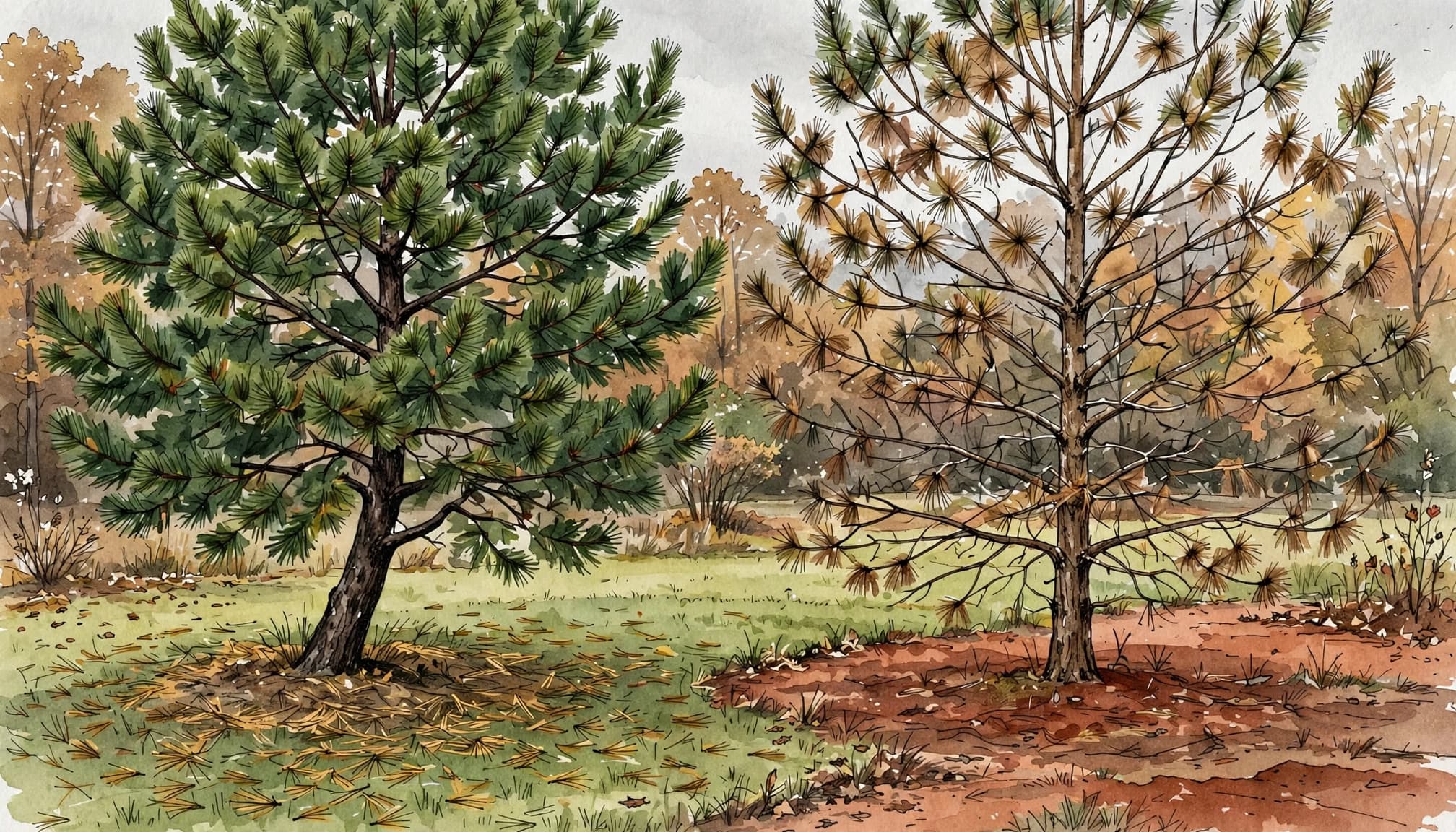
Before focusing on the needles covering your driveway, look up. Their location on the tree provides more useful information than the size of the pile below.
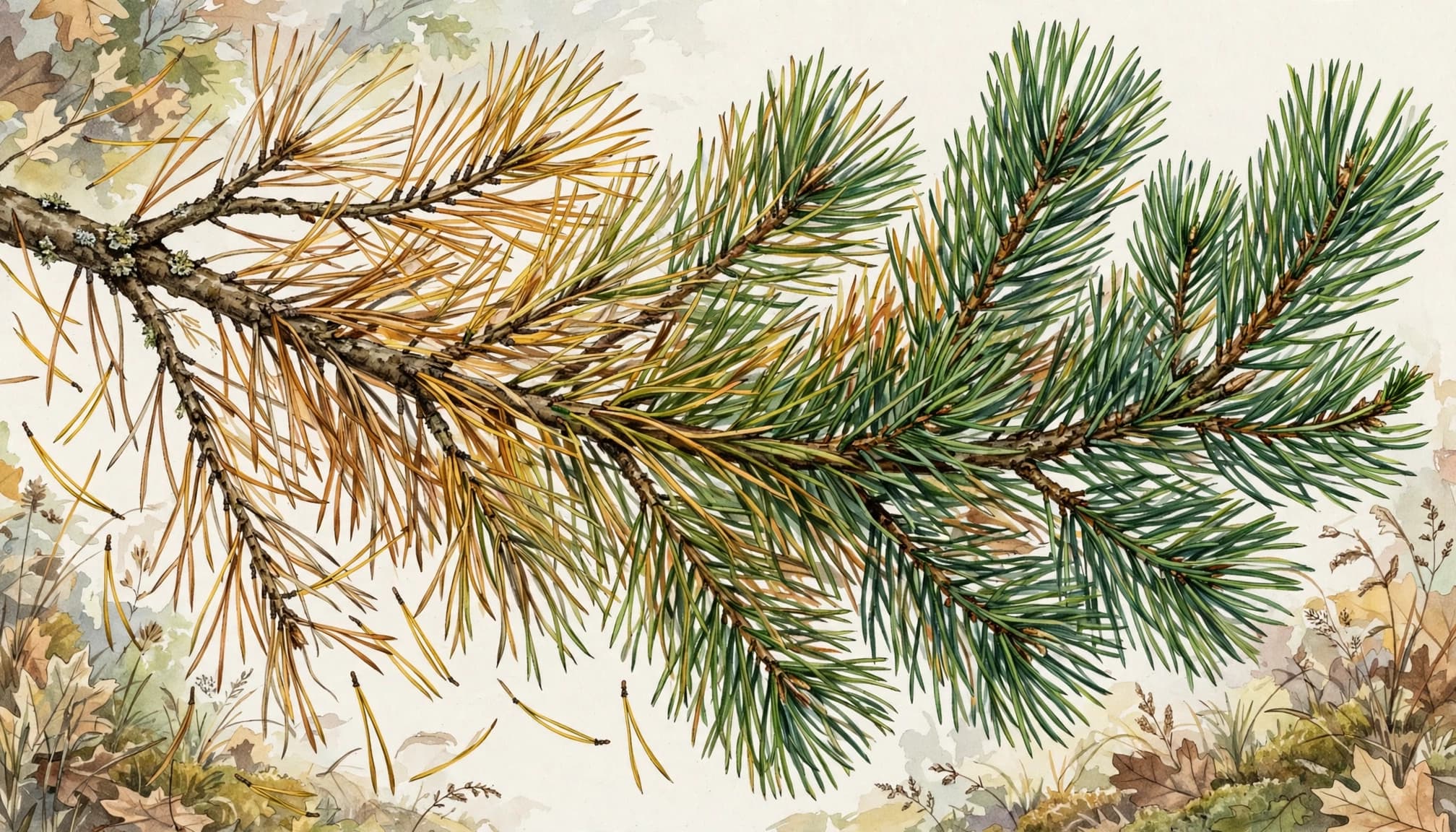
Compare interior needles with branch tips
From a safe distance, note whether discoloration stays near the trunk and older branch sections or extends into the outer foliage. Also look for bare branch ends, dead shoots, or thinning at the top.
These observations help describe the problem, but no single pattern identifies its cause. A tree professional needs to consider the foliage alongside the trunk, roots, site conditions, and recent changes around the tree.
Watch for changes across the whole crown
Take photographs from the same ground-level location so you can compare the canopy over time. Include the entire tree rather than photographing only one yellow branch.
Look at nearby pines as well. Several trees showing similar changes deserve attention, especially when discoloration accompanies trunk damage. However, one declining pine doesn't establish that every neighboring tree has the same problem.
Why Atlanta Growing Conditions Matter
Metro Atlanta yards can expose pines to dry soil, compacted ground, and drainage changes. These conditions matter when you assess needle loss, particularly after construction or an extended rainless period.
Dry weather and poorly drained clay affect roots
Piedmont clay can dry hard between storms yet hold water in compacted or low-lying areas. As a result, a tree may struggle because its roots lack moisture or because saturated ground limits oxygen.
Don't assume yellowing means a pine needs more irrigation. Consider recent rainfall, irrigation coverage, runoff, and whether water collects around the tree. A lawn sprinkler running regularly doesn't prove that a mature pine's root zone receives suitable moisture.
Construction damage can appear later
Trenching, grading, heavy equipment, and soil compaction can injure roots beyond the area immediately surrounding the trunk. Decline may become visible after the work has finished.
Mention recent driveway installation, drainage work, clearing, or utility digging during an arborist's assessment. Those details can help distinguish root injury from insects or disease.
Also avoid piling excavated soil around existing pines. Raising the soil level over roots or burying the trunk flare creates problems that cleanup alone won't correct.
Signs of Pine Beetles and Other Problems
Discolored needles deserve closer attention when they accompany trunk symptoms, dead branches, or continuing canopy decline. Atlanta homeowners should recognize the warning signs without trying to diagnose a tree from foliage color alone.
Look for bark beetle evidence
Southern pine beetles attack beneath the bark, where their galleries disrupt the tree's ability to move water and nutrients. Loblolly and shortleaf pines are among Georgia's potential hosts.
Warning signs include small, popcorn-like resin masses called pitch tubes, fresh boring dust, and loose bark. Severe attacks can kill a tree, and trunk evidence may appear before the crown changes color.
Our guide to southern pine beetle warning signs explains what to look for around Atlanta properties.
A green crown doesn't rule out a developing beetle problem when fresh trunk symptoms are present.
Keep disease and environmental stress in the picture
A yellow, reddish-brown, or thinning crown can also result from drought, root injury, disease, lightning, or other insects. Color alone can't separate these causes.
Document whether damage affects one branch, one side, or much of the crown. Also note recent storms and changes in drainage. Avoid applying a fungicide or insecticide based only on needle loss, because treatment depends on identifying the actual problem.
When to Call an Arborist
Arrange an inspection when discoloration spreads, outer foliage declines, or several nearby pines develop matching symptoms. Fresh pitch tubes, boring dust, substantial bark loss, and dead branches also justify professional attention.
An ISA Certified Arborist or qualified tree-care company can assess the canopy, trunk, root area, and surrounding trees. The inspection should also consider what the tree could strike if a branch or trunk failed.
Before that visit:
- Photograph the crown and visible trunk symptoms from a safe distance, and record when you first noticed them.
- Keep people, pets, vehicles, and mowing equipment away from a tree with hanging limbs, cracks, or a new lean.
- Leave bark, branches, and suspected infested wood undisturbed until a professional recommends the next step.
A cracked limb over a driveway or a leaning tree near a power line requires prompt attention. Never climb, use a ladder, or operate a chainsaw around an unstable tree.
An inspection doesn't automatically mean removal. Depending on the findings, the recommendation may involve monitoring, correcting growing conditions, treating selected trees, or removing a hazardous pine.
Care for Pines Without Adding Stress
Landscape maintenance should protect the trunk and root zone while the cause of concern becomes clearer. Mower impacts and string-trimmer wounds create avoidable injuries, so keep equipment away from bark and exposed roots.
During extended dry periods, established pines may benefit from supplemental watering within applicable watering restrictions. Direct water toward the root zone rather than against the trunk. However, adding water to ground that already stays saturated won't solve a drainage problem.
Skip emergency fertilizer applications intended to reverse browning. Fertilizer can't repair injured roots, restore dead tissue, or correct an insect infestation.
Also avoid heavy pruning to make a thinning tree look tidier. Removing substantial live growth adds stress, and pruning can't make a severely decayed trunk sound. Leave major limbs and hazardous deadwood to qualified tree professionals.
These precautions are especially important after nearby construction, storm damage, or land clearing.
Manage Fallen Needles in Lawns and Beds
Once you identify any immediate safety concerns, handle the needles according to where they land. Grass, paved surfaces, and landscape beds need different cleanup approaches.
Clear grass and slippery surfaces
Heavy accumulations can cover turf and block light. Remove dense layers rather than repeatedly mowing over them, especially where pine needles mix with wet oak or sweetgum leaves.
Keep walks, steps, and driveways clear because wet needles can reduce traction. Ground-level drain openings also need attention when debris starts collecting.
For mixed-canopy properties, our Atlanta leaf cleanup plan helps organize recurring cleanup instead of waiting for one oversized pile. At RW Lawn Co, our seasonal cleanup services help keep lawns and landscape beds manageable through fall.
Use suitable pine straw thoughtfully
Pine straw can protect landscape-bed soil from rainfall impact and help conserve moisture. However, adding fresh material over a thick, matted layer can create excessive buildup.
Keep straw away from trunks and avoid stacking it against siding or foundations. Our pine straw installation guide covers bed preparation and maintenance.
If beetles are suspected, don't casually move logs, branches, or fresh pine debris elsewhere on the property. A tree professional should recommend how to handle potentially infested wood. Routine needle cleanup and management of infested timber are different jobs.
Frequently Asked Questions About Pine Needle Drop
Do yellow needles mean my pine has beetles?
No. Needle discoloration can accompany several problems, including drought, root injury, disease, and insect activity. Beetle assessment also considers trunk evidence, such as pitch tubes and boring dust, along with the condition of nearby pines.
Should I spray a pine that's dropping needles?
Spraying without identifying the cause can waste money and expose the landscape to unnecessary chemicals. Preventive insecticides may protect selected healthy pines under professional guidance, but they aren't a dependable rescue for trees with extensive beetle activity.
Can a declining pine recover?
Recovery depends on the cause and how much living tissue remains. Correcting moisture or drainage problems may help a stressed tree. However, treatment can't restore tissue destroyed by extensive beetle damage or make a structurally unsafe tree sound.
Should I remove every needle from beneath the tree?
Cleanup needs depend on the surface and the tree's condition. Remove heavy coverage from turf and walking areas. In beds, manage buildup and keep the trunk clear. If disease or insects are diagnosed, follow the professional's debris-handling recommendations.
Put Tree Condition Ahead of the Cleanup
Pine needle drop is a reason to observe the whole tree before choosing a treatment. Trunk symptoms, spreading canopy changes, and structural damage deserve more attention than the amount of straw on the ground.
Keep cleanup practical, protect roots from equipment, and get professional help when warning signs appear. A tidy yard matters, but tree safety comes first.