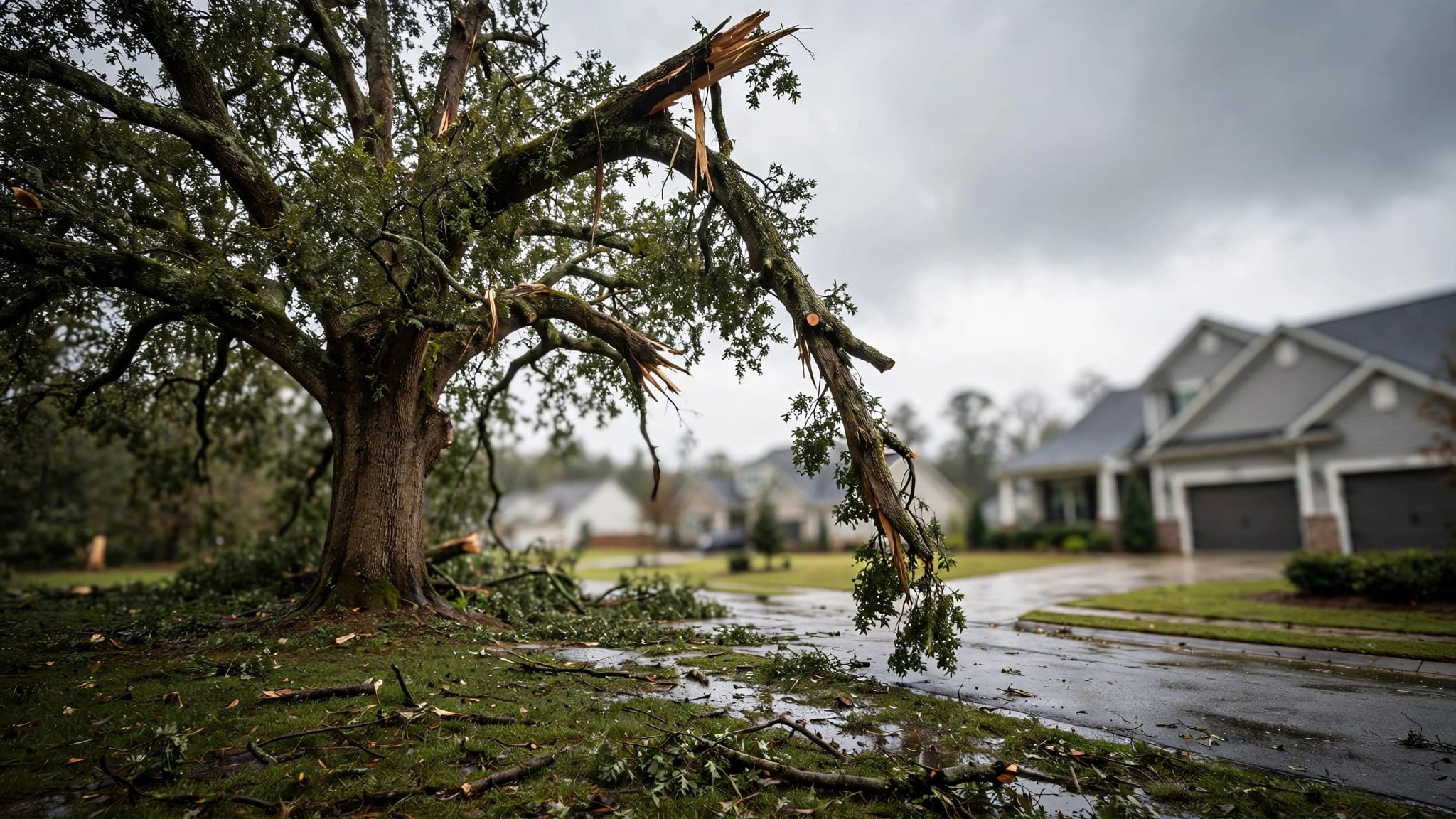
Southern Pine Beetle Damage in Atlanta: Warning Signs
Southern pine beetle damage can turn a healthy-looking pine into a serious tree hazard faster than many Atlanta homeowners expect. Small clues on the trunk often appear before the crown changes color, so early inspection matters.
These beetles can spread to nearby pines, especially when trees face drought, storm damage, root problems, overcrowding, or other stress. Learn the warning signs, keep people away from unsafe trees, and arrange a professional assessment before cutting or moving affected wood.
Why Southern Pine Beetles Threaten Atlanta Pines
The southern pine beetle is a small bark beetle that attacks pine trees beneath the bark. Adult beetles bore through the outer bark, create winding galleries, and interrupt the tree's ability to move water and nutrients. A severe attack can kill a pine, sometimes within a short period.
Georgia's pine population includes species such as loblolly and shortleaf pine, which can become hosts when conditions favor an infestation. Trees under stress have a harder time producing enough resin to push beetles out. However, a healthy tree can also become involved when beetles attack in large numbers.
An affected pine may stand near a driveway, play area, roof, fence, or utility line. As the crown declines, branches become brittle. Once the trunk and root system weaken, removal becomes a safety issue rather than a routine landscaping task.
Southern pine beetles may also move through a group of nearby pines. One declining tree doesn't prove that every tree on the property is infested, but it does justify checking surrounding trunks and canopies. A tree professional can determine whether the problem involves beetles, another pest, disease, storm injury, or general decline.
A pine with a brown crown may have been under attack for weeks. Trunk evidence often provides an earlier warning than foliage color.
Southern Pine Beetle Damage: Warning Signs to Check
Look at pine trunks from the ground, especially after periods of heat, drought, or storm damage. Don't climb a declining tree or remove bark to inspect it yourself.
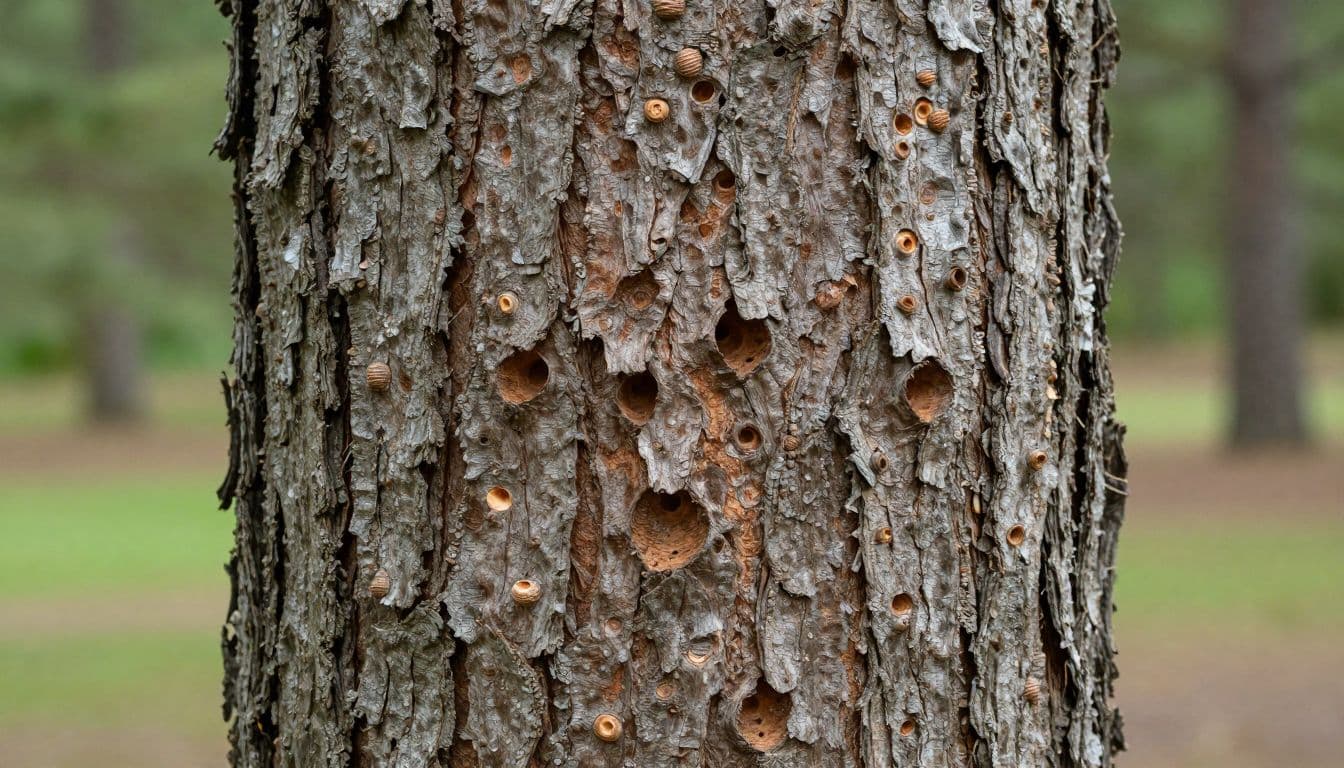
Popcorn-like pitch tubes
The most recognizable sign is a cluster of small resin masses on the trunk. These popcorn-like pitch tubes form when the tree tries to seal beetle entry holes with sap. They may appear white, cream-colored, pink, or reddish, depending on age and contamination.
A few pitch tubes can have other causes, so location and pattern matter. Numerous tubes scattered across the trunk, especially on the middle or upper sections, deserve prompt attention.
Boring dust and tiny holes
Fine, reddish-brown boring dust may collect in bark crevices, around the base, or on nearby spider webs and groundcover. Fresh dust can indicate active boring. Small round holes may also be visible after beetles enter or leave the bark.
Wind can remove dust, and rain can wash it away. Therefore, its absence doesn't rule out an infestation. Check the trunk, ground, and low branches together instead of relying on one clue.
Bark loss and winding galleries
As the problem advances, bark can loosen, crack, or fall away. Underneath, a professional may find winding galleries cut into the inner bark. These channels interfere with the tree's vascular system and may contain beetles, larvae, or frass.
Don't pry off bark to confirm the diagnosis. Loose bark can fall without warning, and disturbing the trunk won't improve the tree's condition. A qualified tree professional has the equipment and training to inspect it safely.
Yellow, red, or thinning needles
A pine crown that shifts from green to pale yellow, reddish brown, or dull brown may indicate serious decline. Needles often change color after the tree's internal systems have already suffered damage.
Canopy symptoms can also come from drought, root injury, disease, lightning, or other insects. For that reason, crown color alone isn't enough to identify southern pine beetle damage. Look for trunk signs and inspect nearby pines as well.
Nearby affected pines
Southern pine beetles can move between closely spaced trees. Check pines near the declining one, along property lines, beside wooded areas, and around recent storm breaks. Look for fresh pitch tubes, boring dust, thinning crowns, or loose bark on more than one trunk.
A single infested pine can become a source of concern for the surrounding stand. Quick action helps a professional evaluate the full area before the symptoms become harder to separate.
What Atlanta Homeowners Should Do Next
Safety comes first. Dead, declining, or unstable trees can drop branches or fail at the trunk, even on calm days. Keep children, pets, guests, and lawn equipment away from the tree until someone assesses it.
Follow these steps when you notice possible signs:
- Stay on the ground and document what you see. Take photos of the trunk and crown from a safe distance. Note when you first noticed pitch tubes, boring dust, bark loss, or needle discoloration.
- Inspect nearby pines without touching them. Look for matching signs on neighboring trees. Don't peel bark, drill the trunk, apply chemicals, or cut limbs to test the tree.
- Schedule a professional tree inspection. An ISA Certified Arborist or qualified tree-care company can evaluate the pest signs, tree structure, surrounding targets, and nearby pines. Ask for a clear explanation of the findings and recommended next step.
- Treat urgent hazards as urgent. If the tree leans toward a house, road, fence, or power line, or if large limbs are hanging or cracked, keep clear and request prompt service. Never use a ladder or chainsaw around an unstable tree or utility line.
- Ask how affected wood will be handled. Infested logs, branches, and fresh pine debris shouldn't be moved around casually. A professional can recommend appropriate removal, chipping, or disposal and help limit the chance of spreading insects to other pines.
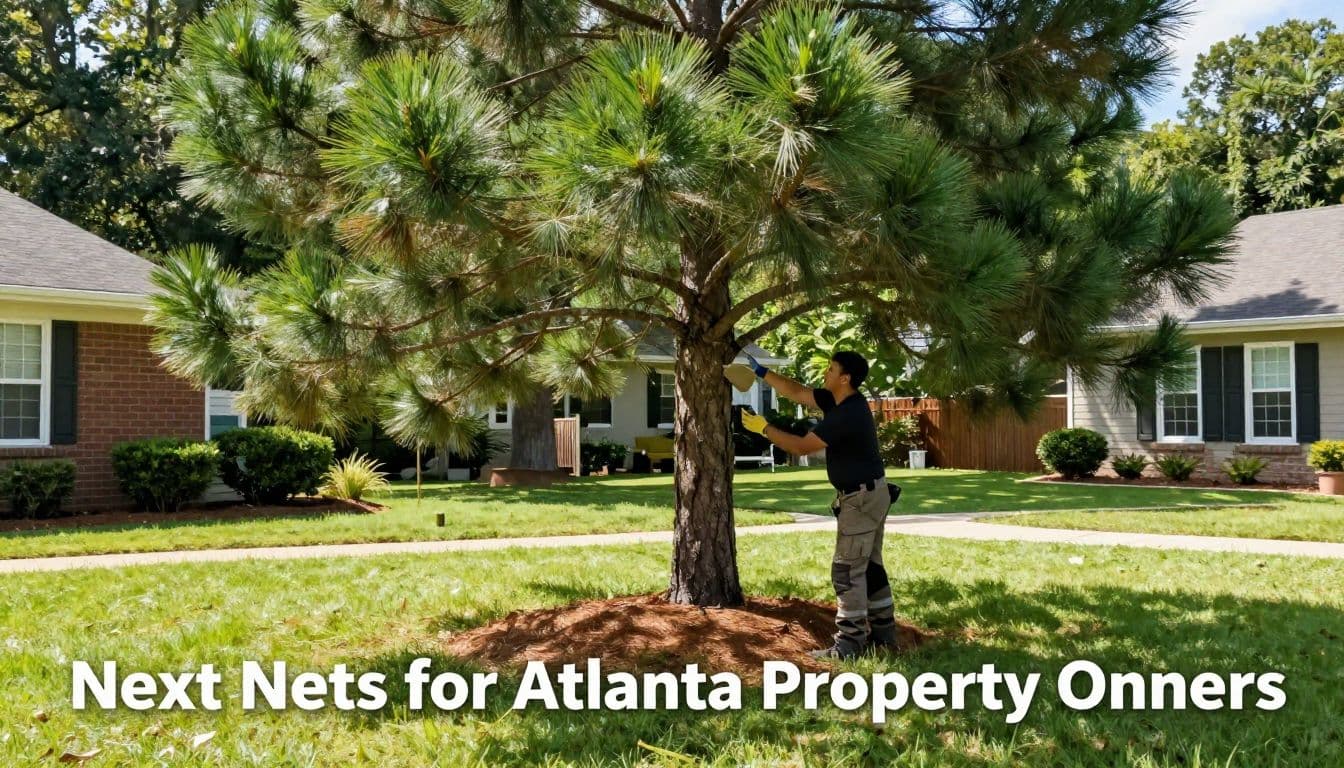
A professional inspection doesn't always mean every nearby pine needs removal. The response depends on the extent of the infestation, the tree's condition, its location, and the risk to people or property.
Can an Infested Pine Be Saved?
A tree with a declining crown and extensive bark disruption may already have severe internal damage. In those cases, treatment cannot restore the affected tissue or make the tree safe. Removal may be the responsible option, especially when the tree can reach a home, driveway, sidewalk, or play area.
Preventive insecticide treatments may protect certain high-value pines that are still healthy and not currently infested. These applications require correct product selection, timing, coverage, and professional judgment. They aren't a dependable rescue for a tree with widespread beetle activity.
A tree professional may recommend removing one tree, treating selected nearby pines, improving growing conditions, or monitoring the property. The plan should address both the visible tree and the surrounding pines.
Don't assume that cutting a tree down stops the problem by itself. Remaining material, nearby stressed trees, and improperly handled logs can complicate control. Ask the contractor how the wood will leave the property and how they will protect structures, turf, beds, and hard surfaces during removal.
Preventing Future Pine Problems
You can't control every beetle outbreak, but you can reduce avoidable stress in your yard. Water established pines during extended dry periods when local conditions and watering rules allow. Direct water toward the root zone rather than against the trunk.
Avoid damaging trunks with string trimmers, mowers, or equipment. Construction, grading, soil compaction, trenching, and changes in drainage can also injure roots. If your property has recently experienced clearing or construction, watch nearby pines for delayed decline.
Pruning should remove dead or hazardous branches, but major cuts and crown work need care. Excessive pruning can add stress. Ask a qualified professional before removing large limbs from a mature pine.
After a tree comes down, restore the area without burying the remaining trunk flare or piling mulch against living trees. Residential landscaping and mulch services can help clean up disturbed beds and maintain a healthier, more orderly yard after tree work.
Keep an eye on replacement planting, too. Choose trees suited to the site's soil, drainage, sunlight, and available space. Avoid crowding new trees against structures or packing too many pines into one small area.
When to Call for Southern Pine Beetle Damage
Call for a professional assessment when you find several popcorn-like pitch tubes, fresh boring dust, bark loss, or a rapidly changing pine crown. The need becomes more urgent when nearby pines show similar symptoms or the tree has dead limbs over a regularly used area.
A qualified assessment should include the trunk, canopy, root area, nearby pines, and potential targets. It should also separate beetle activity from other causes of decline. That distinction matters because removing the wrong tree won't solve a disease, drainage, or root-injury problem.
Southern pine beetle damage can progress quickly, so waiting for a completely brown crown can cost valuable time. At the same time, homeowners shouldn't rush into unsafe cutting or chemical treatment based on one symptom.
Protecting Your Atlanta Property
Pine beetles often reveal themselves through small trunk clues before a tree becomes an obvious hazard. Popcorn-like pitch tubes, boring dust, bark loss, changing needles, and nearby affected pines all deserve attention.
Keep away from dead or unstable trees, avoid moving suspect pine wood, and arrange a professional inspection as soon as signs appear. Early assessment gives you more safe options , while delayed action can leave a weakened tree over your home, driveway, or yard.