Best Atlanta Dog Yard Grass for Heavy Use
Choosing the best grass for Atlanta dog yards with heavy use starts with more than a seed blend. You need turf that fits Atlanta's hot summers, humid weather, red clay, shade, and your dog's favorite running routes. The right Atlanta dog yard grass can recover from daily play without leaving a trail of bare soil and mud.
Warm-season grasses usually handle Metro Atlanta's summer better than cool-season turf. Bermudagrass and zoysiagrass are the leading choices for sunny yards, while tall fescue can work in areas shaded by mature trees. Your grass choice matters, but drainage, mowing, and traffic control determine how long the lawn stays usable.
Why Atlanta Dog Yards Wear Out Quickly
Metro Atlanta generally falls in USDA hardiness zones 7b and 8a. That means long, hot growing seasons for warm-season turf, plus short winter freezes that send bermudagrass and zoysiagrass into dormancy. Summer rain can arrive in heavy storms, then disappear for days.
Red clay soil adds another challenge. When dogs run across wet ground, their paws compress the soil and destroy young grass crowns. Repeated traffic near gates, doors, fences, and water bowls creates narrow worn paths faster than the rest of the lawn can recover.
Shade also changes the decision. A sunny area may support bermudagrass, while the same yard may need zoysiagrass or tall fescue beneath trees. Grass that receives too little light grows thin, regardless of how much fertilizer or water you add.
A turf variety can tolerate dog traffic only when its roots have enough air, water, and sunlight to grow.
Before installing or repairing a lawn, watch the yard for a full day. Note where sunlight reaches the ground, where water collects after rain, and which routes your dog repeats. Those observations often matter more than choosing the lowest-priced sod.
Choosing Atlanta Dog Yard Grass for Heavy Use
For many sunny properties, Atlanta dog yard grass comes down to bermudagrass versus zoysiagrass. Tall fescue fits a narrower set of conditions, mainly yards with filtered shade and owners who accept more summer maintenance.
Bermudagrass handles active sunny yards
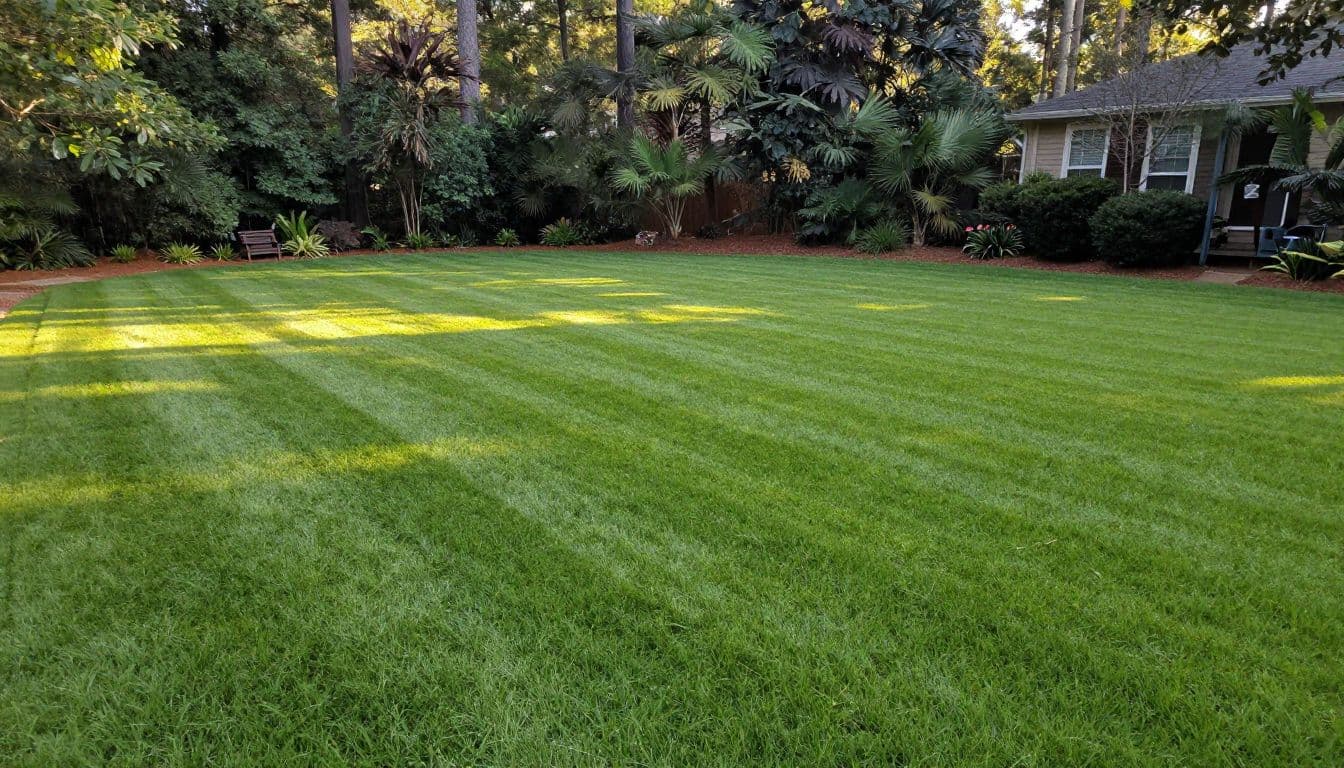
Bermudagrass is often the strongest choice for a dog yard that receives full sun and heavy running. It spreads through stolons and rhizomes, so healthy turf can fill small worn areas during the growing season. It also tolerates heat, frequent mowing, and regular foot traffic.
The tradeoff is sunlight. Bermudagrass usually needs several hours of direct light each day, and it becomes thin under dense tree cover. It also turns brown during winter dormancy, then needs warm soil before it greens up in spring.
Many Atlanta homeowners maintain Bermuda at about 1 to 2 inches, depending on the cultivar and mowing equipment. Cutting too high can create a floppy canopy, while scalping removes leaf area the plant needs for recovery. A sharp mower blade and consistent schedule matter more than chasing a perfect height.
Zoysiagrass creates dense, durable turf
Zoysiagrass forms a thick carpet that feels comfortable under paws and resists light to moderate wear. It handles more shade than bermudagrass, although it still needs adequate light for dense growth. Its tight growth pattern can also leave less exposed soil when the lawn receives steady care.
Zoysia grows more slowly than Bermuda. That makes it less likely to repair a heavily damaged running lane quickly, especially after installation. It also may take longer to green up in spring and can develop thatch if mowing, watering, and soil care fall behind.
Zoysiagrass is a strong fit for a homeowner who wants a dense, tidy lawn and can manage traffic during recovery. It works well in yards with mixed sun, provided the shadiest areas still receive enough light.
Tall fescue can solve a shade problem
Tall fescue is a cool-season grass that stays greener during Atlanta's cooler months. Its deeper root system helps it handle some dry periods, and it performs better than Bermuda in filtered shade. For a yard beneath mature pine or hardwood trees, fescue may be the practical choice.
It doesn't spread aggressively after damage. Tall fescue grows in clumps, so a worn patch usually needs reseeding or new sod. Atlanta's summer heat can also stress fescue, especially in full sun or compacted clay. Regular irrigation and a fall overseeding plan may be necessary.
Fescue is usually a poor choice for a high-speed dog run in full sun. It fits better where shade limits warm-season turf and the dog uses the area at a moderate pace.
Match Turf to Sun, Soil, and Traffic
This quick comparison helps narrow the choice before you buy seed or sod.
| Yard condition | Best fit | Main advantage | Main concern |
|---|---|---|---|
| Full sun with daily running | Bermudagrass | Fast spread and summer recovery | Poor shade tolerance and winter dormancy |
| Full sun with moderate to heavy use | Bermudagrass or zoysiagrass | Strong warm-season performance | Both need good soil and drainage |
| Mixed sun and filtered shade | Zoysiagrass | Dense turf with better shade tolerance | Slower recovery after damage |
| Tree-shaded area | Tall fescue | Better cool-season shade performance | Summer stress and limited self-repair |
| Deep shade or persistent wet soil | Hardscape or another ground treatment | Less dependence on turf growth | Requires a different yard design |
The best Atlanta dog yard grass is the one that matches the weakest part of the property. If one section stays shaded or wet, installing the same turf across the entire yard can create predictable failures.
Correct the soil before laying sod. Core aeration can relieve compaction, while grading or drainage work may be needed for standing water. A thin layer of topsoil won't solve a low spot that collects runoff.
Maintenance That Helps Turf Survive Dogs
Heavy-use turf needs a maintenance plan that supports recovery. Mowing, irrigation, soil care, and urine management all work together.
Mow at the right height
Never remove more than one-third of the grass blade in one mowing. Tall fescue commonly stays around 3 to 4 inches, while Bermuda and zoysia are often cut shorter. Exact heights vary by cultivar, mower type, and lawn condition.
Mow more often during fast summer growth instead of waiting until the grass becomes overgrown. Keep the mower blade sharp, since a dull blade tears leaf tips and leaves a ragged surface. The Atlanta mowing height guide offers grass-specific height ranges and common warning signs.
Avoid mowing saturated clay soil. Heavy equipment can leave ruts and increase compaction, especially near gate entrances and narrow dog paths.
Water deeply, but don't keep the yard soggy
Atlanta lawns often need supplemental water during hot, dry stretches. Water in the morning so the blades have time to dry, and use a rain gauge or irrigation gauge instead of guessing by appearance.
The Atlanta lawn watering schedule can help you adjust irrigation for Bermuda, zoysia, and tall fescue throughout the year. Reduce automatic watering after meaningful rainfall, and check the soil before adding more.
Warm-season turf needs active growth before it can repair damage. Overwatering dormant grass won't bring it back, and wet soil makes dog traffic more destructive.
Manage urine spots realistically
No grass is fully urine-proof. Dog urine contains nitrogen and salts that can create brown patches, while the surrounding grass may grow darker or faster. Spot damage becomes more noticeable when the same location receives repeated use.
Rinse a frequently used area with water soon after urination when practical. Keep fresh water available for your dog, and remove solid waste promptly so it doesn't smother blades. Avoid applying extra fertilizer to brown spots before checking whether the damage comes from urine, drought, insects, disease, or compacted soil.
A designated toilet area can reduce damage across the main lawn. Use a surface that drains well and is easy to clean, then guide your dog there with consistent routines. Repair turf only after correcting the cause of the bare patch.
Yard Design Tips for Less Mud and Wear
Grass alone can't handle every dog-yard demand. A few design changes can concentrate traffic on surfaces that tolerate it better.
Create a durable path between the back door, gate, and the dog's preferred toilet area. Large, stable pavers or another well-drained surface keep paws off wet clay. Light-colored materials are more comfortable in summer sun, but check any surface temperature before allowing extended contact.
Keep downspouts and gutter outlets out of the dog run. If water flows across the yard, install a suitable drainage solution or correct the grade before adding new turf. Persistent puddles usually need drainage work, not more seed.
Rotate high-energy activities when the property allows it. Moving fetch sessions to a different section gives damaged turf time to recover. Temporary barriers also protect new sod and seed until roots establish.
Bare soil near a gate deserves special attention. Widen the landing with pavers, mulch, or another stable treatment, and use edging to keep the surface in place. Choose materials that won't create sharp edges or loose debris your dog might swallow.
For a new installation, prepare compacted soil, correct low spots, and select sod suited to the yard's sun exposure. Keep dogs off freshly installed turf until it has rooted firmly. Otherwise, paw traffic can separate sod seams and create uneven surfaces before the lawn establishes.
Conclusion
The best Atlanta dog yard grass depends on how much sun the yard receives and how hard your dog uses it. Bermudagrass is usually the quickest-repairing option for sunny, active spaces. Zoysiagrass offers dense coverage with a slower recovery rate, while tall fescue fits filtered shade better than either warm-season choice.
No turf will prevent every urine spot, worn path, or muddy patch. Pair the right grass with correct mowing, sensible watering, improved drainage, and durable paths near gates and doors. That combination gives your dog room to run and gives the lawn a realistic chance to stay green.