Atlanta wood fence cost in 2026: What to budget
A new fence can make a backyard feel finished, but the price can change quickly once gates, slopes, and old posts enter the quote. For most Atlanta homeowners, the Atlanta wood fence cost for a standard installed privacy fence is about $20 to $30 per linear foot in 2026.
That puts a 150-foot project near $3,000 to $4,500 before unusual access, extensive clearing, or premium materials. Smaller ranch-style or picket fences may cost less, while custom cedar work can run much higher. The numbers below show where your budget is likely to land and what moves it.
Atlanta wood fence cost: realistic 2026 price ranges
Fence estimates vary because each calculator defines "standard" differently. Angi's Atlanta data places wood fence installation around $9 to $28 per linear foot. Its simple ranch-style average is about $9 per foot, while custom picket work can reach $70 per foot.
Other Atlanta estimates cluster higher for privacy fences. GetFenceFind lists wood at $14 low, $24 average, and $33 high per linear foot. Build-Folio uses a $22-per-foot wood benchmark, then estimates a 175-linear-foot project at $5,287 to $7,152. Those figures aren't contradictory. They reflect different fence heights, layouts, gates, removal needs, and labor assumptions.
For early planning, use this table:
| Project example | Installed planning figure | Approximate project total |
|---|---|---|
| Simple ranch-style fence | About $9 per linear foot | About $1,350 for 150 feet |
| Picket or split-rail fence | About $10 to $20 per foot | About $1,500 to $3,000 for 150 feet |
| Standard six-foot privacy fence | About $20 to $30 per foot | About $3,000 to $4,500 for 150 feet |
| Typical 150-foot privacy estimate | About $24 per foot | About $3,563 |
| Larger 175-foot project | Varies by scope | About $5,287 to $7,152 |
A 150-foot property line doesn't always mean a 150-foot fence. Measure each run, subtract open sections, and add gates separately. A survey may be wise when the boundary is uncertain, especially if the fence sits near a neighbor's driveway or an easement.
The lowest per-foot number often excludes old-fence removal, gates, difficult access, or finish work.
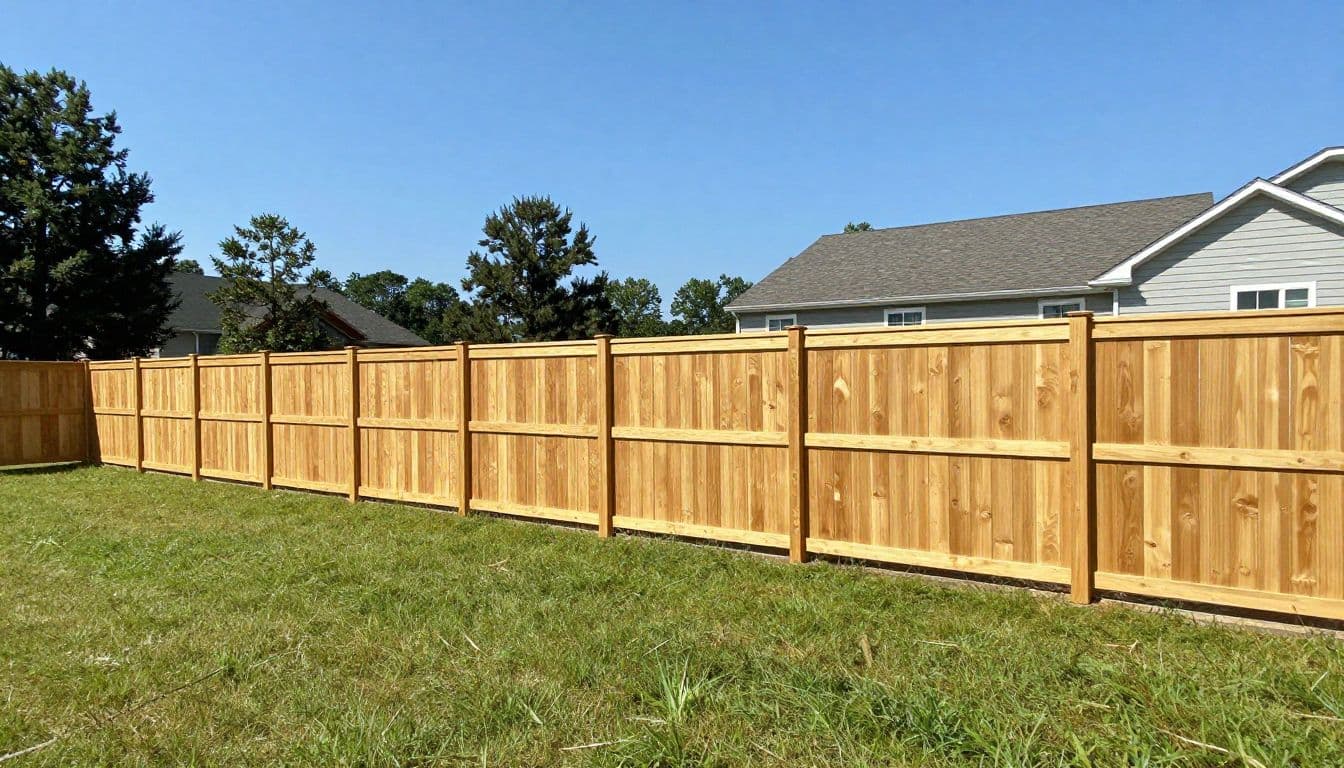
Most homeowners searching for Atlanta wood fence cost are pricing a six-foot privacy fence. For that project, $20 to $30 per foot is a practical starting range, not a guaranteed bid.
What changes a wood fence installation quote
The per-foot price covers more than pickets. A complete installation may include layout, post holes, posts, concrete, rails, boards, fasteners, gates, hauling, and cleanup. Ask for those components in writing so two estimates can be compared on the same scope.
Fence style and wood choice
A six-foot privacy fence uses more material than a short picket fence. Board height, spacing, cap and trim details, and the number of horizontal rails all affect the total. A board-on-board design also uses more lumber than a basic side-by-side layout.
Pressure-treated pine is common in Atlanta because it offers a lower-cost starting point and handles outdoor exposure when maintained. Cedar usually costs more, but many homeowners choose it for its appearance and natural resistance to some moisture-related problems. The actual price depends on grade, thickness, treatment, and local availability.
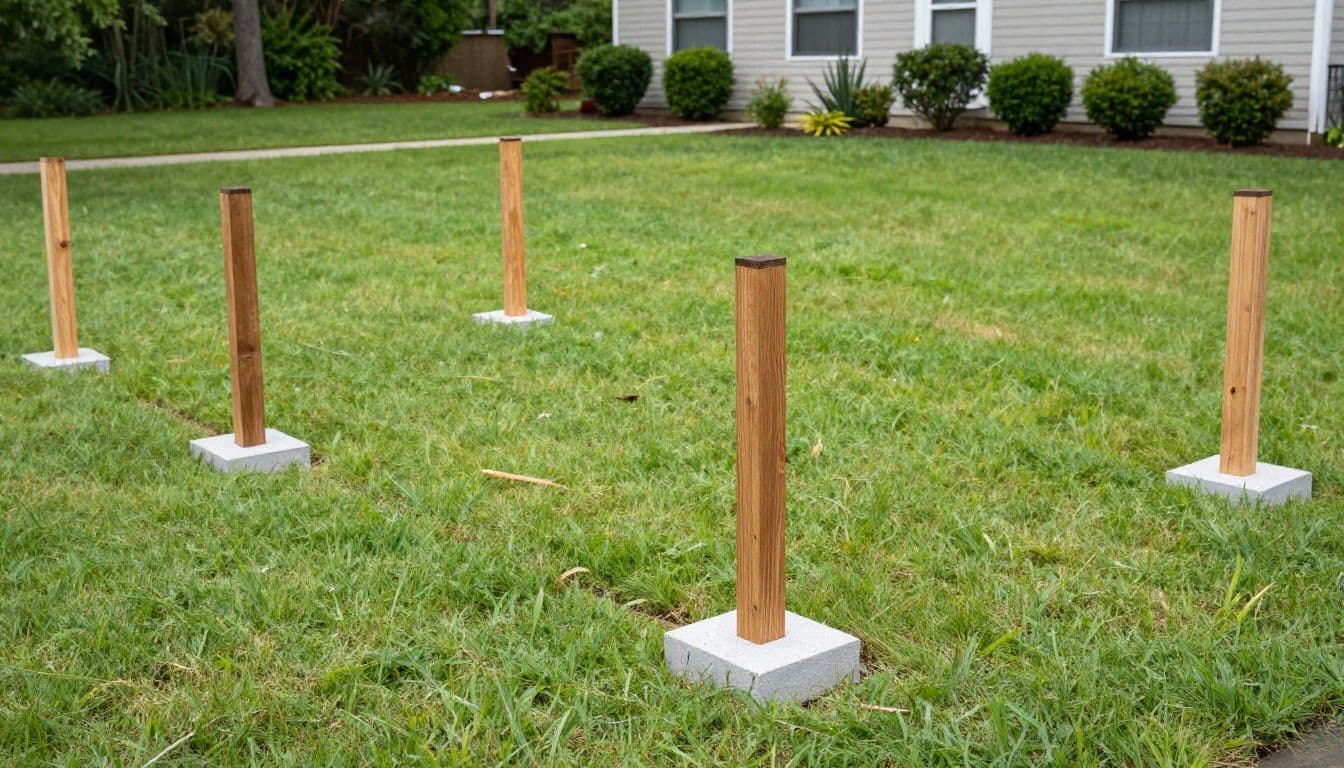
Posts deserve attention. A fence with shallow or poorly set posts can lean after heavy rain or seasonal temperature changes. Ask whether posts will be set in concrete, how deep the holes will be, and whether the quote includes post caps and treated ground-contact lumber.
Gates add both materials and hardware. A single walk gate is a different project from a wide double gate for a mower or trailer. Confirm the gate width, latch, hinges, bracing, and whether the installer will adjust it after the posts settle.
Yard conditions and access
A level backyard with a wide driveway is easier to price than a narrow, sloped lot. Atlanta properties often have red clay, buried roots, drainage concerns, and compacted soil near older homes. Digging can take longer when equipment cannot reach the fence line.
Old fence removal is another common extra. Crews may need to pull posts, break concrete, load debris, and dispose of it. Dense brush can hide the property line and slow layout. If the line needs clearing first, professional land clearing and site preparation can be part of the project plan.
Narrow side yards also raise labor costs because materials must be carried by hand. Slopes may require stepped fence panels, custom cuts, deeper posts, or additional layout work. A contractor should inspect these conditions before giving a firm price.
Atlanta weather makes maintenance part of the budget
Atlanta's humid summers and frequent rain can shorten the useful life of an untreated wood fence. Chamblee Fence gives wood fences in the area a typical lifespan of 10 to 15 years, with regular sealing or staining. That range depends on wood quality, drainage, sun exposure, and maintenance.
Water is hardest on the bottom of each post and board. Soil that stays wet can speed up rot, while sprinklers that spray the fence every day keep the wood damp. Good installation leaves wood clear of standing water and keeps the lowest boards from sitting directly in soil.
A finish protects the surface from moisture and ultraviolet light, but it isn't permanent. Plan to inspect the fence each year for soft spots, loose fasteners, leaning posts, open joints, and peeling finish. Small repairs are easier before a gate begins dragging or a section starts to sag.
Terrain matters here as well. A fence at the top or bottom of a steep grade may need drainage work, grading, or a retaining wall nearby. Sloped Atlanta yards can carry extra soil pressure and runoff, so review an Atlanta retaining wall cost guide when the fence connects to a wall or borders an eroding slope.
A low installation bid can become expensive if it ignores water flow. Ask how the layout will handle runoff, downspouts, and low areas before construction begins.
How to compare Atlanta fence estimates
Collect at least two written estimates, but don't choose by the lowest total alone. A $3,000 bid and a $4,500 bid may describe different fences.
Use these steps before signing:
- Confirm the measured linear footage, fence height, style, wood species, and board layout. These details affect the material quantity.
- Ask for a line-item list covering posts, concrete, rails, pickets, gates, hardware, removal, hauling, staining, and cleanup. If an item isn't included, find out how the contractor prices it.
- Check the construction details. The estimate should state post material, post spacing, ground-contact treatment, and how the fence will follow slopes.
- Verify property-line, HOA, and local approval requirements before digging. Ask whether the contractor will coordinate Georgia 811 utility marking.
- Review the workmanship warranty and maintenance instructions. A clear warranty should explain what it covers and what it excludes.
The quote should also identify payment timing, expected start date, weather delays, and who handles changes. Written details protect both sides when the actual soil or property line differs from the initial visit.
For a fair comparison, give every contractor the same information. Share the approximate fence length, desired height, number of gates, existing fence condition, access limitations, and photos of slopes or brush. Better project details produce tighter estimates.
Is professional installation worth the price?
DIY installation can reduce labor charges, but it requires more than setting posts and attaching boards. You need accurate measurements, a string line, post-hole equipment, concrete, safe material handling, and enough time to keep every post aligned while the concrete cures.
Post spacing and height errors become obvious across a long run. A small alignment problem at the first few posts can leave the final panel out of level. Gates require more precision because a slight shift can cause dragging, sagging, or latch problems.
Professional installation makes more sense when the yard has slopes, dense clay, roots, an old fence, or limited access. It also helps when the fence must meet HOA rules or connect cleanly to a driveway, retaining wall, or existing gate.
DIY may still fit a short, level run with easy access and a simple design. Before choosing, compare your expected tool rental, delivery, disposal, and repair costs with the labor portion of a written professional quote. The cheapest route on paper is not always the cheapest finished fence.
Conclusion
For most Atlanta homeowners, a standard six-foot wood privacy fence in 2026 deserves a starting budget of $20 to $30 per linear foot , or roughly $3,000 to $4,500 for 150 feet. Simple ranch and picket designs can cost less, while custom layouts, premium wood, gates, removal, and difficult terrain push the total higher.
The best estimate accounts for the whole property, not only the boards. Confirm the length, style, gates, site conditions, drainage, cleanup, and maintenance plan before comparing bids. That approach gives you a clearer Atlanta wood fence cost and fewer surprises after work begins.