Atlanta Lawn Care and Mowing Height Guide for Bermuda Grass, Zoysia Grass, and Tall Fescue (and what goes wrong when it’s off)
If your Atlanta lawn looks thin, patchy, or just “tired,” mowing height is often the quiet culprit in Atlanta lawn care. It’s easy to assume fertilizer is the fix, but Atlanta mowing height choices can make grass either thrive or struggle, even with the same weather and watering. Maintaining the correct mowing height is vital for the root system to withstand local climate swings.
Think of mowing height like a haircut that affects health, not just looks. Cut it too short and the lawn “sunburns.” Leave it too tall and it can turn into a humid jungle that invites fungus, especially in sticky Georgia summers.
Disclaimer: The exact best height depends on your grass cultivar, sun vs shade, irrigation, soil conditions, and what your mower can actually do well. Use the ranges below as practical targets, then adjust in small steps based on how your lawn responds.
Ideal Mowing Height and Seasonal Adjustments for Atlanta Lawns
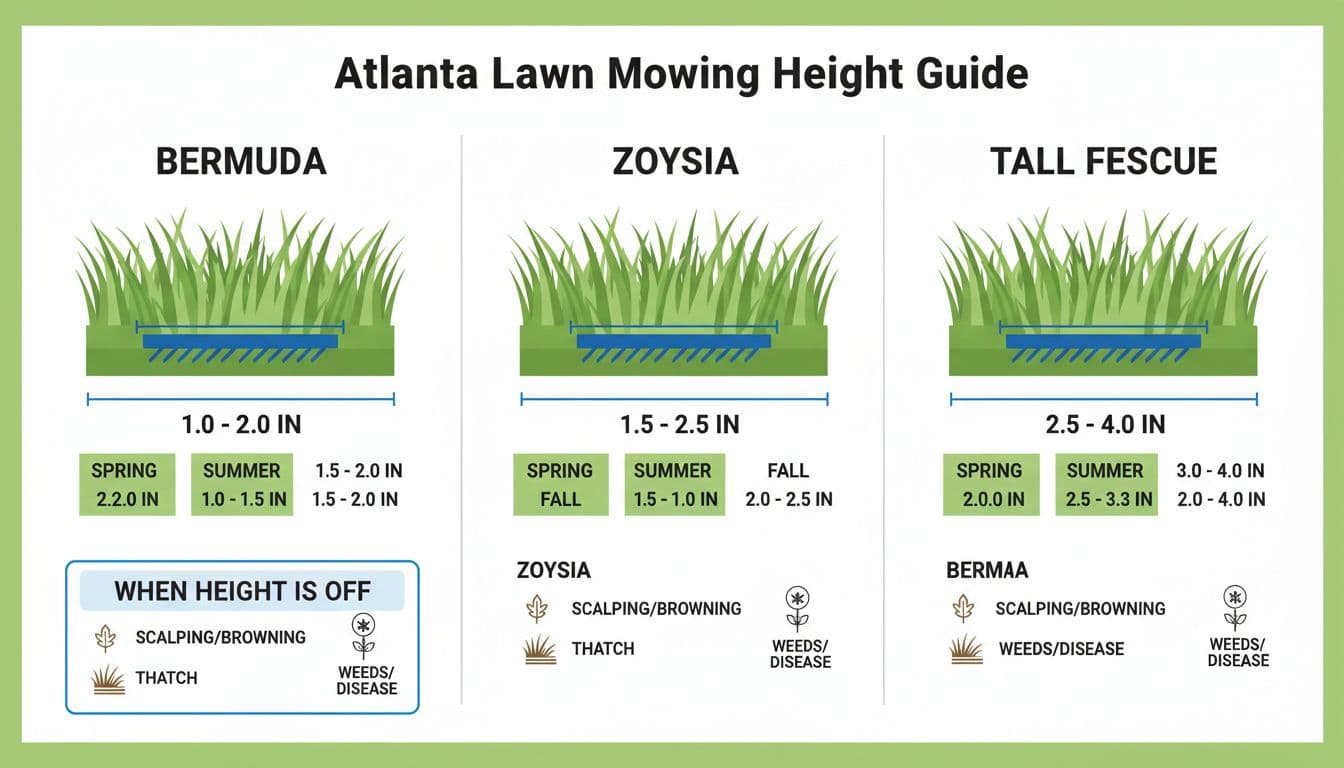 Infographic showing recommended mowing heights and seasonal adjustments for Bermuda, Zoysia, and Tall Fescue, created with AI.
These mowing height ranges fit most Georgia home lawns (including Metro Atlanta), covering popular warm-season grasses and cool-season grasses when using the standard rotary mower. If you have a reel mower (more common for Bermuda grass), you can go lower, but only if the lawn is level and you mow often.
| Grass type | Spring (green-up) | Summer (heat + drought) | Fall (pre-dormancy) | Practical notes |
|---|---|---|---|---|
| Bermuda | 1.0 to 1.5 in | 1.25 to 2.0 in | 1.0 to 1.5 in | Full sun champ, can go lower with reel mowing |
| Zoysia | 1.5 to 2.0 in | 1.75 to 2.5 in | 1.5 to 2.0 in | Slower growth, thatch risk if kept too tall |
| St. Augustinegrass | 2.5 to 3.0 in | 3.0 to 3.5 in | 2.5 to 3.0 in | Shade tolerant, coarser blades |
| Centipedegrass | 1.5 to 2.0 in | 2.0 to 2.5 in | 1.5 to 2.0 in | Low maintenance, prefers acidic soil |
| Tall fescue | 3.0 to 3.5 in | 3.5 to 4.0 in | 3.0 to 3.5 in | Cool-season grass, struggles in Atlanta heat |
Two rules that keep you out of trouble:
- Follow the one-third rule: do not remove more than 1/3 of the blade in one mow. If you break this rule, you will see stress fast.
- Match height to mower reality: a dull rotary mower at 1 inch can shred grass instead of cutting it. That shredded tip turns brown, and the lawn looks "rusty" even when it is watered.
For extra context on warm-season mowing habits during summer, see these summer mowing tips for warm-season grasses.
Why mowing height matters so much in Atlanta
Atlanta weather swings hard. You’ll go from soaking storms to dry heat, and that change makes mowing height feel like a steering wheel for your lawn.
In summer heat and drought, height is shade. A taller mowing height builds drought resistance for Bermuda and Zoysia by shading the soil surface, which slows evaporation and protects the root system from heat stress. That matters more here because clay soil can bake into a crust. When clay dries, it tightens, and roots have a harder time getting oxygen and water. Taller grass also cushions foot traffic, which helps with compaction.
In shade, height is a compromise. Tall fescue can handle part-shade better than Bermuda, but it still needs airflow. A taller cut increases leaf surface area to facilitate photosynthesis even in low light, yet mowing too high in shady spots under oaks or pines can trap moisture at the base of the plant. That’s how you get that “matted” look, and it’s also why fungal issues often start in the same shaded corners.
In humid spells, height affects disease pressure. Leaving grass too tall, then mowing late in the day, can set up a wet, dense canopy overnight. In Atlanta, that combo is a common runway for lawn diseases, especially since soil compaction in clay soil worsens drainage issues that lead to brown patches. It’s not that taller grass always causes lawn diseases, it’s that poor airflow plus extended leaf wetness raises risk.
If you want a Georgia-specific reference on mowing height ranges and frequency, this Georgia turf mowing guide is a helpful baseline.
What goes wrong when the height is off (and how it shows up)
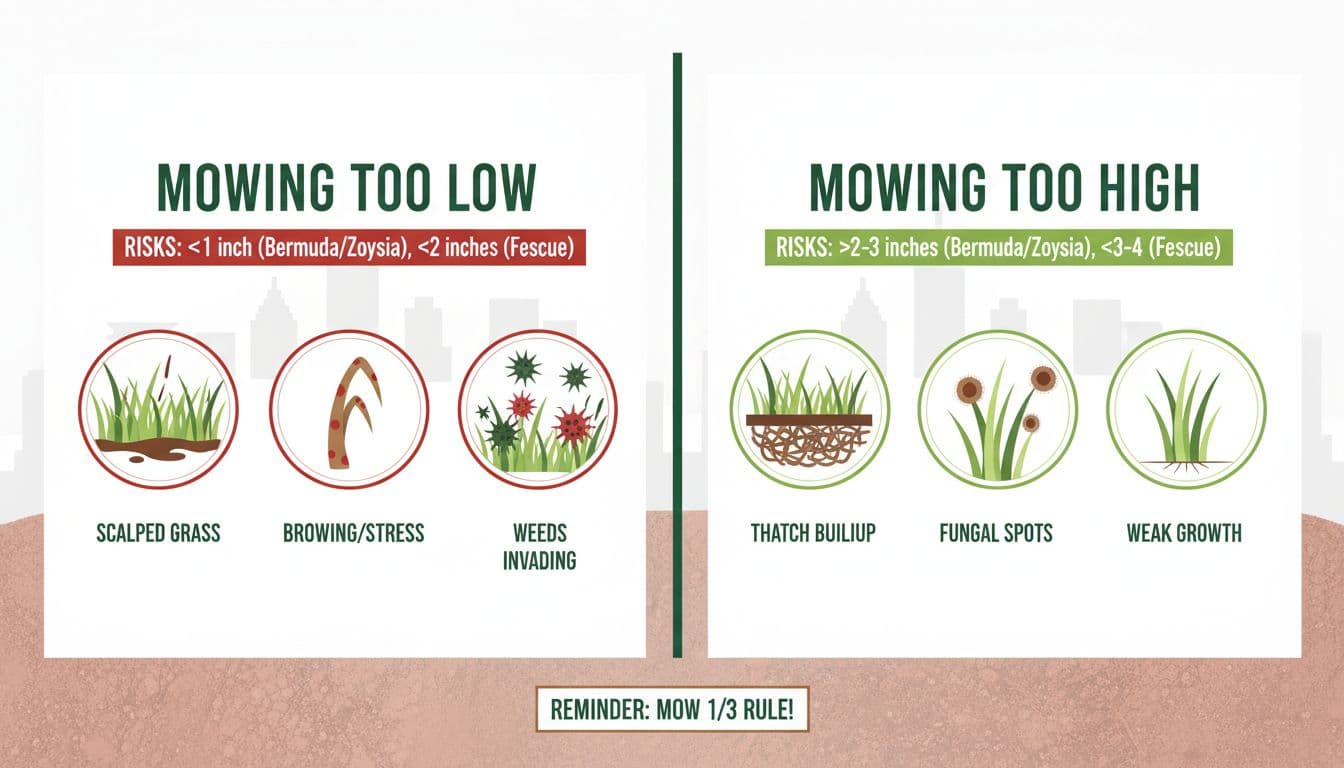 Visual guide to common “too low vs too high” mowing problems in Atlanta lawns, created with AI.
Lawn Scalping: When you mow too low
Cutting too short is like taking away the lawn’s solar panels. The plant has less leaf area to make energy, so it pulls from stored reserves.
- Bermuda grass: Lawn scalping can look great for three days, then turns straw-brown on high spots. It increases weed growth where turf thins, especially along sidewalks and driveways that radiate heat.
- Zoysia: Low cuts can scalp easily because Zoysia lawns aren’t always perfectly level. Scalping leaves brown patches that linger, since Zoysia recovers slower than Bermuda.
- Tall fescue: Low mowing in summer inhibits the growth rate and leads to thin turf, heat stress, and permanent thinning. Fescue crowns sit higher, and cutting too low can weaken plants, then you’re left chasing bare areas into fall.
When you mow too high
Too high sounds “safer,” but it can create its own mess, especially with our humidity and clay.
- Thatch buildup (warm-season lawns): Bermuda and Zoysia can build a spongy layer when the lawn is tall, over-fed, or seldom mowed. That thatch blocks water from soaking in, so the lawn can look dry right after watering.
- Fungus-friendly canopy: Taller, dense grass holds moisture longer and creates canopies with increased risk of lawn diseases. If you mow in the evening or water late, leaves stay wet overnight and problems can show up as spots, patches, or thinning.
- Weak, floppy growth: Grass that’s always too tall tends to lay over after rain. When blades fold, they shade each other, and the lawn starts to look uneven and dull.
A simple 2 to 4 week checklist to fix mowing height problems
Correcting height is usually a slow correction, not a single “fix it” mow. Aim for steady improvement over 2 to 4 weeks.
- Step toward the target height gradually: Adjust by about 1/4 inch per week until you’re in range. Sudden drops are what cause scalping and shock.
- Mow more often (even if it’s quick): In active growth, mowing every 5 to 7 days helps you keep the one-third rule. During slow growth, stretch the schedule.
- Sharpen the mower blades: Sharp mower blades leave a clean cut. Dull blades tear tips, which turns the lawn brown and raises stress.
- Bag or mulch based on conditions:
- Mulch with a mulching mower when growth is normal and grass clippings are short. It returns nutrients and saves time.
- Bag when grass is overgrown, wet, or you’re trying to reduce clumps that smother turf.
- Time mowing and watering for lower disease risk: Increase mowing frequency during peak growth, water early morning so blades dry fast, and try not to mow late evening when the lawn will stay damp overnight.
- Watch the clay: If water puddles or runs off, compaction is part of the problem. A slightly higher summer cut helps, but long-term, aeration and better drainage matter.
- Optional and risky: Early spring scalping is sometimes used on Bermuda grass to remove old debris from dormant grass, but it’s easy to damage turf if your lawn is uneven or your mower can’t cut cleanly. If you try it, do it cautiously and only on healthy Bermuda grass.
Conclusion
Mastering mowing height simplifies Atlanta lawn care and delivers one of the quickest ways to improve color, thickness, and stress tolerance without adding products. For healthy Georgia lawns, balance growth rate and maintenance to minimize heat stress. Pick a realistic target for your grass type, adjust in small steps, and keep your blade sharp. When you get the height right, watering works better, weeds have less room, and the lawn looks more even. These steps ensure the root system stays deep and resilient year-round. If your lawn still struggles after a few weeks, it’s often telling you there’s another issue underneath, like compaction, shade, or irrigation coverage.