Atlanta Walkway Installation Cost Guide for 2026
A new walkway can change how your yard feels the moment you step outside. It can also turn into a budget surprise if the quote leaves out grading, drainage, or base work.
In Atlanta walkway installation cost planning, the surface material is only part of the story. Soil conditions, slope, access, and finish level can move the price more than most homeowners expect.
If you are comparing quotes in 2026, start with the real price range, then work outward from there. The details below will help you spot a fair estimate and avoid a costly redo later.
What Atlanta homeowners pay for a walkway in 2026
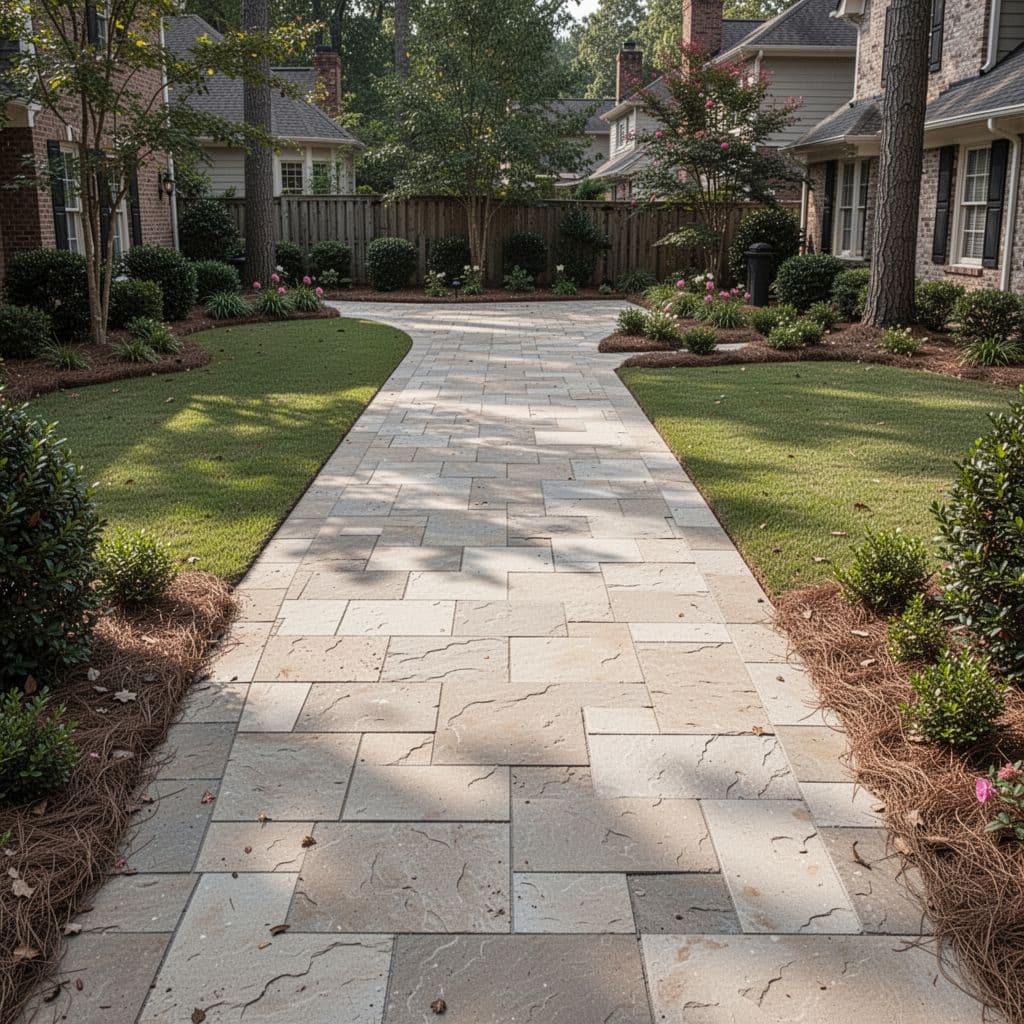
In 2026, Atlanta walkway pricing usually falls into a few familiar bands. For a standard residential project, paver walkways often land around $12.90 to $25.80 per square foot installed. That means a 100-square-foot path often costs about $1,290 to $2,580 .
Concrete is still common, especially for simple front entries and side yards. Many Atlanta homeowners see concrete walkway totals around $1,900 to $2,800 for a typical job. Natural stone sits higher, with recent pricing around $20.67 to $27.59 per square foot .
A walkway quote can look cheap at first glance, then climb once the crew starts digging. That is normal when the site needs more base stone, better compaction, or drainage corrections.
For Atlanta homes, that matters a lot. Clay soil holds water, then shifts when it dries out. A walkway built on a weak base may look fine on day one, then settle or crack later.
A fair quote should explain what is included. If it does not, ask before you sign.
Basic, mid-range, and premium walkway budgets
Most homeowners think in terms of size, but pricing works better when you group projects by scope. A straight, simple path is a different job than a curved entry with stone borders and drainage work.
Here is a practical way to compare 2026 budgets for Atlanta homes.
| Project level | Common Atlanta budget | What it usually includes |
|---|---|---|
| Basic | $1,500 to $3,000 | Straight layout, standard concrete or simple pavers, light grading |
| Mid-range | $3,000 to $6,000 | Curves, better edging, more base work, modest drainage fixes |
| Premium | $6,000 to $10,000+ | Natural stone, steps, custom borders, harder access, major prep |
Basic projects are usually the most predictable. They work best when the yard is fairly level and the walkway is short.
Mid-range projects fit many Atlanta homes because they solve a few site issues and still keep the design clean. Premium work costs more, but it also covers the details that make a yard feel finished.
If your walkway is part of a larger outdoor plan, compare it with 2026 paver patio pricing before you lock in the layout. Bundling hardscape work can change the total in your favor.
Why one walkway quote can be much higher than another
Two contractors can look at the same yard and give very different numbers. That does not always mean one is overpriced. Often, they are pricing different amounts of prep.
Material choice changes the shape of the bill
Material sets the base cost, but it also affects labor. Concrete can be efficient on simple layouts. Pavers cost more in labor, yet they give you more design choices and easier repairs later. Natural stone looks premium, but it often needs more cutting and more time to set properly.
If you want the best match for your budget, think about how the walkway will be used. A side-yard path may not need the same finish as a front entry.
Grading, drainage, and base prep matter more than people think
Atlanta yards often need correction before the first stone goes in. That can include slope changes, low-spot fill, compacted base stone, or water redirection away from the house. If your project needs that work, professional site preparation for patios and walkways is not an optional extra. It is part of the build.
A low quote can hide a thin base. In Atlanta, that is how a walkway starts sinking before the first season is over.
A good installer should explain how deep the base will be and how water will move. If you hear vague answers, keep asking.
Access, demolition, and finish details can add up fast
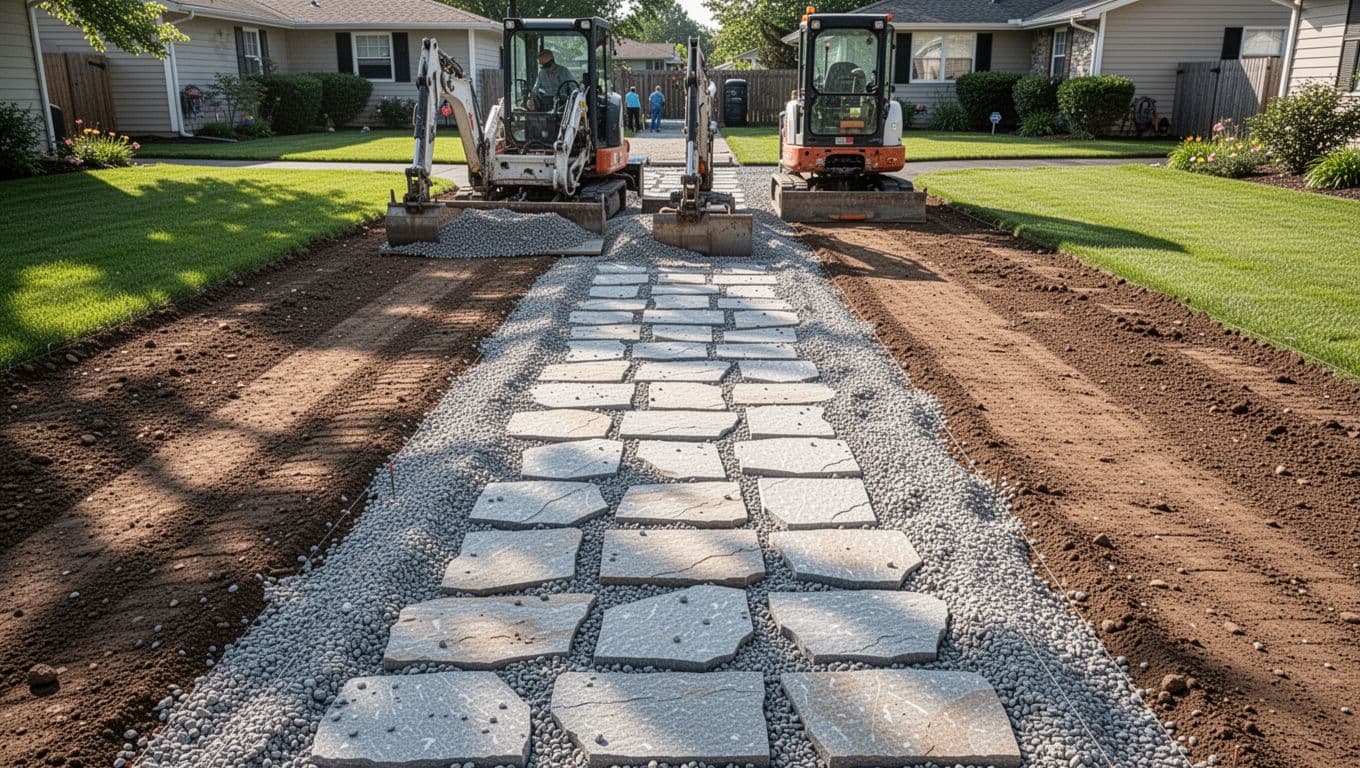
A wide open backyard is easier to work in than a narrow side yard with a gate. Tight access means more hand hauling, more labor time, and sometimes more equipment. Old concrete or broken pavers also need demo and haul-off, which can push the price up.
Finish details matter too. Edging, borders, joints, sealers, and custom curves all add time. None of those items are flashy on paper, but they affect both the final look and the long-term wear.
If you are reviewing two quotes, check whether they include the same prep and finish steps. Many price gaps come from that difference alone.
How walkway size affects the total cost
Square footage drives the base cost, but small jobs often feel expensive per foot. That happens because crews still need to mobilize, excavate, haul materials, and compact the base.
A 50-square-foot path may not cost half of a 100-square-foot walk. Some costs stay fixed. That is why small projects often carry a higher rate per foot than larger, simpler runs.
As a rough planning tool, think like this:
- A short front path with light prep may stay near the low end.
- A standard 100-square-foot walkway often lands in the middle of the local price bands.
- A longer path with turns, steps, or drainage work can climb fast.
For example, a 100-square-foot paver walkway in Atlanta might fit the local range of about $1,290 to $2,580 . Add grading corrections, edging, or better stone, and the total moves up. Add demolition or a steep slope, and it moves again.
That is why size alone never tells the whole story. A clean, direct path is one thing. A path that cuts across a slope is another.
If you are budgeting for more than one outdoor upgrade, it helps to think about the whole yard at once. A walkway, patio, and drainage fix often work better as one plan than as three separate projects.
How to compare contractor estimates without getting lost
A good estimate should make the job easy to picture. If it reads like a one-line guess, ask for more detail.
Start by checking whether every quote uses the same scope. One contractor may price a 90-square-foot path with light prep, while another includes deeper excavation and disposal. Those are not equal bids.
Here are the items that should be easy to find on a solid estimate:
- The exact square footage or linear path length
- The material type and brand, if relevant
- Base depth and compaction details
- Edging, borders, and joint finish
- Demo, haul-off, and cleanup
- Drainage corrections, if needed
- Permit handling, if the job requires it
- Warranty or workmanship coverage
Once those items match, the price comparison gets much clearer.
Also pay attention to what the quote does not say. If drainage work is missing from a yard that clearly needs it, the low bid may cost more later. If the contractor uses one vague number for everything, ask for a line-by-line breakdown.
One more useful check, ask how the company handles change orders. A fair contractor explains how extra grading, hidden roots, or bad subsoil will be priced before the work moves ahead.
When repair is enough and when replacement makes more sense
Not every damaged walkway needs full replacement. Small cracks, a loose section, or a few uneven pavers can often be repaired. That is especially true when the base is still sound.
Replacement becomes the smarter choice when the problems keep coming back. If the walkway has major settling, repeated pooling water, broken edges, or widespread movement, patching it can turn into a short-term fix.
Watch for these signs:
- Water stays on the surface after rain
- Multiple sections shift or sink
- Cracks keep reopening
- Tree roots have lifted broad areas
- The surface repair cost keeps climbing
A useful rule is simple. If a repair quote gets close to half the cost of replacement, replacement often gives better value. That is even more true when the layout or drainage is part of the problem.
A new build solves the root issue. A patch only hides it.
For Atlanta yards, that matters because poor drainage and clay soil can punish a weak surface again and again. If the walkway is old, uneven, and tied to broader grading problems, replacement can be the cheaper choice over time.
Getting the best value from your walkway budget
The best budget is not always the cheapest one. It is the one that gives you a solid base, the right material, and a layout that fits the yard.
If you want better value, keep the design efficient. Straight runs cost less than fancy curves. Wider is not always better. Sometimes a cleaner path with good base work is the smarter spend.
You can also save by planning the project at the right time. If your yard already needs grading, cleanup, or hardscape work, combining tasks may reduce repeat labor and equipment costs. That is one reason many Atlanta homeowners pair walkway work with other outdoor improvements.
Maintenance matters too. Once the walkway is in, keep soil, mulch, and irrigation water from washing across the edges. Good lawn care habits help the hardscape last longer. Clean edges, trimmed turf, and proper drainage all protect your investment.
If the walkway connects to a patio, driveway, or retaining wall, think about the whole site before you choose materials. The cheapest surface is not always the best match for the rest of the yard. A balanced plan usually ages better and looks better.
Conclusion
Atlanta walkway pricing in 2026 makes more sense once you look past the surface. Material matters, but grading , drainage, access, and finish level often change the final number just as much.
A simple path can stay in a modest range. A sloped yard, a tight side entrance, or a premium stone finish can push the price much higher. That is why the best quote is the one that explains the work clearly, not the one with the lowest headline number.
If you compare scope carefully, watch for repair red flags, and plan the whole yard at once, you can spend money where it counts most. A well-built walkway should feel solid, drain well, and look right for years.