Atlanta Gardenia Yellow Leaves Guide for Clay Soil Beds
Yellow gardenia leaves in Atlanta usually start with the roots. Heavy red clay holds water after rain, then hardens when the sun bakes it, and that swing is rough on gardenias. Add humid summers and soil that slowly drifts out of the acid range they like, and even a healthy shrub can fade fast.
The good news is that gardenia yellow leaves usually point to a short list of problems. Once you read the leaf pattern and the soil, the fix gets much clearer.
Why gardenias yellow in Atlanta clay
Gardenias want moist, well-drained, acidic soil. Atlanta clay often gives them the opposite. It can stay soggy after a storm, then turn tight and dry during a hot spell.
That seesaw hurts the roots first. When roots sit in water, they lose oxygen. When clay dries hard, roots struggle to pull in water and nutrients. Either way, the plant may show stress as pale leaves, slow growth, or buds that drop early.
In Metro Atlanta, the bed location matters too. Gardenias planted near downspouts, low spots, patios, or foundation edges often get extra runoff. That runoff is enough to keep the root zone wet long after the rest of the yard dries.
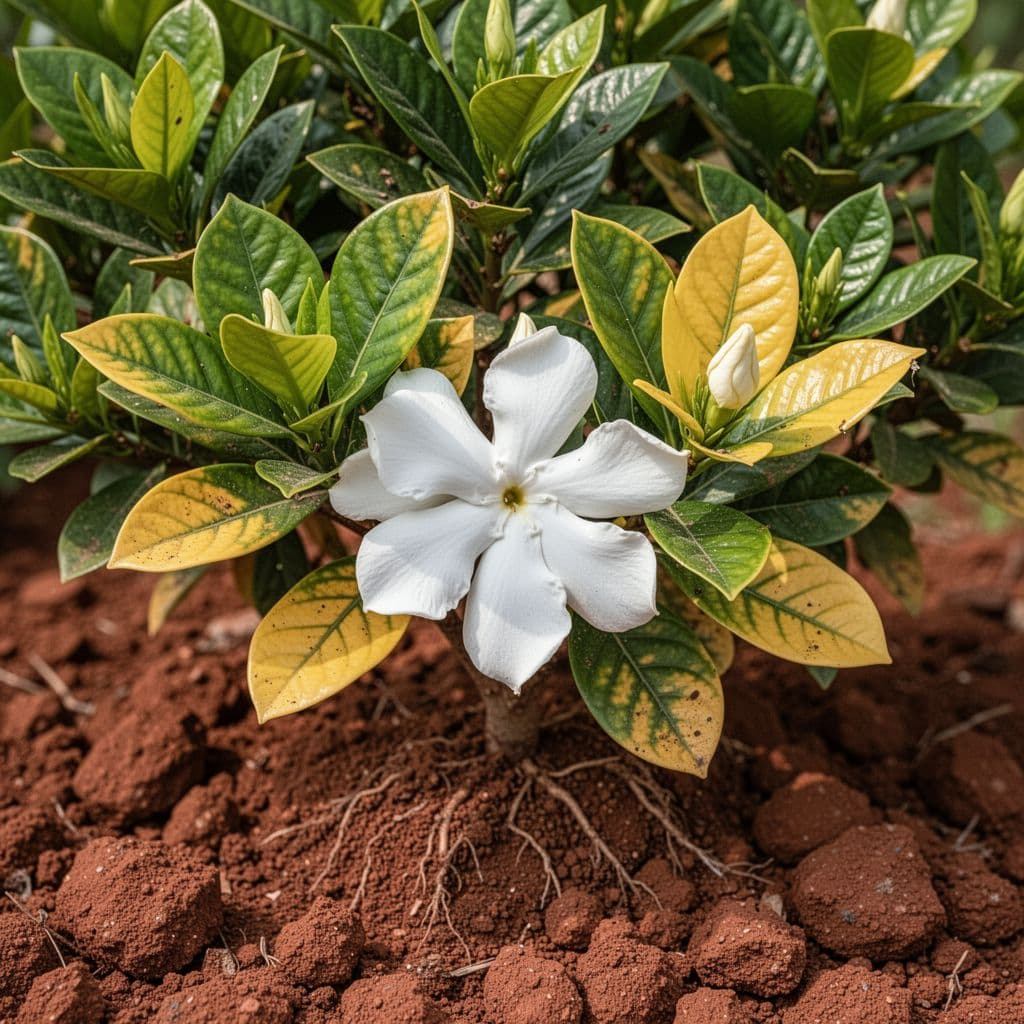
A soil pH problem can make the leaves yellow even when the bed does not feel wet. Gardenias prefer acidic soil, usually around pH 5.0 to 6.0. When pH climbs too high, iron stays in the soil but the plant cannot use it. The leaves then turn yellow while the veins stay greener.
How to tell iron chlorosis from watering stress
The fastest way to diagnose the problem is to watch which leaves change first. New growth tells a different story than old growth.
Leaf patterns that point to each problem
| Symptom | Most likely cause | What the leaves look like | Best next step |
|---|---|---|---|
| New leaves turn yellow first, veins stay green | Iron chlorosis | Bright yellow leaf blades with visible green veins | Check soil pH, improve drainage, use chelated iron if needed |
| Whole plant looks limp and soil stays wet | Overwatering or poor drainage | Soft yellow leaves, weak stems, slow drying soil | Stop watering for a bit, fix drainage, aerate the bed |
| Leaves curl, edges crisp, soil pulls away from the bed edge | Underwatering | Pale, dry, or crispy foliage, often after heat | Water deeply and mulch the root zone |
| Older lower leaves yellow first, new growth stays green | Normal aging | A few inner leaves fade and drop | Remove the old leaves and keep watching the plant |
The newest leaves matter most. If the top growth is yellow, think iron or root trouble. If the oldest leaves fade first, the plant may be shedding older foliage on its own.
A green spray will not fix a bed that stays wet. If the roots cannot breathe, the leaves keep telling the same story.
One more clue helps on hot Atlanta afternoons. A plant that droops at noon and perks up by evening may only be heat-stressed. A plant that stays limp overnight usually has a root problem.
Fix the clay bed before you keep treating the leaves
A gardenia in clay needs a wider fix than a fertilizer spike. Start with the bed, because roots live there every day.
If water still pools after rain, solving soggy lawn drainage issues is part of the answer, even if the problem shows up around one shrub. A shallow low spot can keep the root zone wet for hours or days.
A simple soil refresh can help too. In clay beds, the goal is to open the soil, not just feed the plant. Add organic matter across the whole bed, not only in the planting hole.
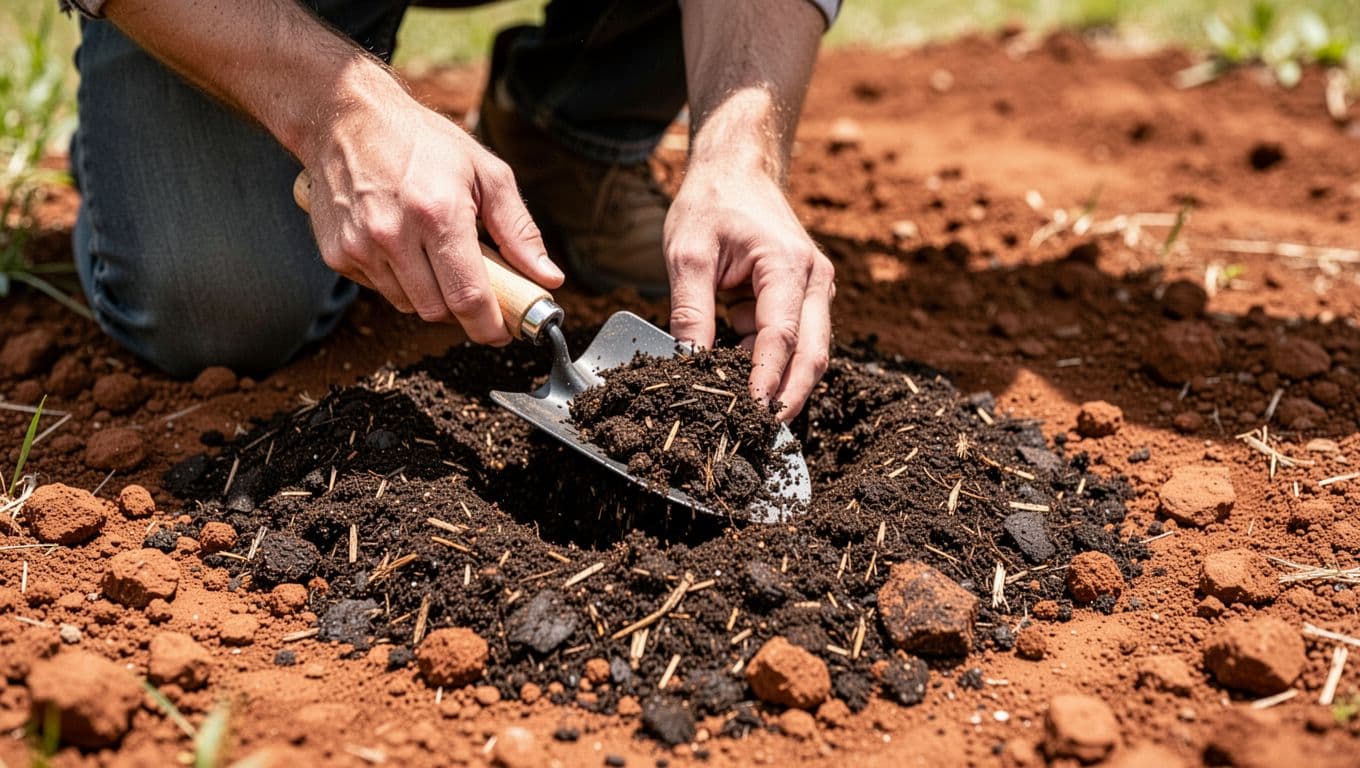
A safe clay-soil repair routine looks like this:
- Spread 1 to 2 inches of composted pine bark, leaf mold, or finished compost over the root zone.
- Work it lightly into the top few inches, especially where the soil crusts over.
- Keep mulch 2 to 3 inches deep, but pull it back a few inches from the stems.
- If water lingers after storms, fix the grade, add a swale, or install drainage before the next rainy season.
That last point matters in Atlanta. A gardenia can look yellow because the bed is holding water, not because the plant is weak. If the site stays wet, no fertilizer can fully solve it.
For a bigger redesign, budgeting for landscaping in clay soil helps you decide when a quick patch is enough and when the bed needs real rebuilding.
Clay beds also do better with organic mulch. Pine straw or fine pine bark helps hold even moisture and keeps roots cooler in July and August. Keep the mulch off the stems, though. Piled mulch traps moisture where rot starts.
Water and feed gardenias without stressing them
Atlanta summers can fool people into overwatering. The surface looks dry, but the clay underneath may still be soaked. Check the soil 4 to 6 inches down before you water again.
Gardenias usually do better with a slow, deep soak once or twice a week during dry spells. A soaker hose works well because it lets water sink in slowly. Sprinklers are less helpful, especially if they wet the leaves and leave the root zone too wet.
Use the weather as a guide. After a heavy rain, wait. After a hot, windy week, check the soil more often. In clay, small changes in watering make a big difference.
For feeding, choose a fertilizer labeled for azaleas, camellias, or gardenias. Those products are usually acid-forming and better suited to the soil these shrubs need. Apply them in spring, then again only if the label calls for it.
A few rules keep feeding safe:
- Follow the label rate, or go lighter if the plant already looks stressed.
- Avoid lime and wood ash near the root zone.
- Skip fertilizer if the soil is dry and the plant is wilted.
- Use chelated iron only as a short-term fix when new leaves stay yellow.
Fertilizer should support the plant, not push it harder when the roots are already struggling. If the bed is waterlogged, fix that first. If the soil test shows high pH, correct the pH first. A yellow shrub often improves when the roots finally get the conditions they asked for.
When yellow leaves are normal, and when they are not
Some yellowing is part of a gardenia's life cycle. Older leaves near the center or lower part of the shrub can fade and drop, especially after bloom flushes or weather swings. If the new growth stays dark green, the plant may be fine.
Trouble starts when the yellowing spreads fast, reaches the newest leaves, or comes with weak bloom and stunted growth. That pattern usually points to drainage, pH, or watering problems.
A healthy gardenia in Atlanta clay is possible, but the bed has to work for the plant. Air in the soil, steady moisture, and an acid root zone matter more than quick fixes.
Conclusion
Yellow leaves on a gardenia are often a root problem wearing a leaf-level mask. In Atlanta clay, the bed can stay too wet after storms, then turn too hard in summer heat, and both stress the plant.
Watch the newest leaves first, check the soil before you water, and fix drainage before you add more fertilizer. When the roots get better conditions, the shrub has a much better chance of turning green again.