Atlanta Pre-Emergent Timing Guide: When to Apply for Crabgrass, Goosegrass, and Poa Annua (Soil Temp Checkpoints)
If you’ve ever watched weeds pop up “overnight,” you already know the frustrating truth: by the time you see crabgrass or goosegrass, you’re late. Pre-emergent herbicide is different. It prevents the germination of weed seeds before the weed shows up, like an invisible shield in the top layer of soil.
The trick in Metro Atlanta and North Georgia isn’t picking a date on the calendar. It’s Atlanta pre emergent timing based on soil temperature, because weeds wake up when the soil does, and Atlanta yards can warm up at different speeds.
Soil temperature checkpoints for Atlanta lawns (not calendar dates)
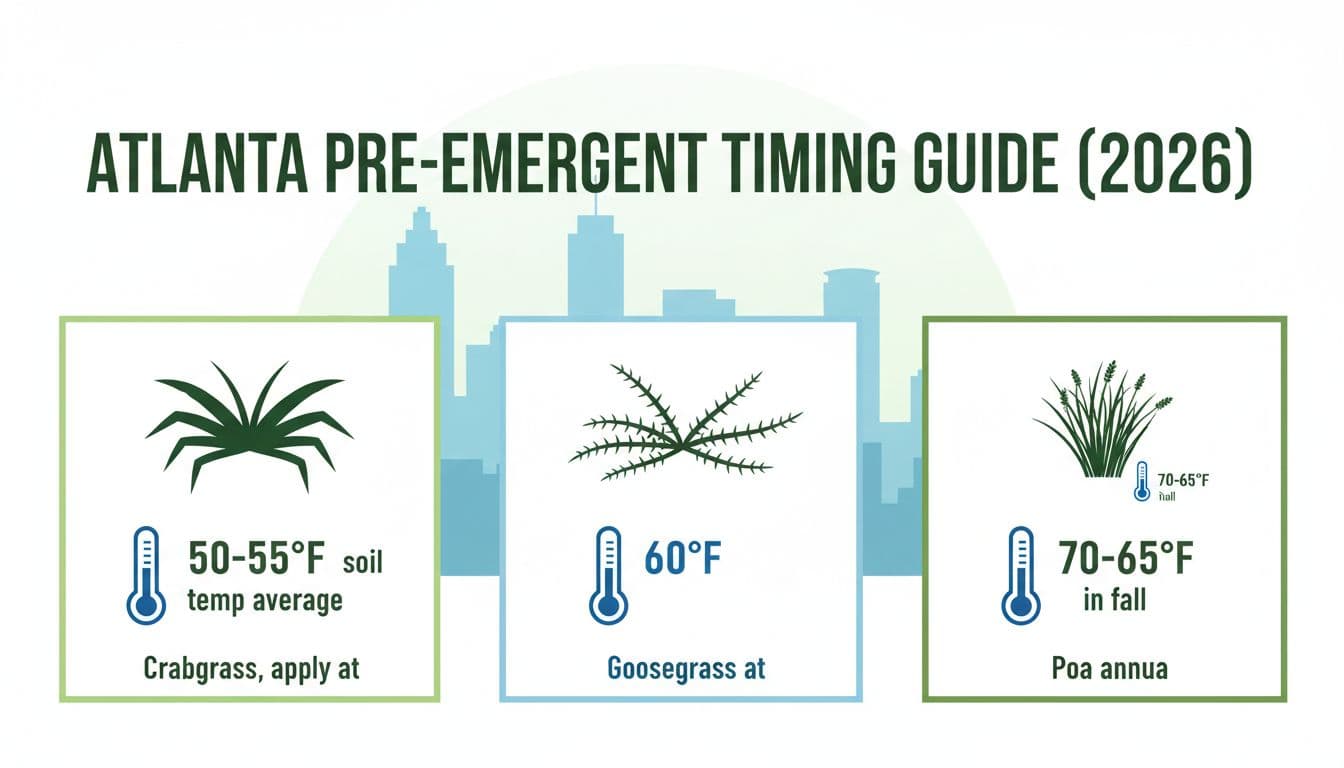 Quick soil temperature checkpoints for Atlanta pre-emergent timing, created with AI.
Soil temperature is the main trigger because it lines up with germination. In January 2026, typical Atlanta soil temperature is still cold (often in the 40s to low-50s°F range), so most spring pre-emergent work is a “get ready” phase, not a “go time” phase.
Also, your yard isn’t the same as your neighbor’s. Microclimates matter: sunny slopes warm faster, shaded backyards stay cooler, and heat near driveways can bump temps up a few degrees. That’s why measuring soil temperature at your home is worth it.
Use this table as your quick guide, then fine-tune with your own readings:
| Target weed | Soil temperature checkpoint (2-inch depth) | Typical Atlanta backup window | Key notes |
|---|---|---|---|
| Crabgrass | 55 degrees (24-hr average for several days) | Late Feb to mid Mar (spring application, varies) | Apply pre-emergent herbicide before germination, water-in to activate |
| Goosegrass | Approaching 60°F (slightly later than crabgrass) | Mid Mar to Apr | Often breaks through “early-only” plans, timing matters |
| Poa annua (annual bluegrass) | Fall: about 70 degrees dropping toward 65°F | Sept to early Oct (fall application) | Must go down before seeds sprout, watch overseeding conflicts |
For the science behind soil temperature timing, see UGA Extension’s explanation on why crabgrass control depends on soil temperatures.
Crabgrass pre-emergent timing (50 to 55°F soil temp)
Crabgrass, a prominent summer annual weed, is the classic summer annual. It’s also the one that tricks people into applying too late because spring weather in Atlanta flips back and forth.
Your checkpoint: apply pre-emergent herbicide when the 24-hour average soil temp at 2 inches holds in the 50 to 55 degrees F range for several days and the trend is rising. If you only have a quick-read thermometer, take a morning reading for 3 to 5 days in a row and average it. When it’s close and warming, it’s time.
Typical Atlanta backup window for spring application: many lawns hit this sometime from late February into mid March , but shady yards can lag into late March. Don’t guess. Measure.
Active ingredient categories (generic):
- Long-residual options like prodiamine , a popular choice, are common for a “one-and-done” approach that creates a protective barrier against weed seeds.
- Products like dithiopyr , a partial post-emergent herbicide, can offer a little early post-emergent activity on very young crabgrass, but timing still matters.
One more key: if you choose a shorter-residual program (or your lawn gets a lot of irrigation and heavy rain), plan a second application about 6 to 8 weeks later to keep the protective barrier intact.
If you want a broader, research-based overview of weed control options and safe use, UGA’s Weed Control in Home Lawns bulletin is a solid reference.
Goosegrass timing (near 60°F, usually later than crabgrass)
Goosegrass, one of the more stubborn grassy weeds and summer annual weeds, is why some "I did pre-emergent" lawns still look rough by early summer. It tends to germinate a bit later, and it loves compacted soil and thin turf, which are common around high-traffic spots.
Your checkpoint: target the period as soil temps approach 60°F at the 2-inch depth. Think "crabgrass timing, then a step later." Timing this spring application correctly prevents the germination of weed seeds that thrive in heat.
Typical Atlanta backup window: often mid March through April , depending on sun exposure and how quickly spring settles in.
Practical strategy in Atlanta:
- If you run one spring application only with a pre-emergent herbicide, you may reduce crabgrass but still see goosegrass later.
- A split plan (or a product with a longer residual) helps cover that later germination window.
- Tighten up cultural issues that invite it in: relieve compaction, mow correctly for your turf type, and avoid scalping.
- If breakthrough occurs despite prevention efforts, a post-emergent herbicide may eventually be needed.
If you like using models as a secondary checkpoint, the University of Wisconsin tool on a crabgrass pre-emergence timer can be a helpful comparison point, but your soil thermometer still wins for your yard.
Poa annua timing in Atlanta (fall, 70°F dropping to 65°F)
Poa annua (annual bluegrass) and other winter weeds like henbit and chickweed make winter lawns look patchy and pale green, especially in Bermuda grass and Zoysia grass. The hard part is that the best timing is in fall, when you are busy with leaves and not thinking about weeds.
Your checkpoint: apply pre-emergent herbicide in fall when soil temperature drops to about 70 degrees and continues trending toward 65°F . That window is your best shot to target weed seeds and stop germination before it starts. This fall application is critical to keep lawns clean during dormancy.
Typical Atlanta backup window: often September into early October , with earlier timing for cooler, shaded lawns and later timing for hot, sunny sites.
Two big cautions:
- Overseeding conflicts: many pre-emergents will block desirable grass seed too. If you are overseeding rye for color or planting tall fescue, you must choose products and timing that match that plan, and follow the label closely.
- Spring clean-up is harder: if you miss the fall window, spring options usually turn into spot treatments and turf-thickening work, not true prevention for poa annua and winter weeds.
Poa annua prevention is less about "spray and pray" and more about being early, because once it is established, it seeds heavily and resets the problem for next year.
How to measure soil temp and make the application stick
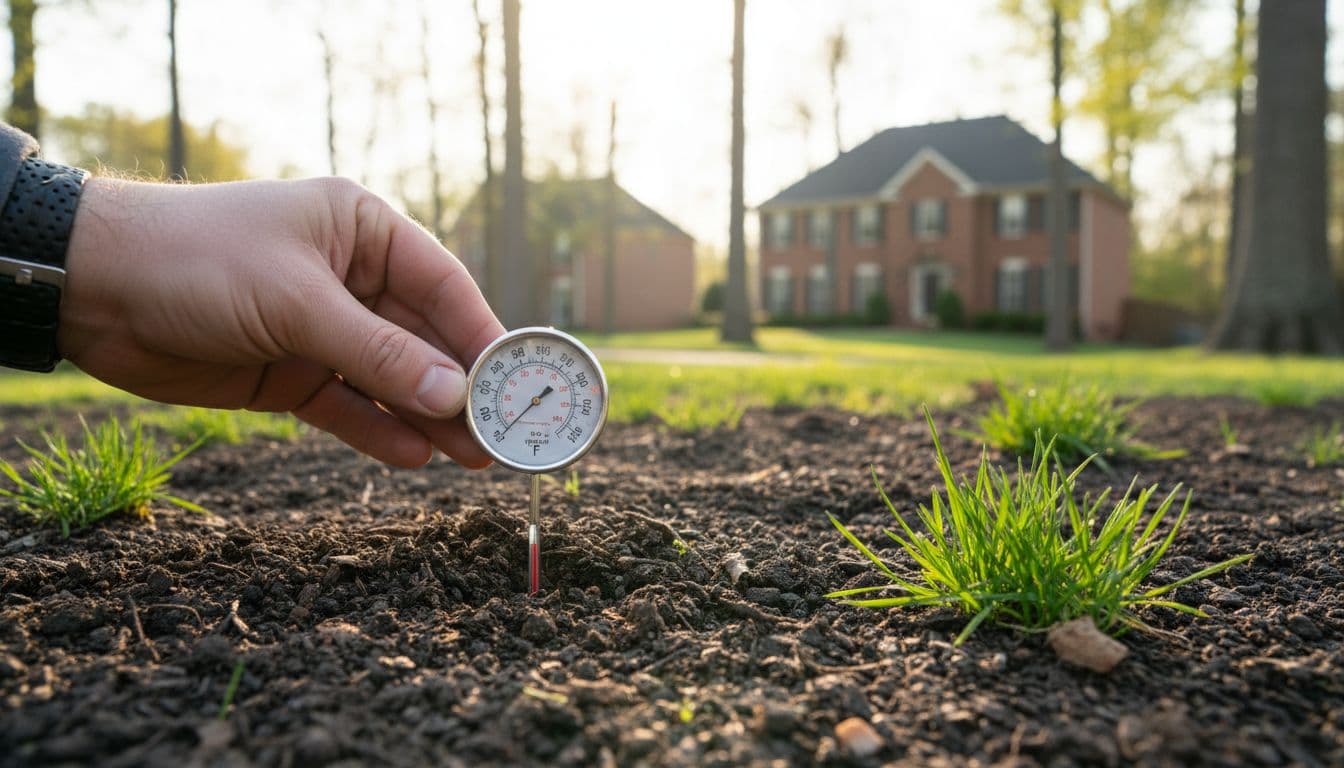 Checking soil temperature at 2-inch depth with a simple thermometer, created with AI.
You don’t need fancy gear. A basic soil thermometer works if you use it the same way each time.
For North Georgia homeowners, whether you choose granular pre-emergent or liquid pre-emergent, a simple routine works in Metro Atlanta:
- Measure 2 inches deep , in a representative spot (not next to concrete), to gauge soil temperature.
- Take readings in the morning , then track a 3 to 5-day average of soil temperature.
- Check more than one area if you have shade and sun zones.
This timing prevents germination of broadleaf weeds and other grassy weeds when you apply pre-emergent herbicide.
Then, make the pre-emergent herbicide actually work:
- Apply evenly. Streaks and skips turn into weed stripes later.
- Watering in (or apply before a light rain) moves it into the top layer of soil to create the protective barrier. Watering in with about a half-inch of water activates it fully, but always follow the specific product directions.
- Don’t disturb the barrier after application. Aggressive raking, core aeration, and heavy topdressing can break that shield.
Always follow the label for rates, re-entry, and restrictions. In lawn care, the label isn’t a suggestion, it’s the rulebook.
Final takeaways for Atlanta pre-emergent timing
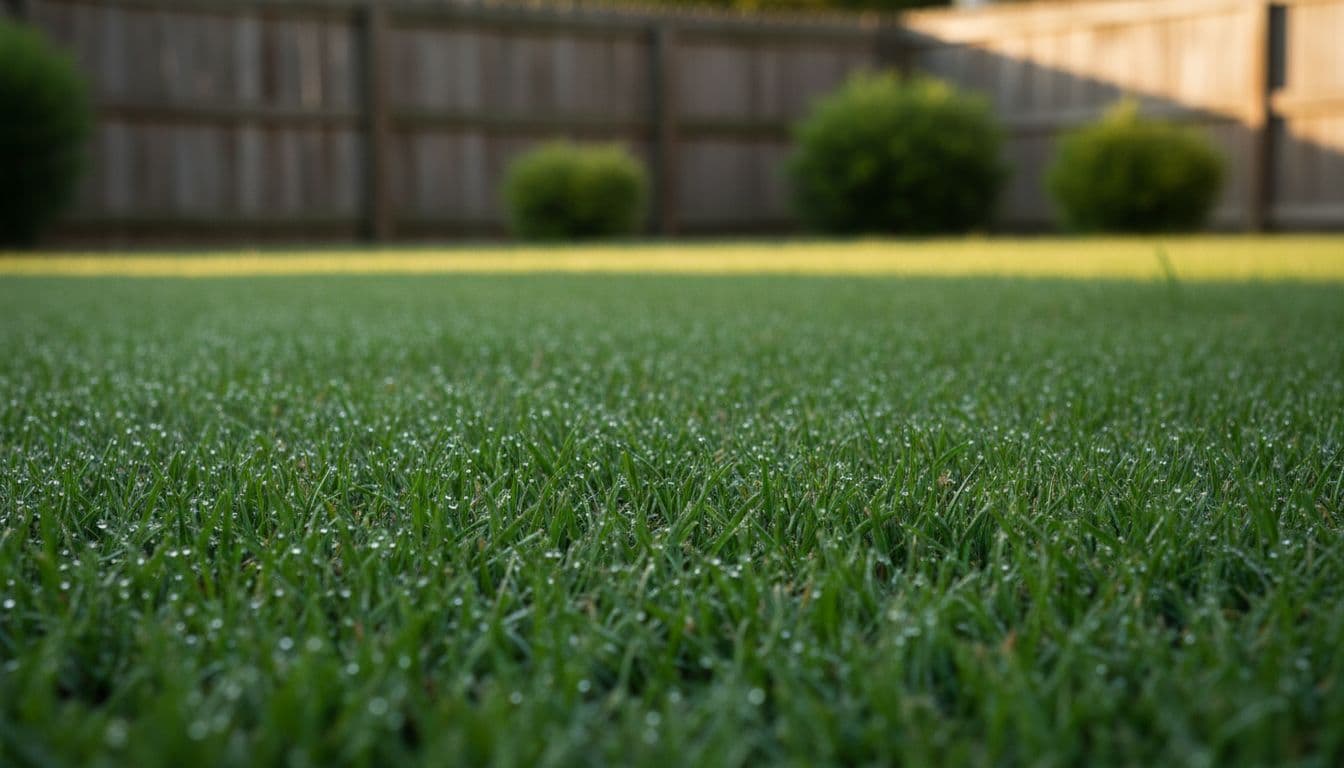 A healthy Atlanta lawn after timely weed prevention, created with AI.
The Atlanta Pre-Emergent Timing Guide delivers good results through boring consistency: measure soil temperature, apply on time, and water it in. Use 55 degrees as your spring crabgrass trigger, watch 60°F for goosegrass coverage, and target 70 degrees in fall as soil temps slide toward 65°F for poa annua.
A well-timed pre-emergent herbicide program prevents winter weeds and summer weeds by stopping germination early. If you track temps and treat your North Georgia lawn like it has its own weather, your weed pressure drops fast, and your summer mowing looks a whole lot better. Atlanta pre emergent timing is really just listening to the soil.