Atlanta Dry Creek Bed Cost Guide for 2026
Trying to price a drainage fix in Atlanta can feel like guessing before a storm. The short answer is simple: most homeowners spend $4,000 to $12,000 on a dry creek bed in 2026, with higher totals for steep yards, deep digging, or serious runoff control.
That wide range exists for a reason. The atlanta dry creek bed cost depends on whether the project is decorative, functional, or doing both at once. In Metro Atlanta, heavy rain, red clay, and sloped lots can turn a simple rock feature into real drainage work fast.
Atlanta dry creek bed cost ranges for 2026
A dry creek bed is a shallow, rock-lined channel that guides stormwater across the yard. Think of it like a planned stream bed that stays dry most days, then goes to work when Georgia rain hits. In Atlanta, it often helps with washed-out mulch, downspout runoff, muddy turf, and erosion along slopes.
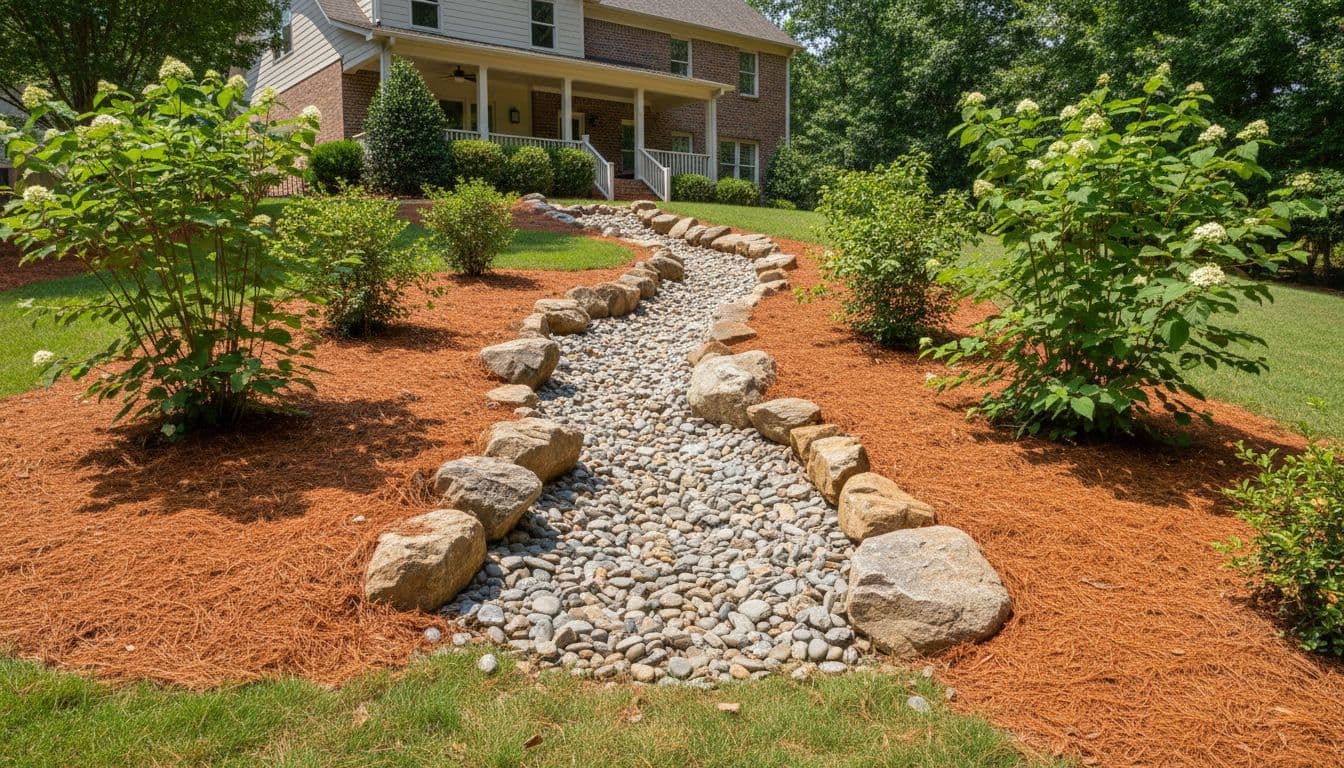
These estimated 2026 ranges fit many 200 to 400 square-foot Atlanta-area projects.
| Project type | Typical scope | Estimated 2026 cost |
|---|---|---|
| Basic install | Flat yard, light runoff, simple rock channel | $4,000 to $6,000 |
| Mid-range build | Moderate slope, clay prep, decorative planting, better rock mix | $6,000 to $9,000 |
| Complex drainage build | Steep grade, erosion control, larger rock, outlet work | $9,000 to $12,000+ |
| Large combined system | Bigger yard, regrading, added pipe or basin work | $12,000 to $15,000+ |
The main takeaway is this: most functional projects start above the bargain-price zone . A small decorative swale may cost less, but many Atlanta yards need more than a pretty line of stone. If water is carving a path through the lawn or washing soil toward the house, the work usually includes excavation, base prep, and a real outlet.
These are planning ranges , not guaranteed quotes. Labor rates, material pricing, and site conditions can shift totals. If you're still deciding whether this is the right fix, this dry creek beds vs French drains guide helps sort out the options.
What pushes Atlanta dry creek bed prices higher
In Atlanta, price changes usually come from the ground, not the rocks you can see. Yard slope is a big factor. A bed on a gentle grade is easier to shape and stabilize. A steep backyard in places like Sandy Springs or East Cobb often needs more digging, heavier stone, and extra erosion control.
Drainage issues matter just as much. If the bed only handles surface runoff, the job stays simpler. If the yard also holds water in the soil, a contractor may add gravel, pipe, or a catch basin. When roof runoff is part of the mess, ask whether downspout drainage fixes should happen first.
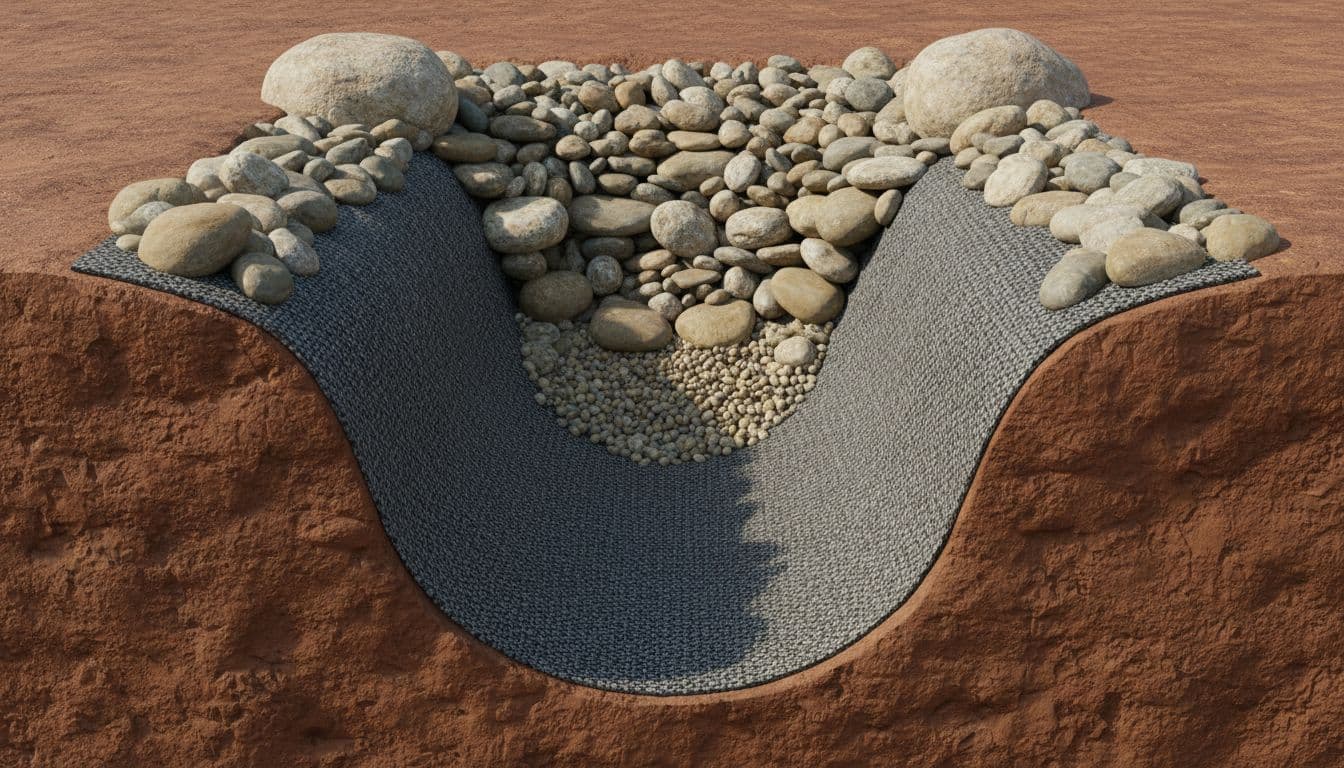
Then comes red clay soil . Atlanta clay drains slowly, compacts hard, and can swallow rock over time if the base isn't built right. That means more excavation depth, fabric, gravel, and labor. Access also changes price. A crew with machine access works faster than one hauling stone through a narrow side gate on an intown lot.
Rock choice affects the look and the bill. River rock costs less than larger riprap in many cases, but bigger stone may be the better fit on fast-flow slopes. Finally, decorative versus functional changes everything. A feature built mostly for curb appeal won't be sized the same way as one expected to handle heavy runoff during summer storms.
If water already has a path through your yard, the best creek bed usually follows that path and improves it.
Signs your yard may need a dry creek bed
Some yards send clear signals. You may need a dry creek bed if rainwater cuts a visible line through the lawn, mulch or pine straw keeps washing downhill, or a downspout leaves a trench across the grass. It's also a good option when water moves across the surface, but you want something more attractive than exposed pipe or a bare dirt swale.
What a contractor quote should include, and how to compare estimates
A good quote should explain more than rock type and total price. It should spell out how the system works. In Atlanta, that means the path of water matters as much as the look of the finished bed.
Most detailed quotes include:
- Layout and size , including length, width, and planned depth
- Excavation and haul-off , especially if clay removal is part of the job
- Base materials , such as fabric, gravel, and underlayment
- Rock details , including stone type, size range, and any accent boulders
- Drainage plan , with outlet location, pipe, basin, or regrading if needed
- Finish work , such as seed, sod repair, mulch touch-up, and cleanup
When you compare estimates, don't just compare totals. Compare the scope. One bid may look cheaper because it skips fabric, uses shallow digging, or leaves out erosion control. Another may include lawn repair, while the cheaper one leaves ruts and bare clay behind.
Ask each contractor where the water will go in a heavy rain. Ask how they handle Atlanta clay. Ask whether the quote includes protecting nearby beds, turf, and hardscape. If the project ties into steps, borders, or slope support, it helps to work with a team that also handles Atlanta hardscaping services.
A solid estimate should read like a plan, not a guess. If two prices are far apart, the missing detail is often the reason.
Dry creek beds can be one of the smartest ways to manage visible runoff in Atlanta yards. Most 2026 projects fall between $4,000 and $12,000 , but slope, clay, access, and erosion control can move that number quickly. Get a few detailed estimates, compare the drainage plan line by line, and put function first. A well-built creek bed should look natural on a sunny day and work hard in the next storm.