Bermuda Mite Damage Guide for Atlanta Home Lawns
Bermuda grass can go from tight and green to thin and pale fast in an Atlanta spring. When that change shows up in patches, bermuda mite damage is one cause worth checking early.
It often looks like drought, bad mowing, or a fungus problem, so homeowners chase the wrong fix first. The good news is that the pattern usually gives it away, and a few steady lawn-care steps can keep the damage from spreading. Start with what the mites do and where they show up.
What bermudagrass mites are and why Atlanta lawns get hit
Bermudagrass mites are tiny eriophyid mites that feed on bermuda grass shoots and leaf tissue. You usually won't spot the pest without a strong hand lens, but the turf reaction is easier to see. The grass grows in a cramped, tufted way that looks almost broom-like.
Atlanta lawns are a good target because bermuda loves heat, and mites like stressed turf. Dry springs, irregular watering, compacted soil, and scalping all make the lawn easier to injure. In metro Atlanta, the problem often starts in late spring and can stay active through the summer.
The biggest clue is that the lawn doesn't just look thirsty. It looks stunted . New growth gets short, crowded, and uneven. The patch may start small, then spread outward as the stress keeps building.
The clearest signs of Bermuda mite damage
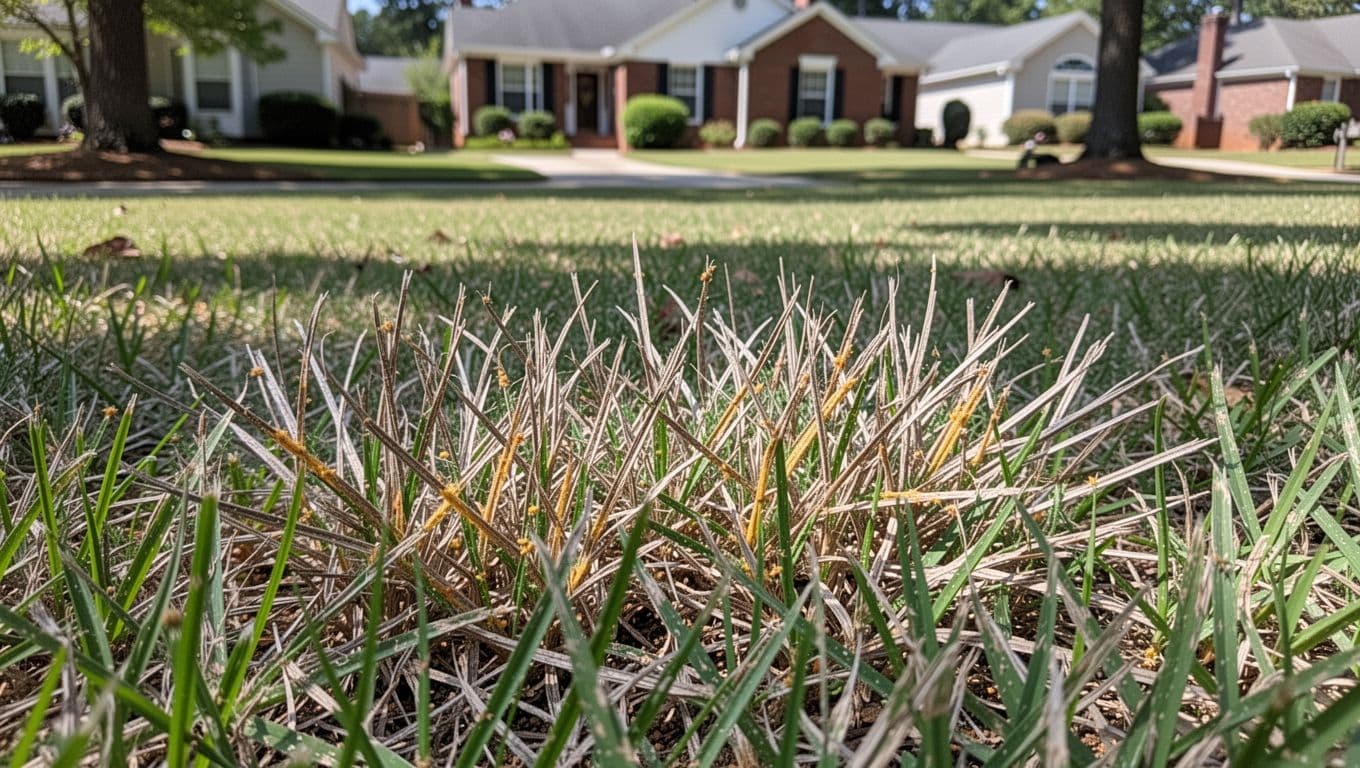
The first sign is usually a patch that looks cramped instead of cleanly brown. The blades get short and tufted, and the color can shift to yellow, bronze, or a washed-out green.
Watch for these signs in a Bermuda lawn:
- Witch's broom growth : The tips bunch up, the shoots get shorter, and the turf looks bristly.
- Bronzed or yellow blades : The lawn can look scorched even when it has water.
- Patchy thinning : The area gets wider instead of staying in one neat circle.
- Slow recovery : Mowed turf doesn't bounce back with normal growth.
- Hot-spot patterns : Sidewalk edges, driveways, slopes, and dry corners often show it first.
A hand lens helps, but the pattern matters more than the pest itself. If the turf looks like it has been trimmed into a rough brush, that is a strong clue.
Why the damage gets mistaken for drought, disease, or mowing issues
Bermuda mite injury is easy to miss because several common lawn problems look similar at first. Dry weather fades color. A low mower can scalp high spots. Some diseases also leave turf thin and patchy.
Here is a quick way to sort the look-alikes:
| What you see | More likely issue | What to check |
|---|---|---|
| Straight lines or stripes | Mowing height or scalping | Look for mower-width patterns |
| Round patches during green-up | Spring dead spot | Compare it with Atlanta spring dead spot in Bermuda |
| Thin turf that feels root-bound or stubborn | Ground-feeding pest or soil stress | Compare it with Atlanta ground pearl damage in Bermuda lawns |
| Turf perks up quickly after irrigation | Drought stress | Recheck after a full watering cycle |
If the lawn improves after water, drought moves up the list. If the patch stays cramped, bronzed, and uneven, mites deserve a closer look. Heavy nitrogen can also make the injury look worse, so don't assume fertilizer will fix it.
What to do right away
The goal in the first week is to slow the stress, not to force a fast cosmetic fix.
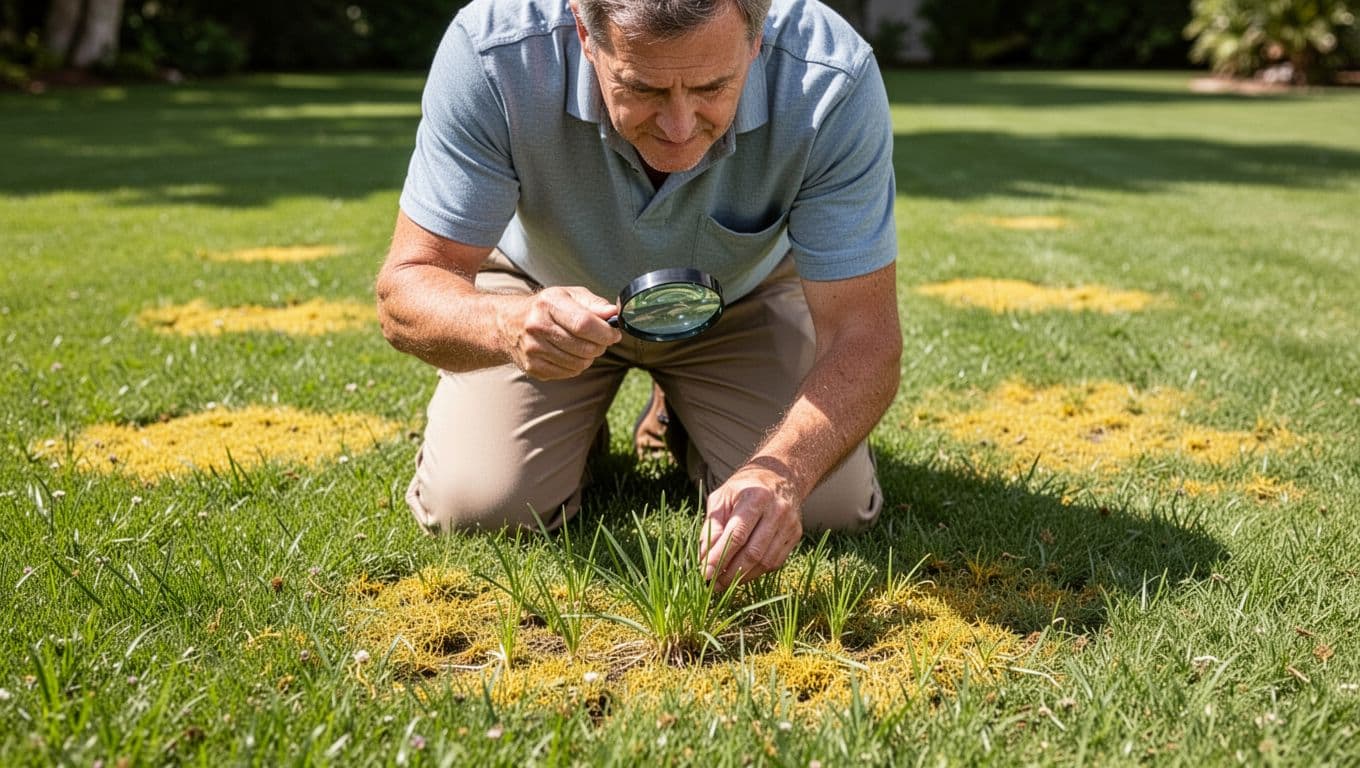
Start with a close look at the edge of the patch. Mites usually show their pattern better there than in the middle of the thin area. If you have a 10x or 15x hand lens, use it. If not, take clear photos and compare the patch to the rest of the lawn.
After that, take these steps:
- Mow at the right height and don't scalp the lawn. If the grass is too tall or uneven, stress gets worse. A good Atlanta mowing guide for Bermuda and Zoysia helps keep the turf in a safer range.
- Bag the clippings if you suspect mites. Clippings can carry the pest to healthy parts of the lawn.
- Water deeply if the soil is dry, then let the lawn dry down a bit before the next cycle.
- Pause heavy nitrogen until you know what you're dealing with.
- Follow local extension guidance and pesticide labels if treatment is needed. A wrong product or bad timing can create more stress than the mites did.
These steps won't make the problem vanish overnight, but they do stop the lawn from sliding downhill.
What recovery usually looks like

Recovery is usually gradual. Once the mites are under control and the lawn is less stressed, small areas can look better in a few weeks. Wider patches often need one to two months of steady growth before they blend in.
The damaged blades won't repair themselves, so don't expect the old bronze tips to turn green again. New growth is what tells you the lawn is healing. In a healthy Atlanta summer, bermuda can fill in quickly if it gets enough sun, water, and room to spread.
Severe damage takes longer. Thin spots in shade, compacted soil, or poor drainage may need plugging or re-sodding after the mite issue is handled. New sod or plugs can fail if the surrounding turf still has mites, so clean up the source first.
How to reduce the chance of a repeat
Prevention is mostly about keeping bermuda strong enough to handle stress. That starts with mowing, water, and clipping control.
- Keep mowing frequent so you never remove too much at once. Bermuda handles regular cutting better than rough swings in height.
- Bag clippings during a flare-up and remove them from the site.
- Aerate compacted soil during active growth if the lawn gets hard underfoot.
- Reduce thatch when it builds up, since thick layers can hide pests and stress roots.
- Use a soil test before adding more fertilizer. Too much nitrogen can push weak, tender growth.
- Water on a steady schedule so the turf doesn't swing between dry and soaked.
- Clean mowers and tools when moving between problem areas and healthy turf.
The right mowing height matters more than many homeowners think. Bermuda that's cut too high, or cut unevenly, can look stressed even before mites arrive. Cut too low, and you can bruise the lawn and expose it to more heat.
FAQs
How do I tell bermuda mites from drought?
Drought usually improves after a solid watering cycle. Mite injury often keeps the turf looking cramped, bronzed, and uneven even when moisture is better.
Will damaged Bermuda grass grow back?
Yes, if the mites are controlled and the lawn stays healthy. Small patches often recover in weeks, while severe areas may need plugs or new sod.
Should I spray something right away?
Not until you know what the problem is. The best first move is to confirm the pattern, reduce stress, and follow local extension advice and label directions if treatment is needed.
Conclusion
Bermuda mite problems can look dramatic, but the fix starts with a calm read of the lawn. If the grass is bronzing, bunching, and staying stunted in Atlanta heat, that pattern matters more than the color alone.
The best response is steady care, not a rush to treat the wrong issue. Check the patch shape, mow at the right height, bag clippings when needed, and protect the lawn from extra stress. That approach gives bermuda mite damage the least room to spread and the best chance to fade as new growth fills in.