Pine Straw vs Mulch for Atlanta Landscape Beds
Atlanta beds take a beating. Summer heat dries them out, sudden storms push material around, and Georgia clay holds water in all the wrong places.
That is why the choice between pine straw vs mulch matters more here than it does in many other cities. The right ground cover can calm a slope, sharpen curb appeal, and cut down on constant touch-ups. The wrong one can slide into the lawn, fade fast, or look messy after the first hard rain.
Key Takeaways
- Pine straw is often a better fit for sloped beds, larger plantings, and yards that need quick, easy refreshes.
- Mulch usually looks sharper longer in flat, front-facing beds and gives a darker, more finished appearance.
- Atlanta rain and clay soil make bed edging and installation quality just as important as the material itself.
- Pine straw often needs more frequent topping off, while mulch usually lasts longer between refreshes.
- Neither material is a termite fix or a termite problem on its own. Moisture management matters more.
What Atlanta landscape beds need from ground cover
Ground cover in Metro Atlanta has three jobs. It needs to slow weeds, protect soil from heat, and stay in place after rain.
That sounds simple until you factor in the local weather. Clay soil sheds water during heavy storms, so runoff can drag loose material with it. Meanwhile, long stretches of heat can dry the top layer and leave beds looking thin before the season is over.
The material choice also affects how often you work in the yard. Some homeowners want a look that stays crisp with less effort. Others want a softer finish that blends with trees, shrubs, and older Southern plantings. Atlanta yards rarely stay flat and tidy for long, so the best ground cover is the one that fits the way your beds actually behave.
Pine Straw vs Mulch at a Glance
The contrast shows up fast when you put the two side by side. This comparison makes the tradeoffs easier to see before you decide.
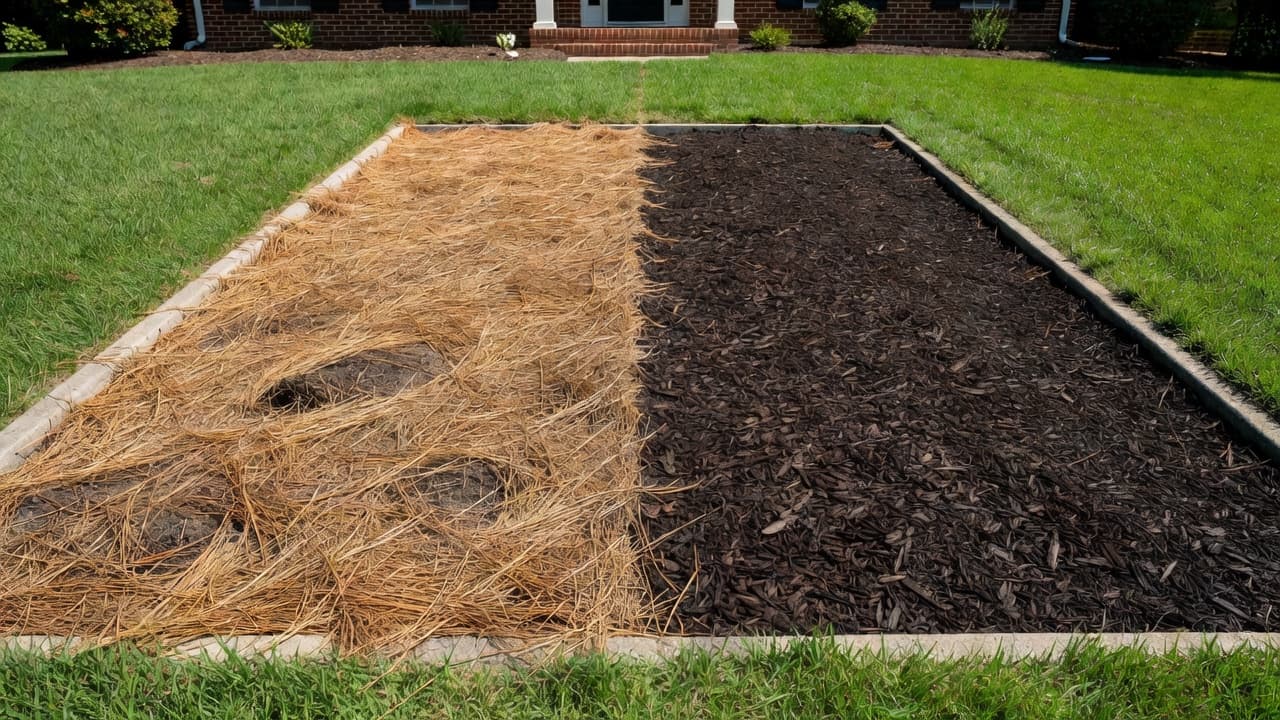
| Factor | Pine Straw | Mulch |
|---|---|---|
| Look | Soft, airy, natural | Darker, cleaner, more defined |
| Slope performance | Often handles slopes well because it interlocks | Can wash or shift if beds are steep or edging is weak |
| Refresh cycle | Usually needs topping off more often | Usually lasts longer between top-offs |
| Weed suppression | Good when layered correctly | Often stronger for longer stretches |
| Best use | Large beds, slopes, informal plantings | Flat beds, front entries, foundation plantings |
The big takeaway is simple. Pine straw often wins on slopes and speed. Mulch usually wins on longevity and a sharper finished look.
Where pine straw fits best
Pine straw makes sense when the bed shape matters as much as the material. On a slope, the needles knit together and hold better than many loose mulches. That matters in Atlanta neighborhoods with front yards that tilt, curve, or drain toward the street.
It also fits beds that feel spacious or wooded. Around azaleas, camellias, hollies, and older shade trees, pine straw looks natural instead of heavy. The lighter color can soften a yard that already has a lot of hardscape, brick, or dark mulch nearby.
Installation is another plus. Pine straw is easy to spread, easy to touch up, and easier to haul by hand than bags of heavier mulch. For homeowners who want to refresh beds quickly before a family gathering or open house, that convenience matters.
The tradeoff is simple. Pine straw breaks down faster and can thin out sooner in exposed beds. If your yard catches wind, gets a lot of foot traffic, or sits in full sun all day, it may need more attention.
Where mulch fits best
Mulch is the better fit when you want structure. It frames shrubs, foundation beds, and entryways with a deeper color that makes plants stand out. In front yards, that contrast can make a house look cleaner almost immediately.
It also tends to stay put better in flatter beds. Heavier mulch resists movement more than pine straw, especially when the bed edge is solid and the depth is right. In Atlanta, that can mean fewer repairs after a summer downpour.
For many homeowners, the question comes down to budget and how often they want to refresh the yard. If you are comparing quotes, Atlanta mulch installation pricing depends on bed size, prep, and depth as much as the material itself.
Mulch does fade over time, and some products break down faster than others. Still, it usually keeps its look longer than pine straw, which is why many front yards and HOA-facing beds lean that way.
Rain, clay soil, and bed edges
Atlanta weather can expose a weak landscape bed in one storm. Heavy rain hits hard, clay soil sheds water, and loose material starts to move.
Pine straw can slide on steep slopes if the bed edge is sloppy. Fine mulch can wash into the lawn or collect in low spots if it is piled too high or spread too close to the edge. The material matters, but the edge matters too.
A clean bed edge does more to hold ground cover in place than most homeowners expect.
That is why proper edging deserves attention before any fresh install. If your beds already blur into the lawn, tips for crisp bed edging can make either material perform better. A sharp border helps the bed hold shape, keeps the mower out, and gives rain a clear path instead of a messy one.
Keep the top layer level, then taper it inward. Do not mound either material against trunks, siding, or hard edges. Small details like that prevent a lot of cleanup later.
Maintenance, cost, and curb appeal
Maintenance is where the long-term difference shows up. Pine straw often needs more frequent freshening, especially in open beds or spots that catch wind. Mulch usually lasts longer, but it still breaks down, fades, and thins out over time.
That changes the cost picture. Pine straw may look cheaper at first, but repeat installs can add up. Mulch often costs more upfront, then holds its look longer between service visits. If you want a rougher, more seasonal refresh, pine straw is easy to live with. If you want a bed that looks finished for a longer stretch, mulch usually has the edge.
Appearance matters just as much as maintenance. Pine straw gives a warm, softer look that blends into a lot of Atlanta yards. Mulch creates stronger contrast and can make evergreen shrubs, boxwoods, and flowering beds pop.
Many homeowners end up using both. A front bed may look better in mulch, while a sloped side yard or large back bed works better with pine straw. That kind of split approach often makes more sense than forcing one material across the whole property.
Pest myths and real-world concerns
Termite concerns come up in almost every mulch conversation, but the material itself is only part of the story. Mulch does not attract termites by magic, and pine straw is not a guarantee against them.
What matters most is moisture and placement. Any organic ground cover piled against siding, resting on foundation vents, or packed too high around trunks can hold dampness where you do not want it. That is what creates problems.
The same idea applies to ants, rodents, and fungus issues. Clean beds, proper depth, and good drainage matter more than the label on the bag. If the yard stays wet because gutters dump water at the foundation, no ground cover will fix that on its own.
A shallow, even layer keeps both materials working the way they should. That gives you the look you want without turning the beds into a moisture trap.
Choosing the right material for your yard
If your beds slope, if you want a softer Southern look, or if you need a quick refresh with easy handling, pine straw is usually the better fit.
If your beds are flatter, if curb appeal is the main goal, or if you want a darker finish that lasts longer between refreshes, mulch usually makes more sense.
If different parts of the yard have different problems, use both. Atlanta landscapes often do better with a mixed approach than with one material forced everywhere.
The best choice is the one that matches your slope, drainage, and maintenance routine. In this city, the first hard rain tells the truth fast.