Atlanta Boxwood Psyllid Guide for Cupped New Leaves
Cupped new leaves on boxwoods can send Atlanta homeowners into a panic, especially when a hedge looked healthy a week earlier. The classic culprit is boxwood psyllid , a small insect that feeds on tender spring growth and bends those leaves out of shape.
The strange part is how ordinary the shrub can look in every other season. That is why timing, leaf pattern, and a close look at the newest growth matter more than a quick guess.
Key Takeaways
- Cupped new leaves are a classic sign of boxwood psyllid, especially on the newest spring growth.
- In North Georgia, the problem usually shows up in late spring , when boxwoods push tender flushes.
- Nymphs are tiny, pale, and tucked into new growth, while adults are small, winged, and easy to miss.
- Other problems, including leafminer, mites, winter injury, herbicide drift, and disease, can look similar.
- Many cases do not need treatment, because the damage is mostly cosmetic once the leaves have hardened.
Why cupped new leaves point to boxwood psyllid
Psyllid damage usually starts on the freshest leaves , not the older ones. The insect feeds while the leaves are still soft, and the tissue grows around that feeding. As a result, the leaves curl inward and keep that spoon-like shape.
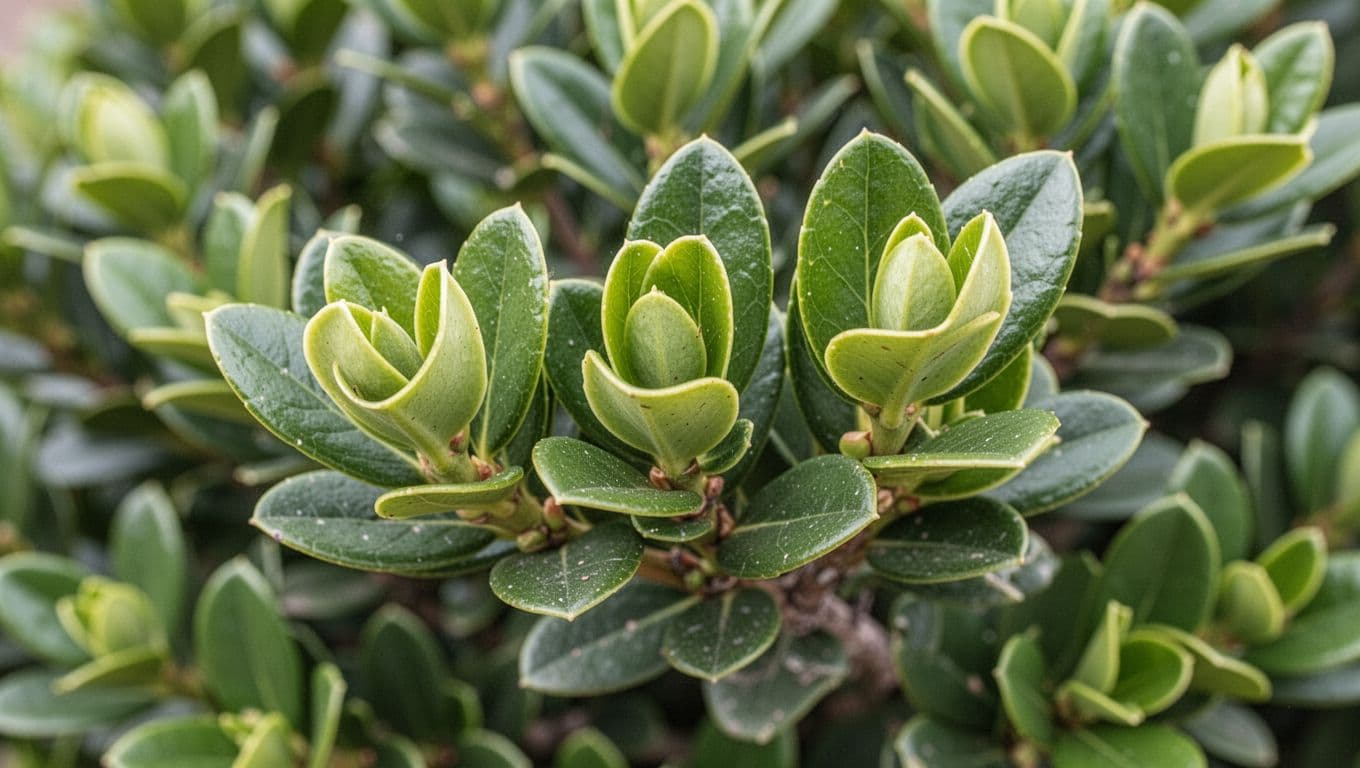
On Atlanta landscapes, the damage often shows up on foundation shrubs, clipped hedges, and any boxwood that pushed a strong spring flush. The plant may still look green and full from a distance, but the newest tips look cramped or folded.
That is a useful clue. Psyllid usually distorts the latest growth first, while the rest of the plant keeps its normal shape. If one flush looks odd and the older leaves look fine, psyllid moves to the top of the list.
What the pest looks like in North Georgia
Boxwood psyllids are easy to overlook because they are small and stay close to the newest growth. You usually have to part the leaves and inspect the tips to find them.
Nymphs on tender growth
The nymphs are the easiest stage to spot if you know where to look. They are tiny, pale green to yellow-green, and flat. Many people miss them because they blend into the leaf bases and new shoots.
They also leave a faint white, waxy look on the foliage around them. On heavily infested tips, the leaves may look tight, crowded, or puckered before they fully cup.
Tiny adults in spring
Adult psyllids are small, winged insects that move quickly when disturbed. They are greenish and slender, so they can vanish into the foliage if you blink.
In North Georgia, infestations usually become noticeable in spring , often as the boxwood begins active growth. By the time the new leaves harden, the cupping is already set. That is why people often notice the shape long after the feeding started.
If the leaves are already hard and fully cupped, spraying will not make them flatten again.
The timing matters more than the visible damage. Early season feeding is the real window that matters.
Distorted boxwood growth can come from other problems
Cupped leaves are a clue, but they are not proof by themselves. Several other boxwood problems can create twisted or unhealthy growth, and the details help separate them.
A quick comparison helps when the symptoms do not fit psyllid cleanly.
| Problem | Common look | Usual timing in Atlanta | Extra clue |
|---|---|---|---|
| Boxwood psyllid | New leaves cup inward, often on fresh spring growth | Late spring | Older leaves stay mostly normal |
| Boxwood leafminer | Blistered, swollen, yellow or orange patches, sometimes later curling | Late spring through summer | Larvae feed inside the leaf |
| Mite injury | Dull, stippled, bronzed foliage | Hot, dry periods | Fine webbing or dusty look |
| Winter injury | Brown, tan, or bronzed leaves, often on exposed sides | After cold snaps or wind | Damage follows a freeze |
| Herbicide drift | Twisted, narrow, deformed new growth on several plants | After nearby spraying | Similar damage on non-boxwood plants |
| Disease | Spots, stem dieback, leaf drop, or rapid browning | Often during humid periods | Usually more than simple cupping |
Leafminer often leaves a more blistered or translucent look than psyllid. Mite injury tends to make leaves look washed out or speckled. Winter injury usually shows up after a cold event and often hits the windward side of the shrub.
Herbicide drift is a big one in residential landscapes. If nearby lawn weed control hit the wrong plants, the new growth can twist, narrow, and bend in odd ways. That damage usually shows up on more than one shrub or on other broadleaf plants nearby.
If the boxwood has dark stem lesions, heavy spotting, or sudden leaf drop, disease moves higher on the list. For a closer look at those signs, see Atlanta boxwood disease prevention guide.
The takeaway is simple. Psyllid usually distorts the newest flush , while the other problems tend to leave a broader pattern, deeper discoloration, or more obvious spotting.
Practical boxwood psyllid management for Atlanta properties
Good boxwood care starts with observation, not a spray can. Check shrubs in early spring and keep watching through the first warm flush. Look at the newest tips, especially on shrubs near driveways, front walks, and other high-visibility spots.
Healthy plants handle minor psyllid feeding better than stressed ones. Water boxwoods during dry spells, keep mulch at the root zone, and avoid harsh shearing that strips off the newest growth. A boxwood that stays vigorous is less likely to look rough for long.
If your shrubs also need shaping, follow the best time to prune boxwood shrubs so you are not cutting during the wrong stage of growth. Light, well-timed pruning is better than aggressive shearing, especially when the plant is already stressed.
Treatment is often unnecessary when the damage is minor. Skip spraying if:
- only a few tips are cupped
- the shrub is otherwise healthy
- the leaves have already hardened
- the plant is growing out of the damage on its own
A targeted treatment may make sense when the infestation is active and the new growth is still tender. That window is narrow. Once the leaves harden, the damage is cosmetic, and spraying will not fix the shape.
For properties where appearance matters, such as front entries or commercial foundations, treatment can be justified if you catch the pest early and repeat damage happens each year. In those cases, a licensed applicator can match the timing to the vulnerable stage and use a labeled product correctly.
A careful inspection often saves time and money. It also keeps you from blaming the wrong problem.
Conclusion
Cupped new boxwood leaves are one of the clearest clues that boxwood psyllid is at work in Atlanta and North Georgia. The pest is easy to miss, but the damage pattern is not. It usually shows up on the newest growth in spring, while the older leaves stay normal.
The best response is measured. Check the timing, compare the symptoms, and decide whether you are dealing with a cosmetic issue or a real treatment window. A calm look at the shrub in April or May usually tells you more than a rushed spray ever will.