Atlanta Drip Irrigation for Foundation Beds and Shrubs
Foundation shrubs can look thirsty while the soil beside the house stays wet. A well-planned Atlanta drip irrigation system solves that mismatch by placing measured outlets near plant roots instead of soaking the entire bed.
Metro Atlanta adds two challenges: heavy red clay slows infiltration, and summer storms can arrive after an automatic cycle. The right design protects the foundation, accounts for mulch and slope, and changes with rainfall, soil moisture, plant type, and current watering rules. Start with the bed's grade and root zones, then choose equipment and a schedule you can inspect.
How Atlanta drip irrigation protects foundation beds
Foundation beds often sit in a narrow strip between the house and the lawn. Shrubs need moisture across their root zones, but repeated wetting at the wall can feed puddles, staining, erosion, or long-term drainage problems. In Atlanta clay, water may move sideways across the surface before it sinks.
Keep a dry buffer beside the wall
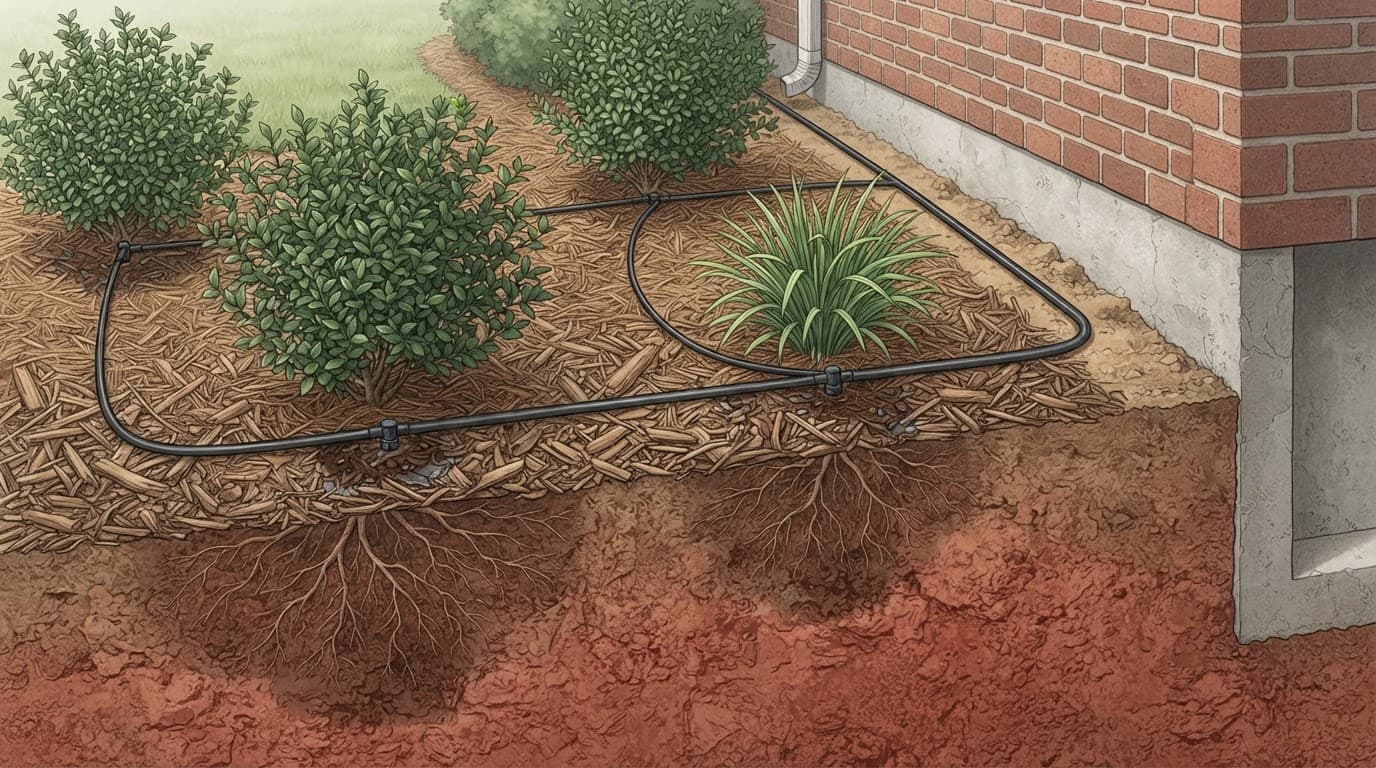
Run the main supply line through the middle or outer portion of the bed, not directly beside the foundation. Place emitters on the plant side of each shrub, with the closest outlet well away from the wall. A dry strip beside the foundation gives runoff somewhere to move without adding irrigation water to the problem.
The exact setback depends on bed width, plant size, grade, and soil condition. A narrow, level bed may need a modest buffer, while a sloped bed that directs water toward the house needs more separation. Keep tubing and emitters out of low spots where water already collects.
Check drainage before adding water
If puddles appear after rain, irrigation may not be the main cause. Inspect downspouts, splash blocks, settling near the house, and the bed's slope. RW Lawn Co's guide to Atlanta downspout drainage fixes covers common ways to redirect roof runoff before it reaches the foundation.
A drip system can distribute water carefully, but it can't correct a grade that sends stormwater toward the house. Fix the drainage pattern first, then size irrigation for the plants that remain.
Plan the tubing around shrub root zones
A good installation begins with a simple bed map. Mark the foundation, downspouts, walkways, valves, slopes, and each shrub. Note which plants are new, established, drought-tolerant, or more moisture-dependent.
Place emitters beside roots, not stems
Young shrubs usually need water near the root ball, with outlets placed around the outer portion of that ball as roots begin to spread. As shrubs mature, move or add emitters farther outward. Watering one point beside the trunk leaves much of the root zone dry and can keep the crown area too wet.
For larger shrubs, use several emitters in a wide ring or a short section of dripline. The ring should follow the plant's root area rather than sit in a perfect row beside the wall. Avoid placing outlets against stems, trunks, siding, or masonry.
Follow the bed's contour on slopes
Atlanta properties often have sloped front beds, especially near driveways and raised porches. Long downhill runs can create uneven delivery because water and pressure behave differently at higher and lower points.
Run lateral tubing across the slope where practical, and place a flush point at the low end. Keep long runs divided into manageable zones. A pressure-compensating emitter can help with elevation changes, but it won't correct a poorly routed line or a clogged filter.
Choose equipment that fits shrubs and clay
The system needs more than flexible tubing and a timer. A filter keeps grit out of small outlets, while a pressure regulator protects the line and helps emitters release water at a predictable rate. Add a shutoff valve so you can isolate the bed during repairs.
Use individual emitters for mixed beds
Individual emitters work well when a bed contains shrubs with different sizes and water needs. You can place more outlets around a mature plant and fewer around a small, drought-tolerant shrub. This flexibility helps prevent the entire bed from receiving the same amount of water.
Inline dripline fits dense rows where plants have similar spacing and moisture needs. It can be useful beneath a hedge, but it may deliver water to empty spaces if shrubs are widely separated. Choose tubing with a flow rate and spacing that match the planting plan.
Protect the system at the water source
Connect the system through the correct backflow protection for the water source and local plumbing requirements. Use a filter that matches the system, then check it during the growing season. Clay particles, sand, algae, and small debris can restrict flow even when the timer still runs.
Pressure problems often show up as dry plants at the end of a line or standing water near the first outlet. Divide the bed into zones when one run becomes too long or contains plants with different needs.
Install drip irrigation in Atlanta clay and mulch
Clay soil holds water tightly when wet, then becomes hard and crusted as it dries. A fast application can run across the surface instead of reaching shrub roots. Slow delivery gives water time to move into the soil, but the system still needs the right layout and pauses.
Keep tubing near the surface
Lay drip tubing on the soil surface and cover it with a light, even layer of mulch. Deep burial makes leaks harder to find and can place water where roots don't need it. Use landscape staples to hold lines in place, especially on slopes and near bed edges.
Before covering the tubing, run the zone and inspect every connection. Look for sprays, leaks, weak outlets, and water moving toward the foundation. Make repairs while the lines are visible.
Manage mulch without hiding the problem
A 2 to 3-inch mulch layer helps reduce evaporation and protects clay from crusting. Pine straw and shredded hardwood mulch are common in Atlanta beds, but both can hide tubing, leaks, and clogged emitters when piled too thickly.
Keep mulch several inches away from shrub stems and pull it back from the foundation line. Do not bury emitters beneath a heavy mound. If a shrub continues to struggle, review planting shrubs in heavy clay soil before increasing irrigation. Poor planting depth and compacted soil can mimic a watering problem.
Build a schedule around soil moisture
A timer setting is only a starting point. Two Atlanta homes can need different watering because one has compacted clay and shade, while another has a sunny slope with amended soil. A fixed runtime cannot account for those differences.
Test output instead of copying minutes
Check how much water a representative emitter releases during a measured test. Use that information with the number of emitters and the soil's response. The goal is a moist root zone, not a particular number of minutes.
Clay often benefits from shorter applications with a pause between them. If water begins to run across the mulch or collect at the bed edge, stop the cycle and allow infiltration before applying more. A longer single run may waste water and keep the foundation-side soil wet.
Inspect the bed after a cycle. Push a hand trowel into the soil below the mulch, away from the emitter. If the root-zone soil is damp several inches down, delay the next cycle. If it is dry and crumbly, the plants may need water sooner.
Separate plants by their actual needs
New shrubs need closer monitoring while their roots establish. Established shrubs usually tolerate longer gaps, especially when rainfall reaches the root zone. Hydrangeas, azaleas, and other moisture-demanding plants may need a different zone than drought-tolerant shrubs.
Sun, shade, wind, soil depth, and slope also change demand. A shrub beside a sunny driveway can dry faster than the same species under a mature tree. For nearby turf, use the Atlanta lawn watering schedule as a separate reference, since lawn and shrub zones don't always need the same treatment.
Adjust Atlanta drip irrigation through the seasons
Seasonal changes matter more than a timer's original setting. Atlanta's spring rain can keep clay wet for days, while July heat can dry the top layer quickly. Fall weather may alternate between heavy rain and dry stretches, and winter can still bring dry periods that affect evergreen shrubs.
Spring and summer require frequent observation
In spring, check the soil before turning on regular irrigation. Rainfall often supplies enough moisture, but newly planted shrubs may still dry near the root ball. Once warm weather arrives, inspect sunny beds more often and watch for runoff during heavy thunderstorms.
Summer schedules should respond to rainfall rather than run automatically after every storm. Pause irrigation when the soil remains damp, then resume when the root zone begins to dry. Water early in the day when possible, and use a rain sensor or soil-moisture sensor if the system supports one.
Fall and winter still need adjustments
Fall usually brings cooler temperatures and lower demand, but evergreen shrubs can lose moisture during dry, windy weather. Reduce frequency when rainfall and soil checks show adequate moisture. Keep monitoring plants near walls, under roof overhangs, and beneath dense tree canopies because those areas may receive less rain.
During winter, protect exposed components from freezing conditions according to the equipment manufacturer's instructions. Avoid watering frozen soil. Local watering restrictions can change with drought conditions, and rules may differ among Metro Atlanta water providers, so check current requirements before setting automatic cycles.
Inspect the system before small problems spread
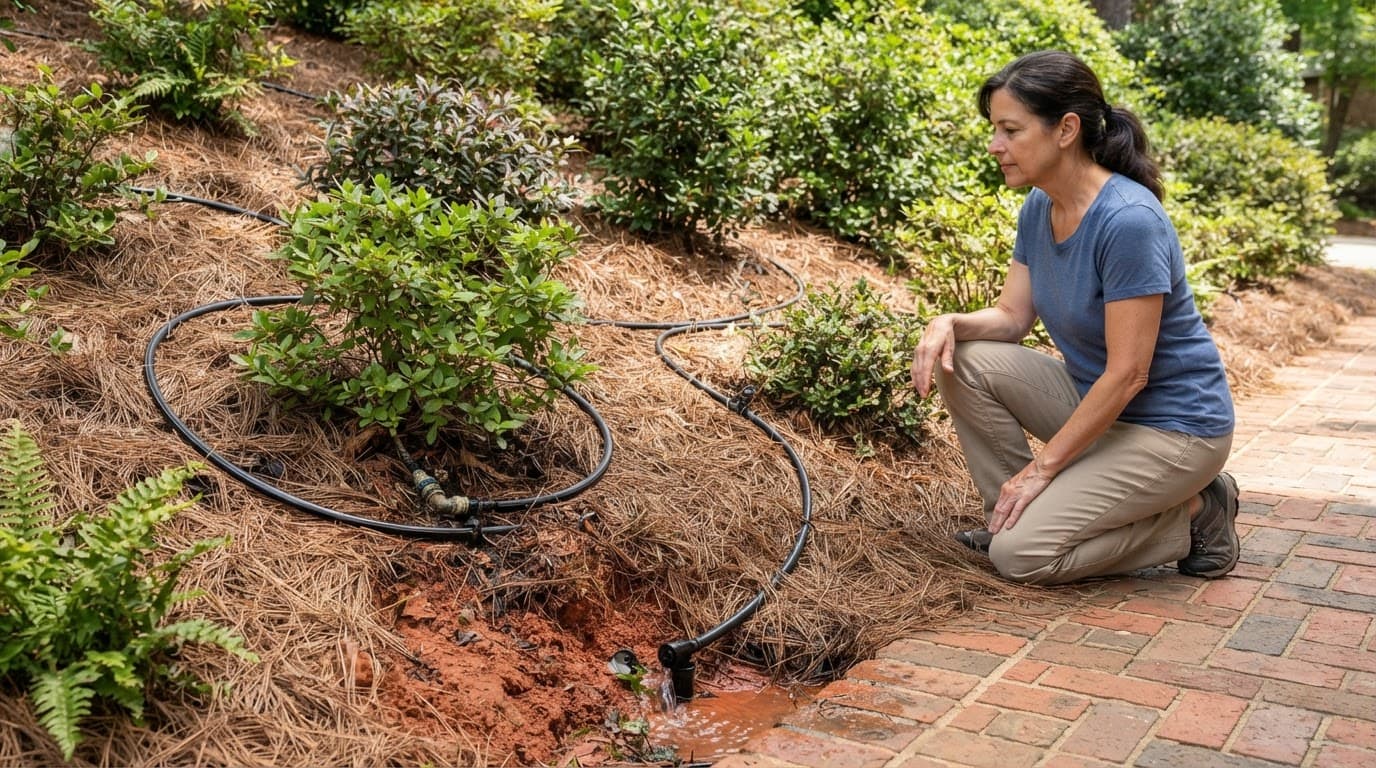
Walk the bed while each zone runs. Look beneath mulch, around fittings, and along the foundation-side edge. A short inspection can reveal a misplaced emitter before it creates a wet spot or stresses a shrub.
Watch for these signs:
- A dry shrub with damp soil nearby may have a clogged or displaced emitter.
- A wet ring beside the wall may point to a leaking fitting, excess flow, or poor grade.
- Water appearing at the low end of a slope can indicate runoff rather than normal infiltration.
- Uneven plant growth along one line may signal pressure loss or a blocked filter.
- A shrub with yellowing leaves in wet soil may have root stress, poor planting depth, or disease rather than a need for more water.
Flush the ends of the lines according to the system design, clean the filter, and replace damaged emitters. Recheck tubing after lawn mowing, bed edging, aeration, and mulch work. String trimmers and sharp tools can cut shallow lines that were installed correctly.
If water repeatedly reaches the foundation, stop the zone until the cause is clear. Recurring puddles may require grading or a separate drainage project. The Atlanta drainage solutions for soggy lawns guide explains how surface flow, low spots, and saturated soil can call for different repairs.
When to bring in a professional
Professional help makes sense when a bed has several elevation changes, poor access to the water source, buried utilities, or a history of foundation-side puddling. A technician can measure pressure, check flow, divide zones, and identify whether irrigation or grading causes the wet area.
Large shrub beds also need a plan that accounts for mature plant size. Installing tubing too close to the house may water the stems while leaving outer roots dry. Installing too many outlets can keep heavy clay saturated. A professional can adjust the layout without disturbing established shrubs more than necessary.
Before work begins, ask for a clear plan that shows the water source, valve locations, zone boundaries, emitter placement, filter access, and flush points. The plan should also state how the system will be adjusted after rainfall and during seasonal restrictions.
Conclusion
A reliable Atlanta drip irrigation system keeps water where shrubs can use it while leaving a dry buffer beside the foundation. The strongest results come from correct tubing placement, clean filters, shallow mulch coverage, and regular soil checks.
Treat runtime as an adjustable setting, not a universal rule. Rainfall, clay moisture, plant type, slope, sun exposure, and local watering restrictions should guide every change. When the bed stays wet near the house, fix the water path before adding more irrigation.