Atlanta Paver Patio Repair: Fix Sinking and Loose Stones
A patio can look solid for years, then one section dips after a season of hard rain. Loose stones, open joints, and puddles usually point to movement below the pavers, not a surface problem alone.
Atlanta paver patio repair works best when you correct the cause, whether that is clay soil, erosion, poor compaction, tree roots, or weak edging. Many patios need a targeted reset instead of full replacement. Start with the warning signs, then rebuild the layers that support the surface.
Why Atlanta Patios Develop Sinking and Loose Pavers
Pavers rarely sink without a reason. The surface moves when water, soil, or edge restraints fail to support the base beneath it.
Heavy rain and clay soil
Metro Atlanta receives heavy rainfall, and clay soil drains slowly. Water can collect beneath a patio or flow across its surface before the ground absorbs it. That movement may wash fine soil away, leaving empty pockets below the aggregate base.
Clay also expands when wet and contracts as it dries. Over time, those changes can create uneven support. A patio built over poorly compacted fill may settle even faster, especially near a new addition, slope, or recently disturbed yard.
Roof runoff can add another problem. A downspout that discharges beside the patio may send concentrated water beneath the edge or across the joints. If water already pools near your foundation or patio, review these Atlanta drainage solutions for soggy lawns before resetting the stones.
Erosion, roots, poor compaction, and weak edging
Erosion often starts at the patio edge. Water carries soil out from under the border, then nearby pavers lose support and begin to rock. A loose or missing edge restraint allows the entire paved area to spread outward.
Tree roots can also lift pavers or push them apart. Even when a root doesn't break through the surface, it can displace the base and create a raised section. Poor compaction during installation leaves the same result, because the base settles under foot traffic and outdoor furniture.
When a Paver Patio Needs Repair, Not Full Replacement
A localized dip doesn't automatically mean the patio has failed. If most stones remain sound and the problem stays within a small area, a careful reset can restore the surface.
Localized damage is often repairable
Repair is usually practical when:
- One section has settled while the rest of the patio remains level.
- Several pavers rock because bedding sand or base material has shifted.
- Joint sand has washed away, but the stones aren't cracked or badly worn.
- An edge has moved, but the main patio still has a stable foundation.
- A small area collects water because of a shallow low spot.
Matching replacement pavers can help when a few stones are broken. Keep in mind that older pavers may have faded, so new pieces can look slightly different until weather and use reduce the contrast.
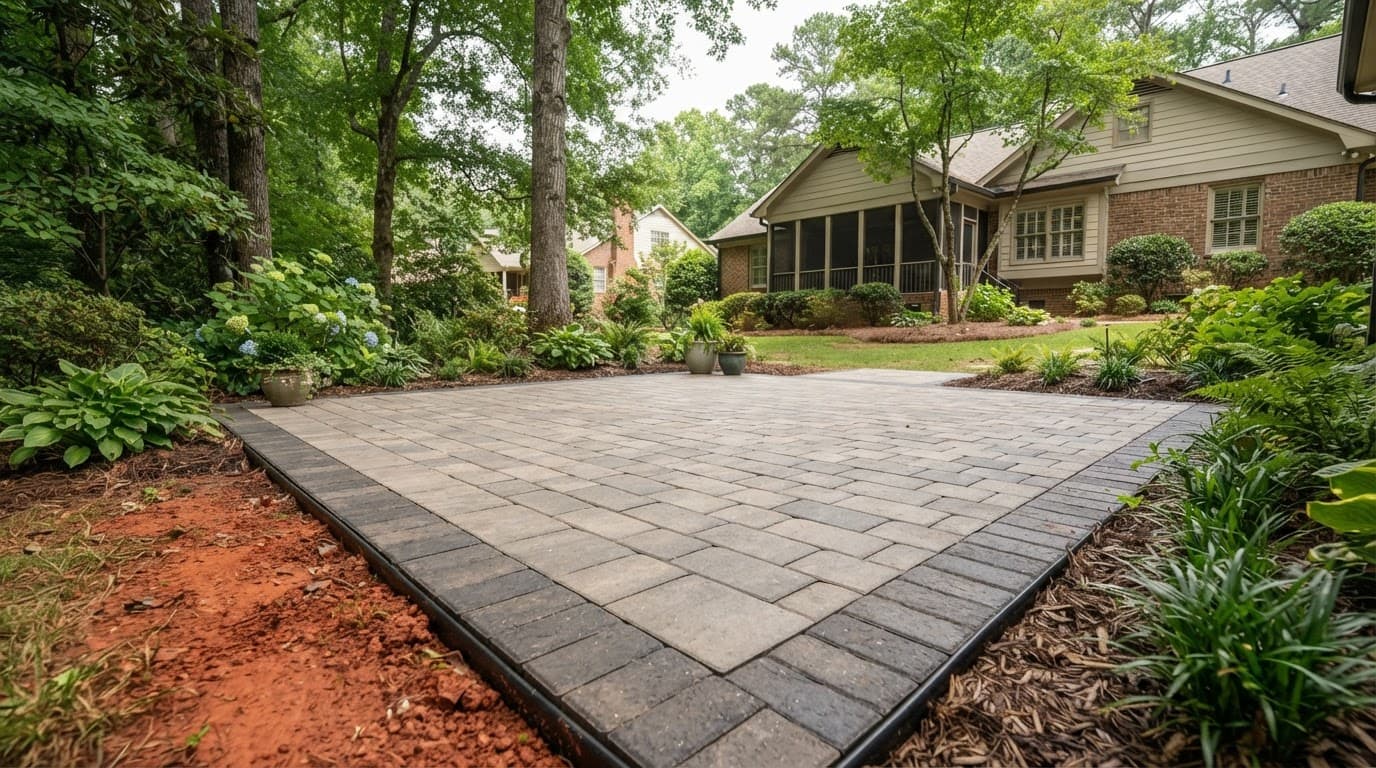
A repaired patio should have firm stones, tight joints, stable edges, and a consistent slope. Cosmetic patching alone won't solve movement below the surface.
When professional evaluation makes sense
Arrange an evaluation when the patio has widespread settlement, repeated pooling, major cracks, or movement near the home. A professional should also inspect patios affected by large roots, retaining walls, steep grades, or active erosion.
If doors, steps, or the foundation sit close to the damaged area, the repair needs extra care. Removing too much soil or changing the drainage path can create a new problem. The same applies when a patio sits above a slope or depends on a retaining wall for support.
How Atlanta paver patio repair fixes sinking and loose stones
A durable repair follows the original installation layers in the right order. The work usually involves lifting the affected pavers, correcting the base, restoring the slope, and securing the surface again.
Remove and label each paver
Start at an exposed edge of the damaged area. A paver puller can lift tightly fitted stones, while a small flat tool may help open a joint carefully. Avoid prying against adjacent pavers, because chipped edges make the patio harder to reset.
As each paver comes out, place it in the same order beside the work area. Mark the back with removable painter's tape and a simple location code, then take a photo of the layout. This step matters when the pavers have different shapes, colors, or patterns.
Set damaged stones aside for replacement. Brush loose sand from reusable pavers, but don't pressure-wash them over the open base. Water can soften the surrounding soil and create more instability.
Correct the base and bedding layers
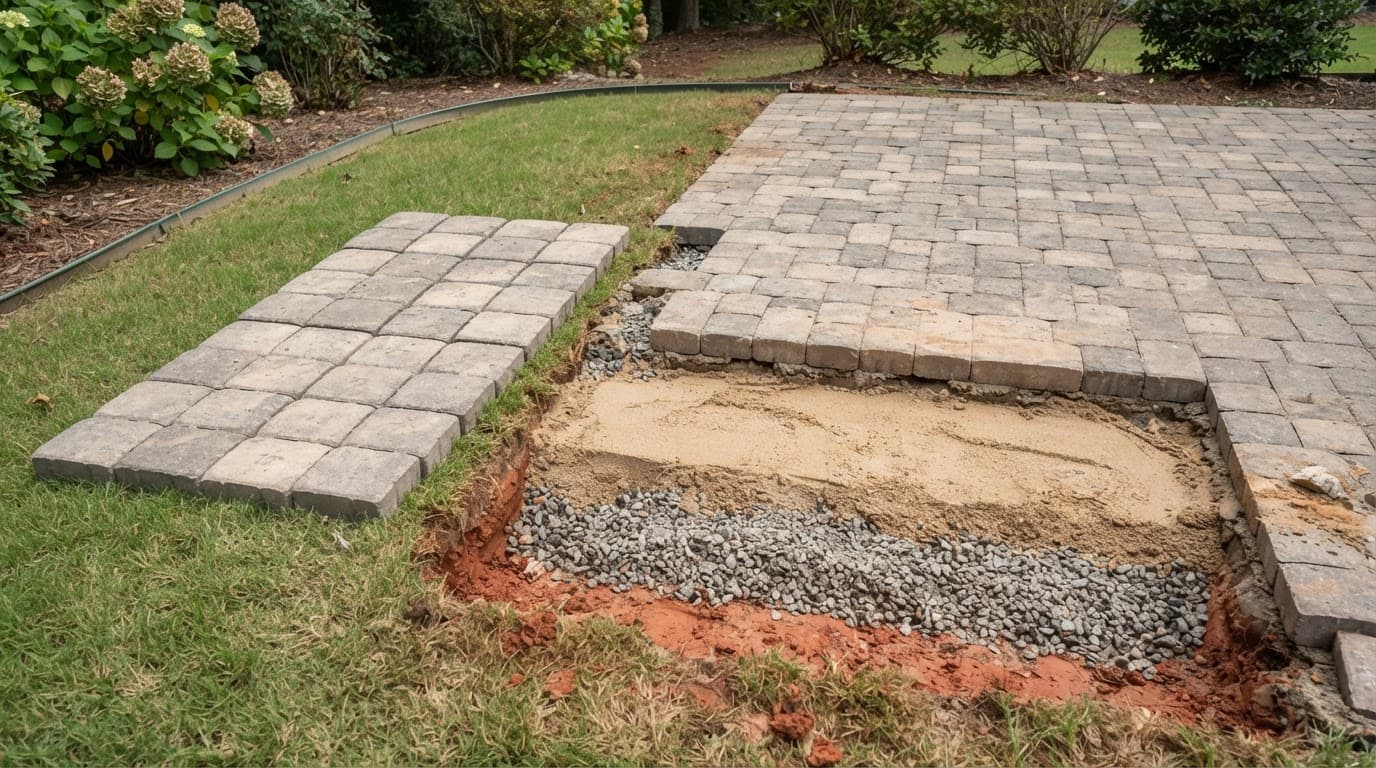
After removing the pavers, scrape out the old bedding sand and inspect the aggregate below it. Soft areas, visible voids, muddy pockets, and loose stone indicate that the repair must extend below the surface.
Remove unstable material until you reach firm support. Add the appropriate compactable aggregate in thin lifts, lightly dampen it if needed, and compact each lift before adding the next. The base should finish at the correct elevation and maintain the intended slope.
Place a thin, even bedding layer over the compacted base. Screed it smooth with straight guides rather than filling individual depressions with loose sand. Adding extra sand beneath one paver may make it level temporarily, but it often settles again.
Restore slope and drainage before resetting the surface
A level-looking patio still needs a slight, consistent fall so rainwater can leave the surface. The slope should move water away from the home, doors, steps, and retaining structures.
Check where the water goes
Before replacing the pavers, inspect nearby downspouts, gutters, lawn grades, planting beds, and hard surfaces. Water from a roof or uphill yard should not discharge into the repaired area.
Correct simple sources first. Extend downspouts to a suitable discharge point, clear blocked outlets, and remove soil or mulch that directs runoff toward the patio. These Atlanta downspout drainage fixes can prevent roof water from returning to the same low spot.
Don't redirect water toward a neighbor's property or trap it against a wall. If the patio receives runoff from a broad slope, the site may need a swale, channel drain, catch basin, or regrading plan.
Fix the low area below the pavers
A low spot should be corrected in the base, not hidden with a thick layer of bedding sand. Mark the finished elevation against the house, walkway, or steps. Then rebuild the aggregate so the repaired section joins the existing patio without a lip.
Check the surface during the work. A straightedge can reveal dips, while a level helps confirm the relationship to nearby thresholds. The finished patio should shed water without creating a sudden drop at its edges.
Reset pavers, edging, and joint sand
Once the base and drainage are correct, place the clean pavers back into their original pattern. Set each stone gently into the bedding layer, then tap it with a rubber mallet until it sits flush with its neighbors.
Keep joint widths consistent. Don't force a paver into a space that has narrowed because the surrounding patio has shifted. In that case, reset the adjoining stones or correct the edge before closing the joints.
Edge restraint is just as important as the base. Replace broken sections and anchor the restraint firmly into stable ground. If the border has no support, the pavers may spread again even after a perfect surface reset.
After the pavers are in place, sweep joint sand across the surface. Use the joint product recommended for the paver system and follow its installation directions. Polymeric sand can resist washout when the joints are clean, dry, and properly filled.
Compact the patio in stages if the paver manufacturer allows it. Sweep more sand into any joints that settle, then remove excess material from the surface. If the product requires light misting, apply water carefully so it doesn't wash sand out or create puddles.
Prevent another patio repair
Maintenance won't correct a failed base, but it can stop small problems from growing. Inspect the patio after major storms and watch for rocking stones, open joints, exposed edges, or new puddles.
Keep gutters and downspouts clear. Trim roots only with appropriate guidance, because cutting major structural roots can harm a tree or create a safety risk. Instead, address the affected pavers and ask whether the tree or patio layout needs a long-term adjustment.
Avoid driving vehicles or heavy equipment across a pedestrian patio. Use care when moving large furniture, grills, or planters. Sweep debris from joints and replace missing sand before water can enlarge the gaps.
If grading, soil movement, or excavation caused the failure, the surrounding yard may need correction too. RW Lawn Co's grading and site preparation services can address unstable ground and drainage problems before new hardscape work begins.
What a professional repair should include
A useful evaluation goes beyond looking at the lowest paver. The contractor should identify where water travels, inspect the edge restraints, check the base, and look for signs of root pressure or soil erosion.
The repair plan should state whether the crew will lift only the damaged section or remove a larger area. It should also explain how the base will be compacted, how the slope will be restored, and how the joints will be finished.
Some patios need related grading or retaining work. If a wall is leaning, soil is washing out, or water is collecting behind the patio, resetting pavers alone may provide only a short-term fix. In that situation, review the patio and wall together, including the drainage path and the stability of the supporting soil.
Price also depends on access, patio size, paver availability, excavation depth, disposal, and drainage corrections. A cost guide for Atlanta paver patios can help you understand why a simple reset and a base reconstruction fall into different project ranges.
Conclusion
Sinking and loose pavers usually point to a problem beneath the surface. Heavy rain, clay soil, erosion, weak compaction, tree roots, and inadequate edging can all move a patio out of place.
The most reliable Atlanta paver patio repair removes the affected stones carefully, corrects the base and bedding layers, restores drainage, secures the edges, and refills the joints. When settlement is widespread or water and structural issues are involved, a professional evaluation can prevent a short repair from becoming a full rebuild.