Atlanta Shrub Trimming Schedule for Boxwoods, Hollies, and Ligustrum
Getting shrub timing wrong is like giving a haircut right before a cold snap. The plant looks neat for a week, then pays for it later. For atlanta shrub trimming , the safest window usually opens in late February and early March, but the exact date shifts with weather, shrub type, and whether you want a crisp hedge or a softer, natural look.
In metro Atlanta, boxwoods, hollies, and ligustrum don't grow on the same clock. Use this guide as a practical schedule, then adjust a little for your yard, your cultivar, and the season in front of you.
Why pruning time matters in Metro Atlanta
Atlanta's winters are mild, yet late freezes still happen. Summers are long, humid, and rough on stressed plants. Because of that, the best pruning schedule is less about the calendar page and more about plant growth.
In most Atlanta yards, the main shaping window is late February through mid-March, just before spring growth starts.
Early spring cuts let shrubs push new growth fast. That fresh growth has months to harden before winter. On the other hand, heavy pruning in late summer or early fall can trigger soft shoots that get burned by cold.
Timing also changes with your goal. Formal hedges usually need more frequent light trims. Natural shrubs look better with selective thinning once or twice a year. In addition, don't prune during drought or extreme heat. A thirsty shrub can't recover well from a hard cut.
Wet weather matters too. Avoid trimming when foliage is damp, especially boxwoods. Disease spreads more easily when plants and tools stay wet.
A simple seasonal schedule for boxwoods, hollies, and ligustrum
This quick chart fits most established shrubs in metro Atlanta.
| Season | Boxwoods | Hollies | Ligustrum |
|---|---|---|---|
| Late Feb to mid-March | Best time for main shaping or thinning | Best time for most size control | Best time for hard cutback or reshaping |
| Late May to June | Light touch-up after spring flush hardens | Light trim on formal hedges | Second trim is common on fast growers |
| July | Only minor cleanup if plants are healthy | Very light touch-up at most | Light shaping only, avoid hard cuts in heat |
| After mid-August | Avoid shaping cuts | Avoid heavy pruning | Stop major trimming |
| Any time | Remove dead, broken, or diseased wood | Remove dead, broken, or diseased wood | Remove dead, broken, or diseased wood |
That schedule is a strong starting point, not a hard rule. A warm winter can move growth earlier. A cool spring can push it back a week or two. Also, younger shrubs often need lighter, more frequent training than older plants.
For formal hedges, keep the base a little wider than the top. Think lampshade, not shoebox. That small shape lets light reach lower leaves and helps prevent the bare-bottom look.
Best trimming windows for each shrub type
Boxwoods need a lighter hand
Boxwoods respond best to pruning from late February through mid-March in Atlanta. If you want a formal ball, square, or low hedge, do the main shaping then. After the first flush firms up, often in late May or June, you can do a light cleanup trim.
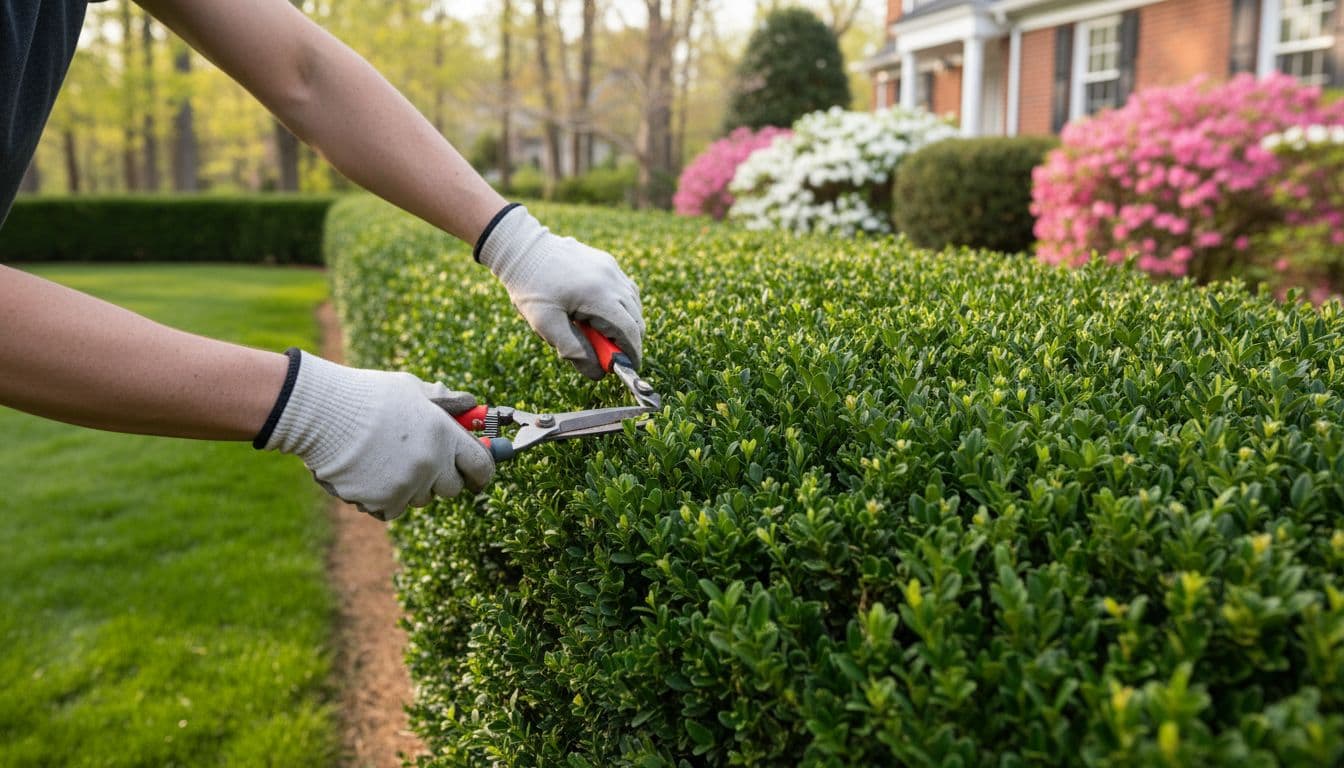
For a looser look, thin a few branches back into the plant instead of shearing the outer shell. That lets light in, which helps prevent thin interiors. Never remove more than one-third of the shrub at once. If a boxwood is badly overgrown, rebuild it over two or three springs instead of one hard cut.
Be extra careful with boxwoods in humid weather. Don't shear them wet, and clean blades if you spot leaf drop, dark stems, or dieback. English boxwoods often need gentler cuts than tougher hybrids.
Hollies vary more than most homeowners expect
Most evergreen hollies do well with late-winter or very early-spring pruning. That's a good fit for dwarf yaupon, Japanese holly, and many foundation shrubs. If you grow a large holly like 'Nellie R. Stevens,' late winter is also the best time for real size control.
Still, berry habits matter. If you love winter berries, hard pruning can reduce that show for a season. If flowers or berries matter more than size, save any nonessential cleanup for after bloom. 'Sky Pencil' holly is another special case. It should be thinned lightly, not chopped hard across the top.
Formal holly hedges can get a light touch-up in late spring. Natural hollies usually look better with selective cuts that follow the plant's shape. Because hollies recover slower than ligustrum, avoid repeated shearing unless you truly want a tight hedge.
Ligustrum grows fast, so it needs the most attention
Ligustrum, often called privet, is the sprinter of the group. In Atlanta, the best main trim is still late February through mid-March. However, fast-growing types such as waxleaf ligustrum often need a second trim in late spring or early summer.
If your goal is a screen or hedge, light repeat trims work better than one severe haircut. If the shrub is badly overgrown, do the big cutback in late winter, then let it recover. Summer shaping is fine in small doses, but hard pruning in July heat can set it back.
Ligustrum can take more shearing than boxwoods or hollies. Even so, constant surface trimming can leave a dense shell and bare wood inside. A few selective interior cuts each spring keep it fuller from top to bottom. Also watch for seedlings around older plantings, because some types spread aggressively.
Mistakes that cause weak growth and bare spots
Most pruning problems come from doing too much, too late, or under the wrong conditions.
- Over-pruning: If you remove too much at once, shrubs lose leaf area and struggle to rebound.
- Late-season trimming: Fresh shoots after mid-August may not harden before cold weather.
- Heat or drought pruning: Hard cuts during dry, high-heat weeks add stress fast.
- Flat-top shearing every time: The outside stays green, but the inside turns woody and thin.
Site conditions matter too. Shrubs planted near splash zones, downspouts, or soggy clay often stay stressed. If water hangs around your beds after rain, choosing drainage fixes for clay soil lawns can help you correct the bigger issue. And if roof runoff is part of the problem, these downspout fixes for foundation puddles are worth reviewing.
Sharp hand pruners beat dull power shears for most selective work. Clean cuts heal faster, and they don't shred the tips. When in doubt, cut less. You can always trim again in June, but you can't put branches back on.
Conclusion
A good atlanta shrub trimming plan is simple. Do the main pruning in late winter to early spring, use light touch-ups in late spring if needed, and stop major shaping by mid-August. Boxwoods want a careful hand, hollies need variety-specific choices, and ligustrum usually needs the most repeat trimming. Follow the plant's growth, not just the calendar, and your shrubs will look fuller, healthier, and easier to manage all year.