Atlanta Tree Trunk Damage From Mowers: What to Do
When a mower scrapes a tree trunk, start by recording the extent of bark loss and keeping equipment away from that spot. The next step depends on how much bark is missing and where the damage sits.
Preventing Atlanta tree damage starts with a clear equipment buffer , especially where grass grows against the trunk. A well-designed mulch bed also makes mowing easier without forcing equipment over exposed roots.
Begin with a ground-level inspection, then adjust the surrounding lawn and bed so the same contact doesn't happen again.
Key Takeaways
- Record the location and extent of missing bark before changing the surrounding landscape.
- Create a grass-free buffer that keeps mower decks and string trimmers away from the trunk.
- Maintain mulch 2 to 3 inches deep, with 3 to 6 inches of clearance around the bark.
- Keep the root flare visible and design bed edges around existing roots.
- Separate tree-condition evaluation from repairs to the surrounding lawn and landscape.
Identify Where Equipment Is Making Contact
A scrape tells you where contact happened, but the surrounding yard often explains why. Look at the mowing route, bed shape, surface roots, and available turning space.
Record the visible bark loss
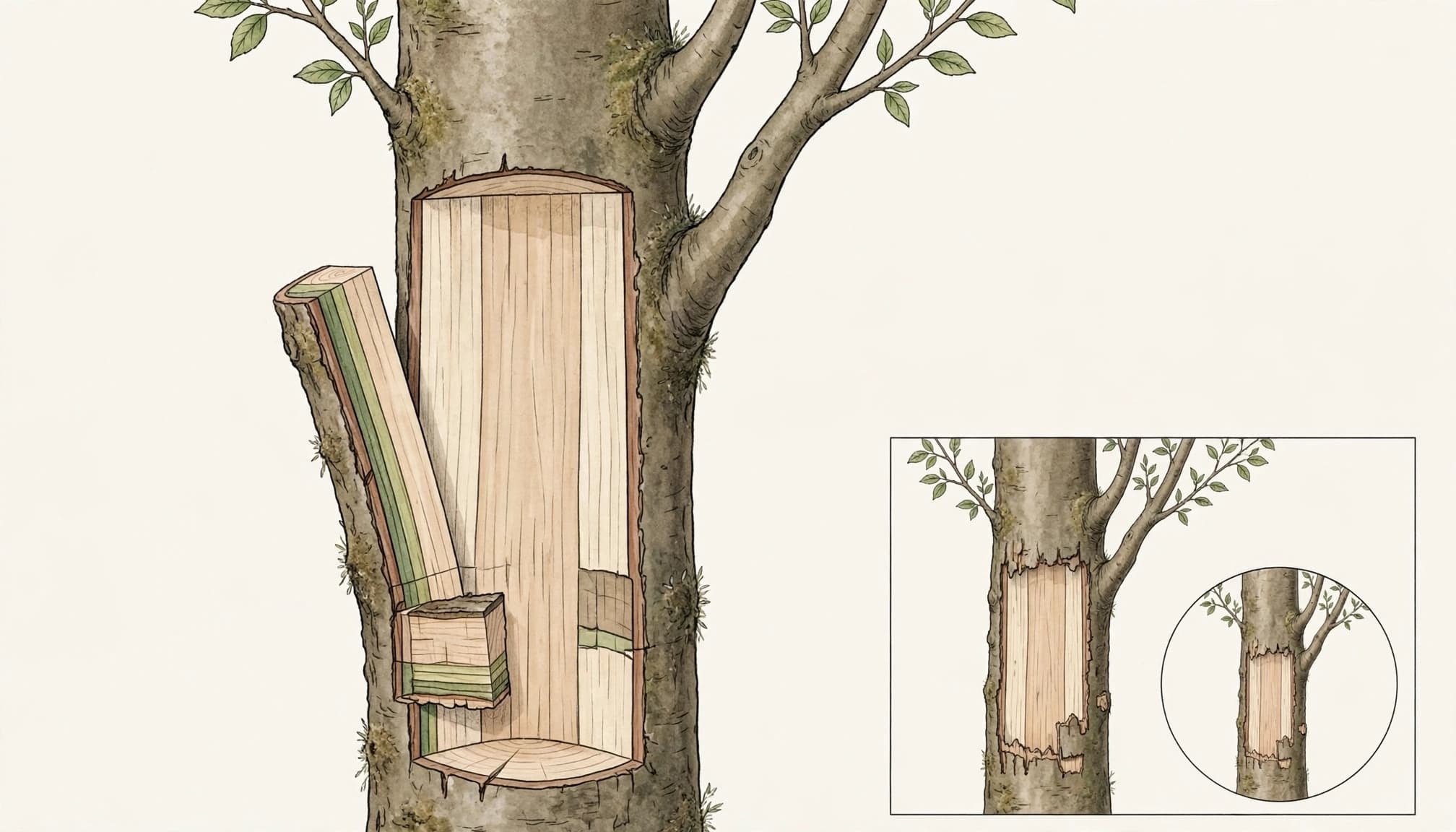
Photograph the trunk from several sides without pulling away bark or probing the exposed area. Include one wider photo showing the tree, nearby grass, and mowing approach.
Note whether the missing bark forms one isolated patch or appears at several points around the trunk. Also record whether the marks sit near the mower deck's path or where trimming occurs.
Keep the date with those photos. This gives you a useful comparison after future mowing visits, rather than relying on memory.
Look beyond the scrape
Grass growing directly against a trunk leaves little room for finishing work. Meanwhile, a tight bed, sloping ground, or awkward turn can push equipment closer than intended.
Look for raised roots along the approach, too. If the mower bumps or scalps there, change the route instead of repeatedly driving across the same obstruction.
Repeated marks deserve attention to the work pattern. Simply making another close pass leaves the underlying access problem unchanged.
Build a Mulch Buffer Around the Tree
A grass-free bed creates visible separation between lawn equipment and bark. It also removes the need to trim every blade of grass at the trunk.
Give the bed enough usable space
Choose a bed outline that leaves comfortable clearance for equipment. A narrow decorative ring can still force close turns, particularly beside fences or on uneven ground.
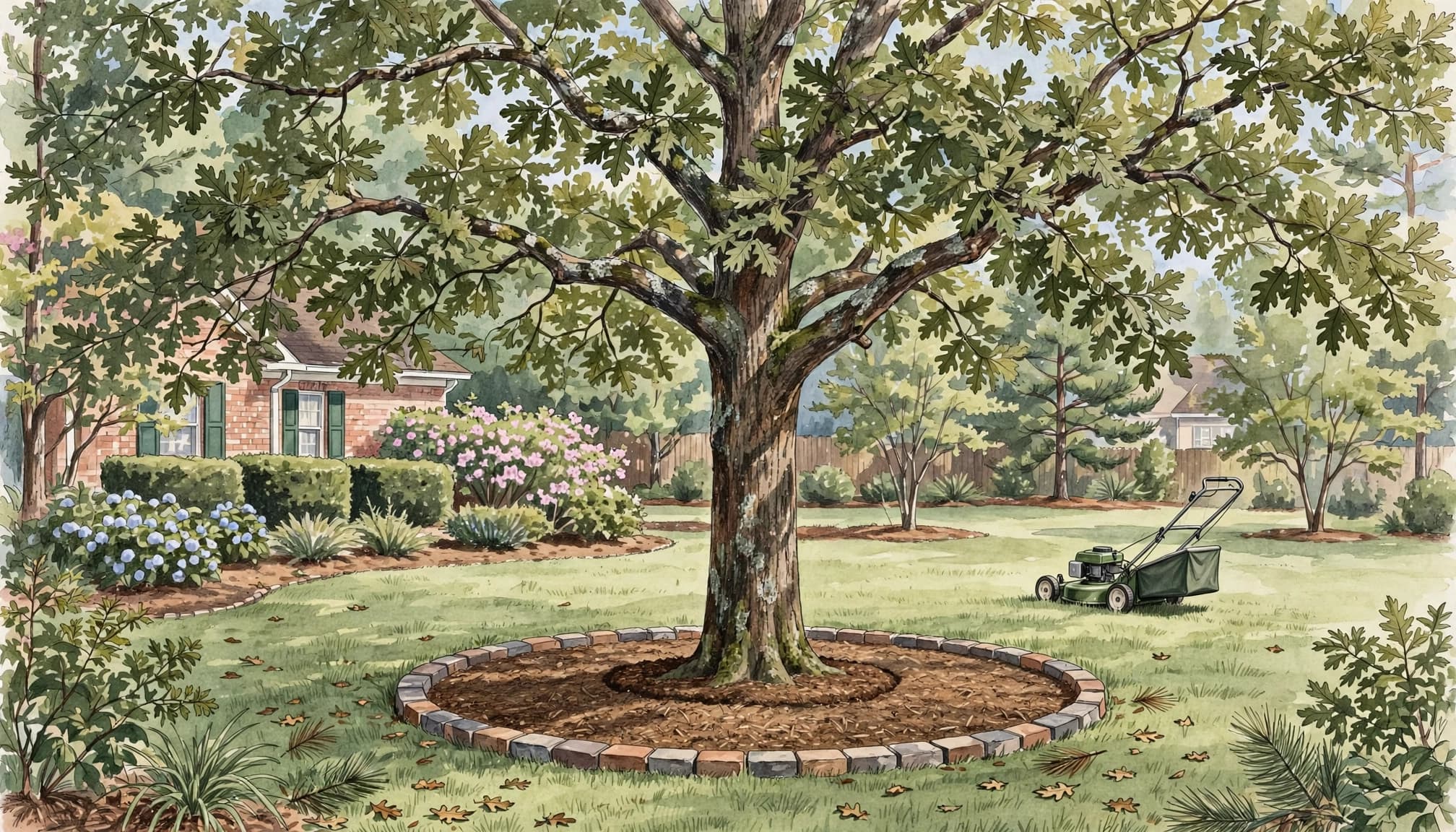
Allow room for a mulch area roughly 2 to 4 feet wide where the site permits. However, existing roots and the mowing approach should guide its shape. An oval or broader planting bed may fit better than a tight circle.
Don't build a raised ring and fill it with soil to create separation. Keep the existing trunk base and surrounding grade visible.
Keep mulch off the bark
Maintain 2 to 3 inches of mulch , leaving 3 to 6 inches clear around the trunk. The root flare, where the trunk broadens into the upper roots, should remain exposed.
Spread mulch evenly, then taper it near the trunk. Avoid piling fresh material over old layers every season.
Our Atlanta mulch installation guide explains material choices, depth, and trunk clearance. After heavy rain, redistribute displaced mulch instead of automatically adding more.
Change the Mowing Route Near Trees
A protected bed works best when the mowing pattern respects it. The goal is to finish the turf neatly while leaving bark and exposed roots outside the equipment's path.
Leave room for turns and equipment overhang
Judge clearance by the entire machine, including the deck, wheels, and attachments. A wheel can stay on grass while another part of the mower extends into the bed.
Approach tree beds with enough space to turn away smoothly. Where a narrow strip forces repeated backing or tight steering, consider incorporating that strip into the bed.
Avoid using the trunk or edging as a physical stopping point. A visible boundary should guide the operator before any equipment reaches it.
Keep trimming at the lawn edge
String trimming should finish the turf boundary, rather than trace the bark. If grass keeps growing against the trunk, the bed needs attention.
Remove encroaching runners carefully so the grass-free buffer stays useful. Don't compensate for a shrinking bed by moving the trimmer closer to the tree.
For a clean boundary, our landscape bed edging tips cover layout and upkeep. Around established trees, adapt the edge to existing roots rather than cutting a trench through them.
A crisp bed line isn't worth cutting a root. Move the edge outward where roots cross the planned border.
Repair the Surrounding Lawn Without Burying Roots
Trunk marks sometimes appear beside another maintenance problem: raised roots, thin turf, or a worn mowing route. Address those conditions as part of the landscape plan.
Atlanta's clay soil, summer heat, and heavy rain make drainage and ground condition important around established trees.
Decide whether grass belongs there
A bare patch beneath a mature canopy may involve shade, root competition, erosion, or compacted ground. Replacing grass without addressing those conditions can leave the same difficult mowing area.
Where exposed roots interrupt the lawn, a larger mulch bed may be more practical than another turf patch. Shape it around the existing ground rather than trying to flatten the area.
Our guide to tree root damage and lawn repair covers these surrounding-yard problems. It explains why changing the landscape can work better than forcing grass into a root-heavy space.
Preserve the existing ground level
Don't cover surface roots with several inches of soil to make mowing easier. Also avoid digging close to the trunk for new edging, irrigation, or drainage.
Instead, work with the contours already there. Keep equipment, soil piles, and stored materials away from the root area while the bed work proceeds.
If digging forms part of the project, contact 811 for utility locating before work begins. Utility marking doesn't identify tree roots, so the layout still needs to account for them.
Make Tree Protection Part of Routine Lawn Care
Consistent instructions matter when several people maintain a yard. A homeowner, mowing crew, and seasonal cleanup crew should all understand where equipment belongs.
Before the next visit, identify the affected tree and show the intended mowing boundary. Describe the actual problem, such as a tight turn beside the driveway or grass growing inside the mulch bed. Clear directions are easier to follow than a general request to be careful.
Keep tree protection in the written scope of recurring maintenance. Include bed-edge upkeep and removal of grass runners where those tasks form part of the service.
Seasonal cleanup also affects access. Leaves can hide roots, edging, and low obstacles, while branches or stored materials can block the normal route. Clear those obstructions without stacking debris against trunks.
Walk the area after mowing and after heavy rainfall. Compare the bark photos, look for displaced mulch, and note any new equipment marks. If contact continues, change the route or bed layout rather than repeating the same approach.
At RW Lawn Co, our lawn care and landscaping services give homeowners options for managing the turf and beds around established trees. Tree protection belongs in that maintenance plan alongside the appearance of the lawn.
Frequently Asked Questions
Can a trunk scrape be assessed from one photo?
One close-up usually leaves out useful context. Photos from several sides show the distribution of missing bark, while a wider view shows nearby roots, grade, and equipment access.
Keep the images dated and describe what happened if you witnessed the contact. Those details help separate the visible trunk condition from the mowing-layout problem.
Should I install a trunk guard?
A guard doesn't replace a grass-free buffer or a better mowing route. Any material around a trunk needs room for growth and shouldn't fit tightly against the bark or trap moisture.
For routine lawn maintenance, prioritize enough separation that equipment never needs to touch the trunk. Also keep the base visible so leaves, mulch, and grass don't conceal recurring contact.
Who evaluates the tree, and who handles the yard?
An ISA Certified Arborist evaluates tree condition. Lawn and landscape work addresses the surrounding turf, mulch, bed boundaries, and equipment access.
Keep those responsibilities distinct when arranging work. A proposal to enlarge a mulch bed or redirect mowing describes landscape changes; it doesn't establish the condition of the trunk. Likewise, a tidy finished bed doesn't replace an evaluation of the tree itself.
Does every tree bed need hard edging?
No. A visible, maintained boundary can separate turf and mulch without a rigid border. The best choice depends on the yard's slope, mowing access, and existing roots.
Hard edging can become another obstacle if it crowds the trunk or forces awkward turns. Choose the layout first, then decide whether edging improves it.
Protect the Tree Before the Next Mow
The right response to trunk damage starts with the extent and location of bark loss . Keep a dated record and separate tree evaluation from repairs to the surrounding yard.
Then address the maintenance problem you can see: tight mowing access, grass against the bark, or exposed roots in the equipment path. A wider, properly maintained buffer makes the next mowing visit easier to manage.