Atlanta Mulch Installation Guide (hardwood mulch vs pine bark vs nuggets), best depth, edging tips, and how to avoid mulch volcanoes

RW Lawn Co • February 17, 2026

Share this article

Mulch can make a Metro Atlanta yard look finished in a single afternoon. It also protects plants from heat, limits weeds, and helps soil hold moisture. But if you spread the wrong material, pile it too deep, or stack it against trunks, you can cause rot, washouts, and pest issues.

This guide walks through mulch installation Atlanta homeowners can trust, including hardwood mulch vs pine bark vs nuggets, the best depth, edging that stays sharp, and the simple habits that prevent mulch volcanoes.

Captivating top view of a green plant with curvy leaves on red bark mulch, showing nature's vibrant contrast.
Photo by Vlad Chețan
Choosing mulch for Atlanta yards (hardwood vs pine bark vs nuggets)

Atlanta's mix of heat, humidity, red clay, and sudden heavy rain puts mulch to work. The "best" mulch depends on where it's going: flat beds, slopes, around trees, or near the foundation.

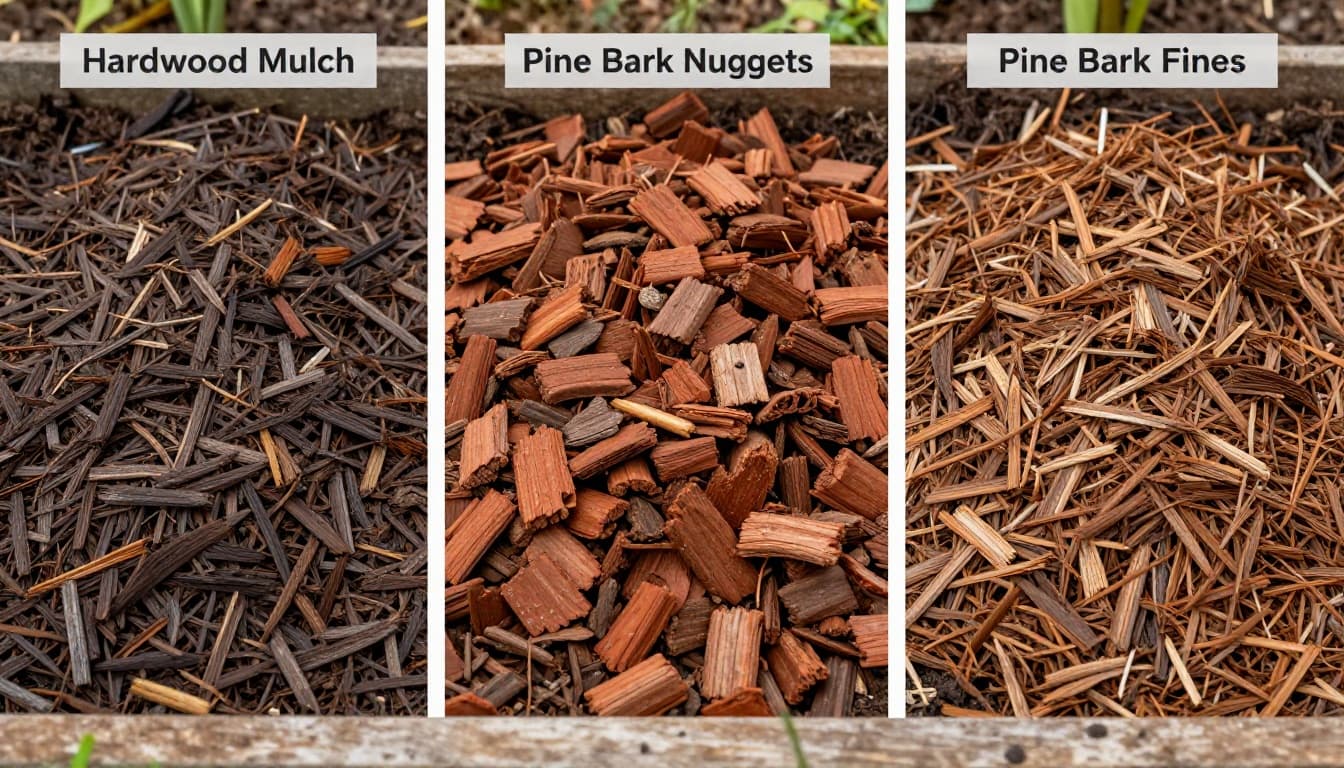
Detailed close-up comparison of three mulch types—hardwood mulch (fine dark brown shreds), pine bark nuggets (reddish irregular chunks), and pine bark fines (smaller pieces)—spread 3 inches deep on Georgia clay soil patches in a garden bed.
Close-up of common mulch textures for Atlanta beds, created with AI.
Here's a quick comparison to help you pick confidently.

Mulch type What it looks like Best uses in Metro Atlanta Watch-outs
Hardwood mulch (shredded or ground) Dark, fibrous, knits together Flat beds, around shrubs, high-visibility front beds Can "mat" if applied too thick, refresh more often
Pine bark fines (small pieces) Lighter, chunkier than hardwood Shrub beds, moisture control, moderate slopes Can wash in downpours if edge control is weak
Pine bark nuggets Larger chunks Slopes where you want airflow, decorative beds Nuggets can float and shift in hard rain, gaps invite weeds

Hardwood mulch is the common go-to for Atlanta curb appeal because it spreads evenly and tends to stay put. It also helps reduce splashback on siding during storms. For many homes, it's the most forgiving option.

Pine bark shines when you want longer-lasting pieces and better airflow. Many homeowners like pine bark for shrubs and areas that dry out fast. Nuggets look nice, but they can migrate downhill in heavy rain, especially on clay.

If you want a deeper dive into picking mulch for Georgia conditions, see this local overview on choosing mulch for a Georgia landscape. Use it as a reference, then match the choice to your bed shape and drainage.

One more key point: mulch is not a soil amendment . It protects the surface. It doesn't fix compacted clay by itself. If plants struggle, add compost first (more on that next), then mulch on top.

Best mulch depth in Atlanta, plus a simple cubic yard formula

Depth is where most DIY mulch jobs go wrong. Too little looks patchy and dries out fast. Too much holds water against stems and reduces oxygen in the root zone.

For most beds in Metro Atlanta, aim for 2 to 3 inches of mulch after raking it level. On bare clay, 3 inches usually performs better than 2 inches because the sun bakes exposed soil quickly. Still, don't treat mulch like a blanket you can keep stacking forever.

Quick yardage math (so you don't overbuy)

Use this simple formula:

Cubic yards = (square feet × depth in inches) ÷ 324

Example: You have a 200 sq ft bed and want 3 inches of mulch.

  • 200 × 3 = 600
  • 600 ÷ 324 = 1.85 cubic yards
  • Round up to 2 cubic yards (then add about 10 percent if beds are uneven)

If you're buying bags, check the bag volume (often 2 cu ft). Since 1 cubic yard = 27 cu ft , you'd need about 14 bags for 1 yard, or about 28 bags for 2 yards.

When to add compost (and when not to)

Mulch protects. Compost feeds and improves structure.

Add 1 to 2 inches of compost under mulch when:

  • You're planting new shrubs or perennials.
  • The clay is hard, crusty, and water runs off instead of soaking in.
  • Beds have been mulched for years without any soil improvement.

Skip compost under mulch when:

  • You already have rich, dark topsoil in that bed.
  • Drainage is poor and the area stays soggy (fix drainage first).

Rake compost in lightly, then apply mulch on top. Keep compost and mulch away from trunks and stems.

Edging tips that keep mulch in place during heavy rain

A clean edge is more than looks. In Atlanta storms, edging is what keeps mulch from sliding into the grass, onto sidewalks, or against the foundation.

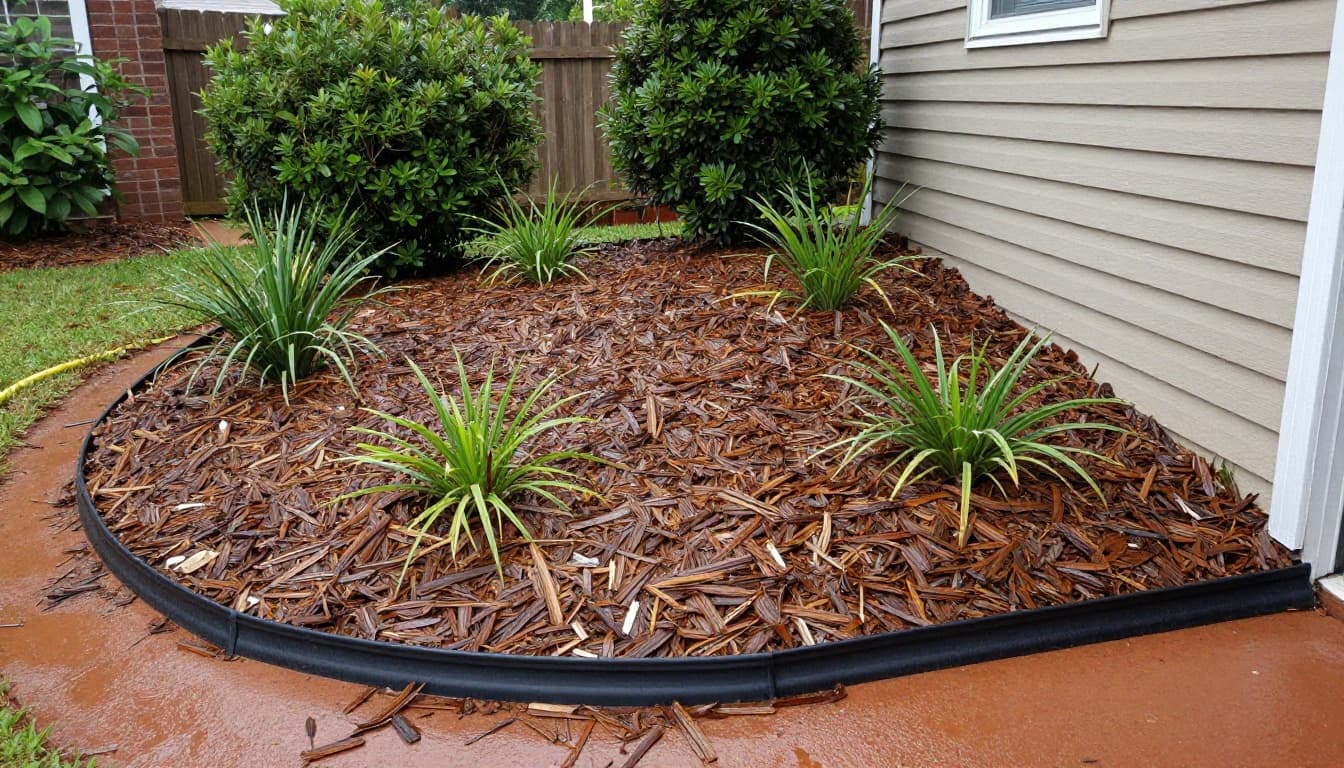
Realistic landscape photo of a well-maintained Atlanta backyard mulch bed on a gentle slope, featuring even 3-inch deep pine bark mulch, plastic landscape edging, mulch rings around plant bases, visible Georgia red clay soil, a garden hose for scale, lush green shrubs, and sunny afternoon light after recent heavy rain with no erosion.
Mulch held on a gentle slope with a defined edge and consistent depth, created with AI.
The "cut edge" that works almost everywhere

For DIYers, the most reliable edge is a crisp, re-cut trench edge.

  1. Cut a clean line with a flat shovel or half-moon edger.
  2. Create a shallow trench (about 2 inches deep) on the bed side.
  3. Pull mulch back from the lip so water doesn't carry it over.

That little trench acts like a gutter. It catches mulch that tries to creep.

When to use physical edging

Physical edging helps most on slopes , tight curves, or beds that get hit by downspouts.

Two practical options:

  • Buried plastic or metal edging : Set it slightly below grade so mower wheels don't knock it loose.
  • Stone edging : Heavy and stable, but it needs a solid base so stones don't settle into clay.

No matter what edge you choose, manage roof runoff. If a downspout blasts water into the bed, mulch will move. Add a downspout extension or a splash block, then re-grade the bed surface so water spreads out.

If mulch keeps washing out, the fix usually isn't "more mulch." It's better water control and a stronger edge .

How to avoid mulch volcanoes (trees, shrubs, and foundations)

"Mulch volcano" is the classic Atlanta mistake: a cone of mulch piled against a tree trunk. It looks tidy for a week, then it traps moisture, invites rot, and encourages roots to grow upward into mulch instead of soil.

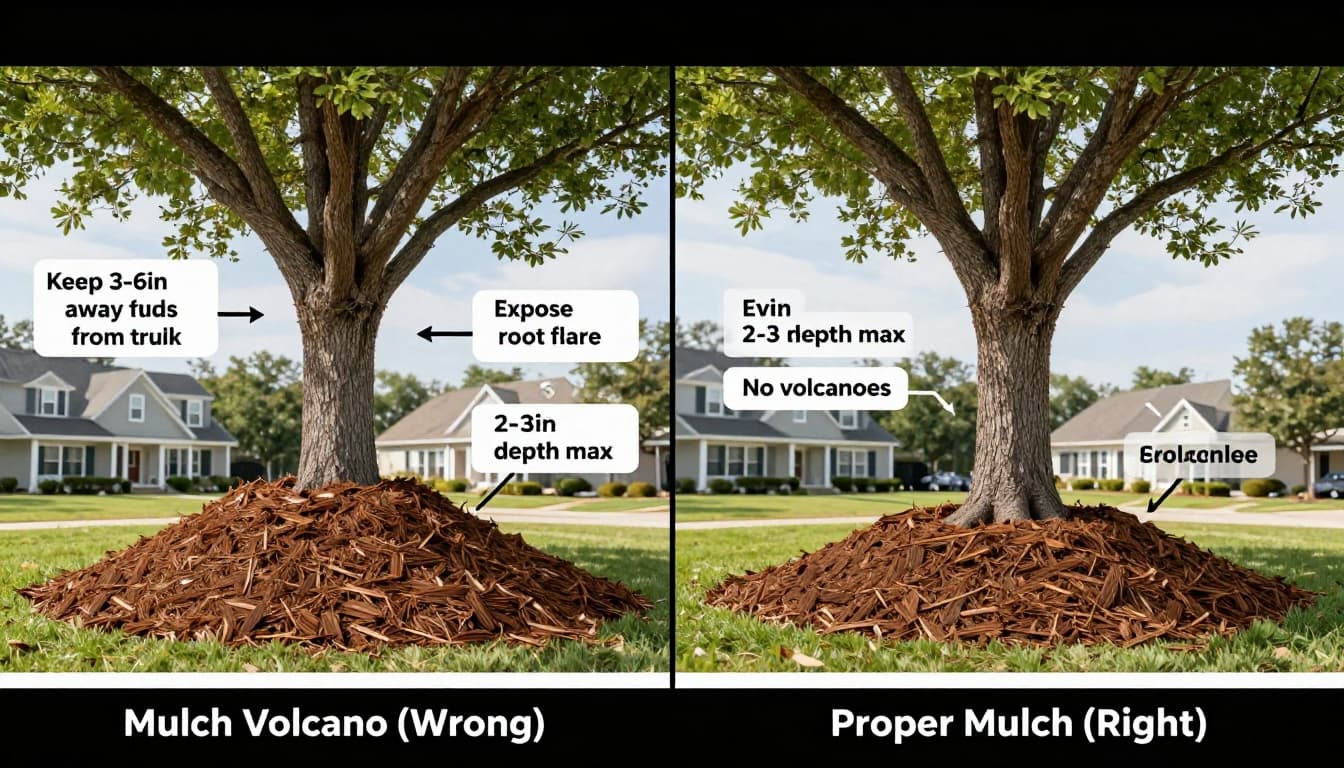
Clean, realistic split-screen educational infographic in landscape ratio showing incorrect 'Mulch Volcano' (left) with mulch piled against the trunk burying the root flare, versus proper mulch (right) with a 3-6 inch trunk gap, exposed root flare, and 2-3 inch even layer, set in an Atlanta front yard with Georgia clay tones.
Side-by-side look at wrong vs right mulching around trees, created with AI.
The tree-safe way (ISA and extension-style best practice)

Use this simple rule: mulch like a donut, not a cone .

  • Keep mulch 3 to 6 inches away from the trunk.
  • Keep the root flare visible (that gentle widening at the base).
  • Maintain 2 to 3 inches deep , then taper slightly thinner as you approach the trunk.
  • Make the mulch ring wide (2 to 4 feet is great if space allows).

Shrubs and perennials need similar treatment. Keep mulch off stems, especially on plants prone to rot. Airflow matters in Atlanta humidity.

Mulch near the house without inviting trouble

Mulch can hold moisture against wood and attract pests if it touches the structure.

For beds along the home:

  • Keep mulch 6 to 12 inches away from siding .
  • Maintain visible weep holes on brick homes.
  • Keep mulch below the siding line and don't bury trim.

If you need a finished look, use a narrow strip of stone right against the foundation, then start mulch after that buffer.

A quick note for bigger properties

If you're managing common areas, retail fronts, or HOA entrances, consistency matters even more. Professional crews can also handle hauling, bed repair, and runoff fixes as part of commercial lawn and property services.

Conclusion

Mulch should make your yard easier to maintain, not create new problems. Choose a mulch that matches your bed shape, keep it 2 to 3 inches deep, and edge it so Georgia rain can't push it around. Most importantly, keep mulch off trunks, stems, and siding so plants stay healthy and foundations stay dry. With a few simple habits, mulch installation Atlanta homeowners do once can look good for months.

By RW Lawn Co February 25, 2026
A sharp bed edge is like a picture frame for your yard. It makes mulch look cleaner, plants pop more, and mowing feels easier. If you've tried bed edging atlanta style before, you already know the challenge: our heavy rains, fast-growing warm-season grass, and compacted soil c...
By RW Lawn Co February 24, 2026
Atlanta summers don't play fair. Warm nights, sudden storms, and heavy humidity can turn a healthy lawn into a spotted mess fast. That's why a good Atlanta lawn fungicide plan isn't about constant spraying, it's about timing, scouting, and fixing the conditions that keep grass...
SHOW MORE