Japanese Maple Leaf Scorch: Atlanta Summer Care
For Atlanta homeowners, Japanese maple leaf scorch calls for measured care: assess soil moisture, review watering, and pause aggressive landscape work. Start at the root zone before changing everything around the tree.
A browned canopy can make a well-kept yard look neglected, especially beside a patio or front entrance. Yet a rushed response can mean extra watering, fertilizer, or pruning without a clear reason.
Work through the tree's growing conditions first, then decide which maintenance tasks belong on your summer list.
Key Takeaways for Summer Care
- Assess moisture beneath the mulch before watering, including the original root ball on recently planted trees.
- Apply water slowly at soil level, allowing it to soak in rather than collect around the trunk.
- Keep mulch away from bark, protect the bed during mowing, and postpone unnecessary fertilizer or pruning.
Keep a simple record of changes, too. Photos and brief watering notes give you something concrete to compare as Atlanta's summer weather shifts.
Document Japanese Maple Leaf Scorch Before Changing Care
Photograph the whole tree and individual branches
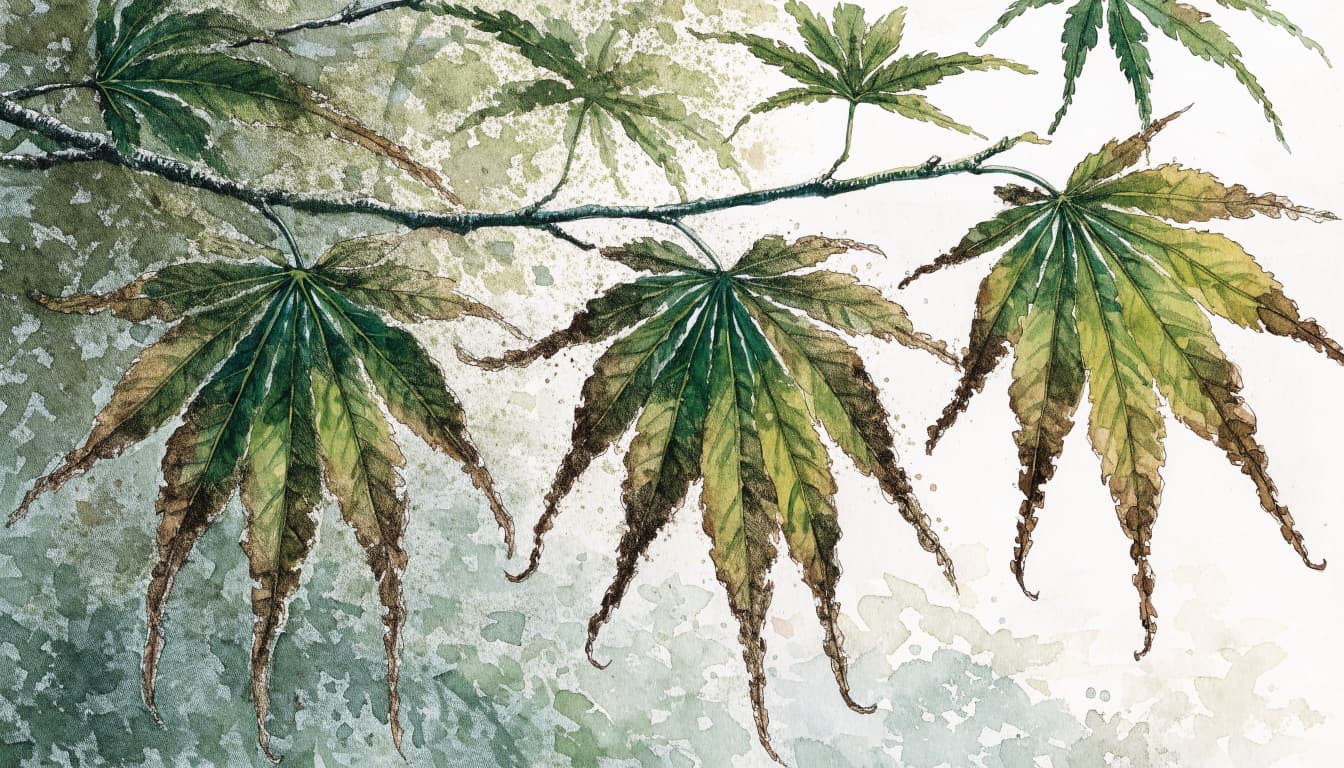
Take one photograph showing the entire maple, then capture several closer views. Include the side facing the house, driveway, or street so you can recognize the same branches later.
Use similar angles when you photograph it again. Otherwise, different lighting and camera positions can make comparisons difficult.
Keep observations separate from conclusions. Write down what you see, such as curled leaves, browned edges, or fallen foliage. A clear description is more useful than assigning a cause immediately.
Record recent landscape changes
Note when the appearance changed and what happened nearby. Useful details include irrigation adjustments, planting work, grading, pruning, and changes to surrounding trees.
Also record whether the maple is newly planted, container-grown, or established in the ground. Those details help organize its care.
Avoid changing several maintenance practices at once without keeping notes. If watering, mulch, and pruning all change together, you'll have a less useful record of what happened afterward.
Check Soil Moisture Before Adding Water
Look beneath the surface
Pull mulch aside and use a narrow hand trowel to examine soil several inches below the surface. Choose a few locations beneath the canopy without cutting substantial roots.
For a recently planted maple, inspect both the original root ball and the surrounding soil. They may feel different, so one sample doesn't describe the entire planting area.
Dry, crumbly soil calls for a different watering decision than wet, sticky soil. If the soil remains saturated, hold off on irrigation.
Atlanta's clay-heavy beds deserve particular attention after summer thunderstorms. Surface appearance alone doesn't tell you how much moisture remains below.
Water slowly across the root zone
When watering is needed, apply it gently at ground level. A hose on a low flow or properly positioned drip irrigation allows more control than a quick spray over the canopy.
Spread water across the planted area rather than concentrating it against the trunk. If it begins running off, pause and let it soak in before continuing.
Deep watering means wetting soil below the surface , not leaving the hose running indefinitely. Afterward, inspect a small soil sample to see whether moisture reached below the top layer.
Don't repeat watering automatically because the calendar says it's time. Let soil conditions guide the next application, and keep roots out of standing water.
Review the Maple's Summer Setting
Walk around the tree at different times of day. Note where morning light falls, how afternoon exposure changes, and whether nearby buildings or paving dominate one side of the planting area.
Record any recent changes to surrounding cover. For example, removing a neighboring tree can leave a familiar bed looking quite different during summer.
Use these observations when planning future landscape work. Consider the maple alongside nearby plants, walkways, irrigation, and the space available for its mature canopy.
For container-grown Japanese maples, include the container in your inspection. Make sure drainage openings remain unobstructed and empty any saucer that holds standing water.
Also assess potting-medium moisture directly rather than judging it by the neighboring garden bed. A container and an in-ground planting are separate watering areas.
If the garden needs a larger redesign or the tree needs relocation, plan that work outside the harshest summer conditions. Atlanta's cooler planting season offers a more practical opportunity to reorganize beds without combining major work with peak summer maintenance.
Keep Mulch and Lawn Maintenance Under Control
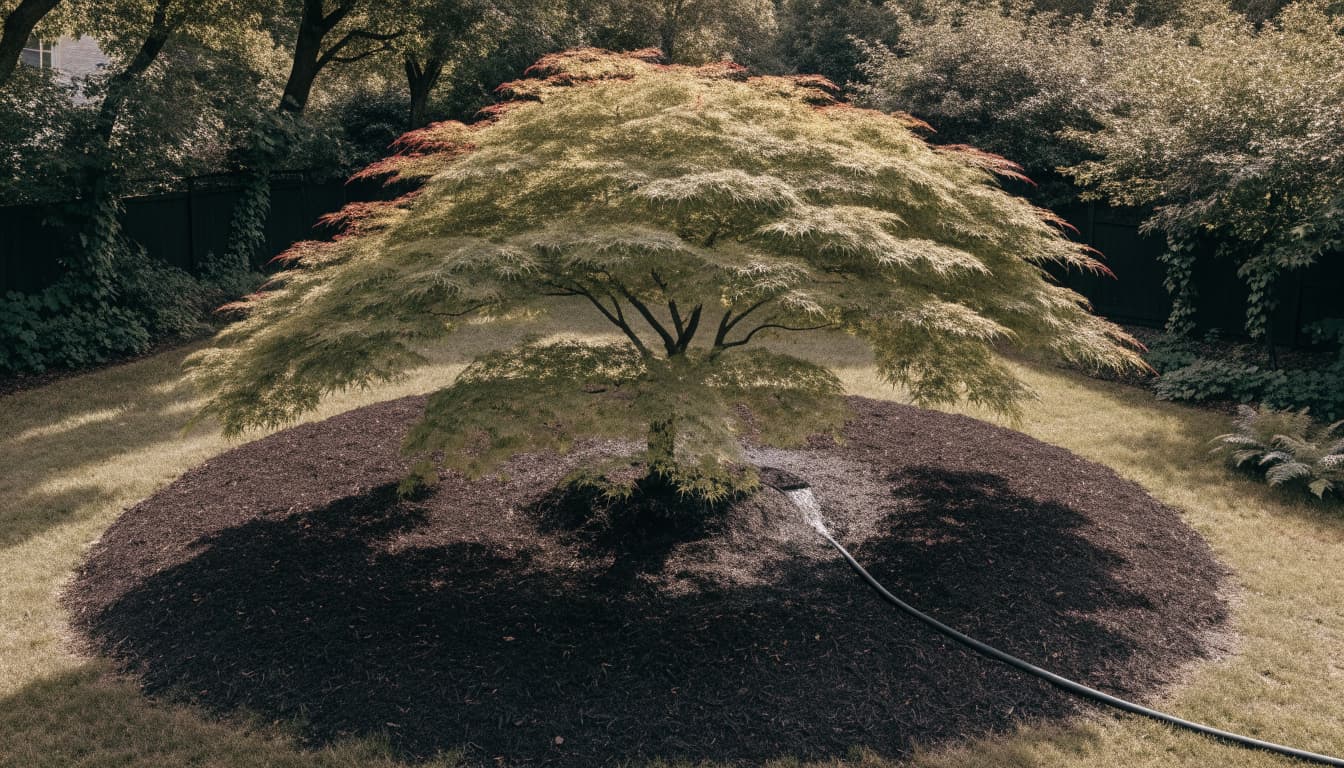
Maintain an even, open mulch bed
Inspect the existing mulch before ordering another load. Pull back material touching the trunk, and remove piles that have accumulated during repeated refreshes.
Keep the base of the trunk visible. Spread material evenly across the bed instead of building a mound around the tree.
Our Atlanta mulch installation guide compares hardwood mulch, pine bark, and nuggets, with guidance on edging and avoiding mulch volcanoes.
When tidying the bed, remove litter and weeds carefully. Don't dig through surface roots to create a sharper border or a deeper planting pocket.
Separate tree care from lawn work
Give anyone mowing the property a clear boundary around the maple. Mower decks and string trimmers shouldn't contact the trunk or exposed roots.
Keep grass clippings out of piled layers around the tree. Also avoid parking equipment, storing materials, or repeatedly driving across the planted area.
During nearby lawn treatments, keep applications within their intended areas and follow the product label. A turf-care schedule shouldn't automatically become the feeding schedule for an ornamental tree.
Before refreshing a maple bed, remove misplaced material and assess what's already there. Adding another layer isn't always the maintenance task the bed needs.
A defined bed also makes irrigation equipment and changes in soil condition easier to see during routine yard visits.
Skip Fertilizer and Nonessential Pruning During Heat Stress
Brown leaves aren't a reason to apply fertilizer immediately. Hold off on feeding a heat-stressed Japanese maple, including heavy nitrogen applications intended to produce rapid growth.
Keep lawn fertilizer applications separate from the maple's care. Likewise, don't add several soil supplements simply because their packaging promises greener foliage.
If nutrition needs attention later, use a soil test to guide that decision. University of Georgia Extension offers soil testing through county offices.
Pruning also deserves restraint. Leave routine shaping, thinning, and size reduction off the summer rescue list.
Don't strip the canopy of every imperfect leaf or cut back branches solely to improve the tree's appearance. Keep ordinary bed cleanup separate from decisions about removing living wood.
Broken or hazardous branches are different. Keep people away from hanging limbs, and arrange qualified help when removal requires climbing or overhead cutting.
For routine maintenance, write down the work you'd like completed later. That keeps appearance concerns from turning into an unnecessary midsummer pruning project.
Know When to Bring in Professional Help
Request a closer assessment when the tree's condition continues changing, the same concern returns each season, or branches begin dying. These situations deserve more attention than another routine maintenance visit.
Provide your photographs and watering notes. Include the planting date if known, recent construction work, and any changes to irrigation or nearby vegetation.
An ISA Certified Arborist can assess the tree itself. A county Extension office can also help homeowners arrange plant-problem evaluation.
Keep safety separate from appearance. A hanging branch over a walkway or a split limb near a driveway calls for prompt attention, regardless of the condition of the leaves.
For the surrounding landscape, our Atlanta landscaping and mulch services include bed maintenance, weed control, mulch installation, and seasonal refreshes.
We can help keep those maintenance tasks organized without treating ordinary landscape upkeep as a substitute for a tree-health assessment. That distinction gives each part of the job a clear purpose.
Frequently Asked Questions
Can the lawn sprinkler handle watering around my Japanese maple?
A sprinkler watering the lawn doesn't automatically provide suitable coverage beneath the maple. Watch where the water lands, then assess moisture in the planted area.
Nearby shrubs, the tree canopy, and sprinkler positioning can leave uneven coverage. Meanwhile, overlap between sprinkler heads may put more water in another part of the bed.
Base adjustments on those observations rather than extending the entire lawn's run time. Keep the tree's root-zone watering decision separate from the appearance of surrounding turf, and reassess after substantial rainfall.
Should I remove every browned leaf to tidy the tree?
Leave routine hand-stripping off the maintenance list. Removing every imperfect leaf is time-consuming and can disturb buds or small shoots.
Instead, collect fallen foliage from walkways and keep the bed free of accumulated debris. Take photographs before cleanup if you're documenting changes.
If a branch needs attention, assess the branch itself rather than making a pruning decision from leaf appearance alone. Save cosmetic shaping for a planned maintenance visit, and leave overhead or hazardous work to qualified professionals.
A Steady Summer Routine for Atlanta Maples
Japanese maple leaf scorch deserves a careful response, with soil moisture and restrained maintenance at the center of summer care. Water according to conditions, keep the bed orderly, and avoid rushing into fertilizer or pruning.
Use your observations to guide the next step. When concerns persist or branches become involved, a closer assessment is more useful than adding another treatment to the routine.