Atlanta Bamboo Removal: Clear Rhizomes, Protect Boundaries
Bamboo can cross a fence underground long before its shoots appear on the other side. Effective Atlanta bamboo removal starts with the roots, not just the canes, and continues with follow-up checks after the visible growth is gone.
If bamboo is crowding a lawn, fence, or planting bed, a careful plan can limit damage to nearby landscaping and reduce the chance of regrowth. Start by identifying where the rhizomes run, then match the removal and disposal plan to the size of the patch.
Key Takeaways
- Remove the rhizomes. Cutting canes improves access, but leaving viable underground growth can lead to new shoots.
- Treat the boundary carefully. Talk with the neighbor before work near a shared fence, and avoid digging on land you don't own or have permission to enter.
- Plan for follow-up. Inspect the cleared area and fence line during later growing seasons, because one removal visit may not eliminate every rhizome.
- Plan disposal before cutting. Large canes and soil-covered roots may need a different disposal plan from ordinary household yard trimmings.
Why bamboo spreads across property lines
Rhizomes travel beyond the visible patch
Running bamboo spreads through underground rhizomes. The University of Georgia Cooperative Extension says these stems can grow up to 5 feet in a year, and a grove can double in size over that period. That means a tidy-looking stand may have roots extending under a lawn, garden bed, or fence.
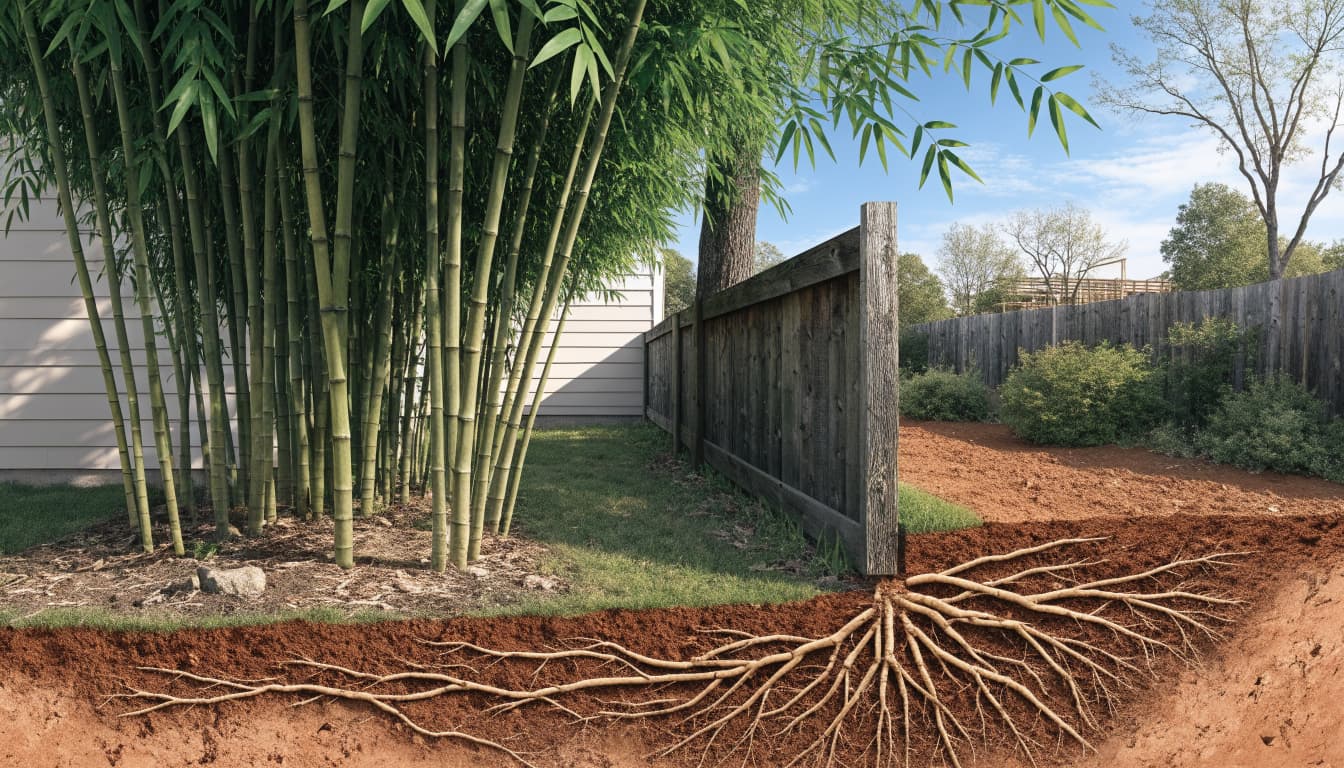
A line of cut canes doesn't show where the plant ends. New shoots can emerge several feet from the original stand, so inspect the ground on both sides of the patch before planning excavation.
Separate the yard problem from a neighbor dispute
A rhizome crossing a property line raises practical concerns, but it doesn't by itself settle questions about responsibility or rights. Georgia's general nuisance law and court decisions address specific circumstances, not a simple automatic rule for every bamboo intrusion.
For that reason, keep the first conversation focused on what each person can see and what work is proposed. If there's a disagreement about the boundary or access, don't assume that cutting or digging across the line is permitted. Get appropriate legal advice rather than treating landscaping guidance as a legal ruling.
Plan Atlanta bamboo removal at the property line
Agree on access and the work area
Before work begins, speak with the neighbor if bamboo is near a shared fence or if access may be needed on their side. Explain where the crew plans to work, what will be removed, and where debris will go. Written agreement about access and cleanup can prevent misunderstandings, especially when roots are likely to extend under a fence.
Mark the visible edge of the grove and note the places where shoots have appeared. Also identify fences, irrigation heads, drainage paths, buried utilities, and nearby trees or beds that should remain undisturbed.
Clear access and set the scope
Move vehicles, toys, patio furniture, and portable decorations out of the work area. If a gate needs to be unlocked, arrange that ahead of time. Tell the crew about fragile plantings or irrigation features that aren't obvious from the driveway.
Before work starts, agree on whether the job includes excavation, hauling, and final site cleanup. Keep a clear path to driveways and sidewalks, and don't allow debris to block drainage. Our land clearing and site preparation services include property-line and fence-line clearing for Atlanta-area sites.
How to remove bamboo safely
Cut back canes to reach the root system
Cutting the canes down makes it easier to see and work around the plant base. Wear eye protection, gloves, long sleeves, and sturdy footwear. Keep bystanders away from the work zone, and take care around canes that may bend or spring as they're cut.
Use extra caution with powered equipment. Avoid working near overhead utilities, structures, or a fence where a blade could cross the boundary. If the patch is dense or the work requires chainsaw use, get qualified help rather than taking on a risky cut.
Excavate rhizomes, not just the shoots
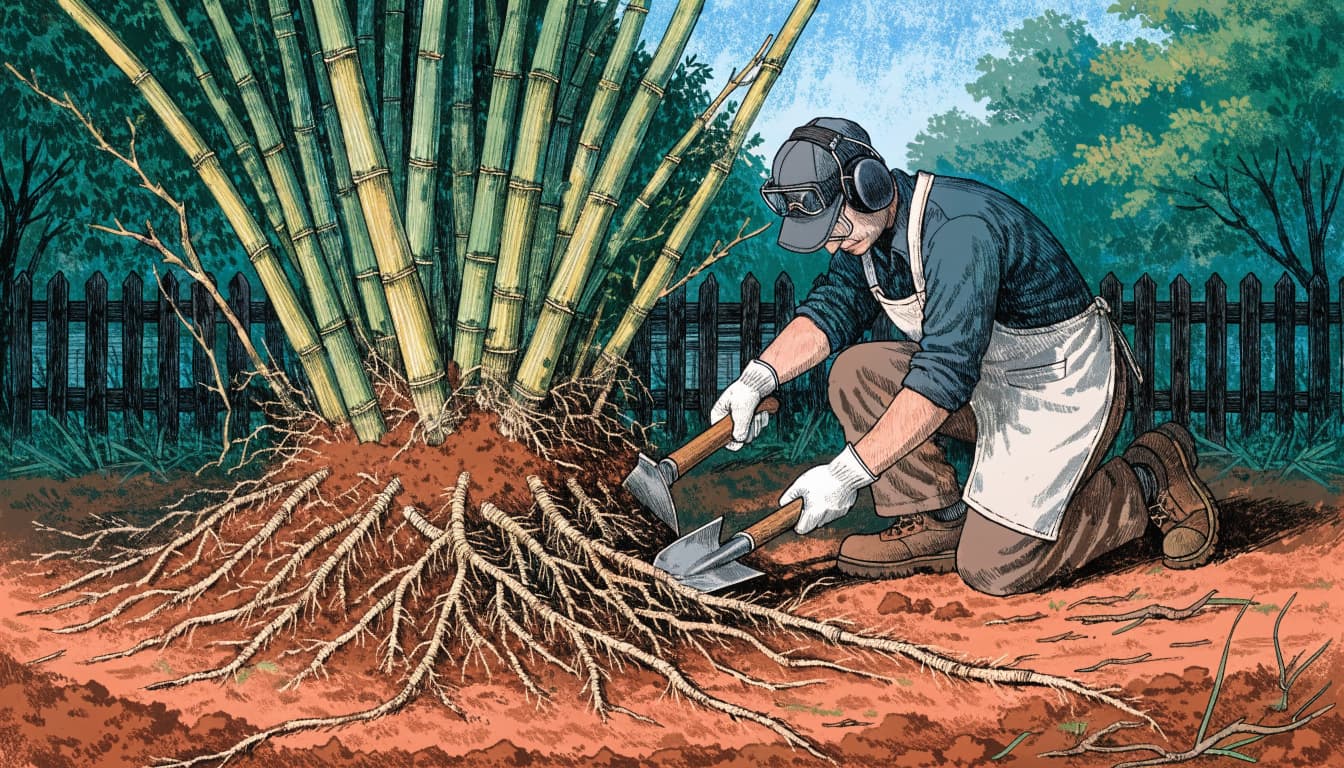
Digging is what addresses the underground network. Work outward from the visible culms, expose the horizontal rhizomes, and remove as much connected growth as practical. A small isolated plant is different from a mature grove, so don't assume one digging measurement fits every site.
UGA's guidance for digging a single plant describes excavating an area about 2½ feet in diameter and cutting all rhizomes around it. That's a single-plant example, not a removal specification for a large stand. Dense groves, roots under hardscape, and growth along a property line can call for broader excavation and careful planning.
Protect nearby features while digging
Before using a shovel or machine, identify utilities, irrigation lines, and other buried features. Work slowly near fence posts, tree roots, retaining walls, and paving. If rhizomes run beneath a neighbor's property or a structure, stop at the agreed work boundary and revise the plan rather than digging blindly.
After excavation, look for remaining rhizome sections in the disturbed soil. Avoid spreading pieces of root through the yard while moving soil or debris. Keep the work area orderly so loose canes and roots don't end up in a drain, on a sidewalk, or against the fence.
Prevent regrowth after removal
Inspect the site through several growing seasons
Even a careful excavation can leave small pieces behind. Walk the former grove and nearby boundary during the growing season, and remove new shoots as soon as they appear. Check the fence line and the area beyond the original canes, not only the bare center.
Georgia's invasive-plant guidance recommends annual site checks and removing new growth until none has appeared for several consecutive years. That's general invasive-plant advice, not a promise of a fixed bamboo eradication timeline. Keep monitoring; a cleared appearance after one visit doesn't prove the rhizomes are gone.
Use a barrier only as part of a plan
If bamboo will remain in a nearby area, a properly installed barrier can help contain future rhizome growth. UGA specifies a trench about 36 inches deep, using fiberglass or 60-mil polypropylene, with roughly 2 inches of barrier above the soil. The exposed edge makes it easier to spot and manage rhizomes that reach the boundary.
A barrier doesn't remove rhizomes that have already passed beyond it. Excavate existing growth on the outside first, then use a barrier to separate the contained stand from the area you're protecting. Keep the visible edge accessible for inspection.
Dispose of canes and roots responsibly
Sort debris before arranging pickup
Bamboo canes, leafy tops, and heavy soil-covered rhizomes don't always fit the same disposal route. Keep roots separate from clean canes, and don't leave a pile where it blocks a sidewalk, driveway, or drainage path. If clean wood chips or usable wood can be kept safely, that may reduce the amount hauled away.
The City of Atlanta Office of Solid Waste Services lists roots among yard trimmings. For eligible City of Atlanta residents, its collection guidance allows up to 20 paper bags per collection, with each bag no heavier than 35 pounds. Plastic bags aren't accepted, and 21 or more bags require scheduled bulk collection. These limits apply to the City's service, not every municipality in metro Atlanta. Large bamboo canes or dense rhizome masses may need separate handling.
Account for contractor-generated debris
ATL311 guidance says contractors must remove yard debris created by landscaping and tree work, citing City Code § 130-40(c)(4). Make haul-off part of the work scope rather than assuming a municipal pickup will cover a contractor's pile.
For a larger cleanup, ask whether the estimate includes loading and disposal, and where the material will be taken. Our yard debris and renovation waste hauling can help with debris removal as part of a property cleanup. Once the area is clear, landscape bed maintenance and weed control can help restore nearby planting areas.
When to bring in land-clearing help
A small, isolated plant may be manageable with hand tools and careful digging. A mature grove, a long fence-line infestation, rhizomes under a patio, or growth beside utilities is a different job. Large-scale excavation can disturb soil and nearby features, so the removal plan should account for access, disposal, and what needs to remain in place.
We provide land clearing and site preparation across metro Atlanta and surrounding communities. For a quote, describe the approximate size of the grove, where shoots have appeared, the distance to fences or structures, and whether debris haul-off is needed. Photos of the area and a clear access path can help define the scope before work begins.
Frequently Asked Questions
Does cutting bamboo down kill it?
Cutting removes the visible canes, but it doesn't remove the rhizomes underground. New shoots may appear afterward, so cutting alone shouldn't be treated as complete removal.
How long should I monitor for new shoots?
Plan to inspect the site during successive growing seasons. Georgia invasive-plant guidance recommends annual checks and repeated removal until new growth hasn't appeared for several consecutive years. Bamboo conditions vary, so there's no reliable one-visit guarantee.
Can I dig up bamboo on the other side of my fence?
Don't assume you can enter or dig on a neighbor's property because rhizomes cross the boundary. Discuss access and the work plan first. If there's a dispute about the property line or permission, seek legal advice.
Can I put bamboo roots in the City of Atlanta yard-waste collection?
The City lists roots among yard trimmings, but its collection limits and approved containers still apply. Large or soil-heavy bamboo root masses may not fit ordinary curbside collection, and City rules don't automatically apply to other metro Atlanta jurisdictions.
Keep the roots in the plan
Bamboo removal is more than cutting canes to ground level. Identify how far the rhizomes may extend, excavate within agreed boundaries, and inspect the site over later growing seasons. A clear plan for access and disposal helps protect both the landscape and the neighbor relationship.