Atlanta Tree Removal Permit Rules for Homeowners
Owning the tree in your yard doesn't automatically give you permission to cut it down. An Atlanta tree removal permit can be required even when a tree is dead, damaged, or interfering with a landscaping project.
Within City of Atlanta limits, the ordinance and Atlanta Tree Commission guidance require permits for private-property trees measuring 6 inches or more in diameter . Nearby cities and unincorporated areas have separate rules, so start with your property's jurisdiction before deciding which removal process applies.
Key Takeaways
- City of Atlanta permit requirements cover qualifying private-property trees, including dead or dying trees.
- Tree diameter is measured 4.5 feet above the ground, not at the stump.
- Location, condition, and removal reason affect the approval process.
- Emergency removal has documentation requirements; ordinary storm damage doesn't automatically justify cutting first.
- Healthy-tree removal may involve replacement planting, recompense, or both.
A contractor's removal quote and the government's authorization are separate parts of the project. Resolve both before scheduling ordinary tree work.
City of Atlanta Rules Don't Cover All of Metro Atlanta
An Atlanta mailing address doesn't necessarily place your property inside City of Atlanta limits. Your parcel could fall within another municipality or an unincorporated county area.
Sandy Springs and Decatur, for example, have their own tree-removal or tree-canopy processes. Atlanta's diameter threshold, application route, and emergency procedures shouldn't be carried over to those jurisdictions.
Establish which government governs the property
Use the property's municipal boundary and parcel information to identify the responsible government. A county name alone isn't enough because an incorporated city may administer its own tree rules.
Get a jurisdiction-specific permit determination before work begins. That resolves which current requirements govern your property without relying on a neighbor's experience across a city boundary.
Tree location creates separate permission questions
A tree beside a sidewalk may stand on private land, within a public right-of-way, or across a property boundary. Its position near your lawn doesn't settle ownership.
Likewise, branches over your yard don't establish ownership of the trunk. Resolve boundary questions before authorizing removal, and include utility coordination when overhead lines affect the work. A removal permit doesn't replace permission from another property owner.
When an Atlanta Tree Removal Permit Is Required
The City of Atlanta's tree ordinance and Atlanta Tree Commission FAQ state that removing, destroying, or injuring a private-property tree at least 6 inches in diameter requires a permit. That requirement applies regardless of species or condition.
Measure diameter at breast height
The city's measurement is diameter at breast height , commonly called DBH. Measure the trunk 4.5 feet above ground level.
Diameter means the width across the trunk, not the distance around it. If you wrap a tape around the trunk, divide that circumference by approximately 3.14 to estimate diameter. A circumference near 19 inches corresponds to roughly 6 inches DBH.
Tree height isn't the permit threshold. A relatively short tree can qualify if its trunk is wide enough. For irregular or multi-stemmed trees, an arborist's measurement avoids guessing.
Understand the conflicting pine descriptions
Atlanta's public guidance isn't entirely consistent. The ordinance and Tree Commission FAQ use a 6-inch threshold for private-property trees. ATL311 separately lists 6 inches for hardwoods and 12 inches for pines.
Those descriptions shouldn't become a blanket exemption for smaller pines. The ordinance also distinguishes pines in its recompense provisions, which concern compensation for tree loss rather than permission to remove.
For homeowners, the practical approach is to bring a pine measuring at least 6 inches DBH into the permit review process instead of assuming it's exempt.
Dead Trees and Emergency Hazards Follow Different Paths
A dead tree still falls under Atlanta's permit requirement when it meets the regulated size threshold. The tree's condition changes the approval route, but it doesn't automatically remove the need for authorization.
Dead, dying, diseased, or hazardous trees
Atlanta's Arborist Division has an application process for dead, dying, diseased, or hazardous trees. The Atlanta Tree Commission states that permits for dead or dying trees are free of charge .
Document the condition clearly. A split trunk, substantial decay, large cavity, or extensive deadwood can support an arborist's assessment. However, shade, leaf litter, and surface roots don't establish that a tree is hazardous.
For non-emergency work, obtain approval before removal. A contractor's opinion that a tree should come down isn't the city's permit.
Imminent hazards and after-hours removal
An imminent danger requires a different response than routine storm damage. Keep people and pets away, and leave trees involving structures or utility lines to qualified professionals.
For an after-hours emergency removal, the Tree Commission directs owners to leave a message describing the circumstances, take two photographs , and follow up for a permit within five working days . Take photographs only from a safe position.
Emergency removal still carries documentation and permit follow-up obligations. A storm doesn't create a general exemption for every damaged tree.
Our guide to storm-damaged tree cleanup in Atlanta covers the separate cleanup costs that can follow urgent tree work.
How the Atlanta Permit Application Process Works
The City of Atlanta's Arborist Division reviews tree-removal requests. The appropriate route depends on whether the request concerns tree condition or removal connected to construction.
Prepare a clear removal request
For dead, dying, diseased, or hazardous trees, use the Arborist Division's condition-based application route. For construction-related removal, tree review can occur through the building-permit process.
City Planning accepts permit applications electronically through Accela Citizen , except Express permits, which are accepted in person.
Prepare the property address, tree location, species if known, DBH measurement, photographs, and a clear explanation of the proposed removal. These details help distinguish a safety concern from a request to make space for improvements.
For multiple trees, identify each one separately. A general request to "clear the backyard" doesn't describe which trees the project affects.
Plan for inspection and a written decision
The Arborist Division's inspection process includes a site visit, followed by results sent by mail or email.
An application submission isn't approval. For ordinary removal, keep cutting off the schedule until the permit authorizes the work. Likewise, another approved property project doesn't automatically authorize every tree removal associated with it.
Keep the permit, inspection correspondence, photographs, and contractor's written scope together. Make sure the crew can identify the authorized trees before work starts. This reduces confusion when nearby trees look similar or the project includes both removal and pruning.
Permit Costs, Replacement Trees, and Removal Expenses
The cost of taking down a tree is separate from permit-related charges and any replacement obligations. Budgeting for only the cutting can leave a project unfinished.
Free permits don't mean free removal
The Tree Commission identifies dead or dying tree permits as free. That statement concerns the permit, not the contractor's labor, equipment, hauling, or stump work.
Our 2026 planning range for a standard medium-to-large residential removal is approximately $800 to $2,500 . Small, accessible jobs can start near $200, while large or difficult removals can reach $4,000 to $8,000 or more.
Our Atlanta tree removal cost guide explains how access, utility conflicts, equipment, and cleanup change the total.
Healthy-tree removal may carry additional obligations
Approved removal of healthy trees may require replacement planting, recompense, or a combination. Recompense is compensation for tree loss under the city's tree-protection rules.
These obligations depend on the approved removal and the applicable ordinance provisions. Don't treat a contractor's cutting price as the complete cost of removing a healthy tree.
Keep replacement planting separate in the project budget. Choosing a replacement also requires attention to mature size, overhead lines, drainage, and available root space. Planting a tree that outgrows its location can recreate the same problem years later.
Landscaping Work Can Affect Trees You Plan to Keep
Tree protection extends beyond cutting down a trunk. Atlanta's ordinance also addresses injury to regulated trees, so excavation and grading deserve attention before work starts.
Protect roots during clearing and grading
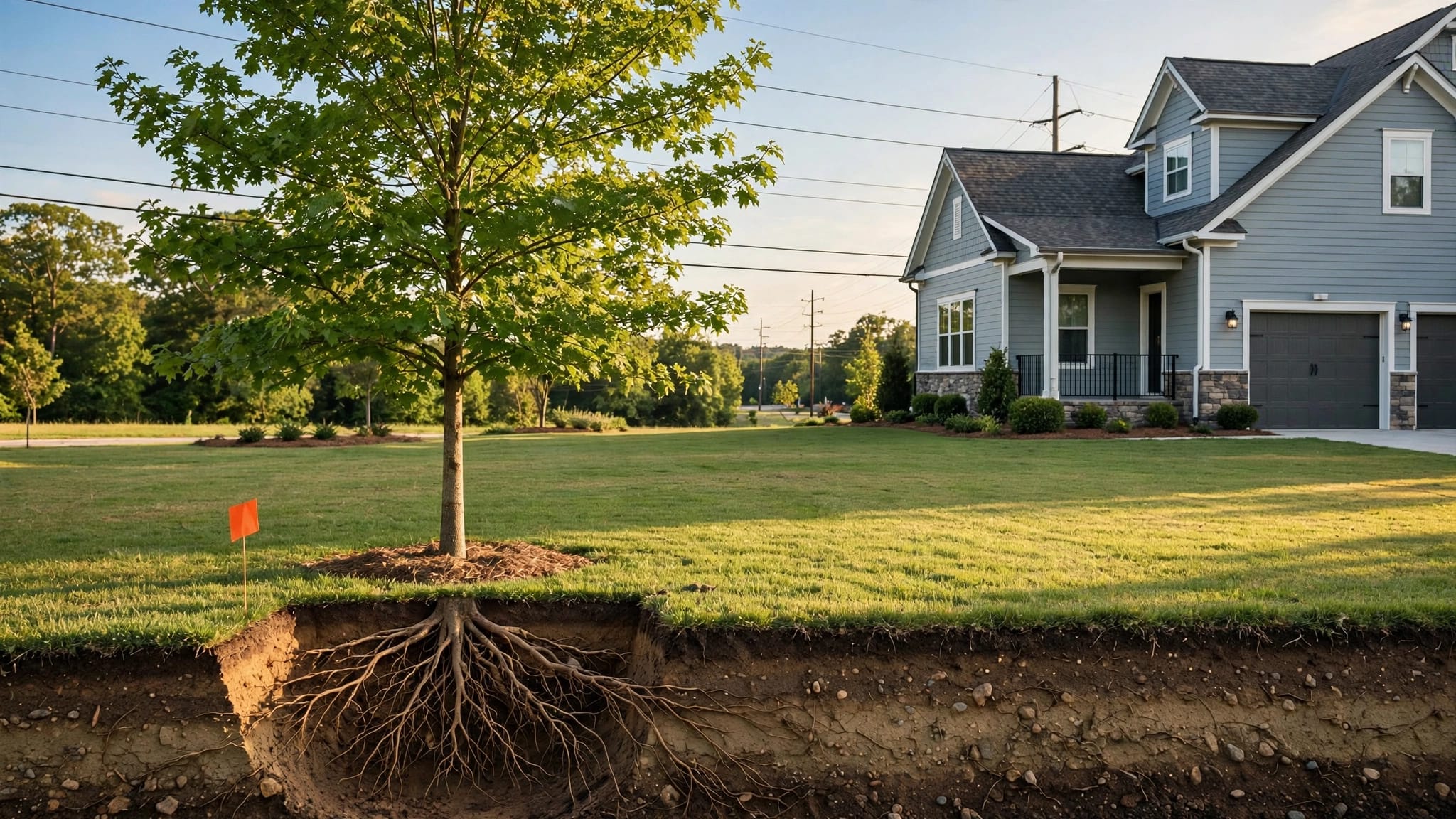
Trenching, heavy equipment, root cutting, and changes in soil level can damage trees that remain on the property. These risks matter during driveway work, retaining-wall installation, and drainage improvements.
Surface roots alone don't mean removal is necessary. In many yards, mulch, suitable ground covers, or a larger planting bed work better than forcing grass beneath a mature canopy.
When a project requires cutting substantial roots, involve a certified arborist before digging. Pruning branches doesn't correct structural damage below ground.
At RW Lawn Co., our land clearing and site preparation services support broader property projects. Tree approvals and protection measures belong in that plan before clearing begins.
Put cleanup and lawn repair in writing
A useful removal estimate states whether it includes stump grinding, log hauling, branch chipping, disposal, and final cleanup. It should also explain how the crew will protect planting beds and lawn areas.
Stump grinding commonly adds approximately $100 to $400 per stump in our planning guidance. Meanwhile, equipment can compact wet soil or leave ruts.
Include soil leveling and lawn restoration in the written scope when needed. Keep debris out of sidewalks, drainage paths, gutters, and storm drains.
Frequently Asked Questions About Atlanta Tree Permits
Can I remove a tree because its roots are damaging my lawn?
Root-related lawn damage doesn't automatically authorize removal. A larger bed or different planting approach may solve the problem while preserving the tree. Cutting major roots needs professional assessment.
Does a permit require me to remove the tree?
A removal permit authorizes the specified work. Keep the approved scope separate from your contractor agreement, which establishes the work you've hired the crew to perform.
Can a contractor handle the paperwork?
Your written agreement can assign application and documentation responsibilities to the contractor. However, ordinary work still needs approval before cutting. Keep copies of the authorization with your project records.
Are all hazardous-tree permits free?
The Tree Commission's published free-permit statement identifies dead or dying trees. It shouldn't be extended to every request described as hazardous.
Plan the Approval Before the Cutting
Atlanta tree removal permit requirements begin with jurisdiction, tree location, and diameter. Within the city, a qualifying tree's poor condition doesn't automatically eliminate the permit requirement.
Treat written authorization and a clear contractor scope as separate necessities. Planning both before ordinary work starts protects your remaining trees and keeps removal, cleanup, and lawn repair on the same schedule.