Forestry Mulching vs. Land Clearing in Atlanta
Forestry mulching Atlanta projects often focus on reducing brush. Forestry mulching can leave usable woodland, while traditional clearing can remove roots and support earthwork as part of land clearing when those tasks are included.
The right choice depends on the property and its intended use, from residential land clearing to brush management on rural acreage or selective acreage reclamation. Before comparing mulching services, define your finished result , then match the method to your vegetation, terrain, and access.
Key Takeaways
- Forestry mulching processes vegetation on-site, usually leaving roots, some stumps, and an uneven organic surface.
- Traditional clearing can include tree removal, excavation, hauling, and grading, but the contract must specify those tasks.
- Neither method is universally cheaper, faster, or exempt from Atlanta-area permits and environmental requirements.
How Forestry Mulching in Atlanta Differs From Full Clearing
Both approaches remove unwanted vegetation, but forestry mulching and full land clearing use different equipment and leave different conditions behind.
Forestry mulching cuts and shreds in place
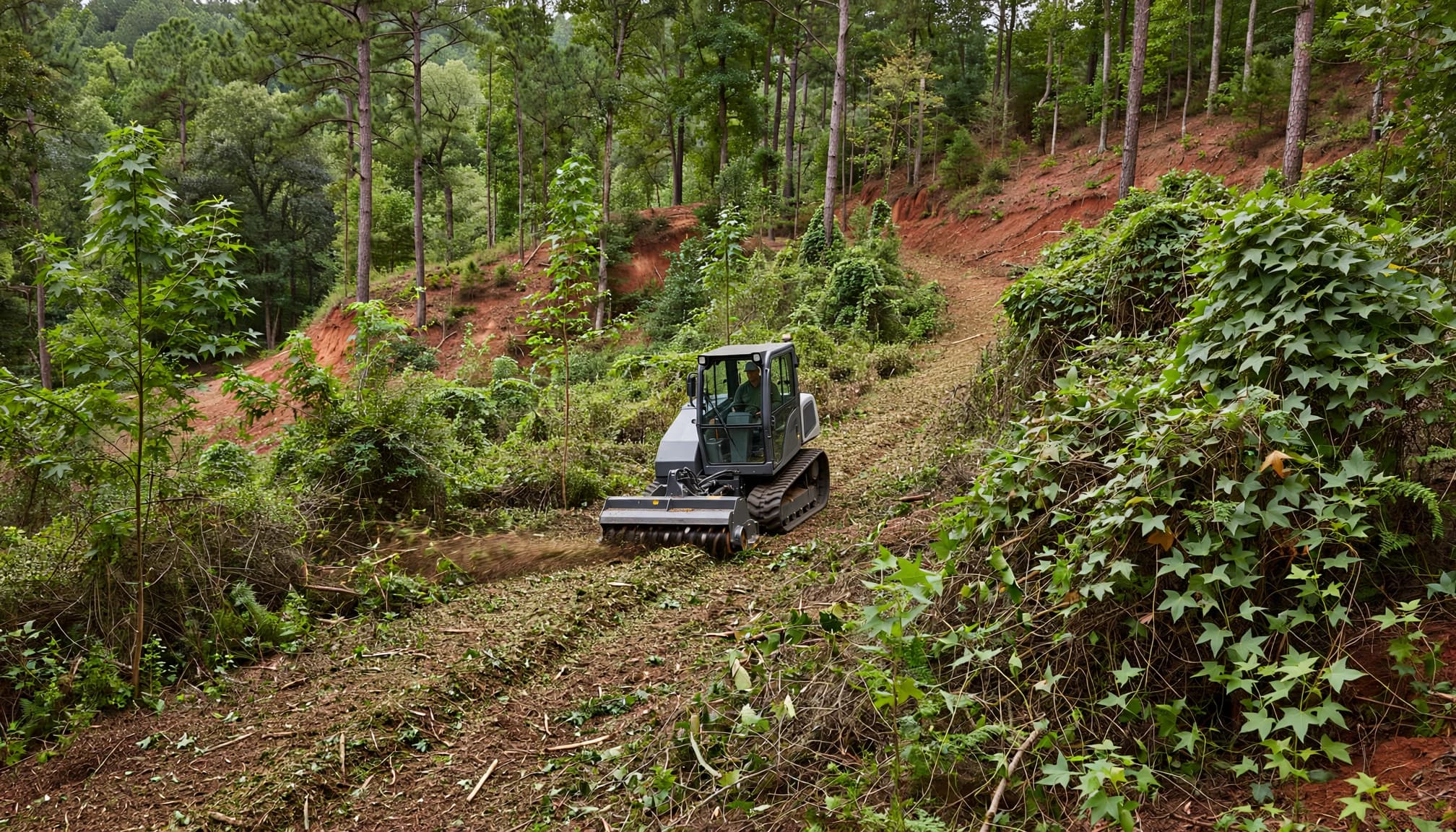
A forestry mulcher uses a powered cutting head to shred brush, saplings, and suitable woody vegetation. Contractors may use a compact tracked loader with a skid steer mulcher or a larger dedicated forestry machine.
A skid steer mulcher can suit compact sites, while horsepower, vegetation density, and access all help determine the right equipment and pace.
With forestry mulching, the shredded material stays on the property rather than going into disposal trucks. This can reduce handling and hauling for brush removal or underbrush clearing.
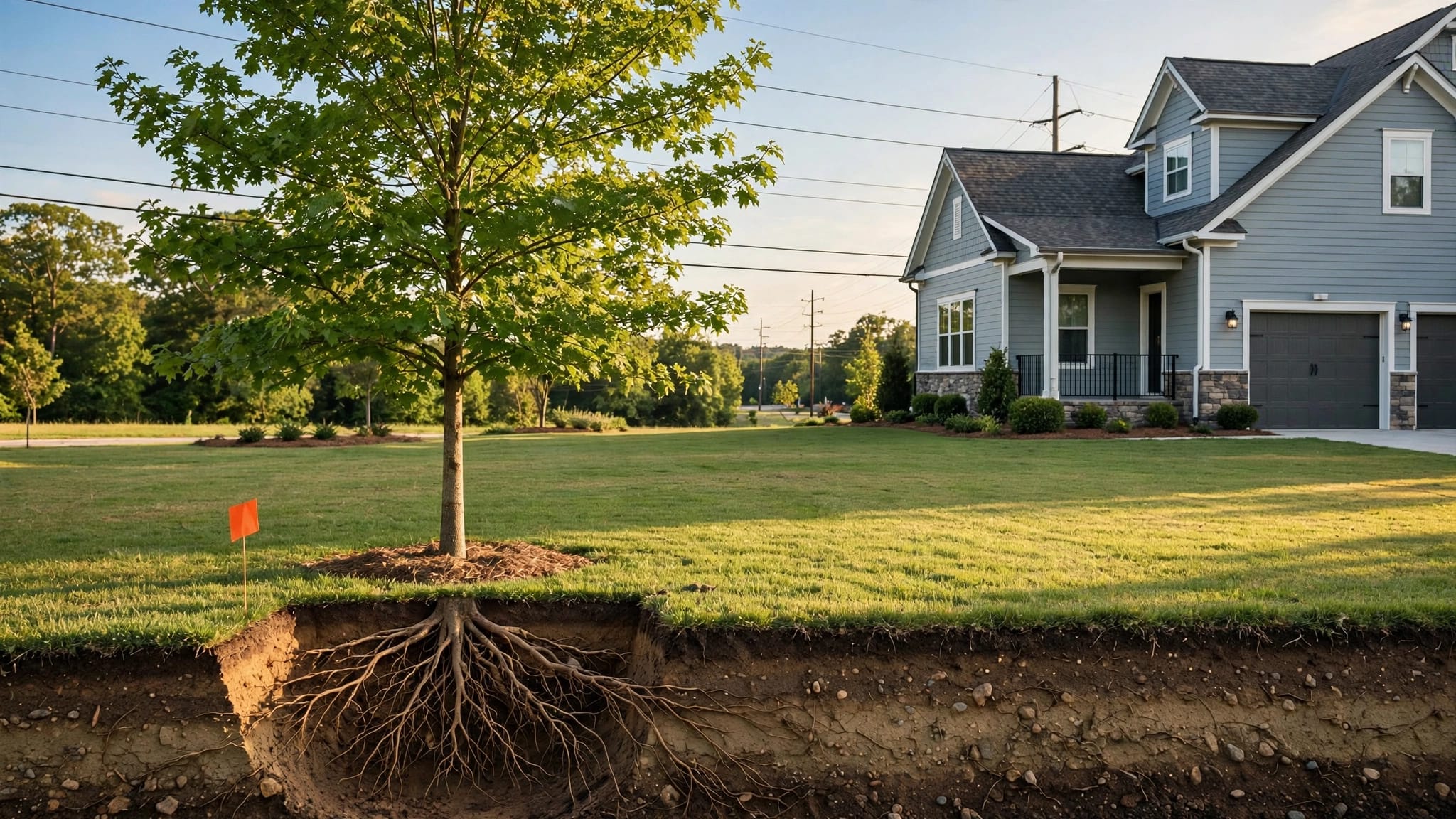
These mulching services can help with vegetation management and opening overgrown areas. However, mulching doesn't automatically remove root systems . Stump remnants, rocks, and uneven ground can remain beneath the shredded material.
Traditional clearing separates removal from processing
Traditional land clearing can involve chainsaws, excavators, bulldozers, loaders, and hauling trucks. Crews cut or remove vegetation, then process, pile, or transport the debris.
Excavation can remove stumps and roots where necessary. Meanwhile, grading changes elevations or prepares surfaces for later work.
Those services aren't automatically included in every clearing quote. A contractor offering tree removal may leave stumps, while another includes excavation and disposal. Compare the actual work rather than the method's name.
Compare the Finish, Debris, and Follow-Up Work
These differences help show whether a cleared area is ready for its intended use. The finish depends on the quoted scope.
| Factor | Forestry mulching | Traditional clearing |
|---|---|---|
| Ground finish | Shredded cover, often uneven | Depends on grading and cleanup scope |
| Roots and stumps | Usually remain unless separately addressed | Can be excavated if included |
| Debris handling | Suitable vegetation processed on-site | Material piled, processed, or hauled |
| Soil disturbance | Often less excavation | Greater disturbance where roots are removed |
| Typical purpose | Brush reduction and selective opening | Root removal and site preparation |
When comparing mulching services with land clearing, focus on the cost to reach your final goal. A lower quote can become expensive if it excludes work you still need.
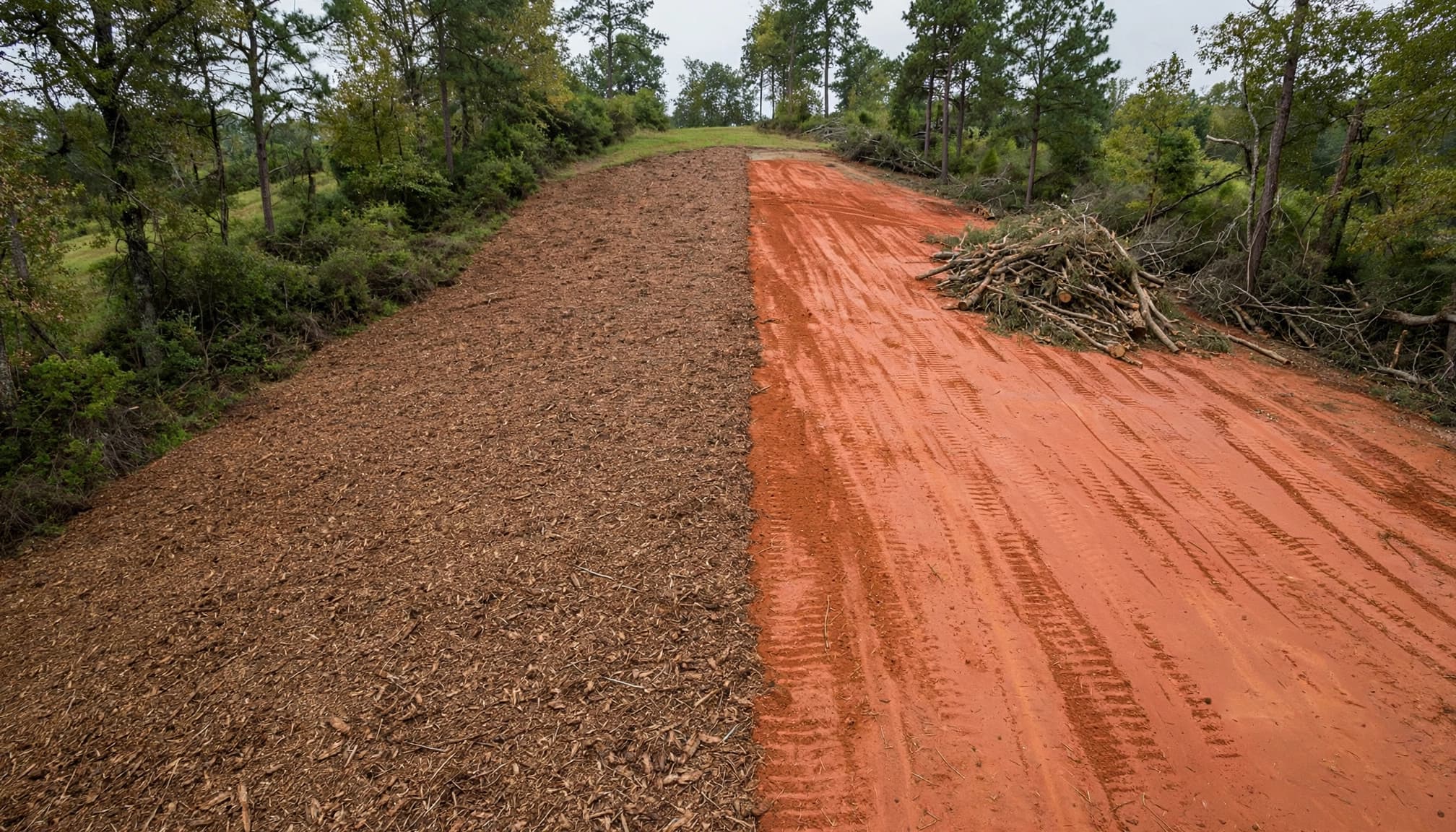
Soil disturbance and soil erosion are related, but not interchangeable. Less excavation doesn't eliminate the need to plan for erosion.
Neither finish is automatically ready for sod, a driveway, or a building foundation.
Cost Factors: Compare Complete Quotes
A dependable residential estimate for forestry mulching requires a site-specific scope. Acreage alone doesn't capture tree size, vegetation density, access, slope, or disposal needs.
What changes a mulching estimate
Estimates for mulching services depend on machine suitability, operating time, mobilization, and the requested finish. Selective clearing around retained trees requires a different approach than opening an unobstructed tract.
Hidden fencing, wire, old lumber, and dumped material also affect the job. These items need separate handling rather than processing through a mulching head.
Ask whether the contractor charges hourly, daily, by acreage, or for a fixed scope. With daily pricing, confirm productive operating hours and how weather delays affect billing.
The Atlanta brush clearing cost guide explains how equipment and cleanup requirements affect estimates.
What adds to traditional clearing costs
Land clearing services vary by scope, and some projects require several machines and truck trips. For farm clearing, root excavation or disposal needs can change the estimate.
Stump excavation, disposal charges, imported soil, grading, and stabilization can add separate costs. Compare land clearing bids using the same boundaries and finish requirements. A mulching-only quote shouldn't compete directly with one that includes root removal and grading.
For budgeting, add quoted equipment and labor, mobilization, disposal, finishing work, and required environmental controls. Have the contractor identify exclusions and explain how unforeseen conditions will be priced.
Small jobs may also carry minimum charges, so doubling the cleared area won't necessarily double the price.
Speed and Site Access Can Change the Choice
Forestry mulching speed depends on more than acreage. Vegetation, ground conditions, equipment access, and cleanup all affect the schedule.
Mulching can reduce handling steps
Because forestry mulching cuts and processes vegetation in place, it can eliminate loading and hauling stages. That often makes mulching services efficient for underbrush clearing.
However, dense woody growth, steep terrain, and repeated passes for a finer finish slow production. Keeping selected trees also requires more careful movement.
Match horsepower forestry mulchers to the vegetation and site conditions. Ask the contractor providing mulching services for a schedule based on an inspection, not a guaranteed acres-per-day estimate.
Bigger equipment needs a workable route
A compact tracked skid steer mulcher may fit places where larger equipment cannot operate. Even so, narrow gates, weak driveway edges, retaining walls, and septic systems can limit access.
Rural acreage may accommodate larger forestry machines and heavy equipment. Residential lots may need a compact skid steer mulcher or hand work near structures.
Before scheduling land clearing, identify the unloading area, working route, and features requiring protection. Confirm slope limits and whether saturated soil will postpone work.
Call 811 before digging, and arrange identification of private utilities when needed.
Soil and Erosion: Less Disturbance Still Needs Planning
Atlanta-area clay soils can compact under heavy equipment, particularly when wet. Tracks distribute weight, but they don't eliminate compaction or rutting.
Forestry mulching often leaves more of the existing soil structure intact than land clearing because it doesn't require widespread root excavation. The remaining organic cover can reduce raindrop impact and help retain moisture.
As that material decomposes, it contributes organic matter. An eco friendly outcome from mulching services still depends on site conditions and retained vegetation, and mulch doesn't guarantee improved drainage or soil fertility.
Traditional clearing exposes more soil when crews excavate roots or scrape the surface. Stabilization needs to be part of the plan to limit soil erosion, not an afterthought.
Mulch can protect the soil surface, but it doesn't replace drainage improvements or required erosion-control measures.
Concentrated runoff can move shredded material downhill. Steep banks may need planting, erosion-control products, drainage work, or structural support.
For sloped properties, review erosion control for Atlanta slopes before deciding how much vegetation to remove. Preserve useful ground cover where practical, and avoid unnecessary equipment traffic near retained trees. Forestry mulching still requires careful planning on slopes.
Match the Method to Your Property's Next Use
The best approach depends on what must happen after the brush disappears. Some properties benefit from combining forestry mulching and traditional clearing.
Natural areas and selective brush reduction
Mulching often fits woodland edges, trail opening, rural acreage reclamation, and selective vegetation management. It can improve visibility without requiring a completely bare surface.
For a residential natural area, decide which trees and screening plants should remain. Mark boundaries before equipment arrives.
A broader land management plan may include mulching services as one part of fire risk mitigation, but mulching alone doesn't provide fire protection. Forestry mulching may also suit some right of way clearing projects, depending on access and desired finish.
However, light yard overgrowth may need only brush cutting or seasonal cleanup. Bringing heavy equipment onto a small property can add unnecessary expense and disturbance.
Lawns, construction, and farm preparation
A new lawn needs a suitable soil surface, drainage, and preparation for seed or sod. Coarse mulch and buried stump remnants can interfere with that finish, so residential land clearing may be needed.
Construction footprints may require root removal, excavation, engineered grading, and compaction testing. Brush reduction can be an initial step, but it doesn't complete those site preparation requirements.
Farm clearing depends on the intended use. A planted field has different root-removal requirements than an access trail.
Discuss land clearing and site preparation with a provider offering land clearing services when several stages are necessary.
Kudzu Control Requires Follow-Up
Forestry mulching services can remove accessible kudzu growth and make rural acreage easier to inspect. However, remaining crowns and roots can produce new growth.
Plan follow-up vegetation management as part of ongoing land management, rather than treating one clearing visit as eradication. Depending on the site, follow-up after brush removal may involve repeated cutting, targeted treatment, and monitoring.
Also avoid grouping every unwanted woody plant with invasive species. Eastern redcedar is native, although it may need removal where it conflicts with your project.
Once clearing is complete, new planting and landscape bed maintenance can help establish the intended appearance. Specify any decorative mulch separately because forestry mulch has a different texture and finish.
Atlanta-Area Permits Depend on the Parcel
There's no single permit rule for land clearing projects across Metro Atlanta. Requirements depend on jurisdiction, protected trees, disturbance, nearby waters, and the proposed use.
In the City of Atlanta, removing, destroying, or injuring a private-property tree measuring 6 inches or more in diameter at breast height (DBH) requires a permit. City-owned trees have protections regardless of size.
That is a City of Atlanta requirement, not a rule you should apply automatically throughout Fulton, Cobb, DeKalb, or neighboring counties.
Georgia's general state-water buffer is 25 feet. Designated trout waters generally have a 50-foot buffer. These measurements don't mean clearing within a buffer is automatically allowed.
Before mobilization, confirm requirements with the applicable city or county and, where relevant, Georgia EPD. Ask about tree permits, land-disturbance approval, stream buffers, and construction-stormwater obligations.
Forestry mulching isn't a blanket exemption. Don't assume equipment choice or the absence of hauling trucks changes the rules.
Your written agreement should identify who checks approvals, who obtains required permits, and what restrictions apply to the work area.
Frequently Asked Questions
Is forestry mulch the same as landscaping mulch?
Forestry mulch contains irregular shredded vegetation produced during clearing. Landscape mulch is selected and installed for a more consistent bed appearance. If you want finished ornamental beds, price their preparation and mulch installation separately.
Can I mow immediately after forestry mulching?
Don't assume the area is mower-ready. Stumps, stones, coarse material, and concealed debris may remain. Inspect the finish with the contractor and specify additional preparation if regular mowing is your goal.
How long does clearing several acres take?
There isn't a reliable universal timeline. Machine capability, vegetation, slope, weather, access, and finishing requirements determine production. Request an inspected-site estimate that separates clearing time from stump work, hauling, and final preparation.
Choose the Finish Before Choosing the Machine
Forestry mulching can suit brush reduction during land clearing when you want processed vegetation left on-site. Traditional clearing or farm clearing may fit projects requiring removal and earthwork, if those tasks are included.
Your strongest land clearing comparison is a written, site-specific scope covering access, debris, final condition, and environmental requirements. Compare forestry mulching with other mulching services within that scope.
Start with what your property needs to become. Then choose the method, or combination of methods, that gets it there without unnecessary work.