Tree Planting Distances for Atlanta Homes and Utilities
A tree that fits beside your house today can crowd the roof or utility lines as it matures. Tree planting distances in Atlanta should account for mature size , usable rooting space, and the utility owner's requirements.
There isn't one setback that works for every tree or property. Before choosing a planting spot, measure the available space, check overhead lines, and have underground utilities located.
Key Takeaways
- Choose a location using the tree's mature height and canopy width, not its nursery size.
- Confirm utility-owner requirements and easement restrictions before planting near wires, buried lines, or electrical equipment.
- Contact Georgia 811 at least three business days before digging, then confirm what the locate request covers.
- Leave room for roots, maintenance access, drainage, and future growth around buildings and pavement.
How Far Should Trees Be From an Atlanta Home?
A suitable distance depends on the tree's mature form and the property. A flowering dogwood and a white oak need different amounts of space, even when both arrive in similar containers.
Measure for the Mature Canopy
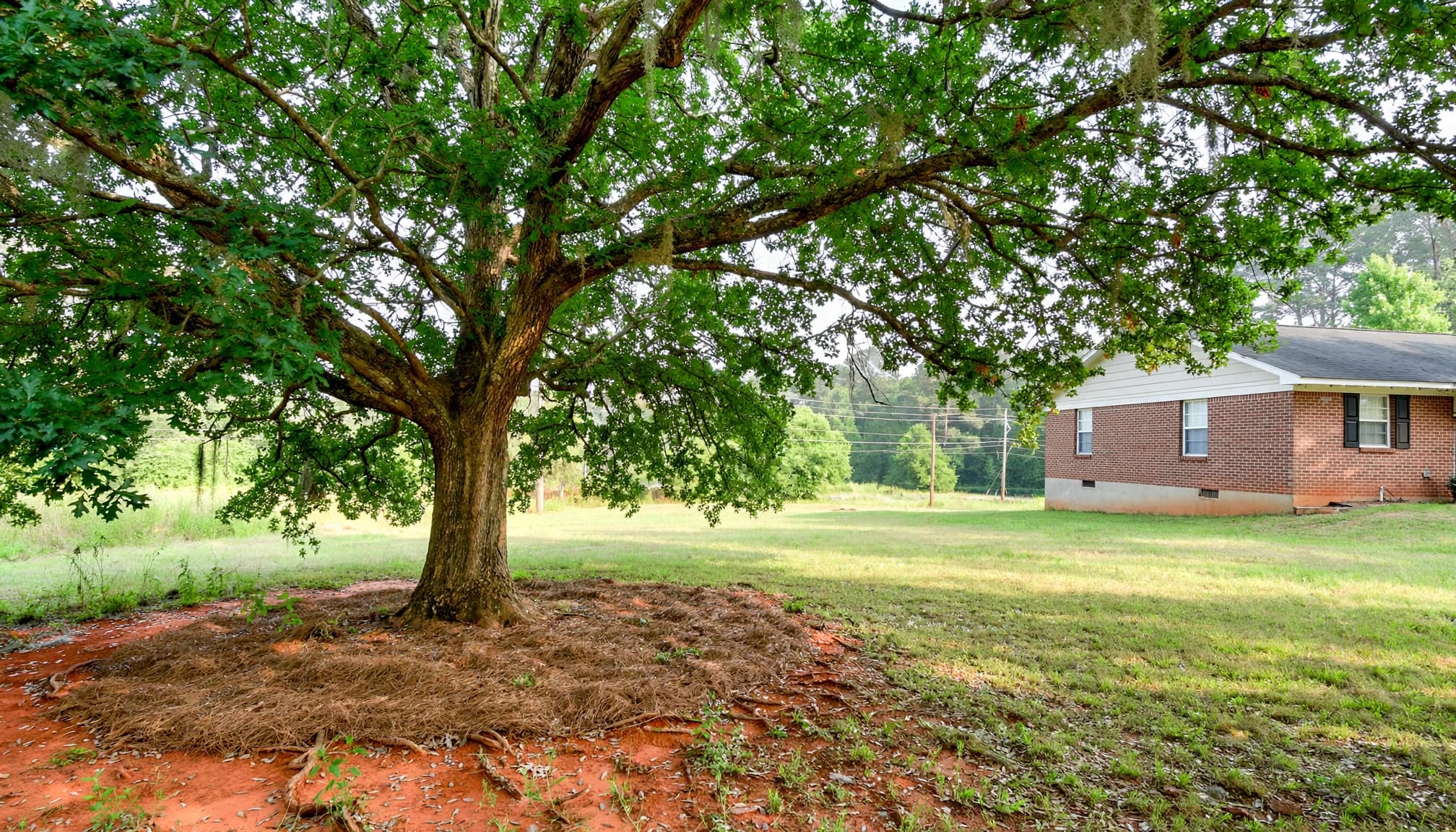
Measure from the proposed trunk location to the foundation, then check the tree's expected canopy width. Use the botanical name and cultivar, because selections within the same species can grow differently.
Compare the expected crown's reach with the wall, roof edge, gutters, and windows. Allow additional room for maintenance and growth variation. A location that needs constant pruning to keep branches off the house deserves another look.
For compact yards, eastern redbud, flowering dogwood, or fringe tree may offer better options than a large shade tree. However, each still needs a site-specific review.
Check Rooting Space and Foundation Conditions
Canopy clearance is only part of the decision. Roots can extend beyond the canopy, so a narrow strip between a house and driveway may offer inadequate soil space.
Also inspect drainage, retaining walls, existing foundation cracks, and buried drainpipes. Healthy roots don't automatically damage sound foundations, but restricted rooting space and existing defects complicate placement.
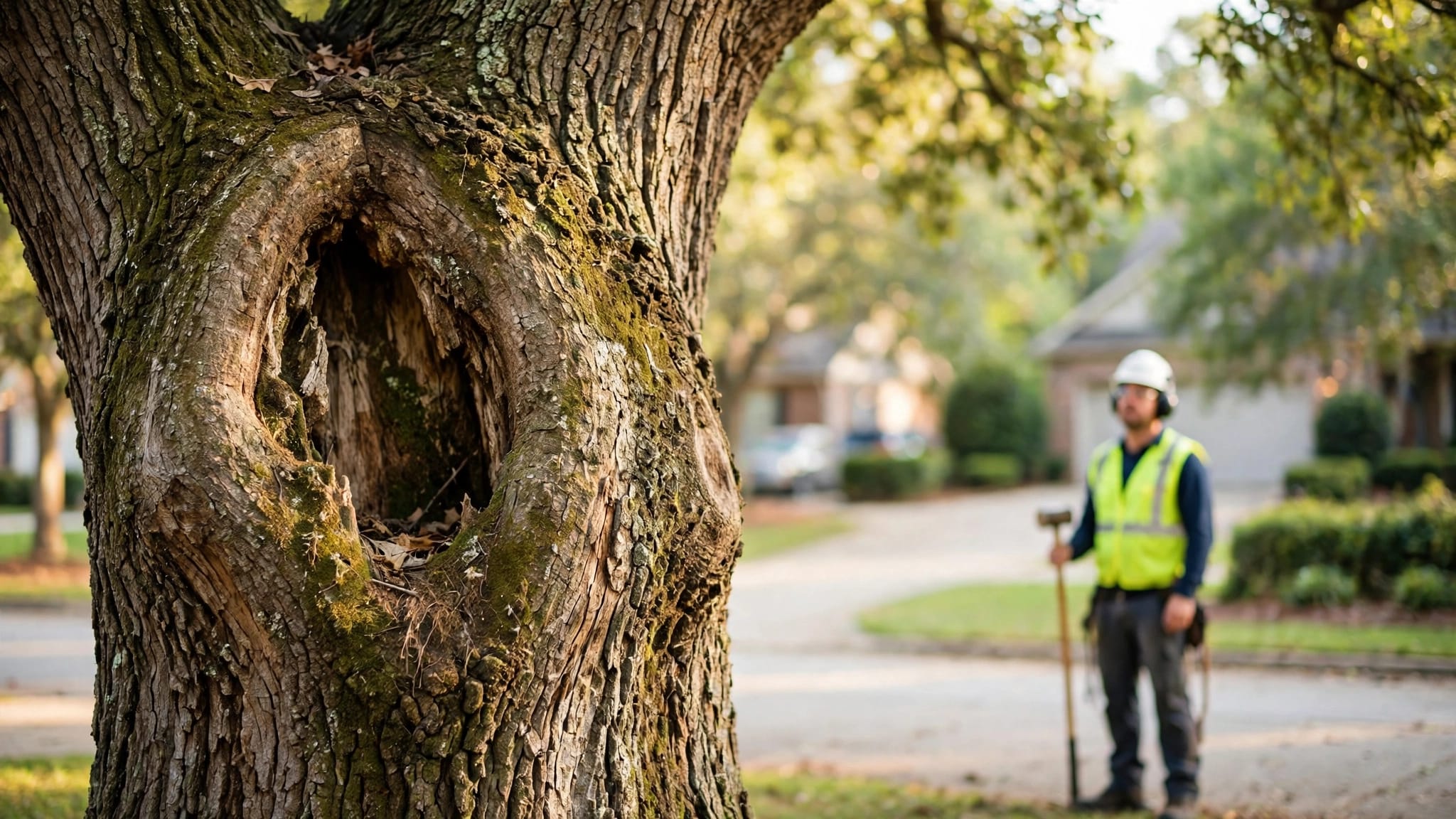
For a large tree near a building, ask an ISA Certified Arborist to assess the location. Don't treat a setback alone as protection against storm damage or future root conflicts.
Keep Future Growth Away From Overhead Lines
Look above the proposed tree location before buying. Check street-side wires and the service connection leading to your home.
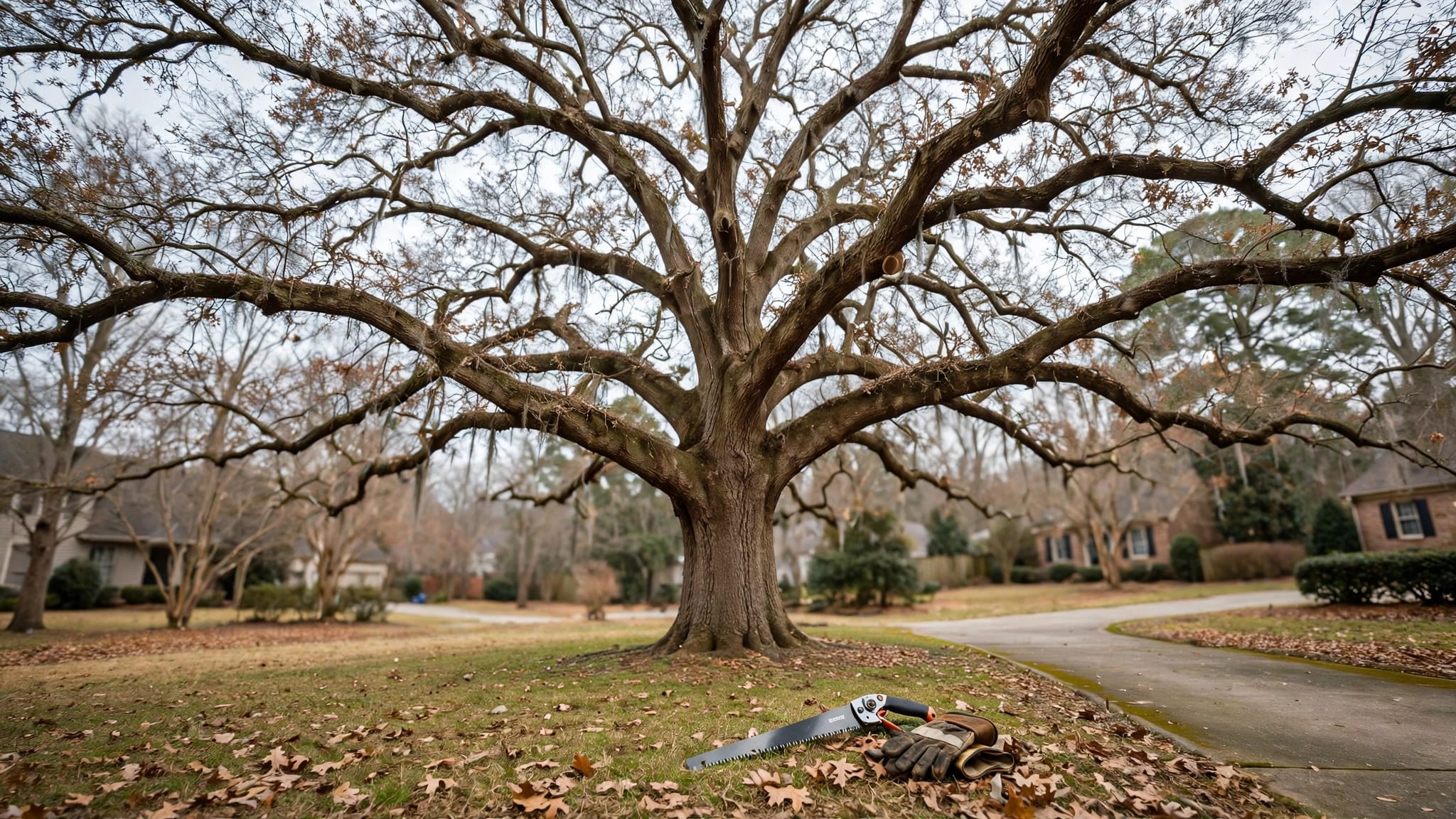
A tree can stand beside a line today and grow into it later. Therefore, review both mature height and sideways canopy spread.
Confirm the Utility's Planting Requirements
Contact the utility serving the property and describe the proposed species, location, and nearby equipment. Ask whether the area has planting restrictions or an easement.
Georgia Power's overhead-project guidance describes typical tree-trimming clearances of 15 to 30 feet , depending on the line. Those figures concern trimming around utility projects; they aren't universal homeowner planting setbacks.
Choose a location where the mature canopy can remain outside the utility's required clearance. If that isn't possible, move the planting or select a tree the utility accepts for that location.
Treat Transmission Easements Separately
Transmission corridors have different restrictions than neighborhood distribution lines. Georgia Power generally permits vegetation with a mature height of 15 feet or less on transmission easements, subject to access and safe operation.
That height allowance doesn't automatically authorize planting. Easement terms and the utility's approval still control what can go there.
Also, a tree described as "small" at a nursery may exceed the permitted height. Confirm its mature dimensions rather than relying on a category name. Never attempt pruning near energized wires yourself.
Locate Underground Utilities Before Digging
Gas, electric, water, sewer, and communications lines may cross an apparently open lawn. Irrigation, landscape lighting, and drainage pipes can add more hidden conflicts.
Start With Georgia 811
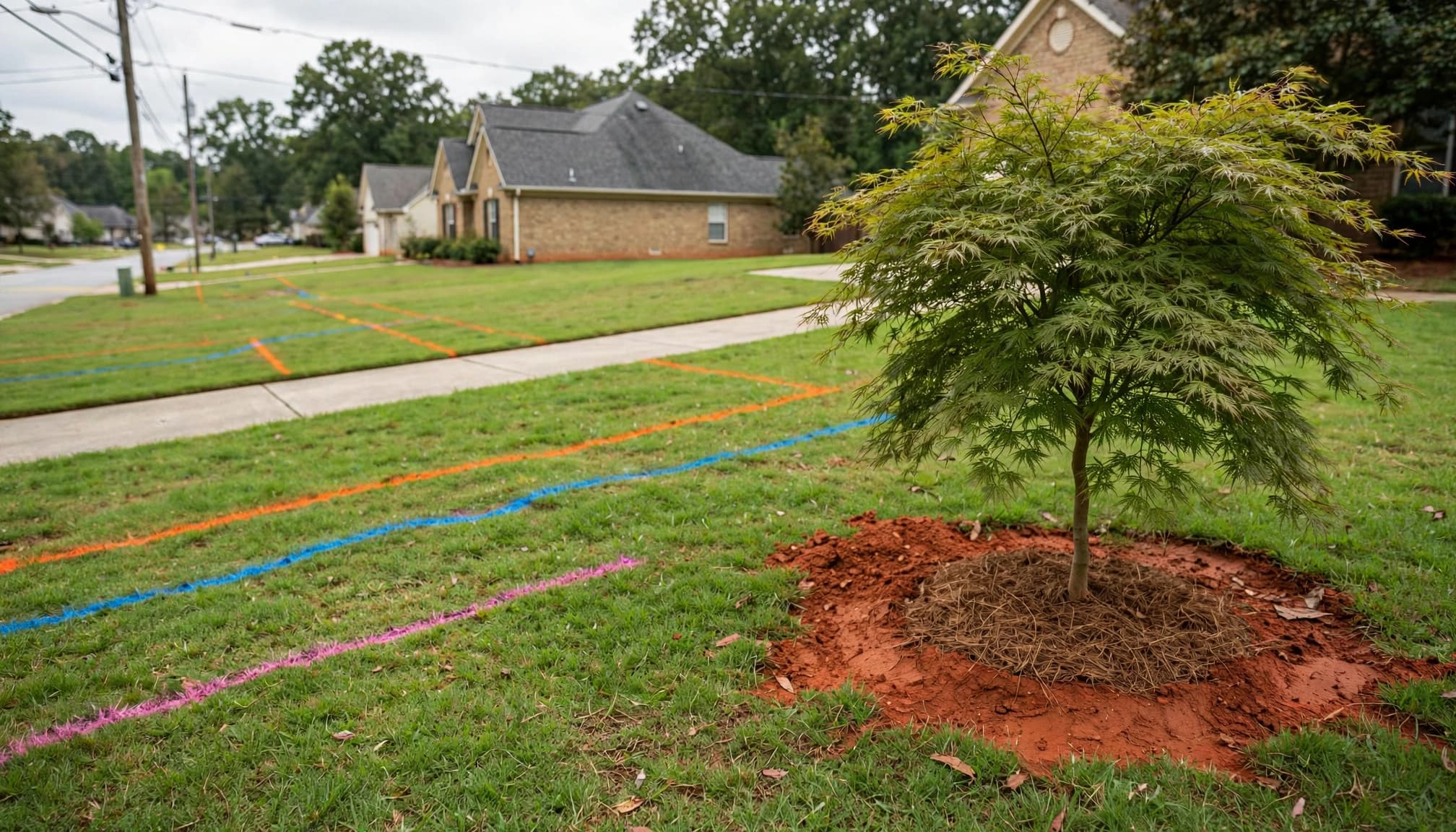
Contact Georgia 811 at least three business days before digging . Then review the responses and follow the locate process before excavation begins. Don't assume an unmarked area is clear without confirming the ticket status.
The marks identify approximate locations of participating utility members' buried facilities. They don't necessarily cover every private line.
Ask what the locate request includes. Private irrigation, lighting, drainage, or customer-owned service lines may need separate locating. Existing plans help, but they shouldn't replace field verification.
Once the routes are known, ask the line owner about planting restrictions and future repair access. A planting hole that misses a pipe can still leave a growing tree in an unsuitable location.
Separate Digging Precautions From Planting Clearances
Georgia's digging tolerance zone extends 18 inches on either side of a buried line's outer edge . Follow the applicable excavation procedures around that zone.
The 18-inch tolerance zone is a digging precaution, not a safe tree-planting setback or a guarantee against root conflicts.
Buried-line setbacks depend on the facility and utility-owner requirements. Also check nearby cabinets and transformers. Georgia Power calls for approximately 10 feet of clearance around underground electrical equipment for crews and equipment.
That equipment-access clearance is different from clearance to a buried cable. Keep doors, working areas, and maintenance routes unobstructed, and ask the equipment owner to approve nearby landscaping.
Allow Room Around Pavement, Septic Systems, and Boundaries
A location clear of the house and utilities can still create expensive problems elsewhere. Review the entire planting area, including features outside the immediate bed.
Protect Walkways and Septic Areas
Large roots can lift pavement or complicate repairs around driveways, sidewalks, and retaining walls. Roots may also spread well beyond the area you intend to mulch.
Avoid squeezing a large tree into a narrow paved opening. Instead, choose a smaller mature form or move it into a broader soil area.
Keep new trees away from septic tanks, drainfields, and their service access. Ask the septic professional responsible for the system to assess the proposed species and location. Don't rely on a generic distance when the system layout is uncertain.
Verify Property Lines and Local Restrictions
Measure to the actual property boundary rather than assuming the fence follows it. Consider whether the mature canopy will extend into a neighbor's driveway or building.
Street trees and planting near public rights-of-way may need municipal review. Rules also vary across Metro Atlanta cities and counties.
Confirm jurisdiction, easements, HOA requirements, and any applicable tree rules before installation. Although a neighbor's agreement can help prevent disputes, it doesn't override utility access rights or municipal requirements.
Atlanta Soil and Drainage Can Change the Planting Spot
Distance planning should include the ground beneath the tree. Metro Atlanta's clay-heavy soils, slopes, and construction compaction can limit healthy root growth.
Resolve Drainage Problems First
Watch the proposed location after heavy rain. Persistent ponding or concentrated runoff needs attention before planting.
A deeper hole won't correct a poorly drained yard. In clay soil, it can leave the root ball sitting in collected water. Instead, reassess the tree selection, location, or drainage plan.
Where runoff, uneven grades, or buried debris complicate installation, site preparation for landscaping can address the groundwork first. Avoid cutting major roots of existing trees during grading without professional guidance.
Plan the Planting Bed and First-Year Care
Once the location works, set the root flare at or slightly above finished grade. Keep it visible, and use a wide planting hole rather than burying the tree deeply.
Create a mulch ring that keeps mowing equipment away from the trunk. However, leave mulch off the trunk and don't pile it over the flare.
Coordinate the planting bed with Atlanta landscaping and mulch services so edging and upkeep fit the location. Also plan dependable watering through the first growing season.
For timing, the Atlanta tree planting season guide explains the cooler planting windows and site conditions to check.
Confirm the Location Before Approving Installation
Put the proposed trunk location on a simple yard sketch. Include the house, pavement, utility routes, equipment, septic features, and property boundaries.
Before authorizing work:
- Verify the tree's botanical name, cultivar, mature height, and canopy width.
- Measure available space and confirm utility-owner restrictions.
- Complete the locate process and arrange private-line locating where needed.
- Review drainage, access, planting depth, and first-year care with the installer.
Request a written scope covering who handles utility coordination and what happens if a conflict requires relocation. Keep the planting location flexible until these checks are complete.
The Atlanta tree planting cost guide can help compare installation scopes. Utility conflicts, hand excavation, and drainage preparation may change the price, so discuss those conditions before the crew arrives.
Frequently Asked Questions
Is There One Minimum Distance Between a Tree and a House?
The guidance here doesn't establish a universal foundation setback. Choose the distance using the tree's mature canopy, available rooting space, drainage, and building conditions.
For a large shade tree or a constrained side yard, get a site assessment before purchasing. A smaller nursery tree won't solve a space problem if its mature form is too large.
Can I Plant a Tree After Utilities Have Been Marked?
Utility marks help guide safe excavation, but they don't approve the planting location. You still need to confirm the utility owner's requirements, easement restrictions, equipment access, and private-line coverage.
Check the ticket responses and applicable digging procedures before starting. If the marked route conflicts with the planting hole or future tree growth, revise the location rather than assuming nearby open soil is suitable.
Choose Space the Tree Can Keep as It Grows
Good tree placement gives the mature canopy room while preserving utility access and usable rooting space. Site-specific planning matters more than a single setback number.
Before planting, confirm mature dimensions, complete utility locating, and resolve drainage or access conflicts. The tree that looks small beside your house today should have a location that still works when it's fully grown.