Atlanta Tree Cavities: Warning Signs and Arborist Help
A hole in your shade tree can look alarming, especially when the trunk stands beside your driveway or home. However, a cavity alone doesn't determine whether a tree is unsafe .
For homeowners concerned about Atlanta tree cavities, the next step is to consider the whole tree and what surrounds it. Fresh cracks, hanging branches, and movement around the roots deserve more urgent attention than an opening by itself.
Start with what you can observe safely from the ground, then arrange an on-site assessment when warning signs appear.
Key Takeaways
- A cavity doesn't automatically mean removal is necessary. Its location, surrounding wood, and the tree's overall condition matter.
- Fresh splits, hanging limbs, a changed lean, or lifting soil around the roots call for prompt professional attention.
- Keep people, pets, vehicles, and mowing crews away from a potentially unstable tree.
- Choose a qualified arborist for an on-site assessment. Photos can help explain your concern, but they can't establish structural safety.
What Atlanta Tree Cavities Can Tell You
How cavities develop
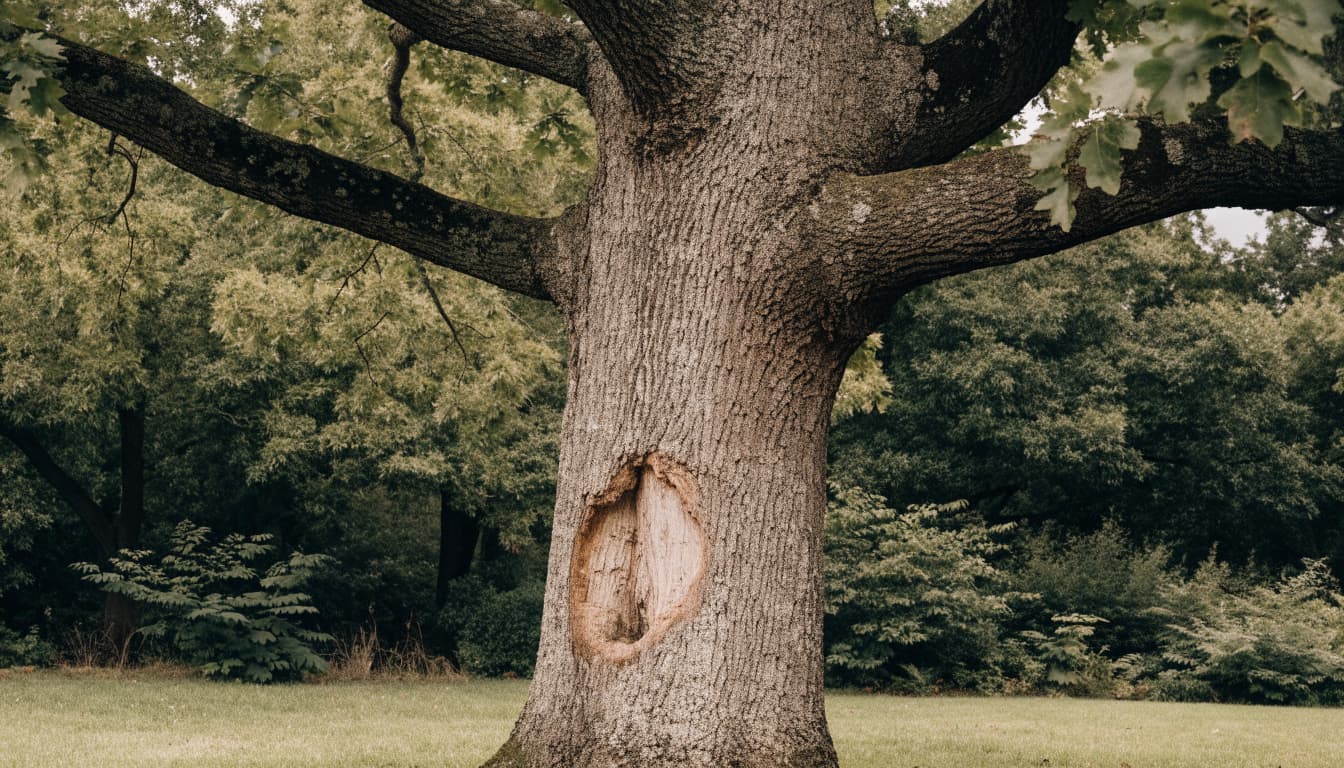
A cavity is an opening where wood has been lost, often after decay develops around an old injury. Broken branches, poor pruning cuts, and equipment damage can create entry points for decay organisms.
Trees respond to injuries by forming boundaries around damaged tissue. They don't replace decayed wood in the way an animal heals a wound. Instead, new growth may develop around the affected area while an opening remains.
As a result, an old cavity can coexist with living tissue and continued growth. Its presence tells you to look closer, but it doesn't provide a complete risk assessment.
Why the whole tree matters
An arborist considers the cavity's position, the remaining wood, branch attachments, and root condition. The assessment also includes nearby people and property that falling wood could strike.
A trunk opening near a busy patio has different consequences than one in an unused wooded corner. However, location alone doesn't reveal how likely the tree is to fail.
Don't estimate safety using the opening's width or an online hollow-trunk percentage. The visible hole may reveal little about internal decay. Likewise, a full, green canopy doesn't prove that the trunk or roots have adequate strength.
Visible Warning Signs That Deserve Attention
Cracks, hanging limbs, and canopy changes
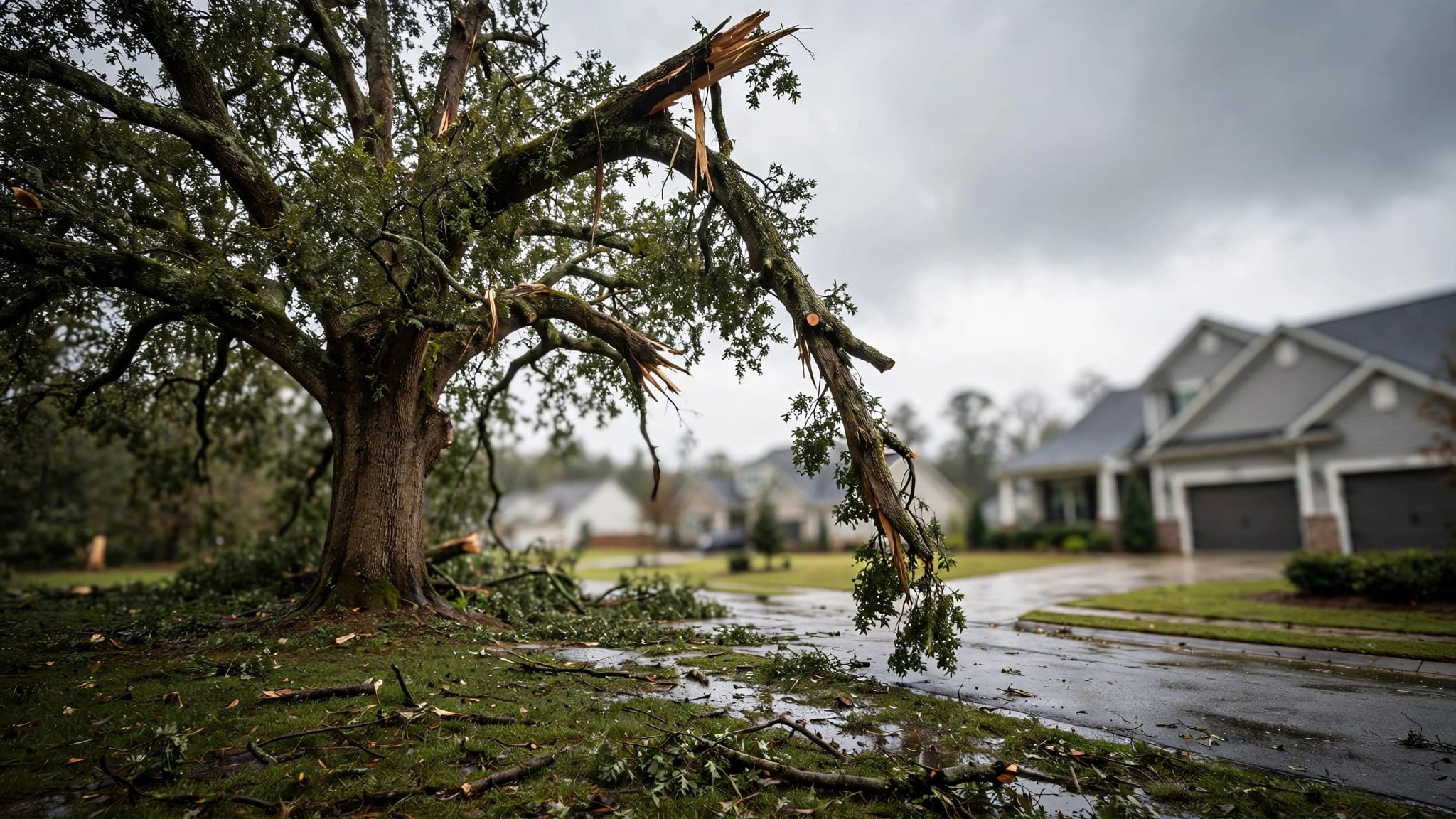
Look for fresh cracks extending above or below a cavity, separated trunk sections, or splits where large stems join. Newly exposed wood can help distinguish recent damage from an older wound.
Hanging or partly broken branches also need attention, even when the trunk opening appears unchanged. Don't walk underneath them to get a better view. Dead limbs over a walkway, roof, or play area create a separate concern.
Sudden canopy thinning, substantial dieback, or bark separating around a damaged section warrants assessment. These symptoms don't identify a single cause, so avoid treating them as proof of a particular disease.
Changes at the trunk base and roots
A newly changed lean is more concerning than a long-standing growth angle. Fresh soil cracks, lifting ground, or movement of the root plate can indicate instability, especially after wind and heavy rain.
Meanwhile, mushrooms or shelf-like fungal growth attached to the trunk or emerging at its base may indicate decay. Identification and location matter; ordinary lawn mushrooms don't establish that a nearby tree is failing.
Surface roots alone aren't evidence of failure. However, severed major roots, recent trenching, or excavation beside a cavity should be mentioned to the arborist. These conditions can affect support even when the damage is mostly underground.
Immediate Safety Precautions for Your Yard
If you notice fresh structural damage or signs of movement, keep the area clear while arranging professional help. Don't wait for another storm to decide whether precautions are necessary.
Take these steps without entering the potential fall area:
- Keep children and pets away, and pause mowing or landscaping beneath the tree. Tell anyone who maintains the property about the concern.
- Stay on the ground. Don't climb, use a ladder, pull on broken branches, or cut near a damaged trunk.
- Photograph the tree from a safe position, including the canopy and surroundings. Record when you noticed the opening or other changes.
- If wires are involved, stay away and contact the utility. Call 911 when there is immediate danger to people or an active emergency.
Never assume a downed power line is harmless because it isn't sparking. Trees, fences, and other objects touching energized equipment can also be dangerous.
Don't approach a suspect tree to move furniture or vehicles. Those items should only be relocated if you can do so without entering the hazardous area.
After storm damage to insured property, contact your insurer before cleanup when possible. However, an immediate hazard may require professional emergency work before an adjuster arrives.
When to Contact a Qualified Arborist
Request prompt help for changing conditions
Contact a qualified arborist promptly when a cavity accompanies a fresh split, hanging limb, changed lean, or disturbed root plate. Explain whether the tree could reach a house, road, neighboring property, or utility line.
Even without visible movement, arrange an assessment for substantial cavities, extensive deadwood, fungal growth on the tree, or recent root damage. You don't need to wait until leaves turn brown.
When booking, describe what changed and when it happened. Mention recent storms, excavation, drainage work, or vehicle impacts. This information helps the arborist prioritize the visit, but it doesn't replace inspection.
Check credentials and the assessment scope
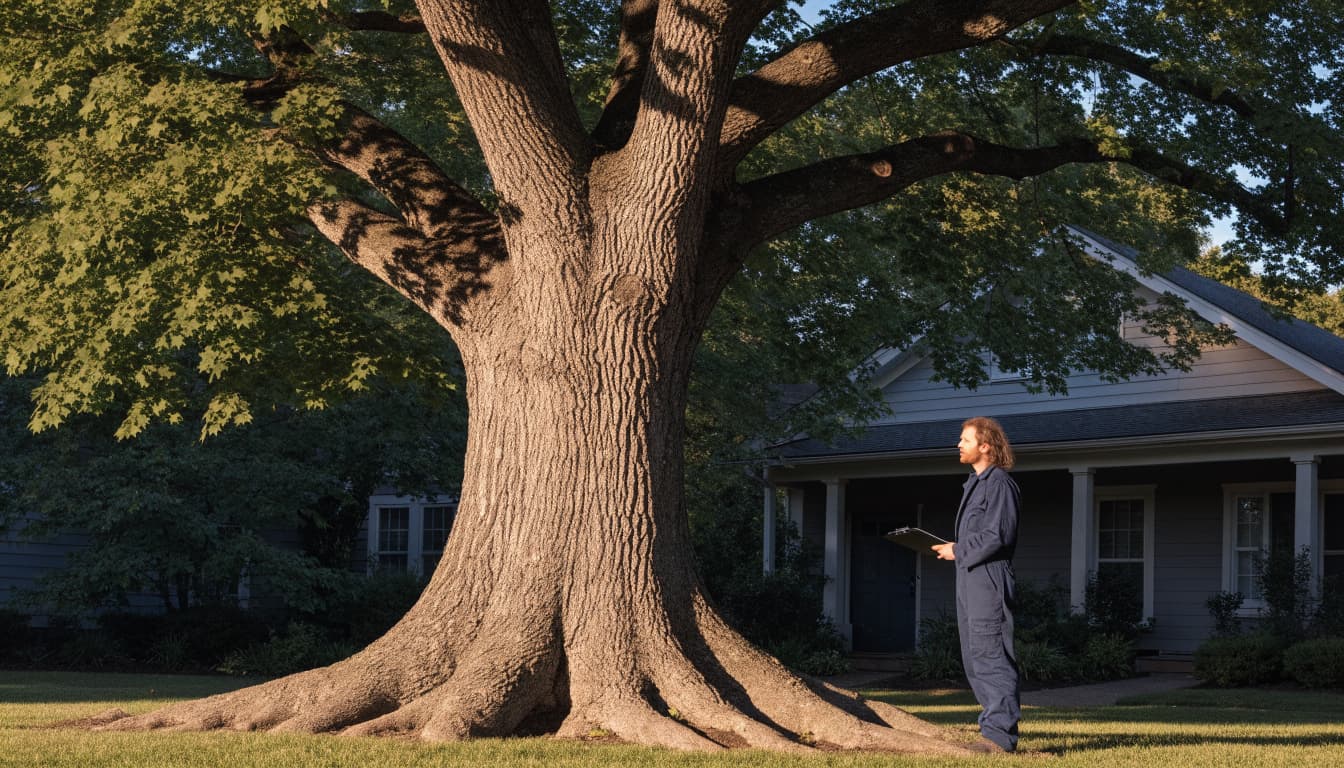
Ask for an ISA Certified Arborist , then verify the person's current credential through the International Society of Arboriculture. For a structural concern, also ask about tree-risk assessment experience. ISA's Tree Risk Assessment Qualification, or TRAQ, is a relevant additional credential.
The visit should consider the trunk, branch structure, roots, site conditions, and nearby targets. Ask whether further investigation is needed and what the initial inspection cannot establish.
Request clear recommendations, a timeframe, and any restrictions on using the yard. If pruning is recommended, use RW Lawn Co's guide to Atlanta tree pruning costs to understand budgeting and compare written scopes.
Verify general liability and workers' compensation coverage before hiring a crew for tree work. An arborist credential and a company's insurance answer different questions.
Protect the Tree During Lawn and Landscaping Work
Routine yard work can worsen existing injuries when equipment repeatedly strikes a trunk or exposed roots. Tell your mowing crew about the cavity, and keep string trimmers away from damaged bark.
Mulch can reduce mowing pressure around a tree, but don't pile it against the trunk. Keep the root flare, the widened area where trunk and roots meet, visible.
Before installing drainage, edging, irrigation, or a retaining wall near the tree, discuss the project with an arborist. Cutting major roots or changing soil levels can affect stability and health.
For exposed roots and struggling turf, consider root-friendly landscape changes rather than cutting roots to flatten the lawn. RW Lawn Co's tree root damage repair guide discusses practical options for Atlanta yards.
Also, contact 811 before digging to have participating utilities located. Utility marking doesn't locate tree roots or establish that excavation is safe for the tree.
After severe weather, look for new changes from a safe location. Pause maintenance if fresh damage appears.
What Happens After the Assessment
Depending on the findings, an arborist may recommend monitoring, selective pruning, further testing, or removal. Ask how each recommendation addresses the observed defect.
Pruning can remove hazardous branches and sometimes reduce loads. However, it can't restore severely decayed wood or automatically resolve a trunk defect. Topping major limbs back to stubs is not an acceptable shortcut.
Don't fill a cavity with concrete, foam, or sealant. Filling the opening doesn't restore the missing wood or establish that the tree is safe.
Likewise, don't drill drainage holes, scrape out decay, or apply chemicals to test or repair the opening yourself.
If removal is recommended, request a written scope covering the tree, access, debris hauling, stump work, and lawn protection. RW Lawn Co's Atlanta tree removal cost guide explains why condition, equipment, and nearby structures affect estimates.
Confirm applicable removal requirements with your jurisdiction, since the City of Atlanta and surrounding communities have different rules. For non-emergency work, compare qualified, insured providers rather than choosing on price alone.
Once hazards are resolved, seasonal yard cleanup services can help with remaining leaves and ordinary landscape debris. Hazardous tree work needs separate planning.
Frequently Asked Questions About Tree Cavities
Can an arborist tell whether my tree is safe from photos?
Photos help an arborist understand your concern and plan a visit. They may show a broken limb or obvious split, but they don't reveal all internal decay, root damage, or site conditions.
An on-site assessment is necessary for recommendations about a particular tree. Send images taken from a safe distance, and include wider views showing nearby structures. Don't approach the cavity to obtain close-ups if the tree appears unstable.
Does a hollow tree always need removal?
No. A hollow tree may retain enough sound wood to remain standing, while another tree with a smaller visible opening may have serious structural problems.
The decision depends on the defect, the tree's condition, and the consequences of failure. If retention is recommended, ask what changes to watch for and when reassessment is needed. Monitoring should follow an arborist's plan rather than a homeowner's guess.
A Cavity Is a Reason to Assess, Not Guess
A hole in a tree deserves attention, but it doesn't settle whether the tree can stay. Changing conditions such as fresh cracks, hanging branches, and lifting roots deserve prompt action.
Keep your yard crew and family away from potential hazards, and arrange a qualified on-site assessment. That gives you a sound basis for monitoring, pruning, or removal without relying on the cavity's appearance alone.