Atlanta Tree Planting Season: A Metro Yard Guide
A tree can look healthy at planting and still struggle if it goes into hot, dry soil. For most Metro Atlanta homeowners, the Atlanta tree planting season runs through fall, winter, and early spring, with the best window often arriving after the heat breaks.
University of Georgia Extension identifies the Atlanta area as USDA zone 8a, but conditions vary across counties, neighborhoods, slopes, and individual yards. Soil drainage, sun exposure, available water, and mature tree size matter as much as the calendar. Start by choosing the right planting window, then match the tree to the site.
When to Plant During Atlanta Tree Planting Season
Fall Through Early Winter Is Usually Best
Fall through early winter is often the preferred time to plant trees in Metro Atlanta when the soil is workable and moisture is available. Cooler air reduces stress on the canopy while roots continue developing before spring and summer demand increases.
The Georgia Forestry Commission gives December through March 1 as its main tree-seedling planting season. For many residential trees, planting after December 1 and before early March provides a practical dormant-season window. Late-fall planting can also work, but dry soil creates added risk.
Container-grown and balled-and-burlapped trees offer more flexibility than bare-root seedlings. Still, planting during a cool, moist period reduces the amount of supplemental irrigation required. Avoid digging in muddy soil because heavy equipment and foot traffic can compact the planting area.
When Heat or Drought Changes the Plan
A summer planting isn't automatically impossible, but it demands closer care. Newly planted trees lose water through their leaves before their roots spread into surrounding soil. A tree installed during a hot, drought-stressed period can decline quickly if watering becomes inconsistent.
Postpone planting when the ground is dry and hard, or plan for regular irrigation before the tree arrives. If you must plant during warm weather, choose a smaller tree when practical, protect the root ball from drying, and water the planting area thoroughly.
The same rule applies during an unusually dry fall. A seasonal date doesn't replace soil moisture. Check the site first, then adjust the schedule.
Choose a Tree That Fits Your Metro Atlanta Yard
Atlanta's recommended planting guidance favors native Piedmont trees where possible. Native status alone doesn't make a tree suitable for every property, however. A large oak needs room for its mature canopy and root system, while a wet corner calls for a tree that tolerates regular moisture.
Review the mature height and spread before choosing based on appearance. The small tree in the nursery container is only the beginning of its space requirements.
Small Yards and Areas Near Overhead Lines
Understory trees usually work better in compact yards and planting areas with limited vertical space. Atlanta's planting list includes eastern redbud, flowering dogwood, serviceberry, eastern hophornbeam, fringe tree, and yaupon holly.
Eastern redbud reaches about 20 to 30 feet tall, while flowering dogwood commonly reaches 15 to 30 feet. Serviceberry stays in a similar height range but often has a narrower spread. Yaupon holly grows about 15 to 20 feet tall and tolerates dry to medium moisture.
These trees still need careful placement. A small tree can eventually interfere with a roof, driveway, street sightline, or service wire. Check its mature size, not only its current nursery height.
Larger Canopies, Wet Pockets, and Dry Soil
A roomy, sunny yard can accommodate larger trees such as white oak, northern red oak, Shumard oak, tuliptree, southern magnolia, or American sycamore. Some of these reach 60 feet or more, and American sycamore can reach 75 to 100 feet. Keep them well away from structures, pavement, septic systems, and utility corridors.
Site moisture should guide the choice as well. River birch, red maple, and sweetbay magnolia suit areas with medium to wet soil. Post oak, blackjack oak, and yaupon holly fit drier conditions better.
| Yard condition | Trees to consider | Main planning concern |
|---|---|---|
| Small yard or limited overhead space | Redbud, dogwood, serviceberry, yaupon holly | Confirm mature spread and line clearance |
| Large sunny yard | White oak, red oak, Shumard oak, tuliptree | Allow room for the full canopy |
| Wet or poorly drained pocket | River birch, red maple, sweetbay magnolia | Avoid planting where water remains stagnant |
| Dry or lean soil | Post oak, blackjack oak, yaupon holly | Water during establishment and improve the site carefully |
The right tree is the one that fits the available space, soil, light, and water without demanding constant correction.
Prepare the Site Before You Dig
Tree planting often fails before the shovel enters the soil. Compacted ground, buried utilities, poor drainage, and nearby structures can limit root growth for years.
For a large bed renovation or a property with heavy overgrowth, land clearing and site preparation can create a safer, more stable planting area before installation begins.
Check Utilities and Overhead Conflicts
Call 811 before digging. Underground utility locating is required, and a marked yard gives you a safer starting point. Utility marks don't eliminate the need for judgment around roots, foundations, drainage lines, and irrigation systems.
Overhead power lines need equal attention. Walton EMC advises keeping trees and shrubs at least 25 feet from power lines, but clearance requirements can vary by utility and site. Contact the utility serving your property before planting near a line.
Also look above the proposed canopy. A tree placed beneath a service line may require repeated pruning or removal later. A tree that falls on a service connection can also create repair costs for the homeowner.
Set the Root Flare at the Correct Height
The root flare is where the trunk widens and the main roots begin. It should remain visible at or slightly above finished grade. Never bury the trunk flare under soil or mulch.
Dig a wide planting hole rather than a deep one. The hole should accommodate the root system without forcing the tree into a narrow pit. Break up compacted soil around the sides, but avoid filling the hole with a small pocket of rich soil that discourages roots from moving outward.
Before backfilling, inspect the root ball. Remove loose packing material and correct circling roots when appropriate. Set the tree straight, then backfill with the excavated soil unless a soil test or site condition calls for a different treatment.
Planting too deeply can restrict oxygen near the roots and hold moisture against the trunk. Even a small height mistake can affect long-term survival.
First-Year Tree Care in Metro Atlanta
The first year requires regular attention, especially during Atlanta's hot summer stretches. Newly planted trees need a dependable water source for roughly 12 months after installation, even when the planting occurs in fall or winter.
Water Slowly and Adjust for Rain
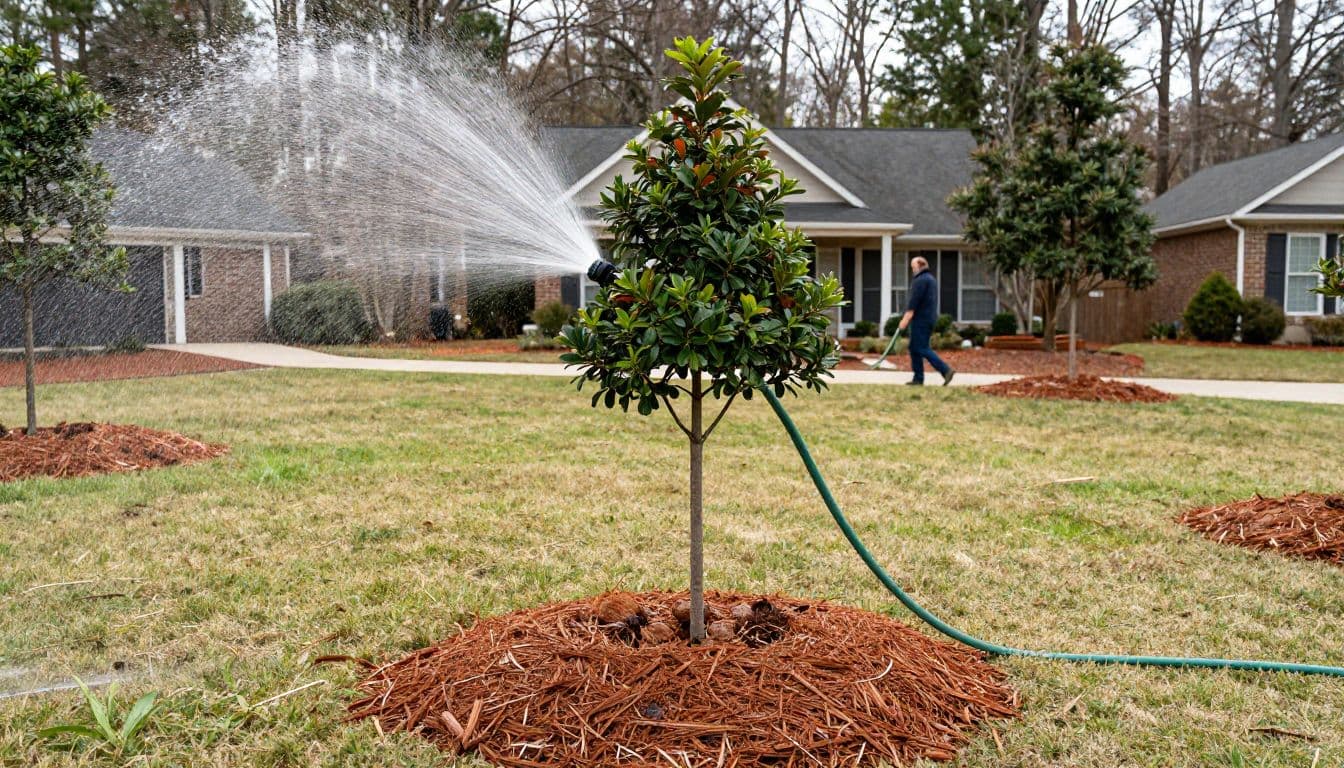
At installation, water until the soil is saturated around the root ball and nearby backfill. Afterward, provide slow, thorough irrigation instead of frequent shallow sprinkling.
A Georgia tree-planting guide based on UGA Extension recommendations uses roughly 10 to 15 gallons per week for each inch of trunk caliper during the first growing season. Caliper is the trunk diameter measured near the base. A two-inch tree may therefore need about 20 to 30 gallons per week, divided into slow watering sessions when the weather stays dry.
Rainfall counts toward that total. During a wet week, reduce irrigation. During hot, windy, or drought-stressed weather, check the soil several inches below the surface and water when it begins to dry. Clay soil may hold water for a long time, so don't water automatically if the planting area remains saturated.
A hose placed at the edge of the root ball can work well. Let water soak in gradually, then move it around the planting area as roots begin to spread.
Mulch Correctly and Stake Only When Needed
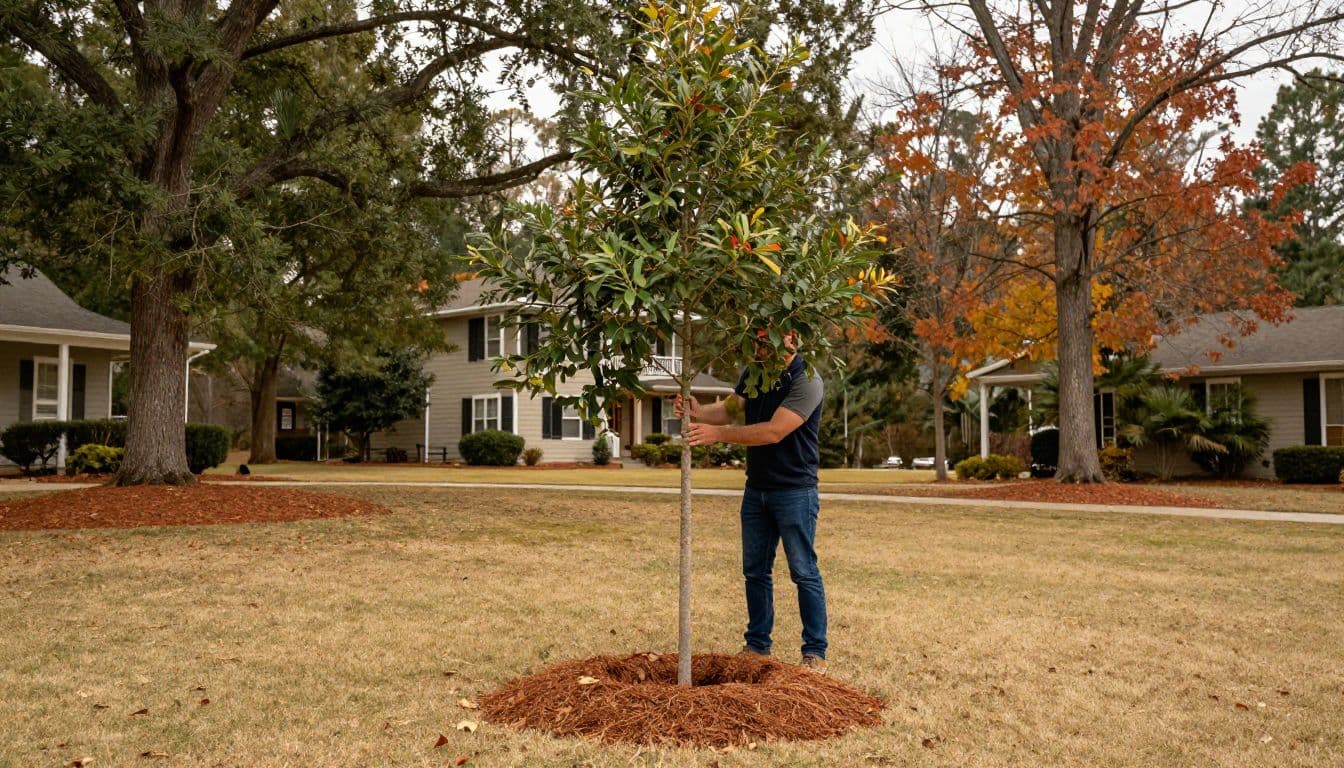
Apply a 3 to 4-inch layer of organic mulch over the planting area. Extend the ring beyond the root ball when space allows, but keep mulch 3 to 6 inches away from the trunk.
A thick pile against the bark can trap moisture and encourage decay. It can also hide the root flare, which makes future grade problems harder to spot. Recheck the mulch after heavy rain and refresh it without adding layers around the trunk.
Staking is useful only when wind exposure, a loose root ball, or unstable soil requires support. Use flexible ties that allow slight trunk movement, and remove the stakes within 12 months. Permanent staking can weaken trunk development.
For ongoing bed care, residential mulch installation in Atlanta can help maintain proper mulch depth and clearance as the landscape matures.
Avoid Common Tree Planting Mistakes
Don't Plant Invasive Species
Some attractive trees spread aggressively or create long-term maintenance problems in Georgia. Avoid mimosa, Chinese privet, Bradford pear, Callery pear, and Chinese tallowtree. Chinese wisteria, English ivy, wintercreeper, and Oriental bittersweet are also invasive plants that can spread through yards and natural areas.
UGA Extension identifies Chinese privet as a leading invasive plant in Georgia. The City of Atlanta's planting guidance excludes exotic trees with invasive properties and recommends native Piedmont species where practical.
Ask the nursery for the scientific name, then compare the selection with current Georgia invasive plant lists before buying. A familiar common name isn't enough.
Plan for Wind, Roots, and Future Maintenance
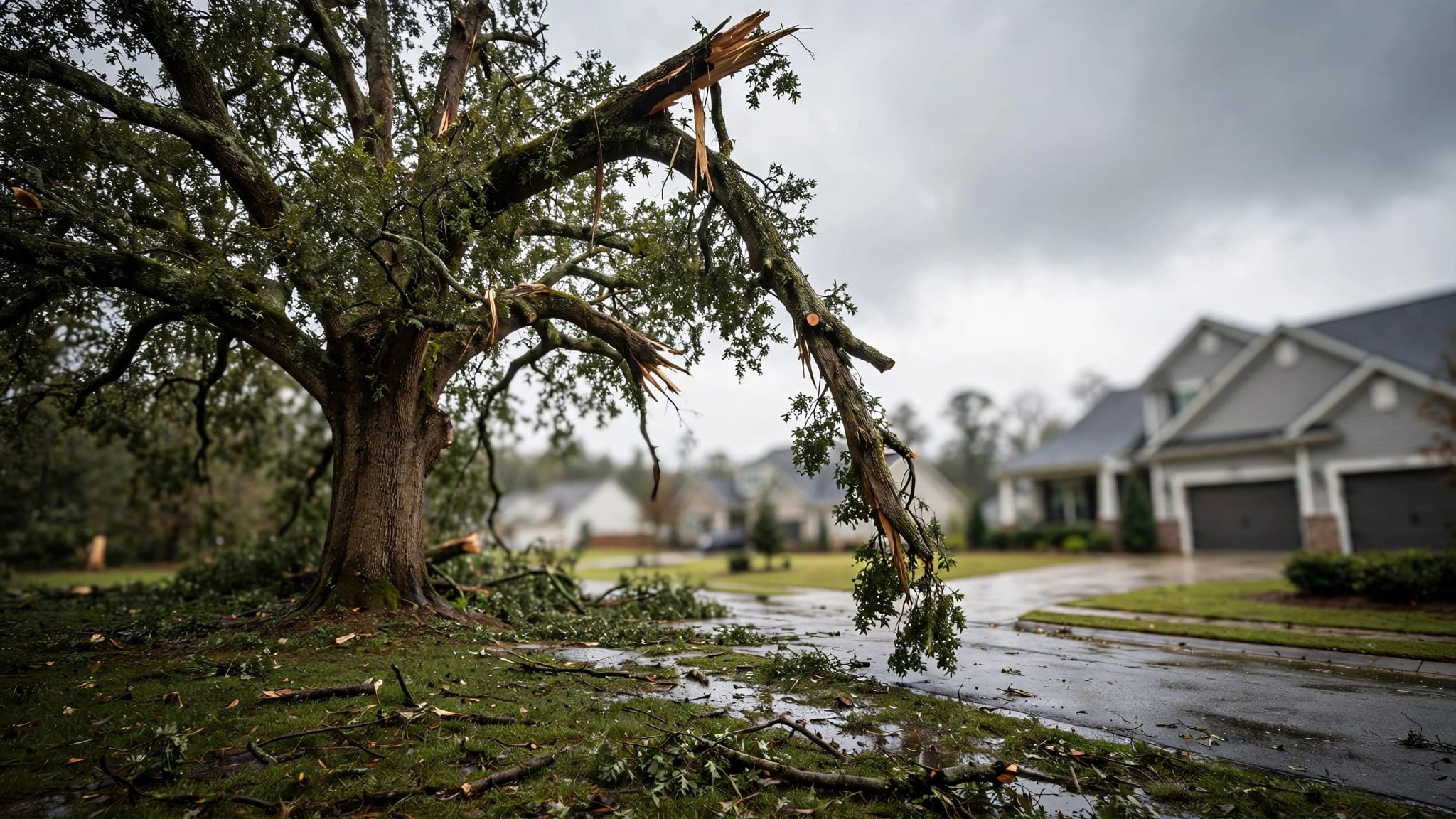
Storm exposure matters in open yards, corner lots, and properties with poor anchoring soil. Choose a tree with enough rooting space, avoid planting in constantly saturated or heavily compacted ground, and use temporary support only when needed.
Keep large trees away from homes, retaining walls, driveways, septic fields, and narrow planting strips. Roots need oxygen and room, while branches need space above roofs and traffic areas.
If the site has a slope, bare bank, or drainage problem, correct the grade and erosion risk before planting. A young tree won't solve active soil movement by itself. Likewise, don't cut major roots from existing mature trees to make room for a new planting without professional guidance.
A Simple Metro Atlanta Planting Plan
Use this sequence for a new residential tree:
- Select a species based on mature size, sunlight, moisture, and available soil volume.
- Check the current USDA hardiness information for your county and account for the yard's microclimate.
- Call 811 and inspect overhead lines, buildings, pavement, septic features, and drainage paths.
- Plant during fall through early winter or the dormant window, when soil moisture is adequate.
- Set the root flare at or slightly above finished grade, then water the root zone thoroughly.
- Add 3 to 4 inches of mulch, leaving a clear gap around the trunk.
- Monitor soil moisture through the first growing season and adjust watering after rain.
- Remove temporary staking within 12 months and inspect the tree after severe weather.
This plan works for many Metro Atlanta yards, but poor drainage, construction damage, steep slopes, and major canopy conflicts may require site-specific preparation first.
Conclusion
The best Atlanta tree planting season is usually the cool, workable period between fall and early spring, especially December through early March. Exact dates vary with county conditions, soil moisture, tree type, and the planting site's sun and drainage.
Choose a tree for its mature size and site fit, keep the root flare visible, mulch without touching the trunk, and provide steady water during the first year. A careful planting decision now gives your tree room to grow without creating utility, storm, or maintenance problems later.