Atlanta Dogwood Anthracnose Symptoms and Treatment Guide
A dogwood can lose its spring color quickly when dogwood anthracnose takes hold. In Metro Atlanta, cool, wet weather around bud break creates the conditions this fungal disease needs.
Look closely before assuming drought stress or ordinary leaf spots. The pattern on leaves, bracts, twigs, and trunk helps you decide whether cleanup, pruning, monitoring, or a professional diagnosis makes sense. Start with the symptoms you can see.
Recognizing dogwood anthracnose symptoms in Atlanta
Dogwood anthracnose mainly affects flowering dogwood, Cornus florida. The disease is caused by the fungus Discula destructiva. It often begins during a wet spring, then spreads into young twigs and branches if conditions remain favorable.
Leaf and bract symptoms show up first
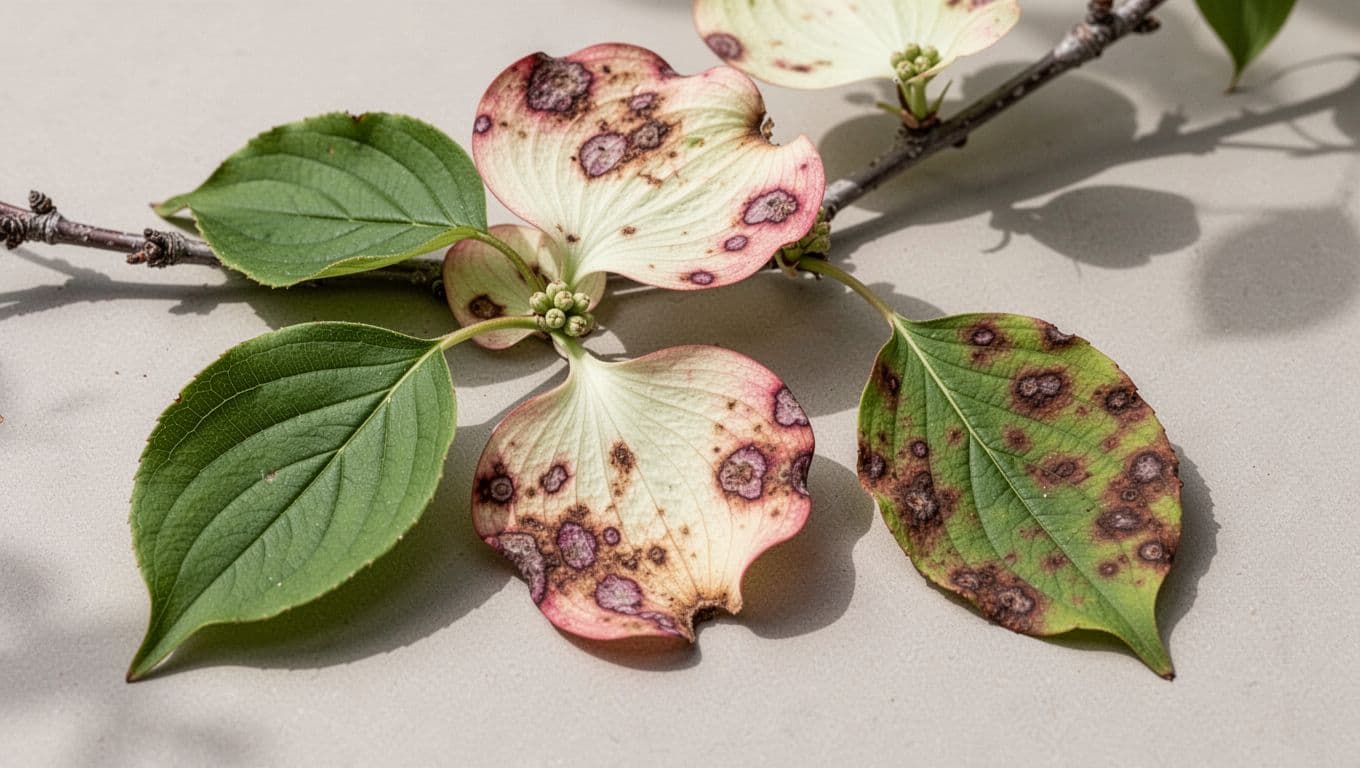
Early symptoms appear as tan, reddish-brown, or grayish leaf spots. Purple or reddish margins may surround the damaged tissue. As spots grow together, large sections of the leaf can turn brown and look water-soaked.
The white or pink structures commonly called dogwood flowers are actually bracts. These bracts can develop brown spots and blighted areas before or during bloom. In wet weather, entire leaves may droop, brown, and fall earlier than expected.
Check the underside of a damaged leaf with a hand lens. Numerous tiny tan or brown dots, about the size of printed periods, can support an anthracnose diagnosis. Those dots are more useful than color alone because several dogwood problems produce brown leaves.
Twig dieback points to a more serious problem
Dogwood anthracnose becomes more concerning when symptoms move beyond the leaves. Young green stems, water sprouts, and small twigs may develop darkened areas before dying back.
Look for bare twig tips, dead shoots, and leaves that remain attached to dying branches. Dark cankers can form on twigs and limbs. On older branches, the wood beneath damaged bark may appear dark brown rather than healthy and light-colored.
A canker that wraps around a stem can interrupt water movement. If infection reaches the main trunk, the tree may decline rapidly or die. Severe branch or trunk symptoms deserve professional evaluation before you begin major pruning.
Dogwood anthracnose versus drought and other leaf diseases
Atlanta weather can make diagnosis confusing. A hot, dry summer may follow a wet spring, so a tree can show disease symptoms and drought stress during the same growing season.
Compare weather and the pattern of damage
Drought stress often produces curled leaves, crispy brown edges, or general scorch. Damage may appear across much of the canopy after an extended period without rain. Drought alone doesn't create the distinct spots, cankers, or progressive twig dieback associated with dogwood anthracnose.
However, a tree under water stress has less ability to replace lost leaves or defend damaged tissue. Check the soil several inches below the surface before deciding that every brown leaf came from a fungus.
Dogwood anthracnose is more likely when:
- Symptoms begin during cool, rainy spring weather.
- Leaf spots enlarge into irregular blighted sections.
- Leaves droop and fall while nearby trees remain green.
- Young twigs die back after leaf symptoms appear.
- Dark cankers occur on twigs, limbs, or the trunk.
Separate spot anthracnose from the destructive form
Spot anthracnose is common on dogwoods in Georgia. It usually produces many small spots, often 1 to 2 millimeters wide, with reddish-purple borders and tan centers. Wet springs can make the spots more noticeable on leaves and bracts.
Dogwood anthracnose usually causes larger blighted areas and can move into twigs and branches. Spot anthracnose often reduces the tree's appearance without causing major long-term decline. The two diseases can occur under similar weather conditions, so twig dieback is an important clue.
Powdery mildew has a different appearance. It creates white, powdery fungal growth on leaf surfaces, often with curling or distorted new leaves. It doesn't normally produce the same combination of large leaf blight, twig dieback, and stem cankers.
When symptoms overlap, photograph both sides of several leaves and inspect the twigs closely. A Georgia county Extension office or qualified tree professional can help confirm the problem.
When to inspect Atlanta dogwoods
Timing affects both diagnosis and treatment. The highest-risk period runs from flower bud break through full leaf expansion, especially when rain keeps foliage wet.
Scout during spring bud break
Begin checking flowering dogwoods in April as buds open and new leaves develop. Metro Atlanta's exact timing varies with temperature, site exposure, and the tree's elevation, but spring scouting should continue through May.
Inspect the bracts first, then the newest leaves and green shoots. Look for spots that expand after repeated rain. By mid to late May, early infections may become easier to identify as leaf blight or premature defoliation.
Avoid watering the canopy with sprinklers during this period. Wet foliage gives fungal spores more opportunity to spread. If irrigation is necessary, direct water toward the root zone.
Recheck through summer and fall
Disease activity may slow during hot, dry periods. Still, damage that started in spring can become visible later as twig tips die and sections of the canopy thin.
Walk around the tree in June and July. Compare the amount of dieback on different branches. Marking affected limbs with a small piece of temporary tape can help you monitor whether symptoms are spreading.
Fall cleanup matters because infected leaves and twigs can remain under the tree and contribute to new infections the following spring. Remove fallen debris after leaf drop, especially beneath a tree that showed significant symptoms.
RW Lawn Co can help with Atlanta spring and fall yard cleanup, including leaf, branch, and landscape-bed debris removal.
Cultural treatment for dogwood anthracnose
Cultural controls won't reverse dead tissue, but they can reduce disease pressure and improve the tree's growing conditions. Start with sanitation and pruning before reaching for a fungicide.
Prune dead and cankered wood in dry weather
Prune dead twigs and branches during a dry period. Make each cut back to healthy wood when practical, and keep the cut just outside the branch collar. Avoid flush cuts because they remove protective tissue around the branch base.
Remove water sprouts and weak shoots that crowd the canopy. Clean and disinfect pruning tools between visibly diseased cuts. Place removed branches and leaves away from the tree, then dispose of them according to local waste rules.
Don't prune during rain or when foliage is wet. Wet conditions increase the chance of spreading spores on tools and equipment. Large limbs near roofs, utility lines, or walkways require proper equipment and trained handling.
Improve airflow, moisture, and tree vigor
Crowded shrubs and dense groundcover can hold moisture around the lower canopy. Thin nearby growth where appropriate, but don't strip the dogwood's canopy or expose it suddenly to harsh afternoon sun.
Water deeply at the root zone during prolonged dry weather. Keep mulch several inches away from the trunk, and maintain a clean, moderate layer over the surrounding soil. Avoid high-nitrogen fertilizer because it can push soft, fast-growing shoots that are more vulnerable to infection.
A healthy planting site also matters. Flowering dogwoods need good drainage and air movement. If you plant a replacement, choose nursery-grown stock rather than moving a seedling from the woods. Forest transplants can carry the fungus into a home landscape.
Some dogwoods offer better resistance than others. Clemson Extension lists Cornus florida 'Appalachian Spring' as highly resistant to anthracnose. Cornus kousa is another option often used where disease pressure is a concern. Resistance reduces risk, but it doesn't guarantee a disease-free tree.
Fungicides and when to call a professional
Fungicides work best as a protective program before infection becomes established. They won't repair dead leaves, restore girdled branches, or cure advanced trunk damage.
Time fungicide protection before symptoms spread
For susceptible dogwoods, treatment generally begins at bud break in early spring. Products may require repeat applications every 10 to 14 days until leaves fully expand. Some guidance also includes a fall application after leaf color changes but before leaves drop.
Product directions control the schedule. Use only a fungicide labeled for the disease, tree, and application site. Follow every label instruction for mixing, protective equipment, weather limits, re-entry, and application intervals. A product that works on one ornamental disease may not be labeled for dogwood anthracnose.
Treating a large mature dogwood can be difficult because the entire canopy needs thorough coverage. Homeowners often lack the equipment needed to reach the upper branches safely. Preventive sprays are usually more practical for a valuable specimen tree than for every dogwood on a large property.
Get a diagnosis for trunk or major branch damage
Professional help makes sense when you see cankers on the trunk, repeated branch dieback, rapid canopy thinning, or damage high in the tree. A diagnosis can separate anthracnose from borers, root problems, storm injury, other fungi, or simple drought stress.
Ask for an inspection before approving extensive treatment. A professional should examine the whole tree, including the trunk flare, branch unions, soil conditions, and surrounding vegetation.
Treatment cannot guarantee that an infected tree will recover. If a canker has girdled the trunk or major limbs have become unsafe, removal may be the responsible option. That decision should follow an on-site assessment rather than a leaf photo alone.
Conclusion
Dogwood anthracnose often starts with spotted bracts and leaves during a wet Atlanta spring. Larger blighted areas, premature leaf drop, twig dieback, and dark cankers separate it from ordinary drought stress or minor spot anthracnose.
Inspect dogwoods during bud break, prune affected wood in dry weather, remove fallen debris, and keep the canopy and root zone in good condition. When symptoms reach major branches or the trunk, professional diagnosis matters more than a rushed spray. A careful inspection gives you the clearest path toward protecting the tree and the rest of your property.